


A Little Extra for the Bowl, Not a Replacement for Dinner
What is a dog food topper? It is an addition sprinkled, poured, or mixed into your dog's regular meal to change its flavor, aroma, moisture, or texture. Most toppers enhance an existing diet rather than provide all the nutrition a dog needs.
A topper can make a familiar bowl more interesting. The important question is whether it complements the meal without taking over its nutritional role.
A dog food topper is a supplemental meal addition, not automatically a complete dog food. It may be a dry sprinkle, meat-based crumble, vegetable blend, broth, or moist mixture. Check the product's nutritional adequacy statement, ingredients, calorie content, and feeding instructions before deciding how it fits your dog's diet.
What Is a Dog Food Topper and What Does It Do?
A dog food topper is a food product or suitable ingredient added to a dog's normal food. Unlike a standalone treat, it is typically served with a meal. Some toppers contain one recognizable ingredient, while others combine several ingredients or use a liquid format.
Its purpose is usually sensory: it changes how the regular food smells, tastes, or feels. A powdered beef liver topper, for example, may add a different aroma, while a wet mixture changes the moisture and consistency of kibble.
Some toppers also contribute protein, fiber, fat, or other nutrients. However, containing nutrients does not mean a product supplies every nutrient in the proportions required for a complete diet.
Make familiar food different
A topper can introduce a flavor or aroma without requiring a complete change of food.
Change the eating experience
Sprinkles, crumbles, and moist mixtures create different textures when combined with kibble or wet food.
Offer controlled additions
A measured topper can add variety while keeping the regular diet as the main nutritional foundation.
Dog Food Topper vs. Complete Dog Food: The Essential Difference
The biggest distinction is not whether an ingredient is natural, nutritious, or appealing. It is whether the finished product is formulated and labeled to provide complete nutrition for the dog's appropriate life stage.
The FDA's explanation of complete and balanced pet food describes how the nutritional adequacy statement identifies foods intended to serve as a complete diet. Treats, snacks, and many supplemental products generally do not have that role.
| Feature | Dog Food Topper | Complete Dog Food |
|---|---|---|
| Main purpose | Add flavor, texture, moisture, or selected ingredients. | Provide the essential nutrients needed for an appropriate life stage. |
| Usual serving role | Measured addition to a regular meal. | Primary daily food when fed as directed. |
| Nutritional adequacy | Often intended for supplemental or intermittent feeding. | Identified by an appropriate complete-and-balanced adequacy statement. |
| Portion approach | Count with treats and other extras. | Base portions on calorie needs, life stage, and feeding guidance. |
| Can replace a meal? | Not unless the specific product is nutritionally complete and appropriate for that use. | Generally designed to serve as the diet when suitable for the dog. |
Important distinction: The word "topper" describes how a product is used, not necessarily its nutritional adequacy. Some complete-and-balanced foods can be served as toppings, but a typical supplemental topper should not be assumed to provide complete nutrition.
Types of Dog Food Toppers Explained
Food toppers come in several forms. Understanding the difference helps you choose a format that fits your dog's normal food, eating preferences, and dietary needs.
Powders and fine sprinkles
These can coat individual pieces of kibble and are often easy to mix throughout a bowl. Always check how concentrated the product is and how much to use.
Crumbles and diced ingredients
Finely chopped or crumbled ingredients introduce a noticeable texture. Piece size should suit the dog's eating and swallowing behavior.
Broths and gravies
These change the moisture and aroma of dry food. Check the ingredient list, sodium content where applicable, and storage instructions.
Wet foods and soft mixtures
These can be folded into regular food. Some are complete diets and others are supplemental, so the label remains essential.
Dry formats can differ considerably in texture and concentration. Our guide to dog food topper powders explains how to compare, measure, and mix powdered options.
Why Do Dog Owners Use Food Toppers?
Owners may choose a topper for convenience, mealtime variety, or a specific feeding preference. The intended benefit should be realistic: a topper changes the bowl, but it does not automatically correct a nutritional deficiency or address a medical problem.
A new aroma
A familiar meal may smell different with a small amount of a flavorful addition.
Less preparation
Ready-to-serve toppers can add variety without cooking a separate ingredient.
Ingredient preferences
Owners can select animal-based or plant-based options based on their dog's established dietary tolerance.
Some dogs happily eat their usual food without any additions. There is no general nutritional requirement to use a topper with an already appropriate complete and balanced diet.
If a dog suddenly becomes uninterested in food, do not assume the answer is a stronger flavor. Dental discomfort, illness, stress, or other problems may affect eating. New or persistent appetite changes deserve veterinary advice.
How Much Dog Food Topper Should You Use?
There is no universal spoonful or tablespoon amount that works for every topper. Products vary in moisture, calorie density, ingredients, and serving directions. A serving of dry beef liver cannot automatically be exchanged for the same volume of broth or sweet potato pieces.
VCA Animal Hospitals' guidance on dog treats describes the general 90/10 approach: roughly 90% of a dog's daily calories should come from complete and balanced food, leaving no more than about 10% for treats and snacks. Supplemental toppers belong in that overall extras allowance.
Toppers share the allowance with other extras
Training rewards, edible chews, table-food additions, and supplemental toppers all contribute to the day's intake. They should not each receive a separate allowance on top of the dog's complete daily ration.
A small dog, a less active dog, or a dog on a weight-management plan may have little room for additional calories. If the topper contributes meaningful calories, ask your veterinarian how to adjust the total feeding plan without compromising essential nutrition.
How to Choose a Dog Food Topper
Instead of choosing only by the flavor on the front of the package, compare the information that affects actual feeding.
| What to Check | Why It Matters | Practical Question |
|---|---|---|
| Ingredients | Identifies proteins, plant ingredients, and possible dietary conflicts. | Does this fit the ingredients my dog can eat? |
| Calories | Shows how much the addition contributes to daily intake. | How many calories are in the measured serving? |
| Intended use | Distinguishes supplemental feeding from complete nutrition. | Is this a meal enhancer or a complete diet? |
| Serving directions | Helps prevent uncontrolled portions. | Can I measure the recommended amount consistently? |
| Texture | Affects mixing and how the dog handles the food. | Does the format suit my dog's eating style? |
| Storage | Helps protect the product from spoilage and contamination. | Does it require refrigeration after opening or mixing? |
Single ingredient does not mean universally suitable. A short ingredient list may make restrictions easier to manage, but dogs can react to individual ingredients. Likewise, a multi-ingredient product is not automatically inappropriate. Evaluate the complete label and your dog's needs.
How to Add a Topper to Your Dog's Regular Meal
A measured, gradual introduction is generally more useful than immediately covering the entire bowl with a new product. Keep the primary diet consistent so changes in tolerance are easier to identify.
For a more detailed transition routine, see our guide on how to introduce a dog food topper gradually.
When a Dog Food Topper May Not Be Appropriate
Not every dog benefits from extra ingredients. A topper may be unsuitable when it conflicts with a prescribed diet, introduces a known allergen, contributes excessive calories, or encourages the dog to leave most of their regular food uneaten.
Check before adding extras
- Veterinary elimination diets
- Prescription or therapeutic food plans
- Known food allergies or intolerances
- Calorie-controlled feeding programs
Consider individual needs
- Growing puppies with specific nutritional requirements
- Pregnant or nursing dogs
- Dogs with chronic digestive conditions
- Senior dogs with medical or chewing difficulties
Stop the new addition if concerning symptoms develop. Contact a veterinarian when vomiting or diarrhea is severe, persistent, or recurring, or when appetite loss, weakness, pain, or other unusual signs appear. Suspected choking or breathing difficulty requires immediate veterinary attention.
Good food-handling practices matter too. The FDA's pet food handling recommendations cover handwashing, clean bowls and utensils, suitable storage, and prompt disposal of spoiled food.
Brutus & Barnaby Dog Food Toppers to Consider
Brutus & Barnaby offers several meal enhancers with different ingredient profiles. These options are intended to complement regular feeding, not automatically replace an appropriate complete and balanced dog food. Choose according to your dog's known tolerances and current feeding plan.
Sweet Potato Dog Food Topper | High-Fiber Meal Enhancer for Dogs
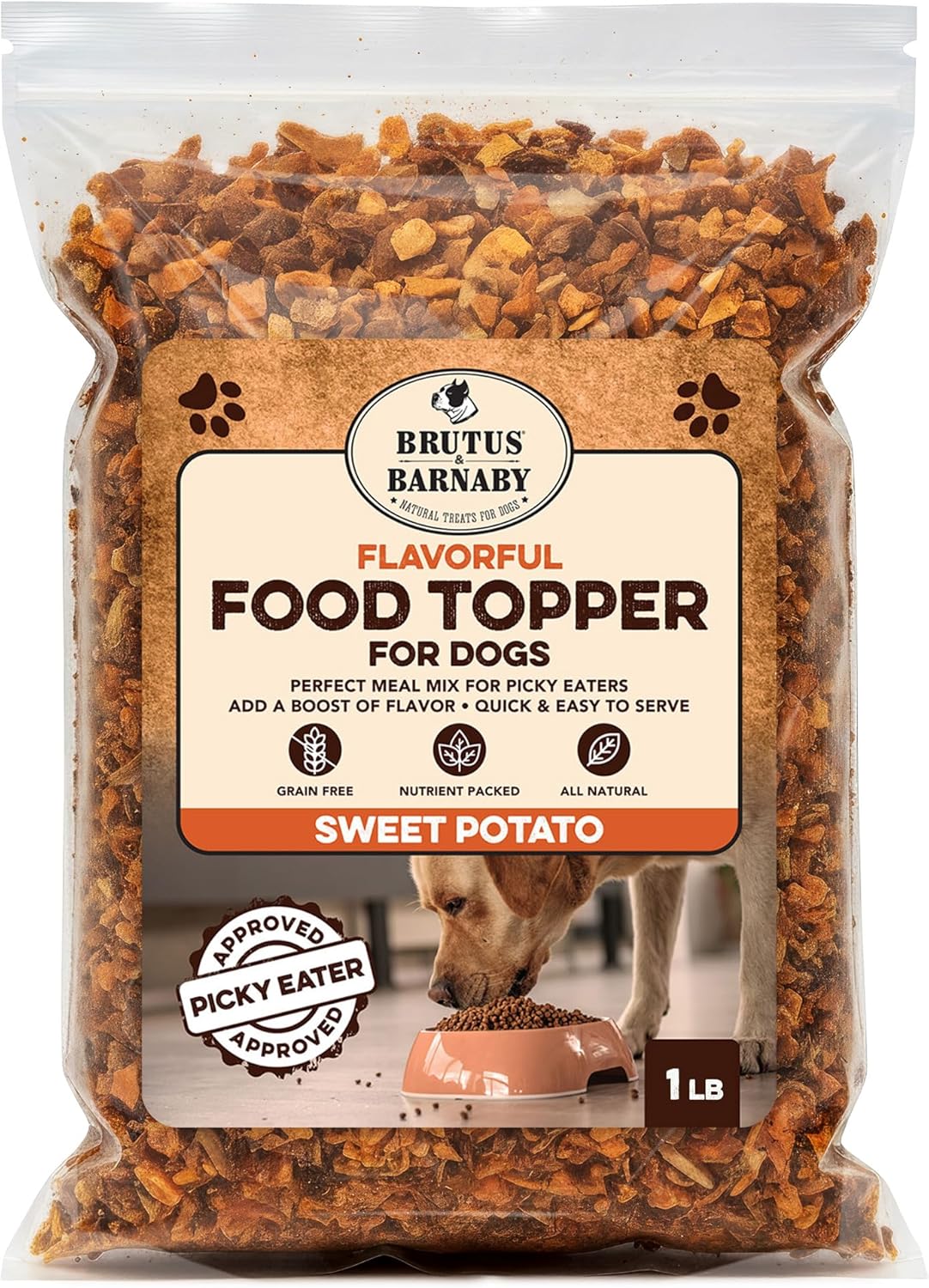 Shop Sweet Potato Dog Food Topper
Beef Liver Dog Food Topper | High-Protein Meal Enhancer for Dogs
 Shop Beef Liver Dog Food Topper
Vegan Dog Food Topper | Meal Enhancer for Picky Eaters
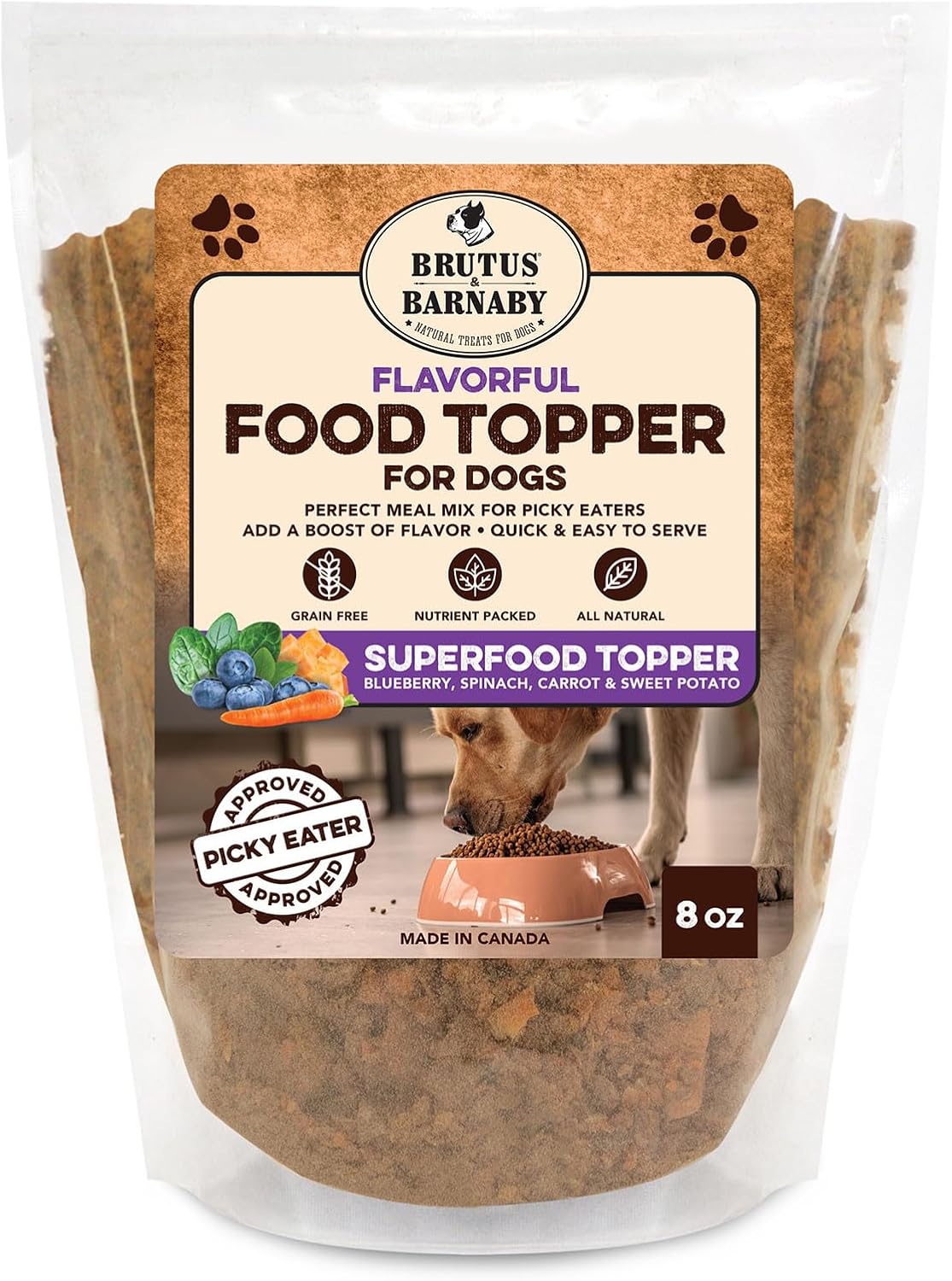 Shop Vegan Dog Food Topper
Common Dog Food Topper Mistakes to Avoid
Even a convenient product can become less suitable when its intended role is misunderstood. Watch for these common feeding habits.
Replacing too much regular food
A supplemental product may not supply the nutrients displaced when significant amounts of complete food are removed.
Ignoring added calories
Small additions accumulate over multiple meals, especially alongside treats and edible chews.
Changing flavors too frequently
Several new ingredients at once can make it difficult to identify the reason for a digestive reaction.
Using toppers to hide appetite loss
Persistent refusal of usual food requires attention rather than repeated attempts to make the bowl more enticing.
Dog Food Topper FAQs
Is a dog food topper the same as dog food?
Not necessarily. Most toppers are intended as meal additions, whereas complete and balanced dog foods are formulated to supply essential nutrition for an appropriate life stage. Check the specific product's nutritional adequacy statement rather than relying on its name.
Can a dog food topper replace kibble?
A typical supplemental topper should not replace kibble that provides complete nutrition. A product can replace a regular food only when it is itself nutritionally complete and appropriate for the dog's needs, or when a veterinarian directs a different feeding plan.
Can dogs have food toppers every day?
Some dogs can have a suitable measured topper regularly. The amount must fit the full diet, and the dog should tolerate the ingredients. Daily use does not make unlimited portions appropriate.
Are dog food toppers only for picky eaters?
No. Owners also use them for variety or to change a meal's texture and aroma. However, a dog eating an appropriate complete diet does not automatically need a topper, and unexplained appetite loss should not be treated as ordinary pickiness.
Are dry toppers better than wet toppers?
Neither format is universally better. Dry toppers may be convenient to sprinkle and store, while wet toppers alter moisture and texture. Ingredients, calorie density, intended use, hygiene, and the dog's preferences matter more than format alone.
Can puppies and senior dogs use food toppers?
Some can, but suitability depends on the product, life stage, health, and regular diet. Puppies need appropriate growth nutrition, while senior dogs may have individual dietary or medical needs. Keep extras modest and seek veterinary guidance when necessary.
Enhance the Bowl While Protecting the Diet
What is a dog food topper? It is a way to add flavor, texture, moisture, or selected ingredients to a dog's usual meal. The best approach is to choose a suitable product, read its nutritional labeling, measure the serving, and keep complete and balanced food at the center of the feeding plan.
For a straightforward plant-based addition, explore Brutus & Barnaby's Sweet Potato Dog Food Topper and review its current feeding instructions before adding it to your dog's routine.
Shop Sweet Potato Dog Food TopperEducational disclaimer: This article provides general educational information and is not individualized veterinary or nutritional advice. Food toppers vary in ingredients, calories, feeding directions, and nutritional adequacy. Review current product packaging before use. Ask your veterinarian before changing a prescription diet, elimination diet, or medically managed feeding plan. Contact a veterinarian for severe, persistent, or recurring digestive symptoms, significant appetite changes, or other concerning signs. Seek immediate veterinary attention for suspected choking or breathing difficulty. Store and handle all pet food according to its instructions.