



Dehydrated Dog Food Toppers: How They're Made, Stored and Served
Dehydrated dog food toppers are dried ingredients added to a dog's regular meals for extra flavor, aroma or texture. Understanding how moisture is removed, how to store the finished product and whether it needs water before serving can help you build a simple, consistent feeding routine.
Dehydrated dog food toppers are made by removing much of the moisture from food ingredients through a controlled drying process. They may be sold as small dried pieces, flakes or powders. Store them sealed in a cool, dry location according to their label, and serve a measured amount over your dog's usual food. Some can be lightly moistened, while others have specific rehydration directions. Drying does not automatically make a food sterile or nutritionally complete.
What Are Dehydrated Dog Food Toppers?
A dehydrated dog food topper is a moisture-reduced food product intended to be added to another food. Instead of serving ingredients in their original fresh form, manufacturers process them into a drier format that can be packaged and portioned conveniently.
Depending on the recipe and manufacturing method, the finished topper might contain dried meat, vegetables or a combination of ingredients. Some products have finely ground textures, while others resemble small pieces or flakes that remain recognizable after drying.
The word dehydrated describes a processing method. It does not tell you whether the food is complete and balanced, which ingredients it contains or how much should be served.
Dried pieces
Small pieces can be scattered over a meal or mixed through food. Their firmness and size vary by product.
Flakes and crumbles
Smaller particles can distribute across the bowl and add a different mouthfeel to regular food.
Powdered toppers
Finely ground ingredients can coat kibble or mix into wet food. Some formulas permit the addition of water.
How Are Dehydrated Dog Food Toppers Made?
Although exact manufacturing procedures differ, dehydration generally uses controlled conditions to remove moisture from food. Manufacturers must consider ingredient preparation, equipment, food safety and the desired texture of the finished product.
1. Ingredient selection and preparation
The process begins with ingredients selected for the intended recipe. Meat, vegetables and other suitable foods may require cleaning, cutting, grinding or other preparation before drying. Ingredient quality, handling and processing controls matter because dehydration is not a substitute for proper food safety practices.
2. Controlled moisture removal
During dehydration, moisture is removed under controlled conditions. The equipment, temperature, airflow, drying duration and characteristics of the ingredients influence the final product.
Removing water can help limit the conditions in which certain microorganisms grow, but the extent of preservation depends on the process and finished food. A dried product is not automatically free from harmful bacteria.
3. Texture preparation and packaging
After drying, ingredients may be left in pieces or processed further into flakes or smaller particles. Manufacturers package the finished food to help protect it from moisture and other environmental exposure.
Drying can change flavor, texture and some nutrients. The extent of those changes depends on the ingredient and process, so claims about nutrient retention should be assessed for the particular product rather than applied to every dehydrated topper.
Important distinction: Dehydration describes how moisture is removed, not a guarantee of a specific temperature, nutrient profile or microbial safety standard. Look for verified manufacturer information before assuming how a particular topper was produced.
Dehydrated vs. Freeze-Dried Dog Food Toppers
Dehydrated and freeze-dried foods are often grouped together because both have reduced moisture. However, they are produced differently.
Conventional dehydration generally removes water through controlled drying, often involving heat and airflow. Freeze-drying starts with frozen food and removes much of its water through sublimation under reduced pressure.
| Feature | Dehydrated Topper | Freeze-Dried Topper |
|---|---|---|
| Processing | Moisture is removed through controlled drying. | Food is frozen, then water is removed primarily through sublimation. |
| Texture | May be chewy, firm, flaky or powdered. | Often lightweight, porous or crumbly. |
| Water addition | Depends on the specific product instructions. | Depends on the specific product instructions. |
| Storage | Follow package directions and protect from moisture. | Follow package directions and protect from moisture. |
| Food safety | Not automatically sterile or pathogen-free. | Not automatically sterile or pathogen-free. |
| Nutritional purpose | Check whether it is supplemental or complete food. | Check whether it is supplemental or complete food. |
Neither format is universally superior. Ingredient suitability, food safety controls, nutritional purpose and serving directions matter more than the processing name alone.
Why Dog Owners Choose Dehydrated Toppers
Dehydrated toppers appeal to owners who want a convenient way to change the eating experience without replacing the dog's regular diet. Their usefulness depends on the individual dog's preferences and needs.
Convenient portioning
Dry pieces, flakes and powders can be measured before each meal. This makes it easier to repeat a feeding routine rather than adding an uncertain amount.
Flavor and aroma variety
Meat-based or vegetable-based toppers may change the smell and taste of familiar food. Some dogs find this appealing, although individual preferences differ.
Flexible meal preparation
Depending on the instructions, a topper may be scattered dry, stirred into food or lightly moistened to change how it coats the meal.
Ingredient-focused choices
Products with short ingredient lists may make it easier to identify what is being added, although a simple ingredient list does not guarantee suitability for every dog.
If you are introducing an unfamiliar ingredient, start cautiously rather than changing several parts of the diet at once. Our guide to introducing a dog food topper without upsetting your dog's stomach explains how to monitor tolerance during a gradual change.
How to Store Dehydrated Dog Food Toppers
Proper storage helps maintain the condition of a dry topper and reduces avoidable contamination risks. Even a product designed for pantry storage can be affected by heat, moisture, damaged packaging or improper handling.
Keep the original packaging and label
Store the topper in its original package when practical, and reseal it according to the manufacturer's directions. If you use a separate storage container, retain the original product information, including its lot code, ingredient list and best-by date.
The FDA's guidance on proper pet food and treat storage highlights the importance of keeping original packaging information available in case of a product problem or recall.
Protect the topper from moisture and heat
Choose a cool, dry storage area away from direct sunlight and unnecessary temperature fluctuations. Close the package promptly after measuring each portion, and avoid introducing moisture with wet utensils.
If the manufacturer requires refrigeration or another specific storage condition, follow those instructions instead of assuming that all dehydrated products belong in the pantry.
Recognize when a product should not be used
Do not serve a topper when you notice unexpected dampness, visible mold, unusual discoloration, damaged packaging or an odor that suggests spoilage. Stop using the product and contact the manufacturer if its condition is questionable.
Follow the package's stated use-after-opening directions. A printed best-by date does not automatically establish how long a product remains suitable after opening or after water is added.
Storage reminder: Dry shelf life and prepared-food shelf life are different. Once water is added, follow the manufacturer's specific refrigeration and discard directions rather than assuming the original dry-food date still applies.
How to Serve Dehydrated Dog Food Toppers
Start by checking whether your product is designed to be served dry, moistened or fully rehydrated. A supplemental topper does not necessarily need soaking, and a food requiring rehydration should not be prepared by guesswork.
- Measure the usual meal. Prepare the dog's regular food according to the existing feeding plan. Keep an appropriate complete and balanced food as the main dietary foundation.
- Read the topper directions. Check the ingredients, serving guidance, intended nutritional purpose and any required preparation instructions.
- Measure the topper separately. Use the recommended serving guidance while accounting for calories from other treats, edible chews and meal additions.
- Choose the permitted serving method. Sprinkle dry, mix through wet food or add the specified amount of water when the manufacturer permits or requires it.
- Serve and observe. Check that pieces are an appropriate size and texture, supervise eating when needed, and notice whether the dog tolerates the addition comfortably.
Serving dry vs. adding water
For a topper intended to be served dry, sprinkling or mixing can be convenient. Water may help certain powders cling to kibble, but it is not necessary for every product.
For a topper specifically formulated for rehydration, use the prescribed water amount, temperature and standing time. Do not assume that a sprinkle-on product and a dehydrated complete food require the same preparation.
Serve food at a comfortable temperature. Avoid serving a hot mixture, and prepare only the quantity you can handle safely under the product's storage instructions.
The FDA's safe pet food handling recommendations include washing hands before and after handling pet food, cleaning bowls and utensils after use, and discarding spoiled food appropriately.
How Much Dehydrated Topper Should You Add?
There is no universal scoop size or serving quantity that works for every dehydrated dog food topper. Different ingredients and processing methods create different calorie densities, and two products with similar-looking portions may contribute different amounts of energy.
Measure according to the actual product's feeding directions and your dog's calorie needs. Count supplemental toppers alongside treats, edible chews and other extras rather than giving each category a separate allowance.
The World Small Animal Veterinary Association's treat-feeding guidance recommends limiting treats to no more than approximately 10% of a dog's total daily calorie intake. For supplemental food toppers, this is a useful general guardrail unless a veterinarian recommends a different feeding plan.
For a more detailed portion-planning approach, see our guide on how much dog food topper to use.
Remember: Adding water changes the weight and consistency of a serving, but it does not remove the calories or ingredients already present in the measured dry topper.
What to Check Before Choosing a Dehydrated Topper
Packaging claims and ingredient descriptions are helpful starting points, but the current product label should guide your final decision.
Diet compatibility
Check animal proteins, vegetables and other ingredients against known restrictions. A single-ingredient product can still contain an ingredient your dog should avoid.
Intended feeding role
Determine whether the product is a supplemental meal enhancer or a nutritionally complete food suitable for a particular life stage.
Preparation and storage
Review serving quantities, water instructions, packaging condition and storage requirements before introducing the product.
The FDA's explanation of complete and balanced pet food clarifies why snacks, treats and supplemental products should not automatically be treated as replacements for a dog's primary diet.
For additional context, our article on whether dog food toppers can replace a meal explains how nutritional adequacy statements affect feeding decisions.
Simple Food Toppers for Everyday Meals
Brutus & Barnaby offers food-based meal enhancers that can be added to a dog's usual food. The following options provide different ingredient choices and textures. Review the current product pages and package directions before feeding.
These examples illustrate dried food-topper formats; their individual manufacturing methods should not be assumed beyond verified product information.

Beef Liver Dog Food Topper | High-Protein Meal Enhancer for Dogs
View Beef Liver Dog Food Topper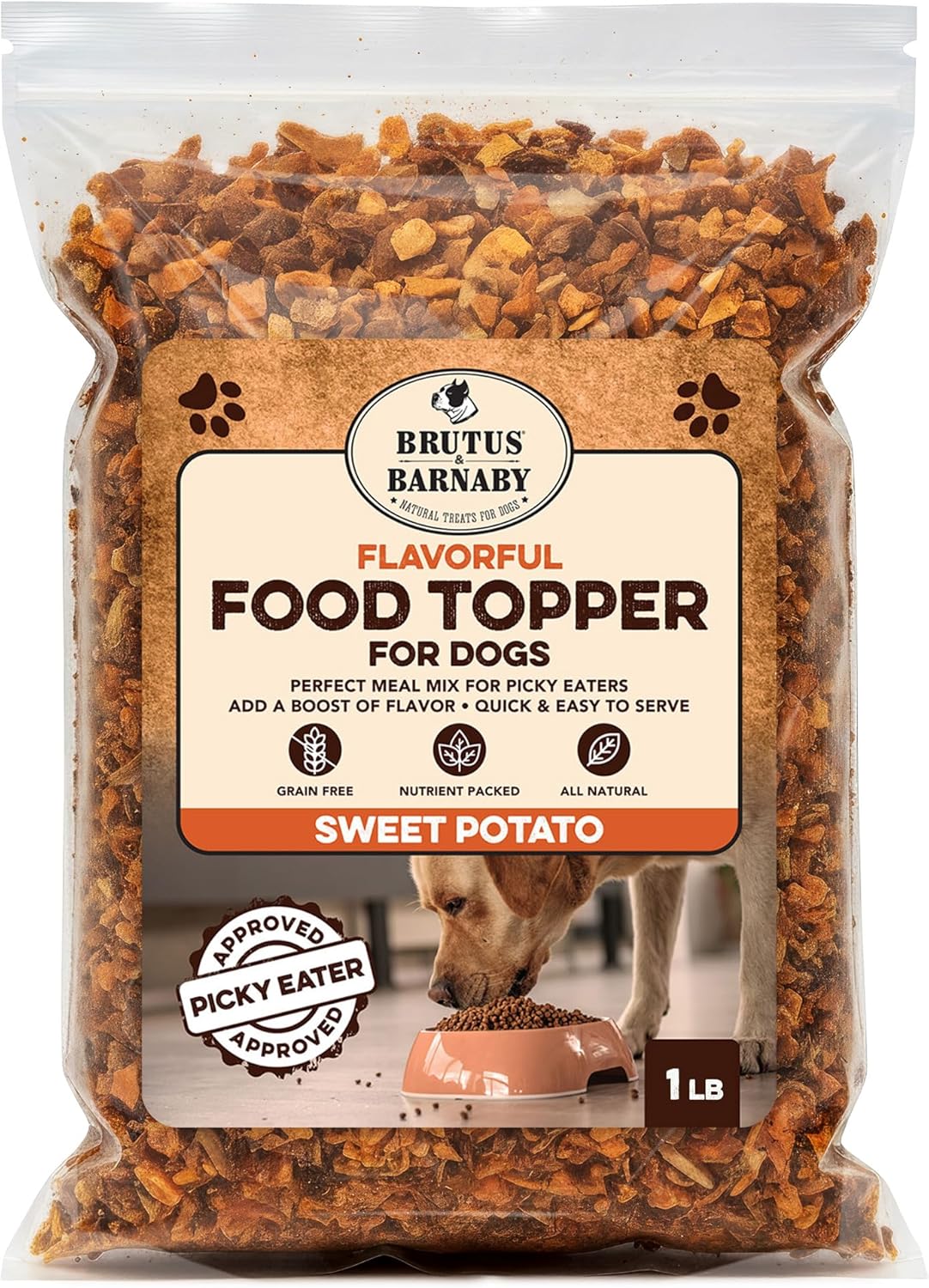
Sweet Potato Dog Food Topper | High-Fiber Meal Enhancer for Dogs
View Sweet Potato Dog Food TopperSafety Considerations for Different Dogs
Dehydrated toppers can vary considerably in ingredient composition, texture and concentration. A food that fits one dog's routine may be unsuitable for another.
Puppies and senior dogs
Growing puppies need nutritionally appropriate food for their life stage. Supplemental toppers should not displace the balanced diet needed for growth. Senior dogs may have individual dietary needs or difficulty managing certain textures, so choose products with their eating ability and veterinary guidance in mind.
Dogs with food sensitivities
Read the full ingredient list, even when a product is marketed as simple or natural. Dehydration does not eliminate a food allergen. Dogs following an elimination or prescription diet should receive veterinary guidance before an additional ingredient is introduced.
Dogs that eat quickly or have chewing difficulties
Check the size and firmness of dried pieces. Choose a texture appropriate to the dog's chewing and swallowing abilities, supervise eating when necessary and do not rely on adding water as a substitute for assessing swallowing problems.
If a dog has difficulty swallowing, persistent vomiting, repeated diarrhea, appetite changes or other concerning symptoms, contact aveterinarian. Active choking or trouble breathing requires emergency veterinary care.
Dehydrated Dog Food Toppers FAQs
Do dehydrated dog food toppers need to be rehydrated?
Not always. Some are designed to be sprinkled directly onto dry or wet food, while others require water before feeding. Follow the preparation instructions for the specific product rather than assuming all dehydrated foods need soaking.
How long do dehydrated dog food toppers last after opening?
Shelf life depends on the ingredients, manufacturing process, packaging and storage conditions. Follow the stated best-by date and any use-after-opening instructions. Do not assume that all dry toppers remain suitable for the same number of weeks or months.
Can you store dehydrated dog food toppers in the refrigerator?
Follow the label. Many shelf-stable dry products are intended for cool, dry storage rather than refrigeration. Refrigeration is not automatically better, particularly if condensation introduces moisture. Prepared, water-mixed food may have different storage requirements.
Are dehydrated dog food toppers the same as freeze-dried toppers?
No. Both reduce moisture, but the processing methods differ. Conventional dehydration generally uses controlled drying, while freeze-drying removes water from frozen food under reduced pressure. Neither method alone establishes that a product is nutritionally complete or free from harmful bacteria.
Can dehydrated dog food toppers replace regular dog food?
A supplemental topper should not replace complete and balanced meals. Some dehydrated products are specifically formulated as complete diets, but the nutritional adequacy statement and life-stage suitability must support that use. Follow the product's intended feeding role.
Can dogs eat dehydrated toppers every day?
A suitable supplemental topper may fit into a consistent feeding routine when its ingredients, portions and calories are appropriate. Count it with other daily extras and keep the primary diet nutritionally balanced. Ask your veterinarian about daily use when your dog has health concerns or dietary restrictions.
Choose, Store and Serve With Care
Dehydrated dog food toppers can add flavor and texture to familiar meals, but the best results begin with understanding how the product is made, checking storage directions and measuring every serving. Keep moisture away from the dry supply, follow preparation instructions and treat supplemental toppers as additions rather than meal replacements.
If you're considering a simple ingredient-based meal enhancer, explore Brutus & Barnaby's Sweet Potato Dog Food Topper and review the current ingredients and feeding directions before adding it to your dog's bowl.
View Sweet Potato Dog Food TopperEducational disclaimer: This article provides general information and does not replace veterinary advice. Dogs vary in nutritional needs, life stage, ingredient tolerance and medical circumstances. Follow current product labels and manufacturer guidance. Consult your veterinarian before changing a prescribed diet or introducing new ingredients for a dog with known medical concerns. Seek veterinary care for persistent, recurring, severe or otherwise concerning symptoms.