



Can Dog Food Toppers Replace a Meal?
Dog food toppers can make regular meals more appealing, but most should not replace a complete meal. Unless a specific product is labeled as complete and balanced for your dog’s appropriate life stage, treat it as an addition to the diet rather than the nutritional foundation.
The word “topper” describes how a product is used, not whether it supplies every nutrient a dog needs. The nutritional adequacy information on the product label matters more than the marketing name.
No—most dog food toppers should not replace a meal. A topper can replace a normal meal only when the specific product is formulated and labeled as a complete and balanced diet appropriate for the dog being fed, or when a veterinarian has designed a different feeding plan. Supplemental toppers should generally stay a modest part of the overall diet.
What Is a Dog Food Topper Supposed to Do?
A dog food topper is generally added to an existing meal to change its flavor, aroma, texture or variety. It can be useful for an otherwise healthy dog that finds plain kibble uninteresting, or when an owner wants to add a measured extra without changing the dog’s entire diet.
Makes familiar food more interesting
A small amount of a strongly scented or flavorful topper can change the eating experience without requiring a complete food switch.
Changes the feel of the meal
Finely diced, powdered, crumbled or moist additions can make a regular meal feel different to a selective eater.
Adds a controlled extra
A topper can provide mealtime variety while allowing the nutritionally complete portion of the diet to remain consistent.
If mealtime interest is the main goal, our guide to dog food toppers for picky eaters explains how to use toppers without continually escalating what goes into the bowl.
Can Dog Food Toppers Replace a Meal? Usually, No
The key distinction is whether a product is nutritionally complete. The FDA explains that a pet food labeled “complete and balanced” is intended to provide the required nutrition as a sole diet for the life stage stated on the label. Treats, snacks and supplemental products often do not meet that standard.
Complete and balanced food
A food with an appropriate nutritional adequacy statement is formulated to supply the nutrients required for the stated life stage when fed according to its directions.
Supplemental food topper
A supplemental topper can contribute calories, protein, fat, fiber or other nutrients, but that does not mean it contains every nutrient in the correct proportion to function as the entire diet.
Do not judge by ingredient quality alone: a topper can contain useful whole-food ingredients and still be nutritionally incomplete as a stand-alone meal.
How to Tell Whether a Topper Can Be Fed as a Complete Meal
Turn the package around and read the feeding and nutritional adequacy information instead of relying only on words such as “topper,” “superfood,” “meal enhancer” or “premium.”
Why Replacing Complete Meals With Supplemental Toppers Can Be a Problem
Dogs need nutrients in appropriate amounts and proportions. A food containing protein, vegetables or vitamins is not automatically nutritionally complete simply because its individual ingredients sound nutritious.
Complete food gets crowded out
As supplemental foods take up more of the bowl, a smaller percentage of daily intake comes from the food formulated to supply balanced nutrition.
Extras still count
Toppers add calories. Adding them on top of a full daily ration without accounting for them can increase the dog’s overall energy intake.
Nutritional needs differ
Growing puppies and reproducing dogs do not necessarily have the same nutrient requirements as healthy adult dogs.
For a broader explanation of what the complete diet needs to provide, see our guide to the basic nutritional requirements in a dog’s diet .
How Much of a Dog’s Diet Should Come From Supplemental Toppers?
There is no universal spoonful that fits every dog. Body size, activity, the calorie density of the topper, the main food, treats and health conditions all affect the appropriate amount.
Count toppers with the rest of the day’s extras
For supplemental foods, a commonly used veterinary nutrition guideline is to keep treats and other extras to no more than about 10% of daily calories so most nutrition continues to come from the complete and balanced diet.
The American Animal Hospital Association specifically includes toppers, treats, table foods and other extras when discussing this calorie allowance.
The UC Davis School of Veterinary Medicine similarly advises that additional food items generally remain within 10% of daily calories, with the majority coming from a complete and balanced diet.
Veterinary guidance from VCA Animal Hospitals also recommends counting topper calories with treats rather than treating them as a separate unlimited allowance.
Important exception: this guideline applies to supplemental extras. A food that is itself complete and balanced and being used as part of the primary diet is evaluated differently.
When Can a Topper Make Up More of the Meal?
The answer changes when the added food is nutritionally complete rather than supplemental.
Complete food used as a mix-in
Some owners mix two complete and balanced foods—for example, an appropriate canned food with kibble. Both portions still need to fit the dog’s calorie needs and feeding plan.
Veterinarian-directed nutrition
A veterinarian may recommend a specific food combination or professionally formulated diet for an individual dog. In that situation, follow the prescribed feeding plan rather than a general topper rule.
The important question is therefore not simply, “Is this sold as a topper?” It is, “Does this exact product provide complete nutrition for my dog when fed this way?”
How to Use a Dog Food Topper Without Replacing the Meal
Think of a supplemental topper as a finishing ingredient rather than a second entrée. A consistent process makes portions easier to control.
Food Toppers Designed to Enhance the Existing Meal
Brutus & Barnaby’s current food-topper directions identify these products as meal enhancers. They are useful examples of the distinction between adding flavor to a meal and replacing the nutritionally complete food underneath it.
Beef Liver Dog Food Topper | High-Protein Meal Enhancer for Dogs

The current product page lists 100% North American beef liver and instructs owners to serve it as a meal enhancer. Use a measured amount over the regular food rather than assuming it can provide an entire balanced meal.
Shop Beef Liver Dog Food TopperSweet Potato Dog Food Topper | High-Fiber Meal Enhancer for Dogs
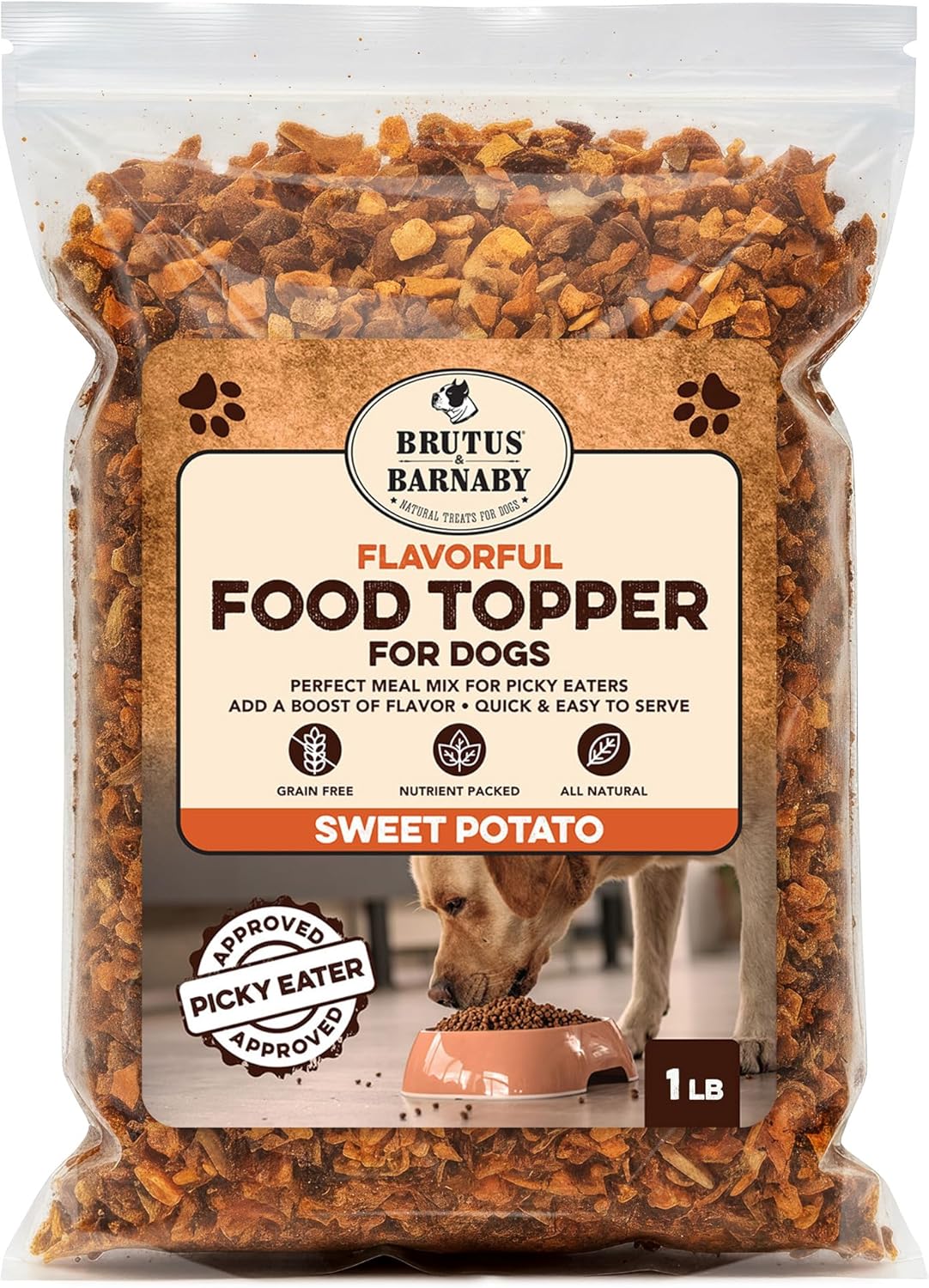
The current product page lists 100% North American sweet potato and describes the product as a meal enhancer. For more serving and usage context, see our Sweet Potato Dog Food Topper guide .
Shop Sweet Potato Dog Food TopperDogs That Need Extra Care With Food Toppers
A small dietary addition may require more thought when the dog has specific nutritional requirements.
Ask before making major changes when
Contact your veterinarian when
Do not use a topper to mask ongoing appetite loss: a highly appealing topper may encourage a dog to eat temporarily, but it does not explain why normal appetite changed. New, persistent or recurring refusal to eat deserves veterinary attention.
Dog Food Toppers and Meal Replacement
Can dog food toppers replace kibble?
A supplemental topper should not replace complete kibble simply because your dog prefers it. If the topper itself carries an appropriate complete-and-balanced nutritional adequacy statement, it may be capable of serving as primary food when fed according to its directions.
What if a food topper says “complete and balanced”?
Read the full nutritional adequacy statement and confirm which life stage it covers. A product genuinely formulated as complete and balanced is different from a supplemental topper, but it must still be fed in an appropriate amount.
Can I feed my dog only food topper for one meal?
If the product is intended only for supplemental feeding, it is better to use it with the dog’s normal complete food rather than turning it into a stand-alone meal. Ask your veterinarian if illness, appetite problems or another circumstance is making normal feeding difficult.
How much dog food topper is too much?
There is no universal spoonful amount. For supplemental toppers, a useful general guideline is to keep all treats and extras combined within about 10% of daily calories unless your veterinarian recommends another plan.
Can puppies have dog food toppers?
Some toppers can fit into a puppy’s diet, but growing dogs have specific nutritional requirements. Supplemental foods should not displace the complete growth diet. Ask your veterinarian about extras when a puppy has dietary restrictions or unusual growth or digestive concerns.
What if my dog refuses food unless I add a topper?
A consistent measured topper can be useful for a known picky eater, but avoid continually adding larger or richer extras after every refusal. Sudden, persistent or recurring appetite changes—or appetite changes accompanied by vomiting, diarrhea, weight loss, pain or lethargy—should be discussed with a veterinarian.
Use Dog Food Toppers to Enhance a Meal, Not Automatically Replace It
Can dog food toppers replace a meal? Most cannot. Unless the specific product is complete and balanced for your dog’s appropriate life stage—or your veterinarian has designed another feeding plan—a topper should remain a measured addition to the primary diet. Check the label, account for calories and keep nutritionally complete food at the center of the bowl.
Explore Dog Food ToppersEducational disclaimer: This article provides general educational information and is not veterinary, nutritional, diagnostic or emergency advice. Dogs differ in age, size, activity, health, calorie needs and ingredient tolerance. Review the current product label and nutritional adequacy statement before feeding. Contact your veterinarian before making substantial dietary changes for puppies, pregnant or nursing dogs, dogs eating prescription or elimination diets, or dogs with diagnosed medical conditions. Seek veterinary advice for persistent or recurring vomiting, diarrhea, appetite loss, unexplained weight change, weakness, pain or other concerning symptoms. Product ingredients, packaging, feeding directions, availability and formulations can change, so check the current product page and package before feeding.