



Best Dog Food Toppers for Picky Eaters: What to Add to Kibble
The best dog food topper for a picky eater adds enough aroma, flavor, texture, or moisture to make regular kibble more appealing without turning a supplemental extra into the main diet.
A dog that has always been selective about food is different from a dog that suddenly stops eating. Before treating a new appetite change as simple pickiness, consider whether pain, dental trouble, digestive illness, medication, stress, or another health problem could be involved.
The best dog food toppers for picky eaters are simple, palatable additions that match the individual dog's ingredient tolerance and calorie needs. Meat-based toppers can add a stronger savory aroma, plant-based toppers can add a different texture and flavor profile, and even a little warm water can change the smell and mouthfeel of dry kibble. Mix the topper through the meal rather than continually adding more when your dog refuses to eat. Unless your veterinarian has designed another plan, keep supplemental foods and treats within the dog's overall calorie allowance and do not let them replace a complete and balanced primary diet.
What Makes a Good Dog Food Topper for a Picky Eater?
A useful topper does more than make a bowl look interesting. It should solve a specific mealtime problem while remaining compatible with the dog's regular diet.
Think about why your dog is leaving the kibble before deciding what to add.
Before Adding a Topper, Make Sure It Is Really Pickiness
Veterinary guidance on picky eating emphasizes ruling out medical causes before assuming a dog is simply fussy. Dental pain, gastrointestinal problems and other illnesses can change appetite.
Your dog otherwise seems normal
The appetite change is new or concerning
Important: A stronger-smelling topper may convince a sick dog to take a few bites, but that does not identify or fix the reason appetite changed. Do not let a successful topper delay veterinary care when other warning signs are present.
Best Dog Food Toppers for Picky Eaters by Ingredient Style
Brutus & Barnaby currently offers both animal-protein and plant-based meal enhancers. There is no universal winner: the better option is the one that fits your dog's ingredient history, calorie needs and flavor preferences.
Do not choose by one number alone: guaranteed-analysis percentages and calories per ounce help compare products, but the actual amount served, your dog's daily energy needs, ingredient tolerance and the rest of the diet matter more than any single nutrient figure.
Two Simple Topper Formats to Start With
If you are unsure whether your dog responds better to a savory meat topper or a plant-based texture change, these two single-ingredient formats provide very different starting points.
Selection rule: choose a topper your dog can safely eat, use the smallest practical amount that makes the regular meal appealing, mix it through the kibble, and count it as part of the day's total food intake.
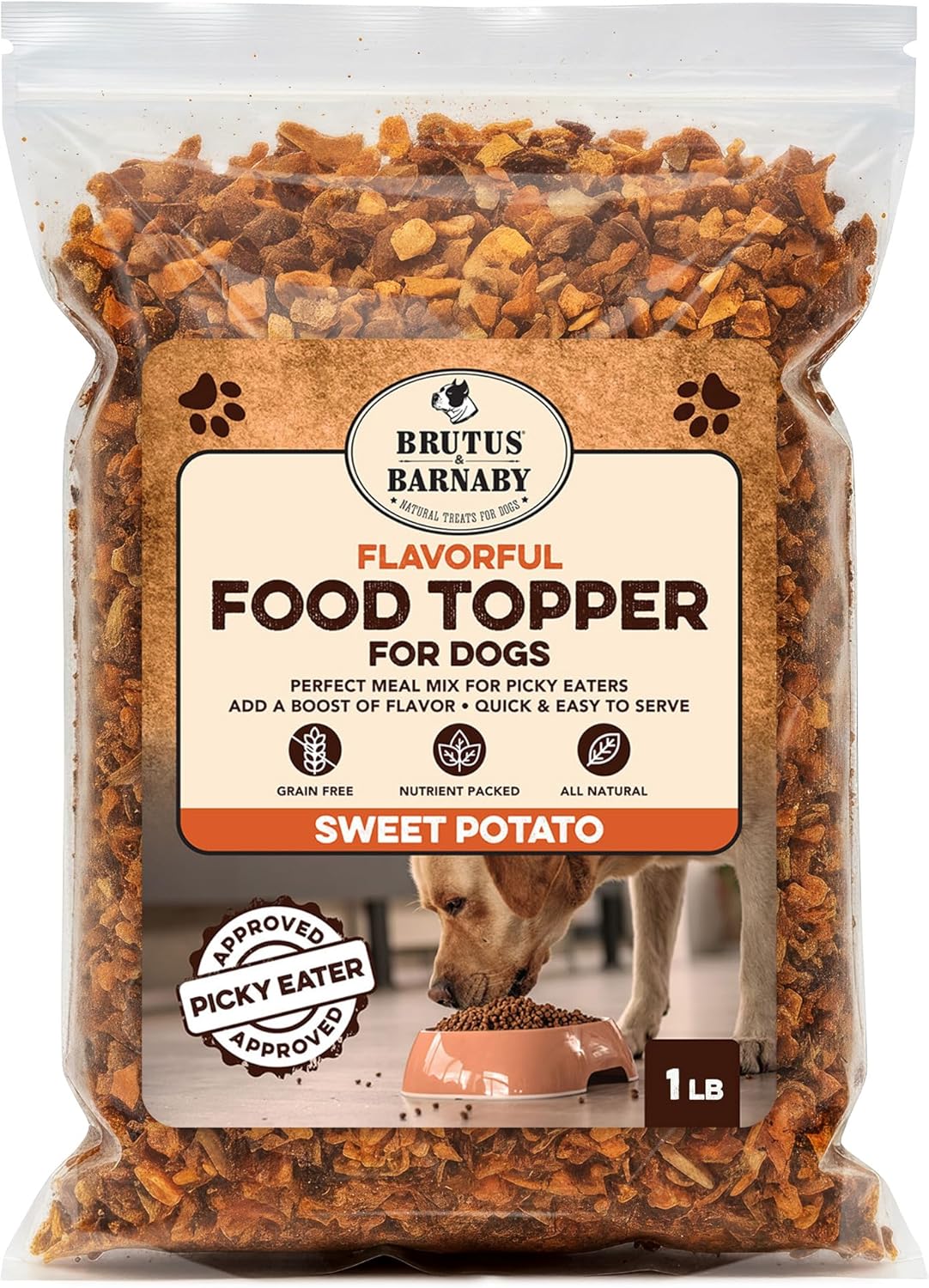
Sweet Potato Dog Food Topper
A finely diced sweet potato meal enhancer for owners who want to change the flavor and texture of kibble without adding an animal protein.

Pork Dog Food Topper
A pork-based meal enhancer for dogs that tolerate pork and respond to a more savory aroma over dry kibble.
More Brutus & Barnaby Topper Choices
Beef Liver Dog Food Topper
The current product page lists one ingredient—North American beef liver—and approximately 116.2 calories per ounce. It can be considered for dogs that already tolerate beef and are motivated by a strong meat aroma.
View Beef Liver Topper →Vegan Superfood Dog Food Topper
This formula lists sweet potato, blueberry, spinach and carrot. It offers a different plant-based flavor profile for dogs that tolerate all four ingredients.
View Vegan Topper →How to Add a Dog Food Topper to Kibble
The goal is to make the regular food more appealing—not to create a second meal sitting on top of the first.
How Much Dog Food Topper Should You Use?
There is no single spoonful amount that fits every dog. Body size, activity, calorie needs, the primary food and the topper's energy density all affect the answer.
Count toppers with every other extra
AAHA nutrition guidance recommends keeping additional foods such as treats, toppers, table foods and other extras at no more than about 10% of total daily calories so they do not dilute the nutrient balance of the primary diet. Your veterinarian may recommend a different plan for an individual dog.
For example, do not budget separately for a topper, training treats, chews and table scraps. They all contribute to the day's additional calories.
Can a Dog Food Topper Replace Kibble?
Not automatically. A product used as a meal enhancer is different from a food formulated to provide complete daily nutrition.
Look for nutritional adequacy
A dog food labeled with an appropriate “complete and balanced” nutritional adequacy statement is intended to supply the required nutrient profile for the stated life stage when fed as directed.
Treat it as a supplement to the meal
The Brutus & Barnaby topper directions describe these products as meal enhancers. They should not be assumed to provide every nutrient a dog needs as a stand-alone diet.
What Else Can You Add to Dog Kibble?
A commercial topper is not the only way to change a bowl. The safest choice still depends on your dog's regular diet, health history and known food tolerance.
Warm water
A little warm water can soften dry food, help a powdered topper coat the kibble and change the meal's aroma without adding another food ingredient.
Complete wet dog food
A measured amount of an appropriate complete and balanced wet food can change moisture and texture. Adjust the rest of the meal so you are not simply adding unplanned calories.
Plain tolerated foods
When your veterinarian agrees, a small amount of a plain food your dog already tolerates may work as an occasional mix-in. Keep seasoning, sauces and unsafe ingredients out.
What Not to Add to Kibble Just to Make a Dog Eat
A picky dog can make it tempting to reach for whatever smells strongest in the kitchen. That approach can introduce unsafe ingredients, excessive calories or a pattern where refusing dinner reliably earns richer food.
How to Avoid Teaching a Picky Dog to Hold Out for Better Food
A topper should make the planned meal work better. It should not become a negotiation that gets more elaborate every evening.
Better routine
Avoid this pattern
What About Dogs With Sensitive Stomachs or Food Allergies?
Do not assume that one topper is universally better for a sensitive dog. Ingredient simplicity can make the diet easier to track, but a one-ingredient topper is still unsuitable when that ingredient is something the dog cannot tolerate.
If your dog is on a prescription diet or a veterinarian-supervised elimination diet, ask before adding any topper. Even a small amount of another protein or food ingredient can interfere with a controlled diet trial.
Introduce one thing at a time: when testing a topper, keep the rest of the diet reasonably stable and monitor appetite, stool quality, vomiting, itching or other changes that might suggest poor tolerance.
More Help for Selective Eaters
Explore picky-eater treats, sweet potato feeding guidance and more ways to build a meal routine around your individual dog.
Helpful Nutrition & Picky-Eater Resources
Use these veterinary and regulatory resources to understand picky eating, supplemental calories, complete diets and foods that should stay out of your dog's bowl.
VCA Animal Hospitals — Feeding Canine Picky Eaters Why medical causes should be ruled out before a dog is labeled simply picky. AAHA — Nutrition & Weight Management Guidance Guidance on accounting for toppers, treats, table foods and other additional calories. FDA — “Complete and Balanced” Pet Food How nutritional adequacy statements distinguish a complete diet from treats, snacks and supplemental products. ASPCA — People Foods to Avoid Feeding Pets A reference for common foods and ingredients that should not be used as casual dog-food mix-ins.Dog Food Toppers for Picky Eaters: Common Questions
What is the best dog food topper for a picky eater?
The best topper is one your dog already tolerates, finds appealing and can eat in an appropriate portion. Meat-based toppers may provide stronger savory aroma, while sweet potato or mixed plant toppers provide a different flavor and texture. There is no single best ingredient for every dog.
What can I add to my dog's kibble to make them eat?
Options include a measured dog-food topper, a little warm water, or an appropriate portion of complete and balanced wet dog food. Avoid assuming that seasoned human leftovers or random pantry ingredients are safe additions.
Can I put a dog food topper on kibble every day?
A topper can be used routinely when the product directions allow it, your dog tolerates the ingredients and the amount fits the total diet. Supplemental toppers should not crowd out the nutritionally complete primary food.
How much topper should I put on dog food?
Follow the current product directions and account for your dog's body size, daily calorie needs and every other treat or extra. As a general nutrition guardrail, additional foods should normally remain within about 10% of total daily calories unless your veterinarian recommends otherwise.
Should I mix a dog food topper into the kibble or leave it on top?
Mixing it through the food is usually more practical for a picky eater because it spreads the aroma and flavor across the kibble and makes it harder to eat only the topper. Follow the exact product directions for the topper you use.
Which food topper is best for a dog with a sensitive stomach?
There is no universally safest topper for sensitive stomachs. Choose ingredients with a known history of tolerance, introduce one new product at a time and ask your veterinarian before adding anything to a prescription or elimination diet.
Why will my dog eat the topper but not the kibble?
Some dogs simply find the topper's smell or texture more rewarding, and some may learn to wait for preferred extras. However, a dog that suddenly avoids normal food while still accepting highly desirable treats may also have a medical or dental problem, so new or persistent appetite changes deserve veterinary attention.
Use a Topper to Improve the Meal—Not Replace It
The best dog food topper for a picky eater is a measured, well-tolerated addition that makes the regular kibble more appealing without becoming the bulk of the diet. Beef liver and pork provide single-ingredient meat options, sweet potato provides a single-ingredient plant option, and the vegan superfood topper combines four plant ingredients. Whichever you choose, mix it through the food, account for its calories, introduce new ingredients carefully and investigate sudden appetite changes instead of assuming your dog is simply being picky.
Explore Dog Food Toppers for Picky Eaters
Compare the current ingredient lists, nutrition information and feeding directions to find a topper that fits your dog's regular meal routine.
Educational disclaimer: This article provides general educational information and is not veterinary, nutritional, diagnostic, allergy, or emergency advice. Topper suitability depends on your dog's age, size, health history, regular diet, calorie needs, ingredient tolerance and any prescribed feeding plan. Contact your veterinarian about sudden or persistent appetite changes, vomiting, diarrhea, weight loss, pain, difficulty chewing, marked lethargy, or other concerning symptoms. Dogs on prescription or elimination diets should receive only foods approved by the veterinarian managing the diet. Product ingredients, guaranteed analysis, feeding directions, packaging, sizes and availability may change, so review the current product page and package before feeding.