



Are Bully Sticks Digestible? What Happens After Your Dog Chews One
Yes, bully sticks are digestible beef chews. But digestible does not mean that a dog should swallow a large piece whole. Here is what happens from chewing to digestion—and when a swallowed piece becomes a reason to call your veterinarian.
The important distinction is between digestibility and physical safety. A food can be digestible once it reaches the gastrointestinal tract while still creating a choking or obstruction concern if a dog swallows an oversized piece before chewing it adequately.
Yes. Bully sticks are considered highly digestible edible chews because they are made from beef tissue that a dog’s digestive system can break down. Chewing first softens and reduces the stick into smaller pieces. Digestion then continues in the stomach and intestines. However, a large swallowed chunk may not break down quickly enough to prevent choking or an intestinal blockage, which is why bully sticks should always be appropriately sized and supervised.
Why Are Bully Sticks Digestible?
Bully sticks are edible beef chews rather than pieces of manufactured plastic or traditional rawhide. Once swallowed in adequately chewed pieces, their animal protein can move through the same basic digestive processes used for other edible animal-based foods.
That is why the answer to “are bully sticks digestible?” is generally yes. It does not mean that every size of bully stick can be swallowed safely or that every dog will tolerate the same amount.
The material can be broken down
After chewing and swallowing, digestive processes can break the edible beef material down further so nutrients can be absorbed and remaining waste can continue through the gastrointestinal tract.
Any chunk can be swallowed safely
A large piece can become lodged before digestion has time to break it down. Digestibility therefore does not eliminate choking, obstruction, overeating, or digestive-upset concerns.
What Happens After Your Dog Chews a Bully Stick?
Digestion is a process rather than a single moment. How efficiently it happens depends partly on how thoroughly the bully stick was chewed before it was swallowed.
How Long Does a Bully Stick Take to Digest?
There is no reliable universal number of hours that applies to every bully stick and every dog. Digestive timing can vary with the dog, the amount consumed, the size of the swallowed pieces, the rest of the meal, gastrointestinal motility, and individual health.
For that reason, a statement such as “every bully stick completely dissolves in the stomach within X hours” is too simplistic. Bully sticks are digestible, but digestion may continue beyond the stomach and a large swallowed section can still create a mechanical problem before it has broken down sufficiently.
The more useful question: instead of trying to predict exactly how many hours a swallowed bully stick will take to digest, ask whether your dog adequately chewed it, how large the swallowed piece was relative to the dog, and whether any concerning symptoms are developing.
Digestible Does Not Mean Swallowable Whole
The biggest mistake is assuming that because a bully stick is digestible, the last few inches can safely be gulped. A dog’s digestive enzymes cannot protect against a piece that first becomes lodged in the throat, esophagus, stomach outlet, or intestinal tract.
Small, well-chewed pieces
These expose more surface area to normal digestion and are less likely to create the same mechanical issue as a large swallowed section.
A large gulped chunk
A substantial piece may travel through the digestive tract before it has broken down enough, particularly when the dog swallowed it with minimal chewing.
Choking or obstruction signs
Breathing trouble, repeated vomiting, significant abdominal pain, marked lethargy, or other serious symptoms require veterinary attention.
What If Your Dog Swallowed a Large Piece?
Risk depends on the size and shape of the piece, the size of your dog, and how your dog is acting. A tiny softened fragment in a large dog is a very different situation from a several-inch section swallowed by a small dog.
Contact your veterinarian promptly if you notice
Seek emergency veterinary care for
Do not induce vomiting unless a veterinarian specifically instructs you to. If you know your dog swallowed a particularly large piece, contacting your veterinarian for individualized advice is safer than relying only on the fact that bully sticks are digestible.
Bully Sticks vs. Rawhide: Digestibility Is a Major Difference
Bully sticks and rawhide can both provide extended chewing time, but they are not the same material. Bully sticks are edible beef tissue, while traditional rawhide is made from processed animal hide and is generally harder for dogs to digest.
Important: greater digestibility is an advantage, but it should never be interpreted as permission to allow a dog to gulp the final section of a bully stick.
How to Make Bully Stick Chewing Easier to Manage
Good digestion starts with a sensible chew routine. The goal is to encourage deliberate chewing rather than rapid consumption.
Can Bully Sticks Upset a Dog’s Stomach Even Though They Are Digestible?
Yes. Digestibility and digestive tolerance are different things. A dog may be able to digest beef normally but still develop loose stool or vomiting after eating too much of a new chew at once.
A Single-Ingredient Bully Stick for Supervised Chew Time
If your dog already tolerates beef, Brutus & Barnaby’s current Natural Bully Sticks provide a straightforward beef-based option. As with every edible chew, selecting the right size and removing the final swallowable portion remain essential.
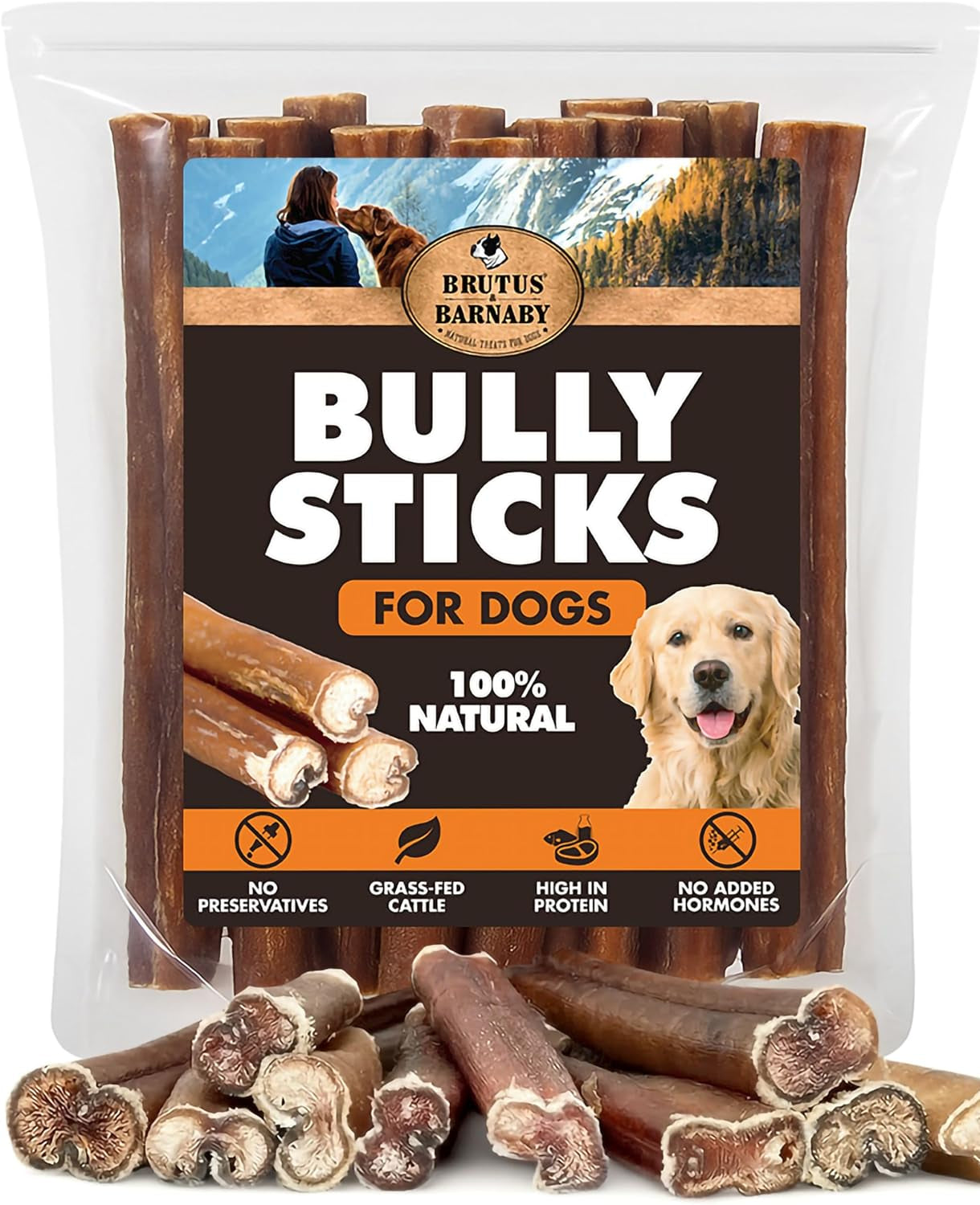
Natural Bully Sticks — 6 Inch
A six-inch beef chew for supervised sessions with dogs that tolerate beef and safely gnaw rather than gulp large pieces.
6-Inch vs. 12-Inch Bully Sticks: Does Length Affect Digestion?
Length does not change the basic fact that the chew is made from digestible beef. Its practical value is portion control and handling. A larger format may give an owner more material to hold, monitor, or remove before the final portion becomes small enough to gulp.
Sizing principle: longer does not automatically mean safer. Match the chew to the individual dog’s mouth size, chewing strength, experience, and tendency to gulp.
Remember That a Bully Stick Is Also a Treat
It is easy to think of a long-lasting chew mainly as entertainment, but anything your dog consumes contributes calories to the daily diet.
Count the amount actually consumed
General veterinary nutrition guidance commonly uses an allowance of up to about 10% of daily calories for treats and extras. The appropriate amount for an individual dog can be lower depending on body condition, medical history, and the main diet.
Brutus & Barnaby’s current 6-inch and 12-inch bully-stick pages list approximately 99.2 calories per ounce. Because natural chews can vary in weight, calories per ounce should not be confused with a guaranteed calorie count for every individual stick.
Build a Safer Bully Stick Routine
Continue with guides covering chew-session length, the final swallowable piece, rawhide comparisons, and different bully-stick formats.
Helpful External Resources
These resources provide additional context about bully-stick digestibility, normal digestion, swallowed foreign material, and treat-calorie management.
American Kennel Club — Bully Sticks for Dogs An overview of bully sticks, digestibility, chew formats, and practical use. VCA Animal Hospitals — Ingestion of Foreign Bodies in Dogs Veterinary information about intestinal obstruction signs, diagnosis, and why swallowed objects require attention. Merck Veterinary Manual — The Digestive System in Animals Background on gastrointestinal digestion, motility, secretions, and digestive-system function. AAHA — Weight Management Guidelines Veterinary guidance that includes accounting for treats within the daily calorie allowance.Bully Stick Digestibility: Common Questions
Are bully sticks fully digestible for dogs?
Bully sticks are generally considered highly digestible edible beef chews. Their protein can be broken down during normal digestion. However, digestible does not mean a dog can safely swallow any size piece whole.
Do bully sticks dissolve in a dog’s stomach?
It is more accurate to say they are digested rather than simply “dissolved.” Chewing reduces the material first, the stomach begins further breakdown, and digestion and absorption continue in the intestines.
What happens if my dog swallows the end of a bully stick?
A small, well-softened piece may be digested normally, but a large swallowed end can create a choking or obstruction concern. The risk depends on your dog and the size of the piece. Contact your veterinarian if you are concerned, particularly if the piece was large or symptoms develop.
How long does it take a dog to digest a bully stick?
There is no single reliable digestion time for every dog. Timing varies with the dog, amount eaten, size of the swallowed pieces, gastrointestinal function, and other foods consumed. Avoid relying on a fixed number of hours after a large piece has been swallowed.
Can bully sticks cause diarrhea even though they are digestible?
Yes. Some dogs can develop digestive upset after consuming too much of a new chew, eating it rapidly, or eating a protein that does not agree with them. Introduce new chews gradually and stop feeding them if digestive problems repeatedly occur.
Are bully sticks more digestible than rawhide?
Generally, yes. Bully sticks are edible beef chews and are considered highly digestible, while traditional rawhide can be more difficult for dogs to digest. Both still require supervision because swallowing an oversized piece can create a mechanical problem.
Should I let my dog eat an entire bully stick?
Not automatically. How much your dog should consume depends on body size, calorie needs, digestive tolerance, and chewing style. Most importantly, remove the remaining end before it becomes small enough for your dog to gulp whole.
When should I take a bully stick away?
Remove it when the remaining piece becomes small enough to swallow whole, very slippery, difficult for you to retrieve safely, or when your dog starts trying to gulp rather than gnaw. Stop the session sooner if chewing causes discomfort or digestive upset.
Yes, Bully Sticks Are Digestible—But Size and Chewing Still Matter
Bully sticks are digestible beef chews. After your dog gnaws and swallows the material, digestion continues through the stomach and intestines much like other edible animal-based foods. The key safety distinction is that digestibility does not make a large swallowed piece harmless. Choose an appropriate size, supervise every session, remove the final gulpable portion, account for treat calories, and contact a veterinarian when a swallowed piece or new symptoms raise concern.
Choose a Bully Stick That Fits Your Dog’s Chewing Style
Compare current sizes, ingredients, nutrition information, pack options, feeding instructions, and availability before selecting a chew.
Educational disclaimer: This article provides general educational information and is not veterinary, nutritional, diagnostic, or emergency advice. Bully-stick suitability depends on your dog’s age, size, chewing behavior, oral health, digestive tolerance, medical history, regular diet, calorie needs, and ability to manage the chew safely. Always supervise edible chews, provide fresh water, remove pieces before they become small enough to swallow whole, and contact your veterinarian when a large piece has been swallowed or concerning symptoms occur. Seek emergency veterinary care for choking, difficulty breathing, collapse, or other severe symptoms. Product ingredients, nutrition information, sizes, packaging, availability, and page information may change, so review the current product page and package before feeding.