



The Last Inch Problem: What to Do When Your Dog Swallows the End of a Chew
The final piece of a bully stick, collagen stick, cow ear, or long-lasting chew can be the part dogs are most likely to gulp. Here is how to prevent the “last inch problem” and make chew time safer.
Many dogs chew calmly for 20 minutes, then suddenly try to swallow the final little piece whole. That “last inch” is where a normal chew session can become risky.
Quick answer: if your dog swallows the end of a chew, stay calm, monitor closely, and call your veterinarian if you notice choking, repeated vomiting, pain, bloating, lethargy, loss of appetite, or trouble passing stool. Going forward, remove edible chews before they become small enough to swallow whole.
Why the Last Piece of a Chew Is the Risky Part
A full-size chew is usually easier to manage because your dog has to hold it, gnaw it, and work on it slowly. But once that chew becomes short, slippery, softened, or small enough to fit fully in your dog’s mouth, some dogs switch from chewing to gulping.
This can happen with bully sticks, collagen sticks, beef cheek rolls, cow ears, pig ears, dental chews, and other edible chews. It does not mean the chew is “bad.” It means the final piece needs management.
The safest routine is simple: choose a chew that is large enough for your dog, supervise the session, and remove the chew before the last piece becomes a swallowable chunk.
What to Do If Your Dog Swallows the End of a Chew
If your dog swallowed the last piece, your next step depends on your dog’s size, the size of the piece, the type of chew, and how your dog is acting. This guide is educational, not a replacement for veterinary care.
Check Your Dog Immediately
Look for coughing, gagging, pawing at the mouth, drooling, panic, breathing trouble, or repeated attempts to vomit. These signs need urgent attention.
Do Not Force Anything
Do not stick your fingers deep into your dog’s mouth unless you can clearly and safely remove a visible object. Do not induce vomiting unless a veterinarian tells you to.
Monitor Over the Next 24–48 Hours
Watch appetite, energy, bathroom habits, vomiting, belly discomfort, and stool changes. Call your vet if anything looks off.
Prevent the Next One
The real fix is prevention: remove chews earlier, size up when needed, supervise more closely, and use smaller treats for quick rewards.
Important: call your veterinarian or an emergency clinic right away if your dog is choking, struggling to breathe, repeatedly vomiting, acting painful, becoming lethargic, refusing food, or showing a swollen or tense belly.
Is Your Dog a Gulper, Gnawer, or Shredder?
Dogs do not chew the same way. Knowing your dog’s chewing style helps you choose better chews and decide when to take the last piece away.
How to Prevent the Last Inch Problem
You do not have to stop giving chews altogether. The goal is to build a routine where the last piece never becomes a surprise.
1. Size Up When Needed
A chew should not be so small that your dog can fit the entire thing in their mouth at the start.
2. Remove It Before It Gets Tiny
Do not wait until there is only a little nub left. Take it away while it is still easy to grab and trade.
3. Use a Calm Chew Spot
Dogs are more likely to gulp when they feel rushed, excited, or worried another pet may take their chew.
4. Practice Trade-Up
Teach your dog that giving up a chew predicts something good, like a training treat or another reward.
Pro tip: set a “chew check” timer. If your dog tends to gulp the last piece, check the chew every 5–10 minutes and remove it before it becomes small.
Better Chew Choices for Dogs Who Swallow the Last Piece
The right chew depends on your dog’s size, chewing style, and how quickly they try to gulp the end. Use these options as part of a supervised routine.

Bully Sticks
A high-value, rawhide-free chew for dogs who enjoy focused chew time. Choose the right thickness and remove the final piece early.
- Rawhide-free chew option
- Great for supervised chew sessions
- Choose size based on dog and chewing style
- Remove before the last piece becomes small

Beef Cheek Rolls
A more substantial rawhide-free chew for dogs who need more engagement than a quick snack can provide.
- Great for longer downtime
- Useful for strong chewers
- Rawhide-free option
- Best with close supervision
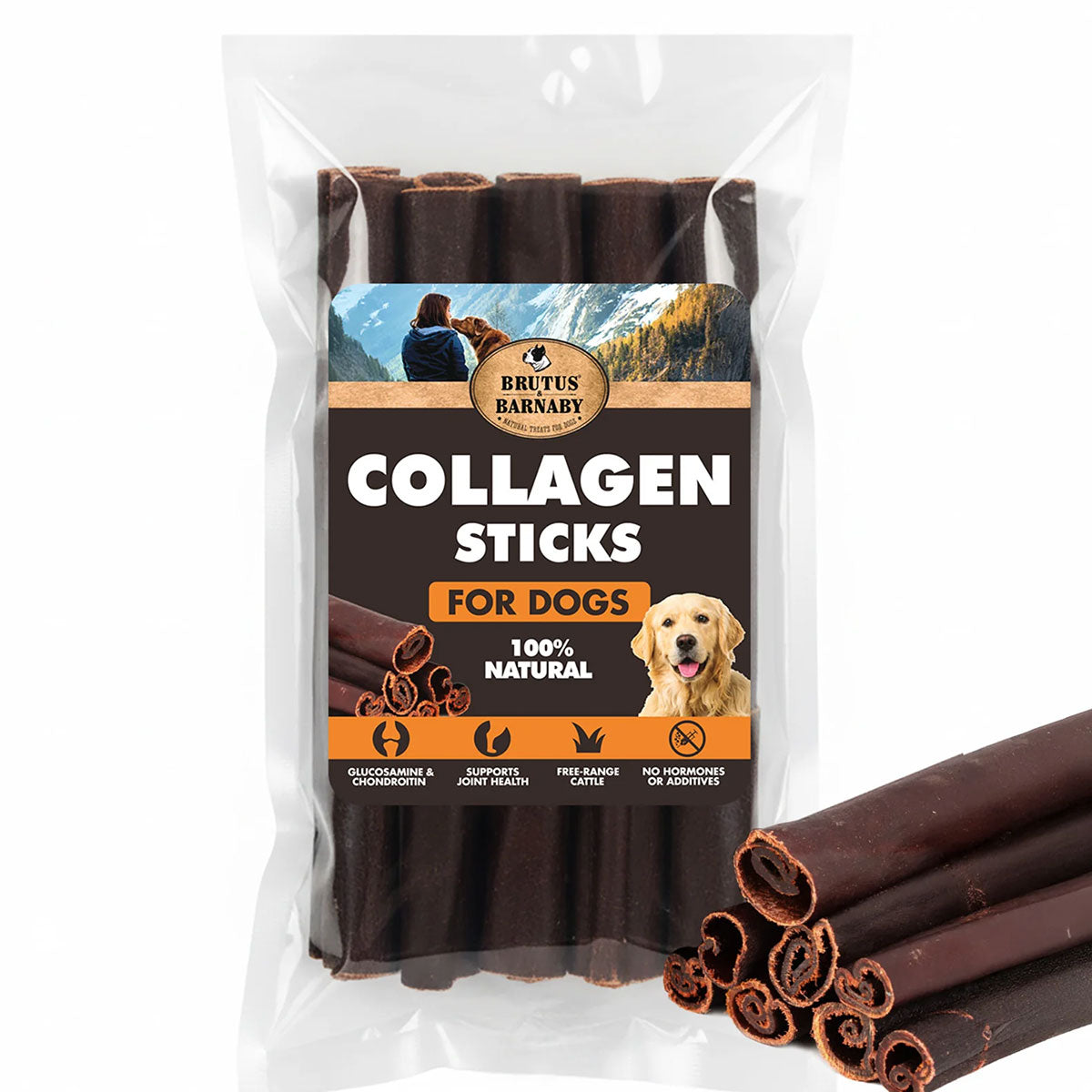
Beef Collagen Sticks
A satisfying chew to rotate with bully sticks when your dog enjoys beef-based chews and needs variety.
- Great for chew rotation
- Rawhide-free option
- Useful for supervised sessions
- Remove small end pieces

Training Treats
Small treats are helpful for teaching your dog to trade the chew before the final piece gets too small.
- Great for trade-up practice
- Easy to portion
- Useful for recall and manners
- Better for quick rewards than chew ends
Keep Learning Before Your Next Chew Session
Pair this guide with related Brutus & Barnaby products and credible veterinary resources. Internal links help you build a better chew routine, while external sources give extra safety context around sizing, supervision, and swallowed pieces.
Related Brutus & Barnaby Links
Trusted Veterinary Resources
Frequently Asked Questions
Make the Last Piece the Safest Part
Brutus & Barnaby chews are made for satisfying, supervised chew time. Choose the right size, watch your dog’s chewing style, and remove the chew before the final piece becomes small enough to swallow.
Shop Rawhide-Free Dog ChewsEducational disclaimer: This article is for general education only and is not veterinary advice. Every dog chews differently. Always supervise edible chew sessions, remove small pieces, and contact your veterinarian if your dog swallows a chew piece and shows choking, vomiting, pain, lethargy, appetite loss, bloating, stool changes, or any unusual symptoms.