



Beef Liver vs. Sweet Potato Dog Food Toppers
Beef liver and sweet potato toppers can both add flavor and variety to a dog's regular meal, but their nutritional profiles are very different. Beef liver is a protein-rich animal ingredient, while sweet potato provides a plant-based, higher-fiber alternative with less fat and fewer calories per ounce.
There is no universal winner in the beef liver vs. sweet potato dog food toppers comparison. The better choice depends on your dog's usual diet, ingredient tolerance, calorie needs and the reason you are adding a topper.
Choose beef liver when you want a meat-based topper with substantially more protein and a strong savory profile. Choose sweet potato when you prefer a plant-based topper with more fiber, much less fat and fewer calories per ounce. Whichever you choose, introduce it gradually, measure the amount and keep it supplemental to a complete diet.
Beef Liver vs. Sweet Potato Dog Food Toppers: Key Differences
The current Brutus & Barnaby product information shows a clear nutritional difference between the two toppers. That does not automatically make one healthier for every dog; it simply gives you useful information for matching the topper to the rest of the diet.
Keep the numbers in context: guaranteed-analysis percentages describe the individual product. They do not mean the topper is a nutritionally complete meal, and the actual amount served matters when comparing calories or nutrients.
What Does a Beef Liver Dog Food Topper Offer?
A beef liver topper provides a concentrated savory ingredient that can change the aroma and flavor of ordinary kibble without requiring a completely different meal. For dogs that already tolerate beef, it can be a simple way to add variety.
Much higher in protein
At 63.5% crude protein, the beef liver topper has a much more protein-dense profile than the sweet potato option.
Savory aroma and flavor
A meat-based topper may be useful when the goal is to make familiar food smell and taste more interesting to a selective eater.
More fat and calories
It contains more crude fat and more calories per ounce than the sweet potato topper, so measured portions matter.
Liver is a nutrient-dense food, but more is not automatically better. The Merck Veterinary Manual discusses nutritional problems associated with diets made up excessively or exclusively of liver. A liver topper should therefore remain a measured addition to an appropriate primary diet rather than becoming the meal itself.
What Does a Sweet Potato Dog Food Topper Offer?
Sweet potato creates a very different topper. It is plant-based, contains substantially more crude fiber than the beef liver option and has less fat and fewer calories per ounce according to the current product information.
Plant-based alternative
The product lists North American sweet potato as its single ingredient, making the ingredient source straightforward to identify.
More crude fiber
The sweet potato topper lists 5.4% crude fiber compared with 0.8% in the beef liver topper.
Lighter nutritional profile
Per the current label information, it is lower in both fat and calories per ounce than the beef liver option.
Fiber is not automatically better in larger amounts. A sudden increase can change stool consistency or cause digestive discomfort in some dogs. For a deeper look at this ingredient, see our sweet potato dog food topper guide and our guide to how much sweet potato dogs can have.
Which Topper Is Better for Your Dog?
Instead of asking which ingredient is universally healthier, start with what you want the topper to accomplish and which ingredients your dog already handles well.
When a savory, protein-forward topper fits
- Your dog already eats and tolerates beef
- You want a strong meat-based aroma over kibble
- A higher-protein topper fits the overall diet
- You are comfortable accounting for its higher fat and calorie content
When a plant-based, fiber-forward topper fits
- You prefer a topper without animal protein
- Sweet potato is already familiar to your dog
- You want the lower-fat option of these two products
- You want more fiber while still keeping portions controlled
For a therapeutic or restricted diet: do not choose a topper based only on protein, fat or fiber percentages. Dogs on prescription, elimination, weight-management or medically restricted diets should have additions approved by their veterinarian.
What About Picky Eaters and Sensitive Dogs?
For a picky dog, aroma and familiarity often matter as much as the ingredient category. Beef liver delivers a strong meat-based flavor, while sweet potato changes the bowl with a different aroma and texture. Our guide to the best dog food toppers for picky eaters explains how toppers can be used without continually escalating what you add to the bowl.
For a dog with a history of food sensitivity, choose based on known tolerance rather than assuming one ingredient is universally easier to digest. A single-ingredient product can make the response easier to evaluate, but neither beef liver nor sweet potato is guaranteed to agree with every dog.
Important: persistent appetite loss should not simply be covered with increasingly tempting toppers. Reduced appetite can have many causes. Contact your veterinarian when it persists, recurs or occurs alongside vomiting, diarrhea, pain, lethargy or other concerning changes.
How to Introduce Either Food Topper Safely
Even a simple topper changes the meal. A controlled introduction helps you judge tolerance without confusing the result with several other new foods.
You can review the UC Davis School of Veterinary Medicine treat guidelines for more information on fitting supplemental foods into a dog's overall calorie intake.
Compare the Two Brutus & Barnaby Food Toppers
Both options are designed as meal enhancers. Choose according to the ingredient your dog tolerates, the nutritional profile that fits the rest of the diet and the flavor your dog prefers.
Beef Liver Dog Food Topper | High-Protein Meal Enhancer for Dogs

A single-ingredient beef liver meal enhancer with a protein-forward profile and savory flavor. Measure the serving and account for its calories within the complete daily diet.
Shop Beef Liver Dog Food TopperSweet Potato Dog Food Topper | High-Fiber Meal Enhancer for Dogs
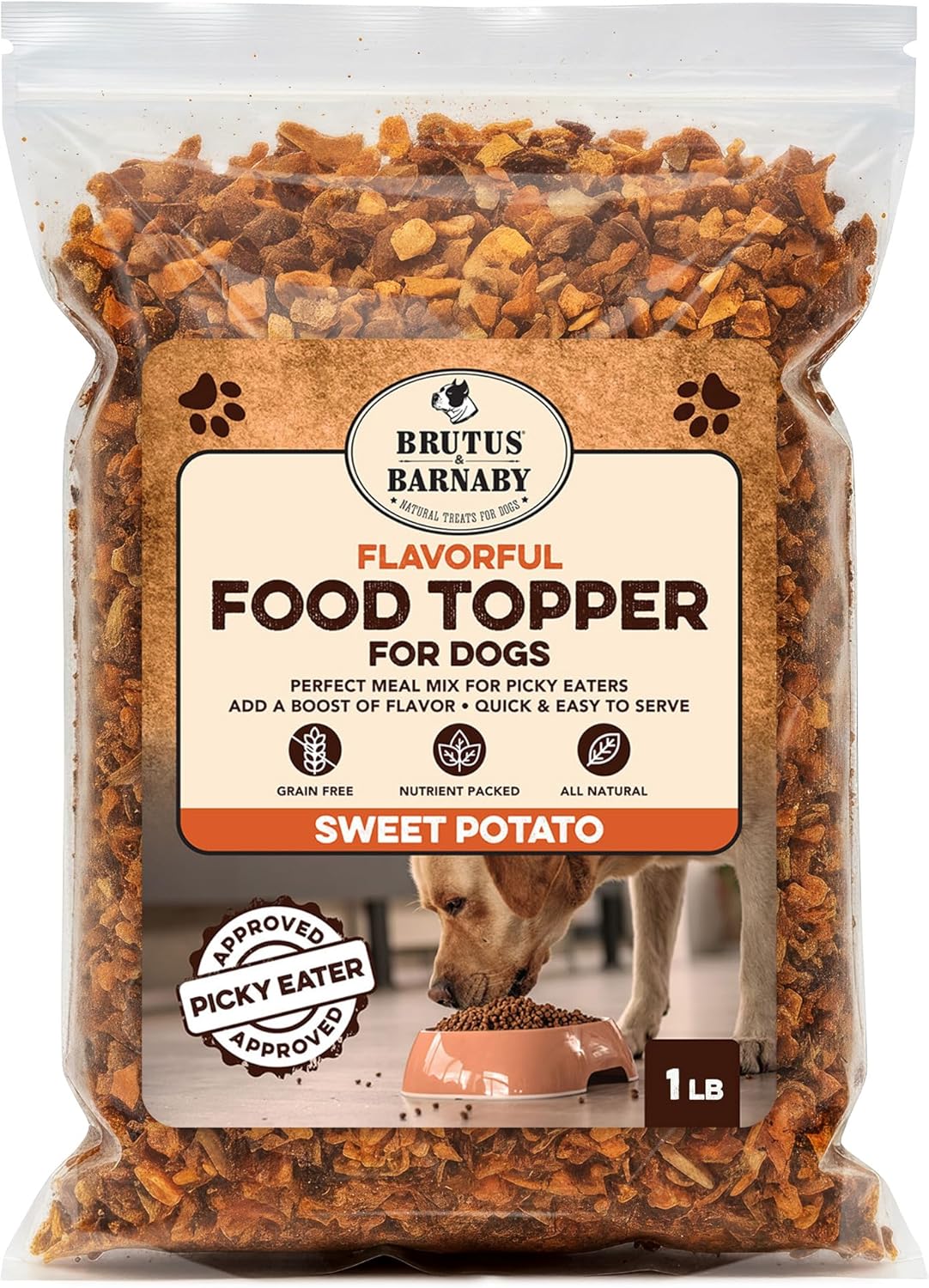
A single-ingredient sweet potato meal enhancer with more crude fiber, much less fat and fewer calories per ounce than the beef liver topper.
Shop Sweet Potato Dog Food TopperCan Either Topper Replace Your Dog's Regular Food?
No. A meal topper should not replace a complete diet unless a product is specifically labeled as complete and balanced for the dog's life stage and is fed accordingly. The FDA explains the importance of “complete and balanced” pet food labeling when identifying foods intended to provide a dog's full nutritional requirements.
This matters especially for puppies, pregnant or nursing dogs and dogs with medical or nutritional restrictions. A topper can add flavor and variety, but it should not crowd out the food that supplies the dog's complete daily nutrition.
Storage, Handling and Signs to Watch
Use a clean, dry utensil when measuring a topper, reseal the package after use and follow the current storage instructions on the product label. The FDA's pet food and treat handling guidance also recommends clean hands, clean feeding utensils and appropriate storage.
For additional practical storage tips, see our guide on how to store dog treats and chews.
Continue monitoring when
Stop and reassess when
Contact your veterinarian when symptoms are severe, persistent, recurring or otherwise concerning. Facial swelling, difficulty breathing, collapse, repeated vomiting, significant pain or bloody diarrhea require prompt veterinary attention.
Beef Liver vs. Sweet Potato Dog Food Toppers
Is beef liver or sweet potato topper better for picky dogs?
Either may help make a familiar meal more interesting. Beef liver provides a strong savory meat aroma, while sweet potato offers a different plant-based flavor and texture. Start with an ingredient your dog already tolerates.
Which topper is lower in calories and fat?
According to the current Brutus & Barnaby product information, the sweet potato topper is lower in both: 92.7 calories per ounce and 0.3% crude fat versus 116.2 calories per ounce and 13.9% crude fat for beef liver.
Which topper has more protein?
The beef liver topper. Its current guaranteed analysis lists 63.5% crude protein compared with 5.2% for the sweet potato topper.
Can dogs with food sensitivities have these toppers?
Possibly, but tolerance is individual. A dog that reacts to beef should not receive a beef liver topper. A dog that does not tolerate sweet potato should avoid the sweet potato option. Ask your veterinarian about additions to an elimination or medically restricted diet.
Can I rotate between beef liver and sweet potato toppers?
You can rotate products if your dog tolerates both, but introduce each one separately first. Changing several ingredients at once makes it harder to identify the cause if digestive or skin symptoms appear.
Can a dog food topper replace a complete meal?
Not unless the product is specifically formulated and labeled as complete and balanced for the dog's life stage. These toppers are intended to enhance a regular meal, not replace the primary diet.
Choose the Topper That Fits the Rest of the Diet
When comparing beef liver vs. sweet potato dog food toppers, beef liver is the more protein-dense, richer and more calorie-dense choice, while sweet potato supplies more fiber with less fat and fewer calories per ounce. Neither is automatically better for every dog. Match the topper to your dog's ingredient tolerance and overall diet, introduce it gradually and keep portions measured. When dietary restrictions, recurring digestive symptoms or medical conditions are involved, ask your veterinarian which additions are appropriate.
Educational disclaimer: This article provides general educational information and is not veterinary, nutritional, diagnostic or emergency advice. Dogs differ in size, age, health, dietary needs and ingredient tolerance. Review the current product label, introduce new foods gradually, measure portions and provide fresh water. Contact your veterinarian if your dog experiences persistent diarrhea, vomiting, appetite loss, skin reactions or other concerning symptoms. Product ingredients, nutritional information, packaging, availability and feeding directions can change, so check the current product page and package before feeding.