



Looking for easy dog food topper ideas without changing your dog's entire diet? Try a little plain cooked vegetable, a measured dog-friendly meat addition, an appropriate wet food, or a ready-made food topper. The goal is to introduce enjoyable flavors and textures while keeping your dog's regular, nutritionally complete meals at the center of the bowl.
Good dog food topper ideas include plain cooked sweet potato, unseasoned chicken, small amounts of cooked carrots, suitable wet dog food, and commercial meal-enhancing toppers. Choose one addition your dog can tolerate, prepare it safely, and use a measured portion. Varying the flavor, texture, or presentation can make familiar meals feel different without constantly replacing the main food.
Why Add Variety to Your Dog's Regular Meals?
Dogs do not necessarily need a different menu every day. A complete and balanced dog food can provide appropriate daily nutrition when selected and fed for the dog's life stage and needs. Still, some owners enjoy adding an occasional finishing ingredient, particularly when their dog responds enthusiastically to different aromas or textures.
The most useful topper is not always the most elaborate. Sometimes changing how a meal feels or smells is enough to create a new eating experience.
Introduce something different
A small amount of a dog-appropriate meat or vegetable can contribute another flavor without completely changing the meal.
Change the mouthfeel
Soft vegetables, finely diced ingredients, and moist additions create different textures when combined with kibble.
Keep preparation manageable
Ready-to-use toppers let owners add variety without cooking an entirely separate meal.
Variety is optional, not a nutritional requirement. The FDA's guidance on complete and balanced pet food explains why an appropriate complete diet should remain the foundation rather than being displaced by treats or supplemental additions.
8 Easy Dog Food Topper Ideas to Try
These ideas focus on ingredients and formats that are relatively straightforward to prepare or serve. They are examples rather than a universal feeding menu. Check your dog's restrictions, the current food label, and appropriate portions before adding anything unfamiliar.
1. Plain cooked sweet potato
Cooked sweet potato adds a soft texture and naturally mild flavor. Wash it, cook it thoroughly, remove the skin if needed for easier preparation, and serve it plain in a suitable mashed or finely chopped form. Avoid butter, sugar, salt, and seasoning. Let it cool before mixing it into food.
If peeling, cooking, and mashing sweet potatoes every time sounds inconvenient, a ready-made sweet potato topper may provide an easier way to introduce the ingredient.
2. Plain cooked chicken
Fully cooked, unseasoned, boneless chicken can be shredded into appropriately sized pieces and distributed through the regular meal. Remove bones and avoid onion, garlic, rich sauces, and heavily seasoned preparations. Chicken is not suitable for dogs with a known chicken intolerance or allergy.
3. Soft cooked carrots
Plain steamed or boiled carrots can provide another vegetable-based texture. Let them cool, then finely chop or mash them so the pieces are appropriate for your dog's size and eating ability. Larger hard pieces can create chewing or choking concerns, particularly for dogs that gulp food.
4. Plain pumpkin puree
Plain cooked pumpkin or unsweetened 100% pumpkin puree is another possible addition. Make sure it is not pumpkin pie filling, which may contain sugar, spices, or other unsuitable ingredients. Start conservatively, as introducing a substantial amount of a fiber-containing food can change stool consistency.
5. Fully cooked egg
A small amount of thoroughly cooked egg can offer a different taste and texture. Serve it without added butter, salt, oils, or seasoning. Egg contributes calories and is unsuitable for dogs with egg-related dietary restrictions. Avoid assuming that a human-sized serving is appropriate for your dog.
6. An appropriate wet dog food
Mixing some canned food into kibble can create a softer, more aromatic meal. Choose a product appropriate for your dog's life stage and dietary needs. When combining two complete and balanced foods, adjust the amounts according to their calorie content instead of simply adding a full serving of each.
7. A dog-specific savory topper
Commercial meat-based toppers can be helpful when owners want an easy finishing ingredient. Beef liver and pork-based products, for example, introduce different animal-protein flavors. Review their individual labels rather than assuming all meat toppers have equivalent ingredients, richness, or feeding directions.
8. A plant-based food topper blend
Some meal enhancers combine multiple plant ingredients. These can create a more varied ingredient profile than a single-vegetable addition. Check every component, especially if your dog has dietary restrictions or is participating in a veterinarian-supervised food trial.
Compare These Dog Food Topper Ideas
There is no single best option for every dog. Use this comparison to identify which preparation style fits your routine and what to consider before serving it.
| Topper Idea | Meal Variety | Preparation | Important Consideration |
|---|---|---|---|
| Cooked sweet potato | Soft vegetable texture | Cook, cool, mash | Keep plain and measure the portion |
| Cooked chicken | Savory shredded pieces | Cook fully and debone | Avoid seasoning and known protein allergens |
| Cooked carrots | Mild vegetable flavor | Steam, cool, chop | Use appropriately sized pieces |
| Plain pumpkin | Smooth, moist texture | Use plain cooked puree | Avoid sweetened pie filling |
| Cooked egg | Soft, savory addition | Cook thoroughly | Count calories and check egg tolerance |
| Wet dog food | Moist coating | Measure and mix | Check nutritional adequacy and calories |
| Ready-made topper | Convenient flavor or texture | Follow package directions | Review ingredient list and feeding amount |
How to Create Variety Without Changing the Entire Diet
A useful approach is to keep the primary food predictable and change only the finishing ingredient occasionally. This makes it easier to recognize how your dog responds to each addition.
- Begin with the normal meal. Measure your dog's regular complete and balanced food using the established feeding plan.
- Select one suitable addition. Consider foods your dog already tolerates before introducing a completely new ingredient.
- Prepare an appropriate portion. Use safe cooking methods, follow product directions, and account for the addition's calories.
- Distribute the topper. Sprinkle, crumble, mash, or mix it through the meal according to its texture and feeding instructions.
- Observe your dog's response. Notice acceptance, stool changes, vomiting, itching, or unusual behavior before deciding whether to use the ingredient again.
There is no need to introduce something new at every meal. A simple rotation between familiar, well-tolerated toppings may be easier to manage than a continuously changing assortment.
Keep new additions gradual. If several new ingredients are introduced at once, it becomes more difficult to identify which one may have caused an unwanted response.
How Much Topper Should You Add to Dog Food?
There is no universal tablespoon measurement for every dog food topper. The appropriate amount depends on the individual dog, the topper's calorie density, the primary food, and what else the dog receives throughout the day.
The American Animal Hospital Association's nutrition guidance recommends keeping treats and other additional foods, including toppers, within about 10% of daily calories for most dogs, unless their veterinarian recommends otherwise.
That allowance is shared. Training rewards, edible chews, table-food extras, and supplemental toppers all contribute to it. A separate allowance should not be created for each addition.
For a more detailed method, see our dog food topper portion guide, which explains how to account for different products and the rest of your dog's daily intake.
Ready-Made Food Toppers for Everyday Variety
Ready-made food toppers offer an alternative to preparing fresh additions every time. Brutus & Barnaby has several options with distinct ingredient profiles. These are intended to enhance an existing meal rather than automatically replace a nutritionally complete dog food.
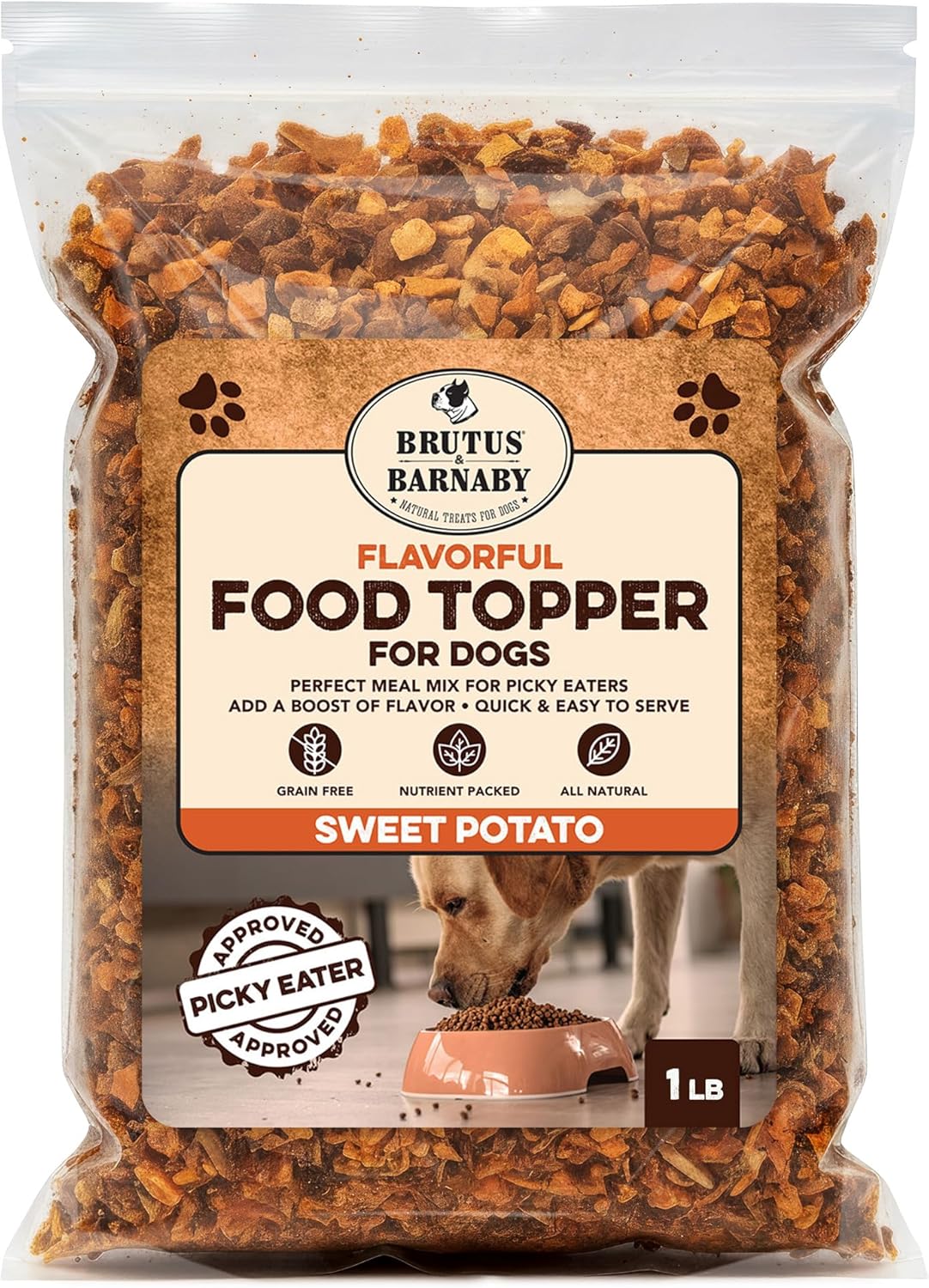
Sweet Potato Dog Food Topper | High-Fiber Meal Enhancer for Dogs
Shop Sweet Potato Dog Food Topper
Beef Liver Dog Food Topper | High-Protein Meal Enhancer for Dogs
Shop Beef Liver Dog Food Topper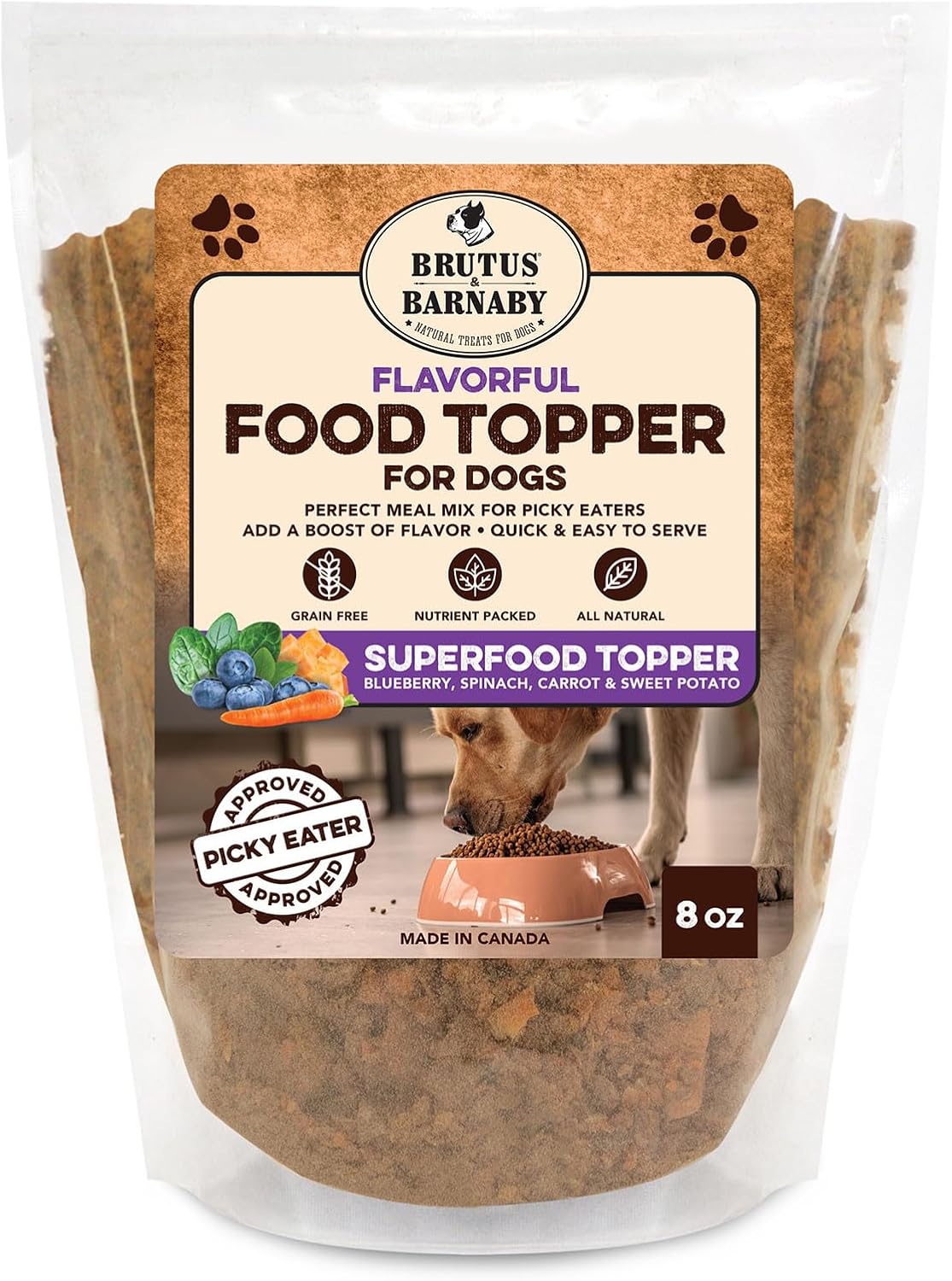
Vegan Dog Food Topper | Meal Enhancer for Picky Eaters
Shop Vegan Dog Food TopperShould You Rotate Dog Food Toppers Every Day?
Daily rotation is not necessary. Some dogs do well with occasional changes, while others have a more predictable feeding routine when the ingredients stay consistent.
You might use a familiar vegetable addition on one occasion and a measured commercial topper another day, provided each suits your dog's diet. However, rotating foods rapidly or introducing several new proteins can make digestive responses harder to interpret.
Choose a familiar favorite
Repeat a topper your dog tolerates when you want a reliable routine with minimal preparation decisions.
Introduce one different option
Try a new texture or flavor separately, keeping the rest of the meal stable while you evaluate the response.
If your dog is reluctant to eat, the issue may be more complicated than wanting variety. Our guide to food toppers for picky eaters explains how to distinguish a routine preference from an appetite change that needs attention.
Ingredients and Feeding Habits to Avoid
Not everything that tastes good to people belongs in a dog's bowl. Homemade toppings should be selected as carefully as packaged treats.
The ASPCA's guidance on people foods to avoid feeding pets identifies potentially dangerous foods including grapes, raisins, onion, garlic, chocolate, and products containing xylitol.
Avoid seasoned sauces
Human gravies, broths, and leftovers may contain onion, garlic, excessive salt, or other unsuitable ingredients. Never assume a prepared sauce is dog-safe.
Avoid uncontrolled portions
A topping may look small but still contribute meaningful calories. Rich additions can be particularly inappropriate for dogs with certain dietary restrictions.
Avoid raw or unsafe preparation
Raw animal products can carry harmful bacteria. Cook animal-based ingredients appropriately and remove bones that could cause injury or obstruction.
Avoid overriding special diets
Dogs eating prescription or elimination diets may need to avoid all unapproved extras, even ingredients normally considered suitable for other dogs.
Contact a veterinarian about concerning symptoms. Persistent or recurring vomiting, diarrhea, appetite loss, weight changes, or difficulty eating should not be managed simply by experimenting with more toppings. Sudden severe symptoms, active choking, or breathing difficulty require urgent veterinary attention.
Keep Preparation, Storage, and Cleanup Simple
Fresh ingredients and commercial toppers both require appropriate handling. Prepare food with clean utensils, follow relevant storage instructions, and avoid leaving moist meals sitting out for extended periods.
The FDA's pet food handling recommendations include washing hands before and after handling pet food, cleaning food bowls and utensils after use, and promptly refrigerating or discarding leftover canned food.
Prepare small amounts of fresh toppings when practical. Refrigerate cooked ingredients appropriately, discard spoiled leftovers, and avoid assuming that a dry commercial topper retains the same shelf life after being mixed with water.
If you are using a supplemental powder or finely diced topper, check its mixing instructions before changing consistency. For the nutritional distinction between a finishing ingredient and a full meal, see our article explaining whether dog food toppers can replace a meal.
Dog Food Topper Ideas: FAQs
What can I put on dog food to make it more interesting?
Consider a measured amount of plain cooked sweet potato, chicken, carrots, suitable wet dog food, or a commercial dog food topper. Choose ingredients your dog tolerates and avoid seasoning or excessive amounts.
Can I add different toppers to my dog's food every day?
Some dogs may tolerate occasional changes, but daily variety is not required. Introduce unfamiliar ingredients gradually and keep portions appropriate. Dogs with sensitive digestion or medically restricted diets may need a more consistent plan.
What is an easy homemade dog food topper?
Plain, thoroughly cooked and mashed sweet potato is one simple option. Fully cooked, unseasoned chicken or appropriately chopped cooked carrots are other possibilities. Prepare small portions without added salt, sauces, or unsafe seasonings.
Can I mix dog food toppers into dry kibble?
Yes, when the topper's directions permit it. Mixing small pieces or measured topper portions throughout the kibble helps distribute the additional flavor. Some products also permit adding a little water to help them adhere.
Are food toppers suitable for puppies and senior dogs?
Suitability depends on the dog's nutritional needs, ingredients, portion size, and ability to chew or swallow. Puppies need an appropriate growth diet, while some older dogs have medical or dental concerns. Ask a veterinarian before introducing extras when special needs are present.
Should I replace regular dog food with homemade toppers?
Not without a properly formulated feeding plan. A few nutritious ingredients do not necessarily provide complete nutrition in the required proportions. Keep supplemental toppers as additions to an appropriate complete and balanced diet unless a veterinarian directs otherwise.
Small Additions, Plenty of Variety
The best dog food topper ideas do not require complicated recipes or a complete diet overhaul. Simple, dog-appropriate vegetables, cooked proteins, wet foods, and ready-made meal enhancers can introduce new flavors and textures while preserving a familiar feeding routine.
Start with an ingredient your dog tolerates, check the portion, and keep the complete diet as the foundation. For a convenient plant-based addition, explore Brutus & Barnaby's Sweet Potato Dog Food Topper and its current feeding instructions.
Shop Sweet Potato Dog Food TopperEducational disclaimer: This article provides general feeding information and does not replace veterinary advice. Individual needs differ by age, health, dietary restrictions, body condition, and calorie requirements. Consult your veterinarian about prescribed diets, persistent digestive symptoms, unusual appetite changes, or other concerns. Product ingredients, feeding directions, and availability may change; review the current label before use.