



Can You Add Cheese to Dog Food? What to Consider Before Using It as a Topper
Yes, you can add cheese to dog food for some dogs, provided it is plain, carefully portioned, and well tolerated. Before sprinkling it over the bowl, consider the ingredients, fat, sodium, and calories—not just whether your dog enjoys the flavor.
A few plain cheese shreds may work as an occasional topper for a healthy dog that tolerates dairy. Cheese is optional, not nutritionally necessary. Avoid seasoned cheeses and rich cheese sauces, keep all extras within your dog's calorie allowance, and consult your veterinarian before using it for a dog with dietary restrictions or recurring digestive problems.
Why Add Cheese to Dog Food?
Cheese has a noticeable smell and flavor that many dogs find appealing. A modest sprinkle may make an otherwise familiar meal more interesting without changing the main food.
That appeal explains why owners consider shredded cheese on kibble or a little cottage cheese mixed into wet food. However, a food being tempting does not mean that adding more makes the meal better.
A complete and balanced dog food already provides the nutrients it is formulated to supply. Cheese should not be used to correct a suspected calcium deficiency, balance a homemade diet, or replace a substantial portion of regular food.
The FDA's explanation of complete and balanced pet food describes why a nutritional adequacy statement matters and why snacks and supplements generally are not suitable as a sole diet.
Four Things to Check Before Using Cheese as a Topper
1. Dairy Tolerance
Some dogs develop gas, loose stools, or other digestive upset after dairy. Previous tolerance of one small bite does not establish that a larger serving will agree with them.
2. Fat Content
Cheese can add substantial fat in a small amount. Dogs with a history of pancreatitis or a prescribed low-fat diet need veterinary guidance before it is offered.
3. Sodium and Ingredients
Compare labels rather than assuming every cheese is similar. Avoid garlic, onion, chives, and seasoned blends, and respect any prescribed sodium restriction.
4. Total Extra Calories
Include cheese alongside training treats, chews, table scraps, and other toppers. Several small extras can collectively become a substantial part of the day.
The American Kennel Club's cheese-feeding guidance recommends moderation, discusses dairy intolerance, and highlights concerns about fat and added ingredients.
Lactose Intolerance Is Different From a Milk Allergy
Lactose intolerance concerns digestion of milk sugar. A milk allergy involves an immune response to milk proteins. Choosing a lower-lactose or lactose-free cheese does not remove milk proteins or make it suitable for a dog with a diagnosed milk allergy.
Do not experiment with cheese during a veterinarian-directed elimination diet. Even a small topper can introduce an ingredient that interferes with evaluating the prescribed food.
Which Types of Cheese Should You Consider?
There is no universally suitable cheese for dogs. Plain varieties with comparatively less fat and sodium may be easier to fit into a feeding plan, but the individual label and dog's needs still matter.
| Cheese or Cheese Product | Main Consideration | Practical Approach |
|---|---|---|
| Plain reduced-fat mozzarella | Still contains dairy, calories, and sodium | If appropriate, use a few small shreds rather than a large piece. |
| Plain low-fat cottage cheese | Fat, sodium, and lactose vary by product | Read the label and measure the portion instead of spooning freely. |
| Cheddar and similar firm cheeses | Can be calorie-dense and relatively high in fat | Keep any occasional serving very modest; avoid a thick layer over food. |
| Parmesan | A strong flavor does not remove sodium or calorie concerns | Do not treat repeated shakes from the container as an unmeasured allowance. |
| Blue cheese or spoiled cheese | Potential mold-related hazards | Choose a different topper; never feed spoiled cheese. |
| Flavored spreads, dips, and cheese sauces | May contain unsuitable seasonings and additional fat or salt | Skip these products, including leftovers from seasoned human meals. |
“Low-fat” is a comparison with another product, not a guarantee that a cheese meets your dog's medical needs. Similarly, a lactose-free cheese can still be rich in fat or sodium.
Plant-based cheese substitutes also need ingredient review. They are not automatically dog-appropriate simply because they contain no dairy.
How Much Cheese Can You Put on Dog Food?
There is no reliable serving size based only on “small,” “medium,” or “large” dogs. Daily energy needs differ, and cheese products vary in calories per gram.
The WSAVA guide to feeding treats to dogs advises keeping treats below 10% of daily calories. Count supplemental toppers in that allowance unless your veterinarian has provided a different feeding plan.
Illustrative calculation: If your dog's established daily allowance is 500 calories, keep all extras below 50 calories. If other treats already contribute 30 calories, fewer than 20 calories remain for additional extras—not 50 calories of cheese on top.
This is an upper-limit guideline, not a target or a recommended cheese serving. A dog may tolerate much less, and some dogs should receive none.
Use the Package to Calculate the Amount
Divide the calories per labeled serving by that serving's weight in grams. Then multiply by the grams you actually offer. A kitchen scale is more reliable than judging a loose handful of shreds.
For example, if a particular label lists 80 calories per 28 grams, a measured 2-gram portion supplies about 6 calories. That is a math example, not a universal portion recommendation or the calorie content of every cheese.
For a broader look at measuring meal additions, our sweet potato dog food topper guide explains why serving instructions and calorie information should be considered together.
How to Introduce a Cheese Topper
- Check suitability first. Review your dog's health history, prescribed diet, and the cheese label before offering it.
- Start with a very small taste. Do not begin by covering an entire meal. Introduce only one unfamiliar extra at a time.
- Keep the portion measured. Finely shred or crumble firm cheese rather than serving a large cube or sticky lump.
- Observe your dog. Watch their eating and subsequent tolerance. Stop the new addition if it appears to cause discomfort or digestive changes.
- Keep the main diet consistent. Avoid repeatedly increasing cheese because your dog leaves the plain food behind.
Melting cheese does not remove its lactose, fat, sodium, or calories. It can also make an unexpectedly hot or sticky addition, so there is little reason to melt a layer over the bowl.
Refrigerate cheese according to its packaging, use clean utensils, and discard uneaten mixed food promptly. Once a perishable topping is added, the bowl should not be treated like dry kibble that can sit out for extended periods.
When Cheese Is the Wrong Topper
Skip cheese if your dog has a known milk allergy, previously reacted poorly to dairy, or is following a diet that excludes it. Ask your veterinarian before offering it to a dog with pancreatitis history, weight-management needs, or a prescribed therapeutic diet.
Puppies need a diet appropriate for growth, and cheese should not be added as an improvised calcium supplement. Senior dogs may also have individual dietary restrictions that matter more than whether a topping is soft.
The ASPCA's guide to foods to avoid feeding pets explains that dairy can cause digestive upset and identifies onion, garlic, and chives as hazardous ingredients.
A changed appetite deserves attention. If your dog suddenly refuses meals, repeatedly eats only the topping, or has vomiting, diarrhea, lethargy, or signs of pain, contact your veterinarian. Seek prompt care for severe symptoms, breathing difficulty, or a suspected toxic-food exposure.
A topper may improve a meal's appeal, but it cannot establish why a dog has stopped eating normally. Repeatedly adding richer foods can delay addressing the underlying problem.
Alternatives to Cheese for Adding Mealtime Variety
If dairy does not suit your dog, a measured dog-specific topper may provide another way to add variety. Compare the full ingredient list, calories, feeding directions, and suitability for your dog's diet.
A plain cooked ingredient is another possibility for suitable dogs. Our guide to preparing sweet potatoes for dogs covers cooking and storage considerations without butter or cheese sauce.
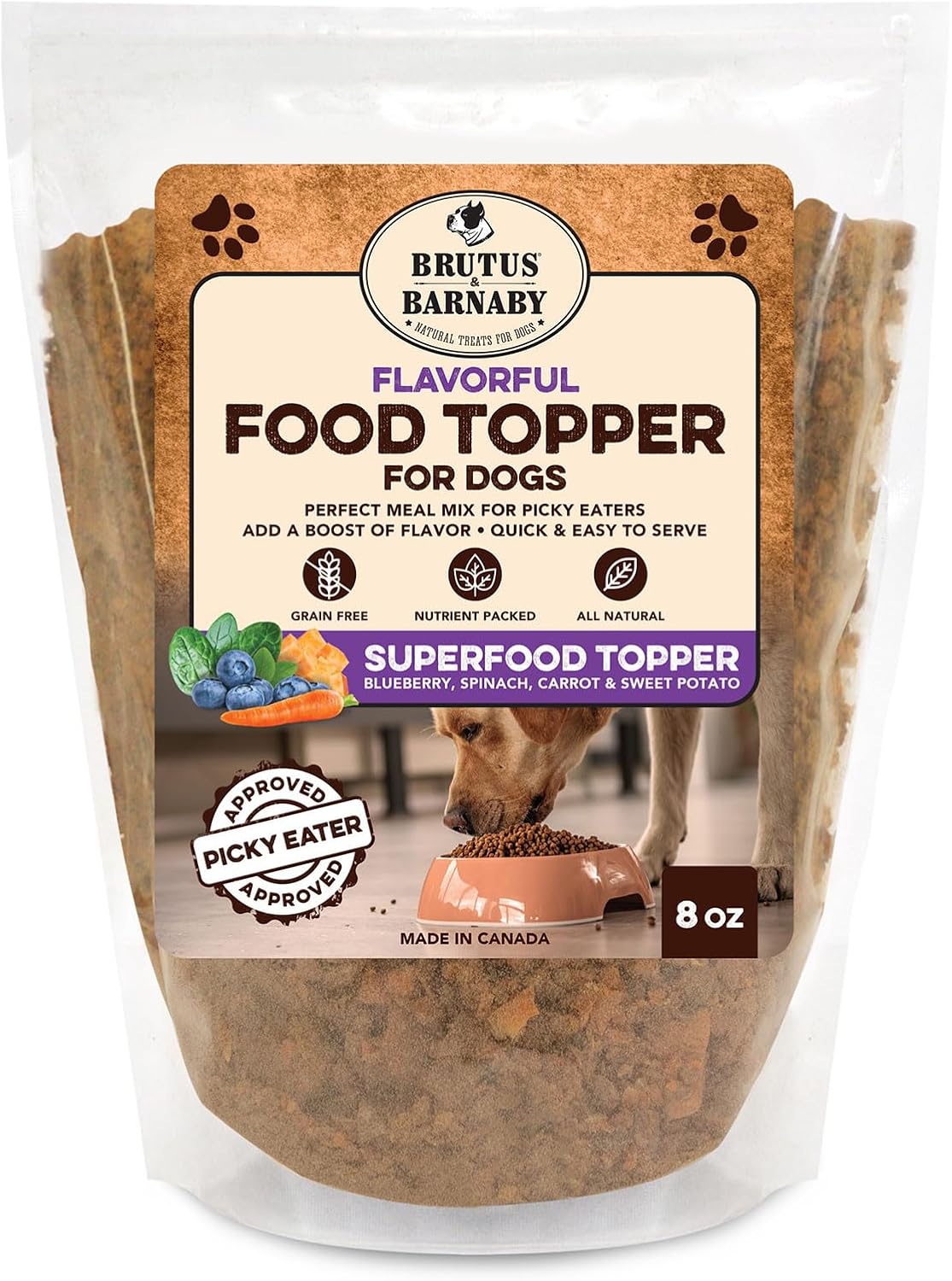
Vegan Dog Food Topper | Meal Enhancer for Picky Eaters
Made with sweet potato, blueberry, spinach, and carrot, this plant-based topper offers a dairy-free ingredient profile for owners considering an alternative to cheese.
Check portions and individual tolerance. A vegan label does not guarantee suitability for every sensitive dog or prescribed diet.
View Vegan Dog Food Topper
Pork Dog Food Topper | High-Protein Meal Enhancer for Dogs
This single-ingredient pork topper provides an animal-based flavor option without using cheese. It may suit dogs that tolerate pork and can accommodate its calories.
It is not a substitute for a prescribed low-fat food or a complete and balanced meal. Measure the amount rather than sprinkling freely.
View Pork Dog Food TopperFrequently Asked Questions
Can I add cheese to my dog's food every day?
Cheese is better treated as an occasional extra. Daily use can add unnecessary calories and fat, especially alongside other treats. If you want a regular topper, discuss an appropriate ingredient and measured amount with your veterinarian.
Is cottage cheese better than shredded cheese?
Plain low-fat cottage cheese may contain less fat than some firm cheeses, but products differ. Compare sodium, calories, and ingredients, and remember that cottage cheese still contains dairy.
Can dogs have lactose-free cheese?
Possibly, if the other ingredients and nutritional profile are appropriate. Removing lactose does not remove milk proteins, fat, or sodium. It does not make cheese suitable for a dog with a milk allergy.
Will cheese help a picky dog eat?
It may make food more appealing, but it is not a dependable solution for ongoing food refusal. A new or persistent appetite change should be evaluated rather than managed by continually increasing the topping.
What should I do if cheese gives my dog diarrhea?
Stop offering cheese and contact your veterinarian if symptoms persist, recur, or concern you. Severe diarrhea, repeated vomiting, blood in the stool, marked lethargy, or signs of pain warrant prompt veterinary advice.
Keep the Topper Small and the Main Diet Balanced
You can add cheese to dog food for some dogs, but plain ingredients, dairy tolerance, and measured portions determine whether it fits. Cheese should remain an optional extra rather than a nutritional requirement or a response to unexplained appetite changes.
If you prefer another flavor profile, compare Brutus & Barnaby's Vegan Dog Food Topper and Pork Dog Food Topper. Choose according to your dog's diet and tolerance, and keep complete and balanced food at the center of the bowl.
Educational disclaimer: This article provides general educational information and is not veterinary, nutritional, diagnostic, or emergency advice. Individual dogs differ in age, size, chewing ability, dental condition, ingredient tolerance, and dietary needs. No edible chew is completely risk-free. Supervise chewing, remove hazardous pieces, introduce unfamiliar treats gradually, and provide fresh water. Consult your veterinarian before introducing new treats to dogs with known medical conditions, prescription diets, persistent digestive symptoms, or significant dental concerns. Seek prompt veterinary care for suspected choking or obstruction.