


Are Bully Sticks Good for Dogs’ Teeth? What Chewing Can and Cannot Do
Are bully sticks good for dogs’ teeth? Chewing may provide some surface cleaning, but that does not make every bully stick a proven dental product. Understanding the difference helps you choose treats without overlooking brushing, dental checkups, or signs of discomfort.
Bully sticks may help rub away some soft plaque on tooth surfaces they contact, but they should be treated as supervised edible chews rather than substitutes for dental care. They cannot reliably remove established tartar, clean beneath the gums, or treat periodontal disease. Product-specific evidence matters, and a chew that is unsuitable for your dog can create dental or swallowing risks.
Why Do People Associate Bully Sticks With Cleaner Teeth?
Bully sticks are edible chews made from beef pizzle. Unlike a small reward that disappears in one bite, a suitable stick may encourage repeated gnawing. That contact between the chew and teeth is why owners often associate them with dental cleaning.
The possible benefit is mechanical: material rubbing against exposed tooth surfaces may disturb some buildup. However, how much contact occurs depends on the dog, the chew, and how it is eaten. A dog that swallows large sections has a very different experience from one that slowly works along an end.
Enjoying a substantial chewing activity is a reasonable reason to choose a bully stick. Assuming that the activity cleans every tooth, or prevents dental disease by itself, goes beyond what that observation can establish.
Are Bully Sticks Good for Dogs’ Teeth? Benefits and Limits
A useful answer separates what chewing might contribute from what requires a dedicated dental routine. The American Animal Hospital Association’s dental-care guidance explains that chewing can help remove some plaque, while daily brushing and professional care remain important.
What Chewing May Contribute
Some rubbing action on exposed tooth surfaces, alongside an engaging activity for dogs that can manage the chew comfortably.
What It Cannot Promise
Complete cleaning, reliable tartar removal, healthy gums, or protection against disease simply because a dog chews regularly.
There is no reason to assume that every tooth receives equal contact. Nor should a cleaner-looking surface be taken as proof that the whole mouth is healthy. Dental problems can involve areas an owner cannot assess by looking at the front teeth.
For practical decision-making, consider a bully stick an optional treat first. Any possible cleaning effect should remain secondary to choosing something appropriate for your dog’s mouth, eating habits, and diet.
Plaque vs. Tartar: Why the Difference Matters
Plaque is a soft bacterial film that accumulates on teeth. Tartar, also called calculus, is hardened buildup. These terms describe different things, so a claim about disturbing soft plaque should not automatically become a claim about removing tartar.
| Dental Concern | Realistic Role of a Bully Stick | Better Next Step |
|---|---|---|
| Soft surface plaque | Chewing may disturb some plaque where contact occurs. | Maintain regular brushing and discuss suitable dental products. |
| Hardened tartar | Do not rely on a bully stick to remove established deposits. | Ask your veterinarian whether professional cleaning is needed. |
| Problems beneath the gums | An edible chew cannot assess or treat these areas. | Arrange a veterinary oral examination. |
| Painful or damaged teeth | Chewing may be uncomfortable or unsuitable. | Stop the chew and seek veterinary advice. |
Trying to make a dog chew harder to remove visible buildup is not a sensible cleaning strategy. A more resistant chew does not necessarily provide a better dental outcome, and existing discomfort needs assessment rather than extra chewing pressure.
Bully Sticks vs. Dental Chews: Look for Product Evidence
“Natural chew” describes a type of treat. It does not establish that the product has been tested for a particular dental benefit. Likewise, a dental-sounding product name alone does not tell you how effectively it controls plaque or tartar.
The Veterinary Oral Health Council’s accepted-products directory identifies products that meet its standards for plaque and/or tartar control. Check the specific product and the accepted claim rather than assuming that all products from a brand qualify.
A product accepted for tartar control is not automatically accepted for plaque control. Acceptance also does not mean the product suits every dog or replaces veterinary treatment.
A useful shopping question: Are you choosing an enjoyable edible chew, or seeking a product with demonstrated dental performance? Both can have a place, but the evidence needed for a dental claim is more specific.
Can Bully Sticks Damage Teeth?
No edible chew is suitable for every mouth. A dense stick may be inappropriate for a dog with damaged teeth, oral pain, or a forceful biting style. “Natural” and “digestible” do not guarantee that a chew is comfortable for teeth or safe to swallow in large pieces.
Watch the behavior in front of you. Repeated attempts to crack through the stick, difficulty positioning it, or a sudden change in chewing are reasons to pause. Do not encourage a dog to persist with a texture they seem unable to handle.
Puppies
Developing teeth need individual consideration. Ask your veterinarian before introducing dense chews during teething.
Senior Dogs
Choose according to current oral health. Age alone does not tell you whether a dense chew is suitable.
Forceful Chewers
A dog that bites through substantial pieces may need a different activity rather than an increasingly hard chew.
After extractions or other dental procedures, follow the treating veterinarian’s instructions about when chewing can resume. Do not use a bully stick to test whether the mouth has healed.
How to Choose and Supervise a Bully Stick
Length and thickness affect handling, but neither creates a universal fit. Choose a starting chew your dog can grip and work on without fitting the entire piece into their mouth.
Our guide to bully-stick size and thickness for small dogs explains why the smallest option is not always the most manageable.
- Observe the entire session. Stay close enough to notice gulping, loose sections, or changes in chewing.
- Start with a brief introduction. Assess tolerance and eating behavior before allowing a longer session.
- Remove the shortened end. Take it away before it becomes a piece your dog could swallow whole.
- Consider a compatible holder. Follow its instructions and keep supervising; a holder cannot eliminate every risk.
- End the session when needed. Your dog does not need to finish the stick for the activity to be worthwhile.
For bigger dogs, our large-dog bully-stick sizing guide discusses length, chewing strength, and swallowing habits together.
There is no established number of chewing minutes that guarantees cleaner teeth. Extending a session for a supposed dental target may simply increase how much treat your dog consumes.
Count the Chew as Part of the Diet
Bully sticks contribute calories, even when offered mainly as an activity. Include the amount eaten alongside training rewards, table extras, and other treats.
The WSAVA guide to feeding treats to dogs recommends keeping treats below 10% of daily calorie intake. A veterinarian may recommend a different allowance for an individual dog.
Use the product’s calorie information and your dog’s feeding plan instead of assuming one whole stick is a daily serving. Dogs on prescribed diets or with food sensitivities may need a different treat. Stop offering a new chew if it causes concerning digestive changes.
Brutus & Barnaby Options for Supervised Chew Time
If an edible beef chew fits your dog’s needs, these options provide different lengths to consider. Choose for comfortable handling and controlled consumption; neither recommendation is a promise of dental treatment or a particular cleaning result.
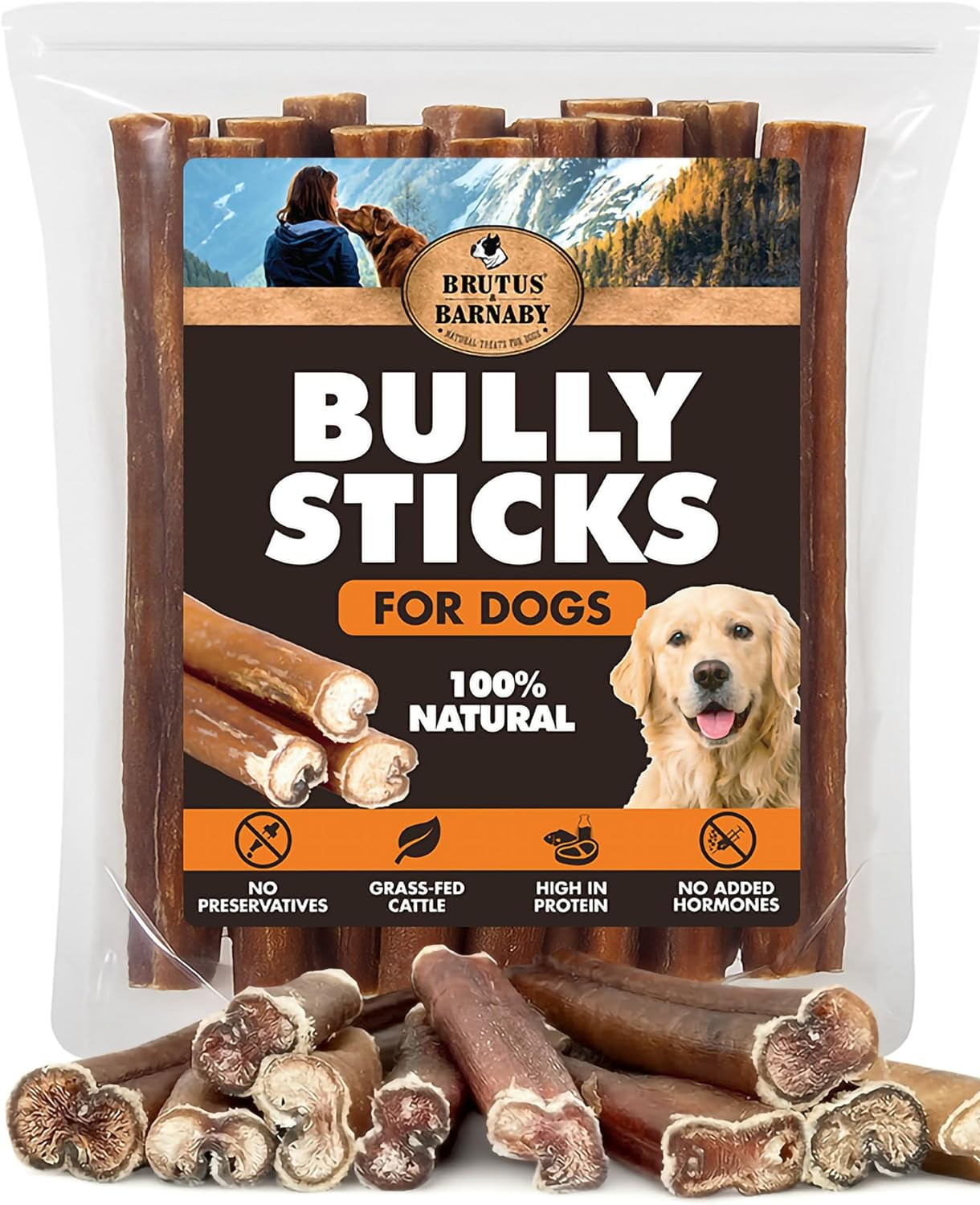
Bully Sticks for Dogs | 6 Inch, Odor-Free & Rawhide-Free Chews
A 6-inch option to evaluate against your dog’s mouth size and chewing habits. Monitor how quickly the stick becomes small enough to swallow.
View 6-Inch Bully Sticks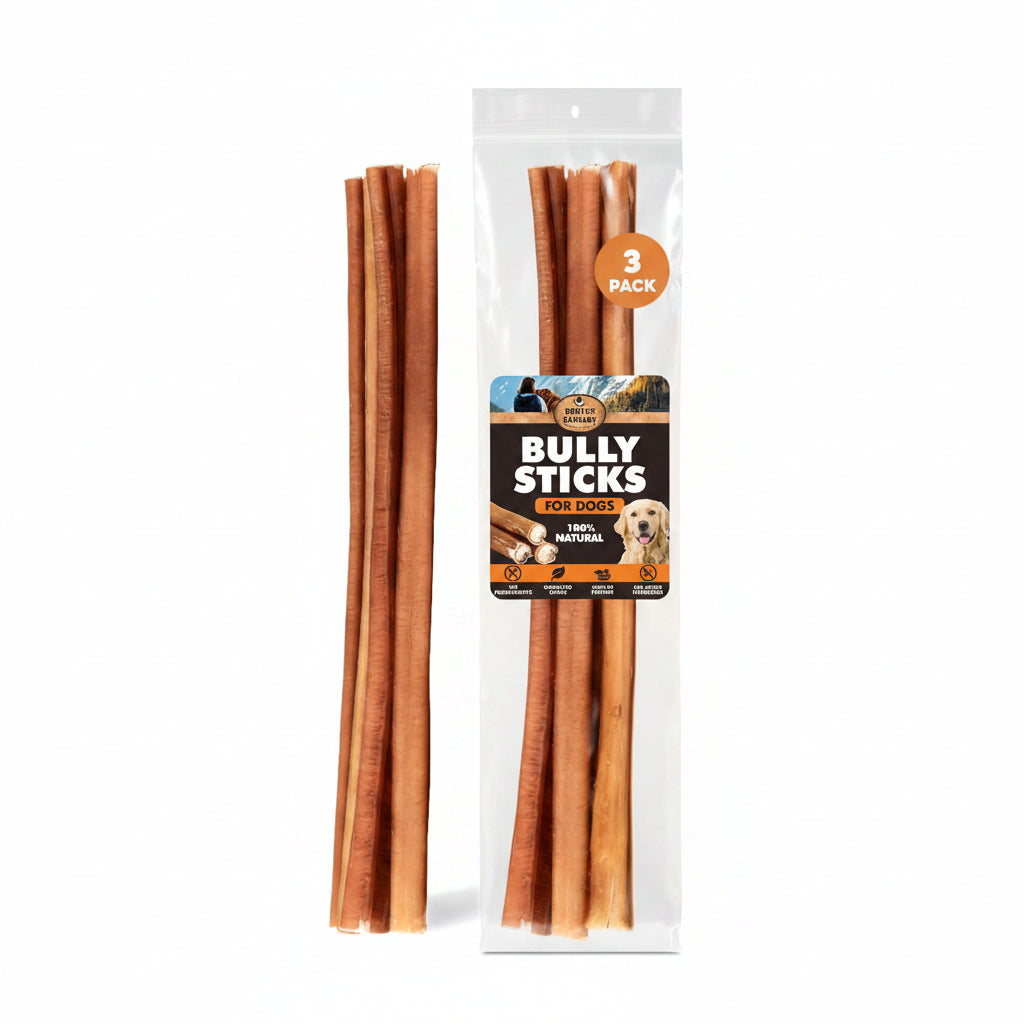
Bully Sticks for Dogs | 12 Inch, Extra Thick & Long-Lasting
A longer format for dogs that can comfortably manage a substantial chew. Extra length does not remove the need to watch for loose pieces and gulping.
View 12-Inch Bully SticksKeep a Dental Routine Beyond Chewing
Build your dog’s routine around regular brushing with dog-appropriate toothpaste, veterinary oral checks, and professional treatment when recommended. Introduce brushing gradually, without forcing a painful mouth.
The AVMA’s pet dental-care guidance identifies regular brushing as the most effective home measure between dental cleanings. It also highlights warning signs such as abnormal chewing, drooling, and dropping food.
Persistent bad breath, bleeding, swelling, or a change in eating deserves veterinary attention. A dog continuing to eat does not prove that their teeth are comfortable. Difficulty breathing, suspected choking, or collapse requires emergency veterinary help.
Frequently Asked Questions
Do bully sticks clean dogs’ teeth?
They may provide some surface rubbing during chewing. That is different from demonstrating consistent plaque or tartar control for a specific product, and it does not replace brushing.
Can bully sticks remove tartar?
Do not rely on them to remove hardened deposits. Ask your veterinarian to assess visible buildup and recommend an appropriate cleaning plan.
Are bully sticks better than brushing?
No. Brushing provides deliberate cleaning of accessible tooth surfaces. Chewing contact is less controlled and should not be treated as an equivalent replacement.
Should dogs have a bully stick every day for their teeth?
There is no universal daily bully-stick requirement for dental health. Frequency should reflect suitability, calories, tolerance, and your veterinarian’s advice.
Can a dog with missing teeth have bully sticks?
Ask your veterinarian before offering dense chews. The location of missing teeth, remaining tooth health, and swallowing behavior matter more than a general yes-or-no rule.
A Useful Chew With Realistic Expectations
Are bully sticks good for dogs’ teeth? They may contribute some surface cleaning, but their clearest role is as an optional supervised chewing activity. Keep brushing and veterinary care at the center of your dog’s dental routine.
If your dog can comfortably manage edible beef chews, explore Brutus & Barnaby’s 6-inch bully sticks and choose according to their mouth, chewing behavior, and diet.
Are Bully Sticks Good for Dogs’ Teeth? What Chewing Can and Cannot Do
Sweet potato chews can be a useful addition to a dog's treat rotation, offering plant-based flavor and a choice of chewy or crunchy textures. Their real value depends on choosing an appropriate size, understanding how quickly the individual dog eats them, and feeding sensible portions.
If your dog enjoys a flexible, chewy snack, consider Brutus & Barnaby's Sweet Potato Slices . For a narrower, portionable alternative, compare the brand's Sweet Potato Fries . The right option is the one that fits your dog's chewing behavior, nutritional needs, and daily routine.
Educational disclaimer: This article provides general educational information and is not veterinary, nutritional, diagnostic, or emergency advice. Individual dogs differ in age, size, chewing ability, dental condition, ingredient tolerance, and dietary needs. No edible chew is completely risk-free. Supervise chewing, remove hazardous pieces, introduce unfamiliar treats gradually, and provide fresh water. Consult your veterinarian before introducing new treats to dogs with known medical conditions, prescription diets, persistent digestive symptoms, or significant dental concerns. Seek prompt veterinary care for suspected choking or obstruction.