



How Many Treats Can a Dog Have a Day? The Simple 10% Rule for Dog Parents
Treats are useful for training, bonding, enrichment, and chewing — but too many can quietly add extra calories. Here is a simple way to keep treat time balanced.
Most dog parents do not overfeed treats on purpose. It usually happens slowly — one training reward, one chew, one table-side snack, one “good dog” treat — until treats become a bigger part of the day than expected.
Quick answer: a common guideline is to keep treats to about 10% of your dog’s daily calories, with the other 90% coming from a complete and balanced diet. The exact amount depends on your dog’s size, weight, activity level, health, and the type of treat.
What Is the 10% Rule for Dog Treats?
The 10% rule is a simple treat guideline: treats should make up only a small portion of your dog’s daily calorie intake. This helps keep treats fun without replacing the nutrients your dog gets from regular food.
For example, if your dog’s daily calorie needs are around 500 calories, then treats would generally stay around 50 calories for the day. That includes training treats, chews, toppers, biscuits, sweet potato treats, and little “just because” snacks.
You do not need to calculate every crumb forever. But understanding the 10% idea helps you make better choices, especially on days with training sessions, long-lasting chews, or multiple rewards.
Why Treat Portions Matter More Than Most People Think
Treats are not bad. They become a problem when the amount, size, or frequency does not match the dog.
Small Dogs Need Smaller Portions
One large treat may be a small snack for a big dog but a major calorie addition for a small dog.
Training Rewards Add Up
Training can involve many repetitions. Small treats or broken pieces help you reward more often without overdoing volume.
Chews Count Too
Edible chews like bully sticks, cow ears, and beef cheek rolls are treats too. They should count toward the day’s treat routine.
Human Snacks Sneak In
A bite of toast, a fry, a chip, or a table scrap may seem tiny, but those extras can crowd out better dog treats.
How to Use Treats Without Overdoing It
Different treat types have different jobs. The easiest way to avoid overfeeding is to match the treat to the moment.
| Treat Moment | Best Treat Type | Why It Works | Portion Tip |
|---|---|---|---|
| Training practice | Training treats | Small, fast, repeatable rewards | Break pieces smaller for more reps |
| Light snack time | Sweet potato fries or slices | Easy to portion and rotate | Use smaller pieces for small dogs |
| High-value reward | Beef lung bites | Useful for recall, focus, and special rewards | Use tiny pieces during training |
| Chew downtime | Bully sticks or beef cheek rolls | Gives dogs a longer supervised chewing outlet | Count edible chews as treats |
Important: the 10% rule is a general guideline. Dogs with obesity, pancreatitis, diabetes, kidney disease, allergies, or restricted diets may need a stricter plan from a veterinarian.
A Simple Daily Treat Plan
You can keep treat time simple by planning the day before treats start stacking up.
Morning Training
Use small training treats or broken pieces for quick practice. Keep pieces tiny so you can reward without overfeeding.
Afternoon Snack
Choose a lighter snack such as sweet potato fries, sweet potato slices, or a few small treat pieces.
Evening Chew
Use a supervised chew on days your dog needs downtime. Skip or reduce other treats if the chew is larger.
No Human Extras
Avoid counting table scraps as “nothing.” Human snacks still add calories and may upset your dog’s stomach.
Pro tip: on heavy training days, use smaller treat pieces. On chew days, reduce extra snacks so your dog’s total treat amount stays reasonable.
Best Brutus & Barnaby Treats for a Balanced Routine
Build your treat routine around purpose: quick rewards, lighter snacks, high-value bites, and supervised chews.

Training Treats
Small rewards for recall, manners, leash practice, crate training, and everyday positive reinforcement.
- Easy to portion
- Useful for repeated rewards
- Great for quick practice
- Better than large treats for training reps

Sweet Potato Fries for Dogs
A dog-friendly fry-style treat for lighter snack moments, meal topping, or rotating away from richer chews.
- Easy to portion
- Useful as a snack or topper
- Great alternative to human fries
- Good for lighter treat days
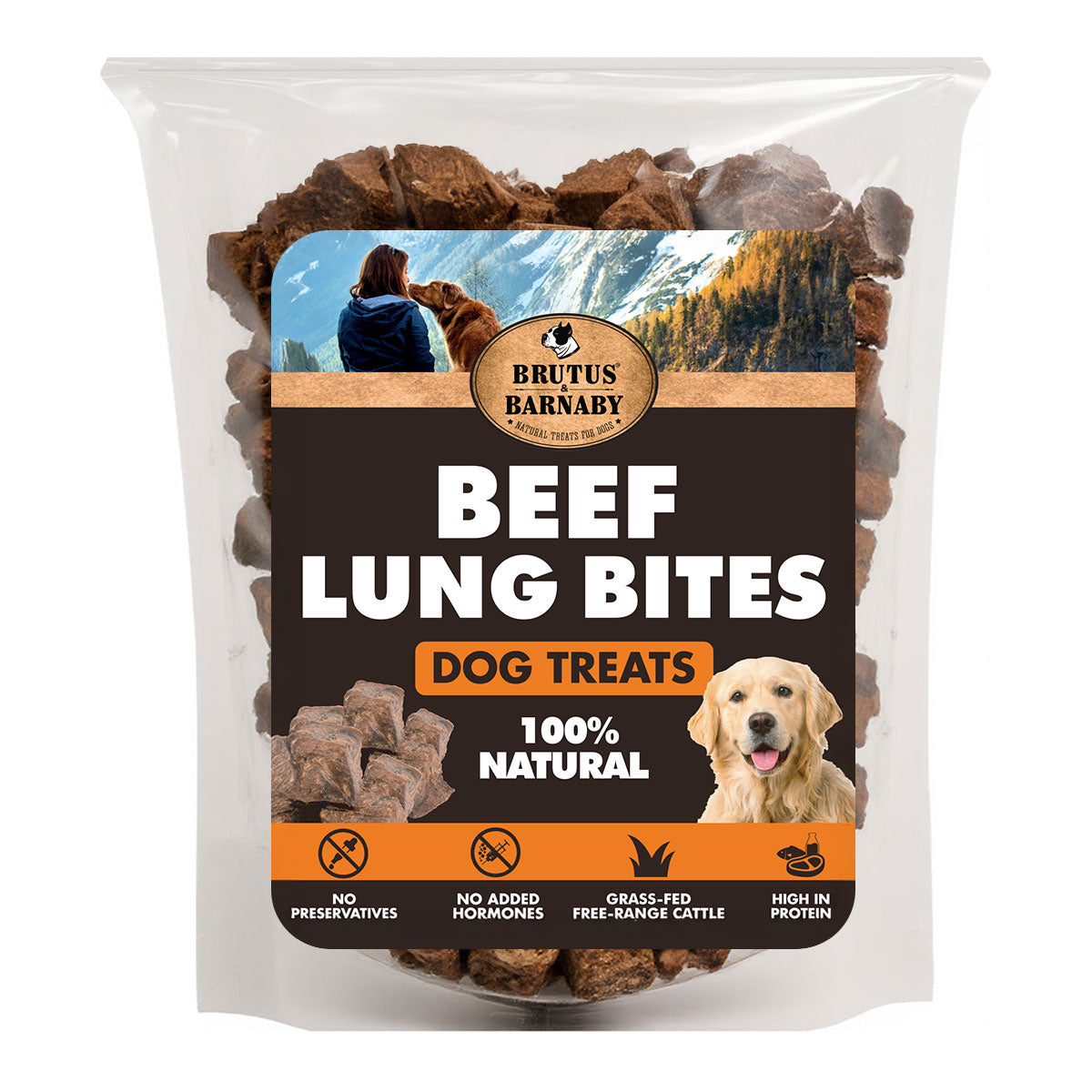
Beef Lung Bites
A simple high-value bite for recall, focus, special rewards, or moments when your dog needs extra motivation.
- Single-ingredient beef lung
- High-value reward option
- Great for training and recall
- Easy to break smaller if needed

Bully Sticks
A natural rawhide-free beef chew for dogs who need a longer, satisfying chewing outlet.
- Great for supervised downtime
- Rawhide-free chew option
- Useful for dogs who love to gnaw
- Count edible chews as treats
5 Easy Ways to Reduce Treat Calories Without Ruining the Fun
You do not have to stop giving treats. You just need smarter portions.
1. Break Treats Smaller
Dogs usually care more about the reward moment than the size of the piece.
2. Use Treats With a Purpose
Reward training, calm behavior, recall, and enrichment instead of handing out treats randomly all day.
3. Plan Chew Days
On days your dog gets a larger chew, keep other snacks smaller and simpler.
4. Avoid Table Scraps
Human snacks are harder to track and may include salt, oil, sugar, seasoning, or unsafe ingredients.
5. Rotate Treat Types
Use small treats, sweet potato snacks, high-value bites, and chews for different jobs instead of treating everything the same.
Simple rule: smaller pieces, clearer purpose, fewer table scraps. That alone can make your dog’s treat routine much easier to manage.
Keep Learning Before You Build a Treat Routine
Pair this guide with related Brutus & Barnaby blog guides and trusted veterinary resources. Internal guide links help you build a better treat routine, while external sources give extra context around treat calories and moderation.
Related Brutus & Barnaby Guides
Trusted Veterinary & Nutrition Resources
Frequently Asked Questions
Make Every Treat Count
Brutus & Barnaby treats and chews are made for different reward moments — from training and snack time to supervised chewing and enrichment. Choose the treat that fits the job and portion it with purpose.
Shop Natural Dog TreatsEducational disclaimer: This article is for general education only and is not veterinary advice. Every dog has different calorie needs, allergies, sensitivities, medical conditions, dental health, and chewing habits. Ask your veterinarian before changing your dog’s treat routine if your dog has obesity, pancreatitis, diabetes, kidney disease, digestive issues, allergies, dental problems, or a restricted diet. Always supervise edible chews and choose treats appropriate for your dog’s size and behavior.