

Keep Mealtime Familiar Wherever the Day Takes You
From road trips and overnight boarding to mornings when every minute counts, dog food topper powder can be a convenient addition to your dog's usual meals. The key is to plan portions, protect the dry product, and keep feeding instructions consistent.
A predictable feeding routine can be easier to maintain when the food, portions, and preparation instructions are ready before you leave home.
To use dog food topper powder for travel, boarding, or busy days, measure the usual serving ahead of time, pack it in a clean, dry, labeled container, and add it to your dog's regular meal immediately before serving. Follow the product's feeding and storage directions, keep fresh water available, and avoid introducing unfamiliar topper ingredients during an already disrupted routine.
Why Consider Dog Food Topper Powder for Travel?
Dog food topper powder is a dry meal addition that may be sprinkled over or mixed into a dog's regular food. Some products are finely ground, while others are coarser, with small dried pieces. Both formats can be convenient when an owner wants to avoid preparing fresh toppings away from home.
A familiar topper may help maintain the usual flavor and aroma of meals during a change in surroundings. It does not guarantee that a nervous or distracted dog will eat, and it should not replace the complete and balanced food that forms the basis of the diet.
Easy to plan
Dry toppers can be measured into separate meal portions before leaving home.
Minimal steps
Many sprinkle-style products can be added directly to food without cooking.
Consistent meals
Using an already familiar topper can help keep part of the normal feeding routine unchanged.
For general serving methods and label considerations, our dog food topper powder guide explains how these meal enhancers are used in everyday feeding.
How to Pack Dog Food Topper Powder for a Trip
Preparing the topper before departure helps avoid guessing portions or dealing with loose packaging during a busy travel day. Keep the product dry and retain access to its original label information.
Storage reminder: The FDA's pet-food storage guidance recommends retaining original packaging information and protecting dry products from heat and moisture. For extended travel, keeping the topper in its original labeled packaging may be preferable to transferring the entire supply.
How to Serve Dog Food Topper Powder While Traveling
Travel meals are usually easiest when prepared shortly before feeding rather than mixed hours in advance. This is especially relevant if the topper is being combined with water or wet food.
Sprinkle and mix
Measure the regular food, add the planned topper portion, and stir it through the bowl. This approach requires little preparation when the product permits dry serving.
Add water when suitable
If the label allows it, a small amount of clean water may help dry particles adhere to kibble. Prepare the mixture near mealtime rather than storing it wet for long periods.
A simple travel feeding sequence
Set up the meal in a quiet, appropriate place. Measure the usual food, add the predetermined topper amount, and mix thoroughly. Offer clean drinking water and supervise feeding, particularly when the dog is excited, distracted, or eating in unfamiliar surroundings.
Wash feeding equipment after use. The FDA's safe-handling recommendations emphasize handwashing, clean bowls, and clean measuring utensils when preparing pet food.
Do not leave moistened meals unrefrigerated for an extended period. Discard leftovers according to the food's storage instructions and safe handling practices.
Using Dog Food Topper Powder During Boarding
Boarding adds another person to the feeding process. Even a familiar product can be used incorrectly if the caregiver does not know the serving amount or whether the topper is intended as a meal addition.
Ask the boarding facility about its food-storage policies, feeding procedures, and whether staff can accommodate a separately measured topper. Some facilities may require original packaging or specific labels.
| Information | What to Provide | Why It Matters |
|---|---|---|
| Main food | Exact food and amount for each meal | Helps maintain the dog's normal diet |
| Topper product | Product name, package, and ingredient details | Prevents confusion with other foods |
| Topper portion | Usual measured serving per meal | Reduces inconsistent additions |
| Mixing method | Dry sprinkle or water added, if appropriate | Maintains the familiar presentation |
| Restrictions | Food allergies, prescribed diet, and veterinarian instructions | Helps staff avoid unsuitable ingredients |
| Problems | When to contact you or the veterinarian | Establishes a plan for reduced appetite or illness |
Keep instructions specific and measurable
"Serve the labeled portion of regular dog food at each scheduled meal. Add the separately labeled topper serving and mix evenly. Add water only as directed. Provide fresh drinking water. Do not substitute another topper or increase the portion without contacting me."
Do not assume a boarding facility can administer every supplement, prescription diet, or specialized feeding routine. Discuss requirements with staff before arrival, and follow veterinary instructions for dogs with medical dietary needs.
If the dog refuses food repeatedly, appears unwell, vomits, or develops concerning digestive signs, the caregiver should follow the established veterinary contact plan rather than simply adding more topper.
Making Dog Food Topper Powder Work on Busy Days
Travel is not the only time that feeding can become inconvenient. Early meetings, late workdays, and changes in household schedules can make it useful to have a consistent system for serving meals.
Prepare the night before
Set aside the dry food and topper portions in separate closed containers so they are ready for the next meal.
Write the instructions
Use one measured portion and clear directions so another family member or sitter can prepare the meal consistently.
Keep routines predictable
Follow regular feeding amounts and an appropriate schedule without trying to compensate for a late meal with excess topper.
Should you prepare complete bowls in advance?
Premeasuring dry ingredients can be convenient, but storing them together is not always ideal. If you mix the dry topper with dry food beforehand, follow both products' storage directions and avoid prolonged storage in unsuitable conditions.
When water or wet food is involved, prepare the combined meal close to serving time. Avoid leaving it in a warm car, at room temperature for an extended period, or in a container without appropriate temperature control.
For dogs that need a gradual adjustment to a new product, follow our guide to introducing dog food toppers before making that product part of a travel routine.
Travel, Boarding and Busy Days: Feeding Methods Compared
Different situations call for different preparation methods. The following table can help you select an approach without changing the underlying diet.
| Situation | Preparation | Useful Supplies | Main Precaution |
|---|---|---|---|
| Road trip | Separately measured dry servings | Sealed topper, bowl, scoop, water | Avoid heat and moisture exposure |
| Hotel stay | Mix at the usual scheduled mealtime | Original packaging and clean bowl | Clean equipment and remove leftovers |
| Boarding | Individual labeled portions and instructions | Written feeding plan and original label | Confirm staff can follow the instructions |
| Dog sitter | Clearly marked daily servings | Measured containers and care notes | Prevent duplicate feeding |
| Busy workday | Premeasure dry items ahead of time | Clean containers and measuring scoop | Do not prepare wet mixtures too early |
How Much Topper Powder Should You Pack or Serve?
There is no single amount that suits every dog or topper. Powder concentration, ingredient composition, calorie content, and the dog's feeding requirements can vary considerably.
Use the product's current directions and your dog's established serving amount. For travel planning, multiply that amount by the number of meals, then set aside a reasonable additional supply for unexpected schedule changes. Keep any reserve clearly separated from planned servings to prevent accidental double feeding.
Count all extras
Food toppers, treats, chews, and other supplemental foods can contribute calories. Count them together rather than treating the powder as calorie-free seasoning.
Preserve complete nutrition
The regular complete and balanced food should remain the foundation of the diet unless the veterinarian has prescribed another feeding plan.
VCA Animal Hospitals' guidance on food palatability explains that toppers and treats generally should make up no more than 10% of daily calories, with the remaining calories supplied by complete and balanced food. Some dogs require more restrictive allowances.
Important: Dogs receiving veterinary therapeutic diets, elimination diets, or prescribed calorie plans may need to avoid additional toppers unless their veterinarian approves them. Do not make unapproved feeding changes during boarding or travel.
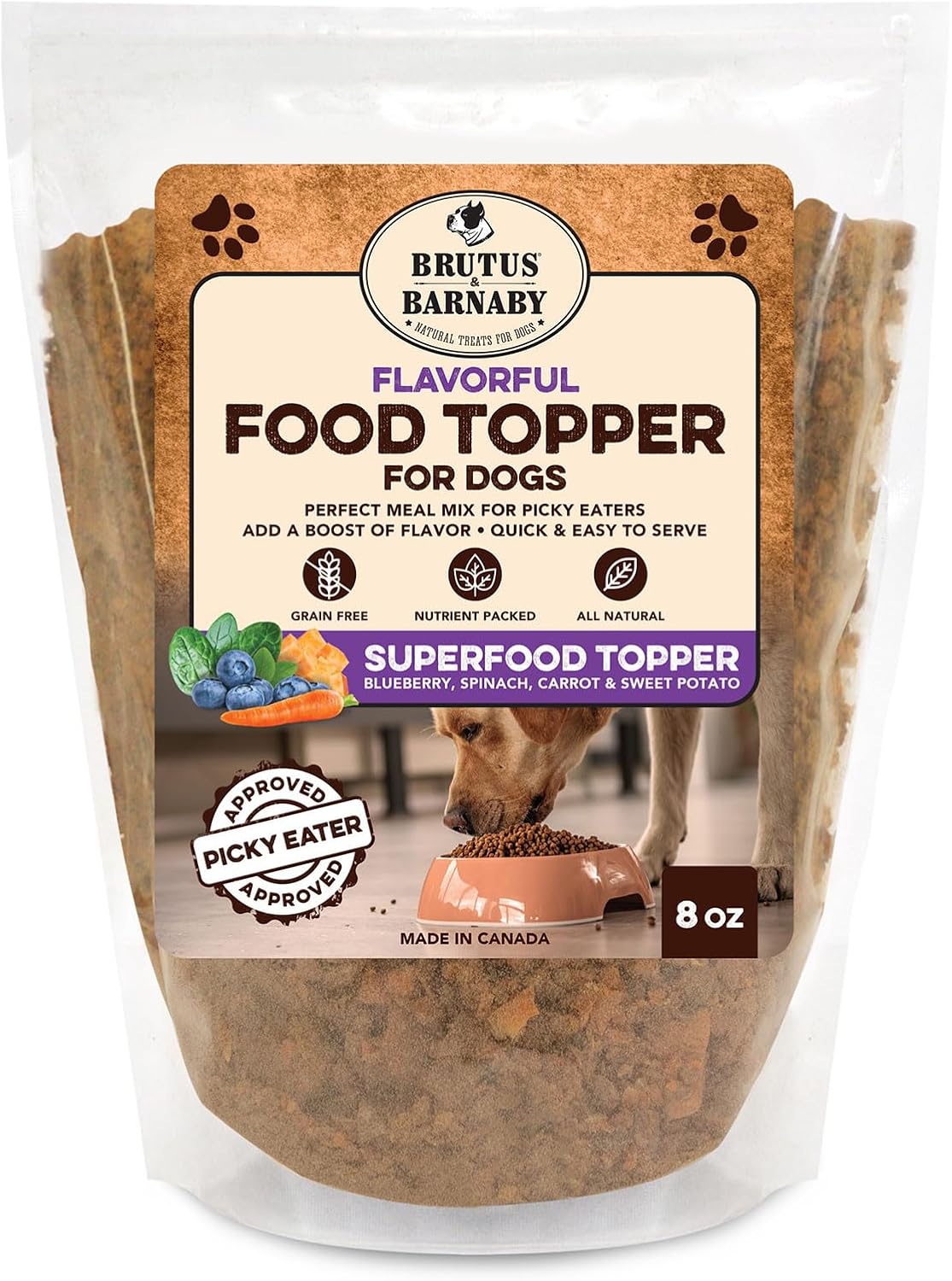
Brutus & Barnaby Food Toppers for Simple Meal Preparation
Brutus & Barnaby offers sprinkle-style meal enhancers that can be added to a dog's usual food. These options provide different ingredient profiles. Choose a familiar product that fits your dog's dietary requirements and check the current label for serving and storage instructions.
Beef Liver Dog Food Topper | High-Protein Meal Enhancer for Dogs

Vegan Dog Food Topper | Meal Enhancer for Picky Eaters
For dogs whose eating preferences are the primary concern, our guide to choosing dog food toppers for picky eaters explains how to consider ingredients, texture, and feeding habits.
Common Mistakes to Avoid When Using Topper Powder Away From Home
A simple feeding addition can become unnecessarily complicated when portions, packaging, or feeding conditions are overlooked.
Trying a new topper during travel
Introduce unfamiliar ingredients at home, where you can observe tolerance without the added complications of a trip.
Packing without product details
An unlabeled container may leave a caregiver uncertain about the ingredients, storage directions, and appropriate amount.
Increasing the portion after a refused meal
Reduced appetite may be related to stress or an underlying problem. Repeatedly adding more topping is not a substitute for assessment.
Leaving prepared food in the heat
Keep dry products appropriately stored and handle wet or moistened meals according to safe food-storage guidance.
When should you contact the veterinarian?
Travel changes can affect a dog's behavior and appetite, but symptoms should not automatically be attributed to unfamiliar surroundings. Seek veterinary advice if your dog experiences persistent refusal to eat, repeated vomiting, significant diarrhea, weakness, or other concerning changes. Urgent symptoms such as collapse, difficulty breathing, or suspected choking require immediate veterinary attention.
Dog Food Topper Powder for Travel and Boarding: FAQs
Can you preportion dog food topper powder before traveling?
Yes, provided the product can be safely stored that way. Measure the usual dry servings into clean, dry, food-safe containers, label them clearly, and retain the original ingredient and storage information. Avoid preparing wet mixtures too far in advance.
Is dog food topper powder convenient for boarding facilities?
It can be, particularly when servings are measured and instructions are clear. Confirm the facility accepts the product, understands its preparation, and can follow any dietary restrictions. Give staff the original product information and a written feeding plan.
Does dog food topper powder need refrigeration when traveling?
Not every product requires refrigeration before use. Storage depends on its formulation and labeling. Follow the manufacturer's directions and avoid exposing dry topper products to excessive heat or moisture. Once mixed with wet food or water, handle the prepared meal as perishable food.
Can you mix topper powder with water before leaving home?
Adding water may be appropriate when the label allows it, but mixing immediately before feeding is generally more practical for travel. If a prepared mixture must be transported, follow applicable refrigeration and food-safety instructions rather than assuming it can remain at room temperature.
Can a topper help a dog that refuses food while boarding?
A familiar topper may make the normal meal more appealing to some dogs, but it cannot reliably resolve stress-related appetite changes or medical problems. Ask the caregiver to document missed meals and contact the veterinarian when appetite loss is prolonged or accompanied by concerning symptoms.
Can dog food topper powder replace a meal on a busy day?
No, not unless the specific product is labeled as complete and balanced for the dog's life stage and is suitable for feeding as a full diet. Ordinary topper powders are supplemental additions. Keep the dog's usual complete food available even when time is limited.
Plan the Portions, Protect the Food, Keep the Routine
Using dog food topper powder for travel, boarding, and busy days works best when preparation is simple and consistent. Choose a familiar topper, measure it before mealtime, provide clear instructions to caregivers, and keep your dog's complete and balanced food at the center of every meal. With a little preparation, feeding away from home can require fewer last-minute decisions.
Explore Beef Liver Dog Food TopperEducational disclaimer: This article provides general dog-feeding information and does not replace veterinary or individualized nutritional advice. Food toppers should be used according to their current labels and your dog's dietary requirements. Keep food properly stored, supply fresh drinking water, and contact your veterinarian about food allergies, therapeutic diets, significant appetite changes, or persistent digestive symptoms. Seek urgent veterinary care for serious or emergency symptoms.