



Dog Food Topper Sprinkles: How to Spread Flavor Beyond the First Bite
Does your dog lick the topping off dinner and leave the food underneath? Dog food topper sprinkles may work better when you distribute a measured portion throughout the meal. A little stirring, layering, or light moistening can help move the topping beyond the surface.
To spread topper flavor through the bowl, measure the serving, add it in stages, and stir from the bottom upward. If the directions allow, lightly dampen kibble before mixing so fewer particles fall straight to the bottom. Improve distribution before increasing the amount; extra powder does not guarantee a finished meal.
What Are Dog Food Topper Sprinkles?
Dog food topper sprinkles are small, dry particles added to a dog's regular food. Depending on the product, they may resemble powder, crumbs, flakes, or finely divided pieces. “Sprinkles” describes how they are served, rather than a standardized nutritional category.
Their main appeal is convenience: a measured amount can introduce another aroma, flavor, or texture without preparing a separate meal. However, a sprinkle-on meal enhancer should not be assumed to supply everything a dog needs. The FDA explains that treats, snacks, and supplements are often not complete and balanced. Keep an appropriate complete and balanced food as the foundation.
This guide focuses on application: helping a suitable topper reach more of the food already in the bowl. Choosing an entirely different diet is a separate decision.
Why Does the Topping Disappear Before the Meal?
When you sprinkle everything over a filled bowl, the strongest concentration sits on the top layer. A dog may lick off that loose material or pick out larger pieces. Meanwhile, fine particles can slip between dry kibble and collect underneath it.
A Concentrated Patch
One pile puts most of the topping within the first few mouthfuls.
Loose Particles
Dry crumbs may move independently of the food you want to coat.
An Untouched Bottom
Stirring only the surface leaves much of the meal unchanged.
Preparation is only one possible explanation. A dog may also dislike the base food, feel full, or have an appetite change that deserves attention. For broader selection considerations, our guide to choosing food toppers for picky eaters discusses options beyond mixing technique.
How to Distribute Sprinkles Through the Whole Bowl
Prepare the meal before setting it down. That gives you control over the serving and avoids repeatedly adding more while your dog waits.
1. Measure Both the Food and the Topper
Portion the regular food according to your dog's feeding plan. Separately measure the topper using its current directions and calorie information. Set that portion aside so every application step draws from the same allowance.
2. Add the Food in Two Layers
Put part of the meal in the bowl, scatter some of the measured topper across it, and stir. Add the remaining food and topper, then mix again. Layering brings topping into the middle rather than leaving it all on the surface.
3. Fold From the Bottom Upward
Use a clean spoon to lift food from the base toward the center. Rotate the bowl and repeat. For wet food, fold the sprinkles through several sections instead of spreading them across the top like icing.
4. Check Whether Light Moisture Helps
If permitted by the product directions, add a small amount of plain, comfortably warm water to dry kibble before mixing in the topper. Aim for lightly damp surfaces. More water may soften the meal or carry particles into liquid at the bottom.
5. Serve and Observe
Look at what remains afterward. Is there loose powder underneath, untouched food, or a few isolated chunks? Use that observation to adjust the next preparation method. Even coverage cannot guarantee that every bite contains the same amount or that your dog will eat.
Keep the serving constant: Dividing one measured portion between layers changes its placement. Adding a fresh spoonful at every layer changes the amount your dog receives.
Choose a Mixing Method That Fits the Meal
Start with the least complicated method that suits your dog's food and the topper instructions. You do not need to turn every meal into a gravy.
| Method | How to Apply It | Useful When | Watch For |
|---|---|---|---|
| Dry layering | Divide the measured topping between layers, then stir. | Your dog prefers mostly crunchy kibble. | Loose particles settling underneath. |
| Lightly dampened kibble | Moisten the surfaces, add the topping, and fold through. | The product permits water and dry particles do not cling. | Excess liquid collecting at the base. |
| Wet-food folding | Work the measured topping through several sections. | The regular meal already has a moist texture. | Unmixed pockets or a thick surface crust. |
| Separate mixing bowl | Combine the meal thoroughly before transferring it. | A slow feeder has compartments that are difficult to stir. | Food left behind and extra utensils to clean. |
Fix Uneven Coverage Without Increasing the Serving
Powder Remains Underneath
Try bottom-up folding or permitted light moistening. Adding more dry powder may simply leave a larger deposit underneath.
Your Dog Picks Out Pieces
Review whether the texture suits the meal. Small sprinkle-style particles may distribute differently from distinct, larger pieces.
The Mixture Forms Clumps
Scatter the measured portion gradually while stirring. Avoid dropping the entire serving into one small wet spot.
Your Dog Still Walks Away
Stop escalating the topping. Consider the whole feeding routine and contact your veterinarian about concerning appetite changes.
Do not improvise with seasoned gravy, salty sauces, or cooking drippings to make the topping stick. Plain water avoids introducing another food ingredient or an uncounted source of calories.
How Much Topper Belongs in the Bowl?
A thin-looking coating can still contribute calories. Serving size depends on the product, your dog's energy needs, and the other extras offered that day. “One spoonful” is difficult to track unless the spoon size and product weight are defined.
AAHA feeding guidance recommends that complete and balanced food provide at least 90% of calories, with treats and other extras making up no more than 10%. A veterinarian may recommend a stricter allowance for an individual dog.
If you set aside a daily topper allowance, divide it between meals. Training rewards, chews, and other supplemental foods also count toward the day's extras.
Use calorie information and a suitable kitchen scale when available. Ask the manufacturer for clarification if the label does not provide enough detail. Our guide to portion-aware, low-calorie dog food toppers explains why both calorie density and serving size matter.
Two Toppers to Compare for Sprinkle-and-Mix Meals
Choose according to ingredients your dog tolerates and the current feeding directions. Both options below are meal enhancers; neither should replace your dog's complete and balanced food.

Pork Dog Food Topper | High-Protein Meal Enhancer for Dogs
The listed ingredient is 100% pork. For dogs that tolerate pork, this provides a meat-based option to mix through regular food. Its directions allow a small amount of water to improve coating.
View Pork Dog Food Topper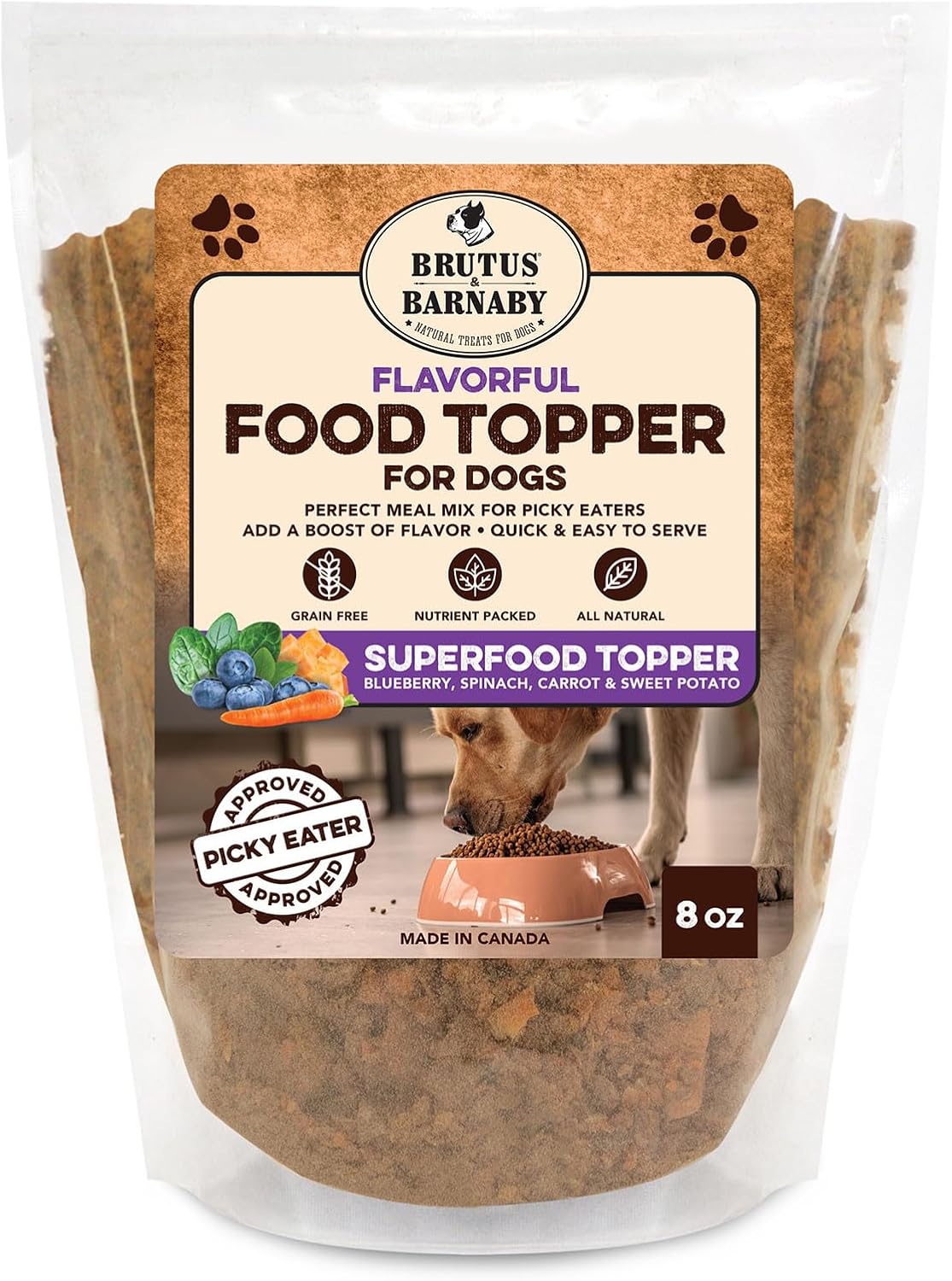
Vegan Dog Food Topper | Meal Enhancer for Picky Eaters
Made with sweet potato, blueberry, spinach, and carrot, this offers a plant-based ingredient combination. Its directions also allow water to help the topper adhere. Review all four ingredients if your dog has dietary restrictions.
View Vegan Dog Food TopperKeep Preparation Clean and Changes Gradual
Introduce one unfamiliar topper at a time, beginning conservatively within the product directions and your dog's feeding plan. Puppies, dogs with medical conditions, and dogs eating prescription or elimination diets need individualized guidance before adding extras. A plant-based or single-ingredient label does not guarantee tolerance.
The FDA's pet-food handling advice recommends washing hands before and after handling food, and washing bowls and measuring utensils after each use. Keep a wet mixing spoon out of the dry topper package.
Follow label instructions for storage and leftovers. FDA storage guidance recommends retaining the original packaging and keeping dry food cool, dry, and secured from pets. Prepare moistened portions near mealtime rather than wetting the whole supply.
Appetite changes deserve attention: Contact your veterinarian about sudden or persistent food refusal, recurring vomiting or diarrhea, weight loss, or apparent discomfort. Seek urgent veterinary care for severe symptoms, collapse, or breathing difficulty. Repeated coughing during eating also needs veterinary assessment.
Frequently Asked Questions
Should I sprinkle the topper on top or mix it in?
Mixing is usually more useful when your goal is distribution throughout the meal. A surface sprinkle concentrates the topping near the first mouthfuls. Try layering and folding before adding more.
Can I add water to dog food topper sprinkles?
Check the product directions. When allowed, a little plain water can help particles cling to kibble. Avoid hot water and prepare only the portion you intend to serve.
Can sprinkles be mixed into wet dog food?
Many meal enhancers can, but confirm the label permits it. Fold the measured amount through the food rather than leaving it as a separate surface layer. Count the added calories.
Can I use a topper at every meal?
Some dogs can have a suitable topper regularly when its directions, calorie allowance, and individual dietary needs permit it. Divide the planned daily amount across meals instead of repeating the full daily allowance each time.
What if my dog eats the topping but leaves the food?
Try more thorough mixing without increasing the portion. If refusal continues, review the feeding routine with your veterinarian. A new appetite change should not be dismissed as ordinary pickiness.
Give Each Measured Sprinkle More Reach
Dog food topper sprinkles are easiest to manage when you measure first and distribute second. Layering, bottom-up stirring, and permitted light moistening can help carry topping beyond the surface. Keep portions consistent and pay attention to your dog's response.
Compare Brutus & Barnaby's topper ingredients and feeding directions to find an option that fits your dog's regular meal.
View Pork Dog Food TopperEducational disclaimer: This article provides general information and does not replace veterinary advice. Individual needs vary with life stage, health, body condition, and food tolerance. Follow current product labels and seek veterinary guidance for dietary restrictions or concerning symptoms.