



Can You Freeze Dog Food Toppers? Storage, Texture and Serving Considerations
Freezing certain dog food toppers can make meal preparation easier, but powders, moist mixes and homemade additions respond differently. Learn which formats may freeze well, how thawing changes texture, and how to serve portions safely.
Quick Answer: Yes, some moist, cooked or freshly prepared dog food toppers can be frozen when their ingredients and packaging allow it. Dry powders generally do not need freezing, and freezer moisture can cause clumping. Freeze suitable prepared toppers in measured, sealed portions, thaw in the refrigerator, and follow the manufacturer's handling instructions. Freezing does not sterilize food or make spoiled ingredients safe.
Can You Freeze Dog Food Toppers? Start With the Format
Freezing can reduce food waste when you prepare small amounts of topper ahead of time. The important distinction is whether the product is shelf-stable while dry, perishable after preparation or sold already frozen. Different forms need different storage plans.
For powder-specific serving tips, see our dog food topper powder guide. Our dehydrated topper guide explains why shelf-stable dry products should be kept away from moisture.
Simple rule: Keep unopened shelf-stable powders dry as directed; freeze suitable moist or freshly cooked portions only when the ingredients and manufacturer's guidance allow. Once water is added, treat the mixture as perishable.
Freezing Dog Food Toppers: What Changes?
Freezer performance depends on moisture, fat content and the structure of the ingredients. Use this practical comparison before making a batch of portions.
The FDA recommends refrigerating or discarding unused moist pet food promptly and keeping dry food cool and dry. Always follow your topper's label when it gives more specific directions.
Dog Food Toppers to Use for Easy Meal Prep
Brutus & Barnaby shelf-stable toppers are convenient for measured meal additions; freezing them is not necessary unless the package specifically says otherwise. These are useful choices for avoiding the extra work of thawing homemade mixes.
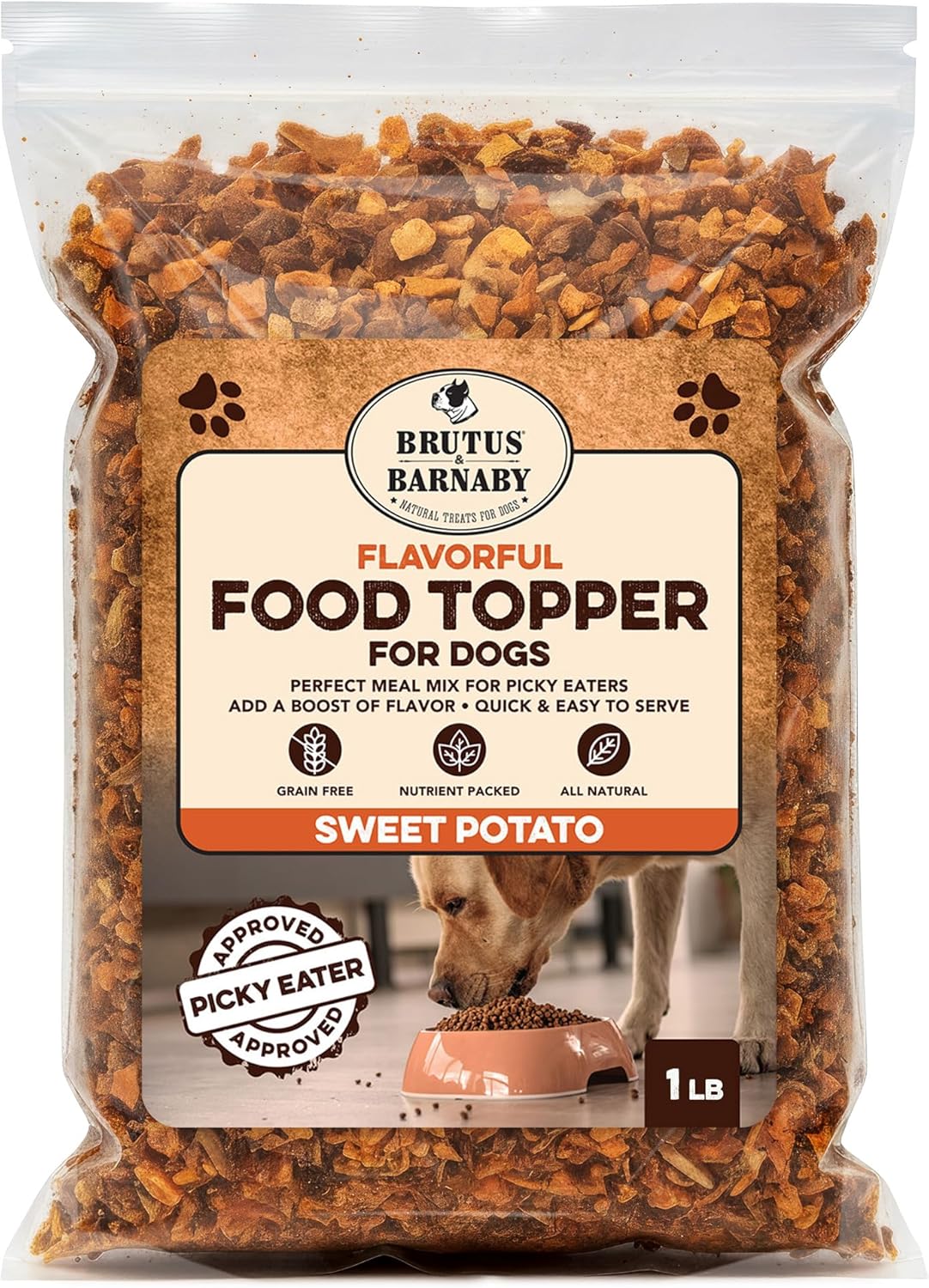
Sweet Potato Food Topper
A shelf-stable sweet potato topper to measure directly over your dog’s normal meal. Keep the package sealed and follow its storage directions rather than freezing unnecessarily.
- Convenient dry-meal addition
- Use a clean, dry scoop

Beef Liver Food Topper
A beef liver meal enhancer for dogs who enjoy savory flavor. Sprinkle a measured amount over food and keep remaining product protected from moisture.
- No thawing step needed
- Measure according to the label
When to Freeze a Prepared Topper Instead
A freshly cooked or rehydrated topper may be easier to portion before freezing. Use clean, freezer-safe containers, leave space for expansion and mark the preparation date. For commercial products, check whether freezing after opening or mixing is permitted.
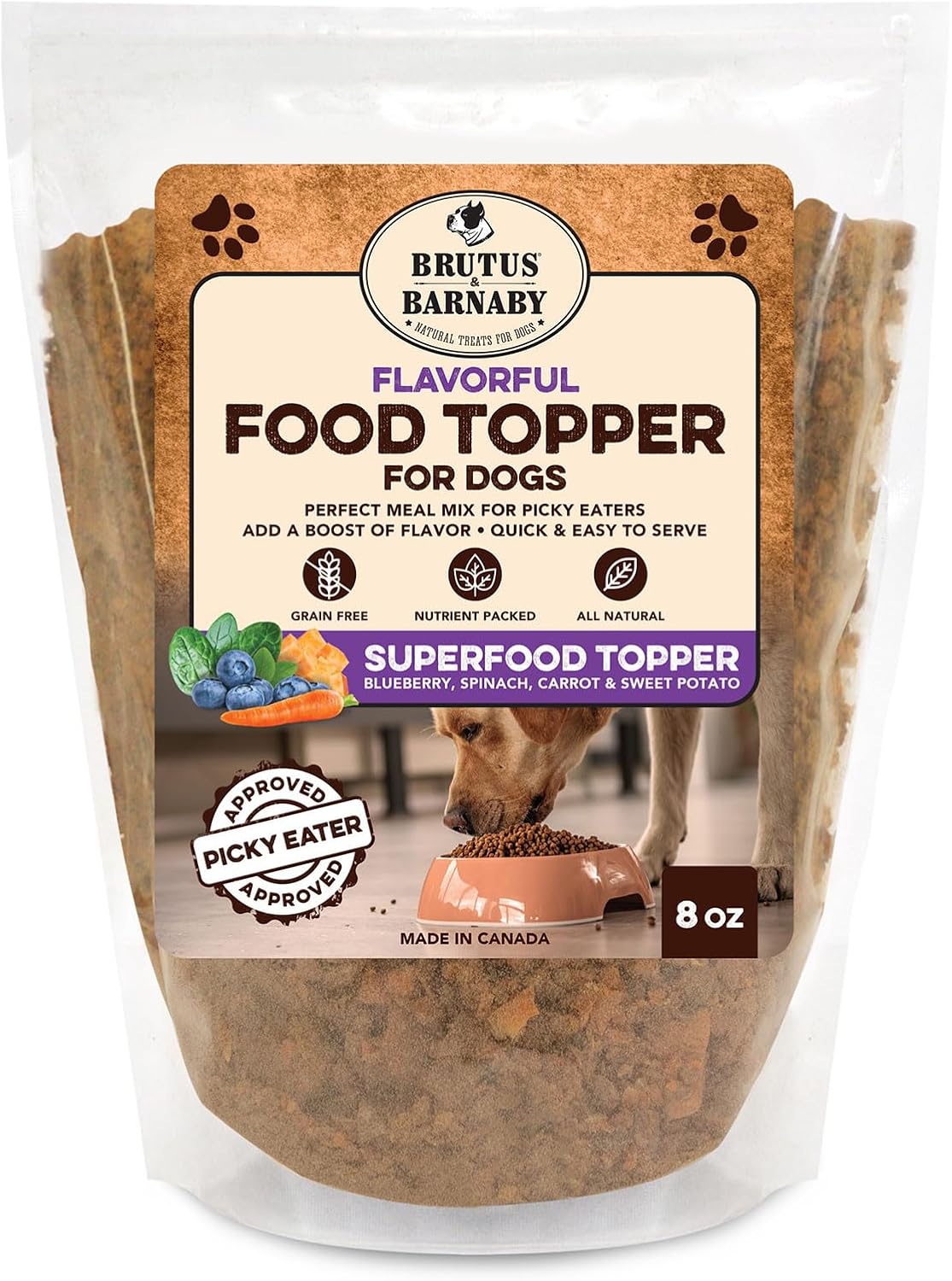
Superfood Food Topper
A plant-based meal enhancer that offers another shelf-stable topper option. Store it according to the package directions and mix only the portion you plan to serve.
- Easy dry storage routine
- Add moisture only when serving
Freeze Prepared Portions If...
- The ingredients are suitable for freezing
- You can cool and pack portions promptly
- You will thaw safely before serving
Keep a Topper Shelf-Stable If...
- The product is shelf-stable powder
- Its label calls for a cool, dry location
- You want to avoid condensation or clumps
Texture, Flavor and Safety After Thawing
Freezing often changes consistency more than flavor. Vegetable purees can release water; liquid mixtures may separate; and creamy or fatty components may look uneven after thawing. Gently stir a fully thawed topper and serve it at a comfortable temperature. Do not assume an altered or unpleasant odor is normal.
Food safety matters more than appearance. Thaw frozen prepared toppers in the refrigerator, not on a countertop. The CDC advises refrigerator thawing for frozen raw pet food; freezing itself does not eliminate all harmful germs. Wash hands and feeding utensils after preparation.
How to Freeze, Thaw and Serve Toppers
Plan by portion instead of freezing a large container you will repeatedly open. For suitable prepared toppers, use the steps below and follow product-specific instructions for storage duration. Keep treats and supplemental toppers within your dog's overall feeding plan.
Safety note: Discard food left too long at room temperature, with mold, unusual odor, damaged packaging or uncertain storage history. Do not refreeze repeatedly thawed portions; prepare smaller portions instead. Keep prepared toppers separate from dry powder stock.
Frequently Asked Questions
Make Mealtimes Simple, Fresh and Flavorful
Skip unnecessary freezing for dry toppers and focus on sealed storage, clean scoops and measured servings. Choose a Brutus & Barnaby meal enhancer that fits your dog’s tastes and daily feeding routine.
Shop Sweet Potato Topper