



Are Sweet Potato Dog Treats High in Fiber? What Labels and Serving Sizes Tell You
Sweet potato treats can contribute dietary fiber, but the amount varies by recipe, moisture and portion size. Learn how to read crude fiber percentages, compare treats fairly and choose reasonable servings for your dog.
Quick answer: Sweet potato dog treats can be a useful source of dietary fiber, especially when dried sweet potato is the main ingredient. But "high fiber" is not a universal guarantee. Check the guaranteed analysis, ingredients, moisture and calories, then consider the actual amount your dog eats. A crude fiber percentage describes part of the product's composition, not the grams of total fiber in one piece.
Are Sweet Potato Dog Treats High in Fiber?
Sweet potatoes naturally contain dietary fiber, but fresh, dried, sliced and flavored treats are not nutritionally identical. Drying removes much of the water, which changes the concentration of nutrients by weight. Different ingredients and processing methods change the finished treat, too.
Start with the ingredient list and guaranteed analysis rather than a front-of-bag claim. You can compare our Sweet Potato Slices with Sweet Potato Sticks with Pumpkin & Cinnamon to understand why ingredient lists and serving sizes matter. Always check the label on the package you actually purchase.
Simple rule: Read fiber together with serving size and calories. More fiber on the label does not automatically mean more is better for your dog.
How to Read Fiber on Sweet Potato Treat Labels
Five details make it easier to compare a single-ingredient slice with a flavored stick or a smaller fry.
| Label Detail | What It Tells You | What to Check |
|---|---|---|
| Crude fiber | Usually a maximum percentage in guaranteed analysis | Not the same as total dietary fiber |
| Ingredient list | Whether sweet potato leads the recipe | Other starches, flavors or added sugars |
| Moisture | How much water is in the finished treat | Compare dry and moist treats carefully |
| Calorie content | Energy per treat, ounce or kilogram | Use the same units for comparisons |
| Piece size | How much is actually served | Count pieces or weigh a sample |
For example, a label stating 5.4% crude fiber should not be read as a promise that every portion contains 5.4 grams of fiber. It describes a percentage by weight under the stated analysis; crude fiber testing also does not capture every type of dietary fiber. Review the label for that specific product before making a comparison.
Sweet Potato Treats to Compare by Label and Texture
Start with a straightforward recipe, then compare serving size and the guaranteed analysis when considering other forms. These options serve different treating habits rather than a single universal fiber target.
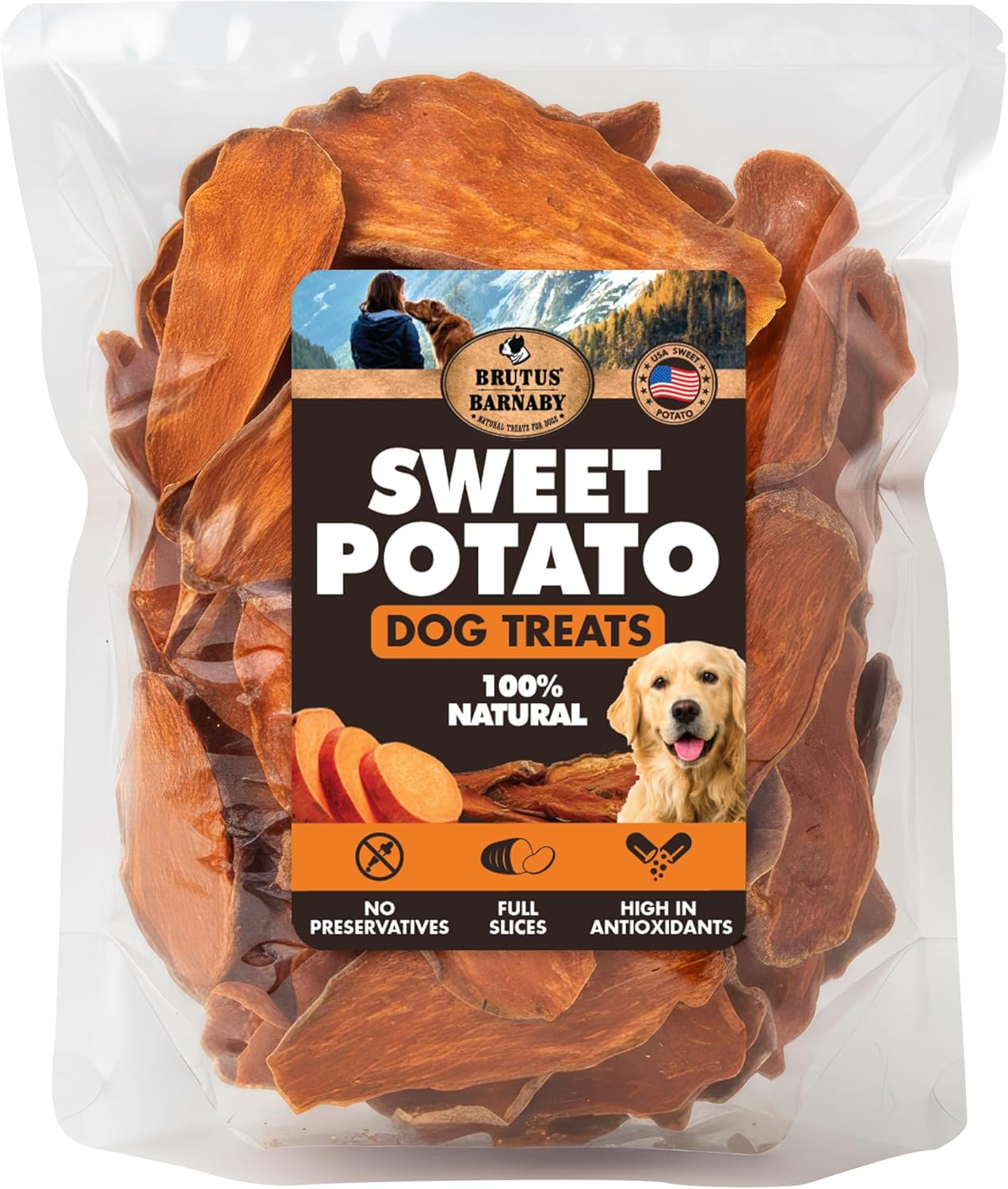
Sweet Potato Slices
A single-ingredient dried sweet potato option for dog parents who want a straightforward label and a chewy treat that can be portioned to suit their dog.
- Sweet potato is the only listed ingredient
- Check calories per piece or ounce

Sweet Potato Sticks - Pumpkin & Cinnamon
Crunchy sweet potato sticks with pumpkin and cinnamon offer a different texture. Compare the recipe and serving information rather than assuming flavored sticks have the same fiber as slices.
- Review the complete ingredient list
- Break pieces only when safely manageable
How Serving Size Changes the Fiber Conversation
A percentage on its own does not reveal how much fiber a dog gets during treat time. A large slice and a few small fries may have different weights, even when both start with sweet potato.

Sweet Potato Fries
Smaller sweet potato pieces can make portion planning more convenient. Review the same nutrition details as larger slices and count all treats in the daily calorie allowance.
- Smaller format for flexible portions
- Single-ingredient sweet potato recipe
Compare Per Serving
- Find the calorie statement
- Check piece weight when available
- Use a kitchen scale if practical
Watch the Whole Day
- Include training rewards and chews
- Keep a complete, balanced main diet
- Reduce portions when trying a new treat
Does More Fiber Mean a Healthier Treat?
Not necessarily. Fiber is one consideration alongside the complete diet, calories, ingredient tolerance and the dog's individual needs. More of a fiber-containing treat can also mean more calories, and a sudden increase in fiber may cause gas or changes in stool.
Introduce sweet potato treats gradually, offer water and pay attention to your dog's response. If your dog has ongoing diarrhea, constipation or a prescribed diet, speak with your veterinarian instead of using treats to manage symptoms. The WSAVA treat-feeding guide explains why treats should stay within a small share of daily calories.
A Practical Guide to Portions and Label Checks
The World Small Animal Veterinary Association recommends that treats contribute no more than 10% of daily calories. Your dog's appropriate amount varies with their size, activity, health and regular diet; the table below is a decision guide, not a fixed feeding schedule.
| Situation | Better Approach | Why It Helps |
|---|---|---|
| First time trying sweet potato | Start with a small piece | Lets you monitor stool and tolerance |
| Small dog or frequent training | Count or weigh tiny portions | Keeps extra calories in check |
| Comparing two fiber labels | Check moisture and serving units | Avoids misleading percent comparisons |
| Digestive concerns | Ask your veterinarian first | Treats are not a treatment plan |
Safety note: Supervise treats, select pieces appropriate to your dog's chewing ability, remove swallowing hazards and keep fresh drinking water available. Stop offering a treat if it causes discomfort.
Frequently Asked Questions
Choose Sweet Potato Treats With Confidence
Explore simple slices, crunchy sticks and smaller fries, then compare ingredients, fiber statements and serving sizes. The right treat is one your dog enjoys in a sensible portion alongside balanced daily meals.
Shop Sweet Potato Slices