



Sweet Potato Treats for Puppies: Benefits, Portions & Safety
Sweet potato treats can fit into many puppies’ routines when the texture and piece size suit the puppy, portions stay small, and treats do not crowd out the complete and balanced food needed for healthy growth.
Puppies have smaller mouths, rapidly changing calorie needs, developing chewing skills, and a greater nutritional dependence on complete puppy food than adult dogs. Those factors matter more than simply asking whether sweet potato itself is dog-friendly.
Yes, many puppies can have sweet potato treats in moderation. Choose a dog-friendly product, use a piece the puppy can chew and swallow safely, supervise eating, introduce it gradually, and count it within the puppy’s total treat allowance. Veterinary nutrition guidance generally recommends that treats and snacks contribute no more than about 10% of a growing puppy’s daily calories, leaving the large majority of nutrition to a complete and balanced puppy diet.
Are Sweet Potato Treats Good for Puppies?
Sweet potato can be a useful occasional treat ingredient for puppies, but its value depends on how it is prepared and how much is fed. It should complement a nutritionally complete puppy diet rather than become a major source of calories.
For puppy owners, some of the most practical benefits come from simplicity, portion flexibility, and having a non-meat treat option rather than from treating sweet potato as a nutritional supplement.
Easy ingredient screening
A single-ingredient sweet potato treat makes it straightforward to see exactly what is being introduced into your puppy’s diet.
Fiber and nutrients
Sweet potatoes naturally contain dietary fiber and micronutrients, although a treat should never be relied on to balance a puppy’s nutritional needs.
Can be portioned smaller
Breakable or smaller-format dog treats can make it easier to provide a modest reward instead of automatically serving a full large piece.
Sweet Potato Benefits: What Matters Most for a Growing Puppy?
The word “benefits” can make a treat sound more nutritionally important than it really is. Puppies need carefully balanced levels of energy, protein, fat, minerals, vitamins, and other nutrients for growth. A sweet potato treat is an extra—not the foundation of that nutrition.
How Much Sweet Potato Can a Puppy Have?
There is no reliable “one slice per puppy” rule. Puppies of the same age can have very different body weights and calorie requirements, and natural sweet potato pieces can vary in weight and dimensions.
Keep all treats within roughly 10% of daily calories
General veterinary nutrition guidance recommends that treats and snacks provide no more than about 10% of a growing puppy’s total daily calories. That allowance includes every extra—sweet potato treats, training rewards, chews, table food, enrichment snacks, and anything else outside the complete diet.
*Examples only. These are not recommended calorie intakes for specific puppies. Your puppy’s actual energy needs depend on current weight, expected adult size, growth rate, body condition, activity, diet, and veterinary guidance.
5 Rules for Giving a Puppy Sweet Potato Treats Safely
The right serving method matters as much as the ingredient itself.
Raw Sweet Potato vs. Dog-Friendly Sweet Potato Treats
A dehydrated dog treat is not the same thing as handing a puppy a chunk of raw sweet potato or sharing seasoned food from the dinner table. Preparation matters.
What Size Sweet Potato Treat Should a Puppy Get?
A manageable piece
The puppy can hold, chew, and work through the treat without immediately trying to swallow the entire piece. Smaller pieces can also make calorie control easier.
Gulping instead of chewing
If your puppy repeatedly attempts to swallow pieces whole, the current format may not be appropriate even if the ingredient itself is tolerated.
Age alone does not determine the right size. Two puppies of the same age may have very different mouth sizes, expected adult sizes, chewing styles, and swallowing behavior.
Can Sweet Potato Treats Cause Diarrhea in Puppies?
They can in some puppies. Any unfamiliar food or an excessive treat portion can contribute to loose stool, vomiting, or digestive discomfort. A puppy tolerating sweet potato once also does not mean unlimited portions will be tolerated.
Introduce one new treat at a time and keep the rest of the puppy’s routine relatively stable. That makes it easier to recognize whether a change follows the new food.
A careful introduction
Call your veterinarian when
A Single-Ingredient Sweet Potato Treat for Puppies
For owners looking specifically for dehydrated sweet potato treats for puppies, Brutus & Barnaby’s current Sweet Potato Slices page lists puppies among the recommended users and instructs owners to break the treat into smaller, manageable pieces for puppies, small dogs, or lighter chewers.
Puppy-selection rule: the product being labeled for puppies does not remove the need to consider your individual puppy’s mouth size, chewing behavior, digestive tolerance, calorie allowance, growth diet, and ability to manage the piece under supervision.
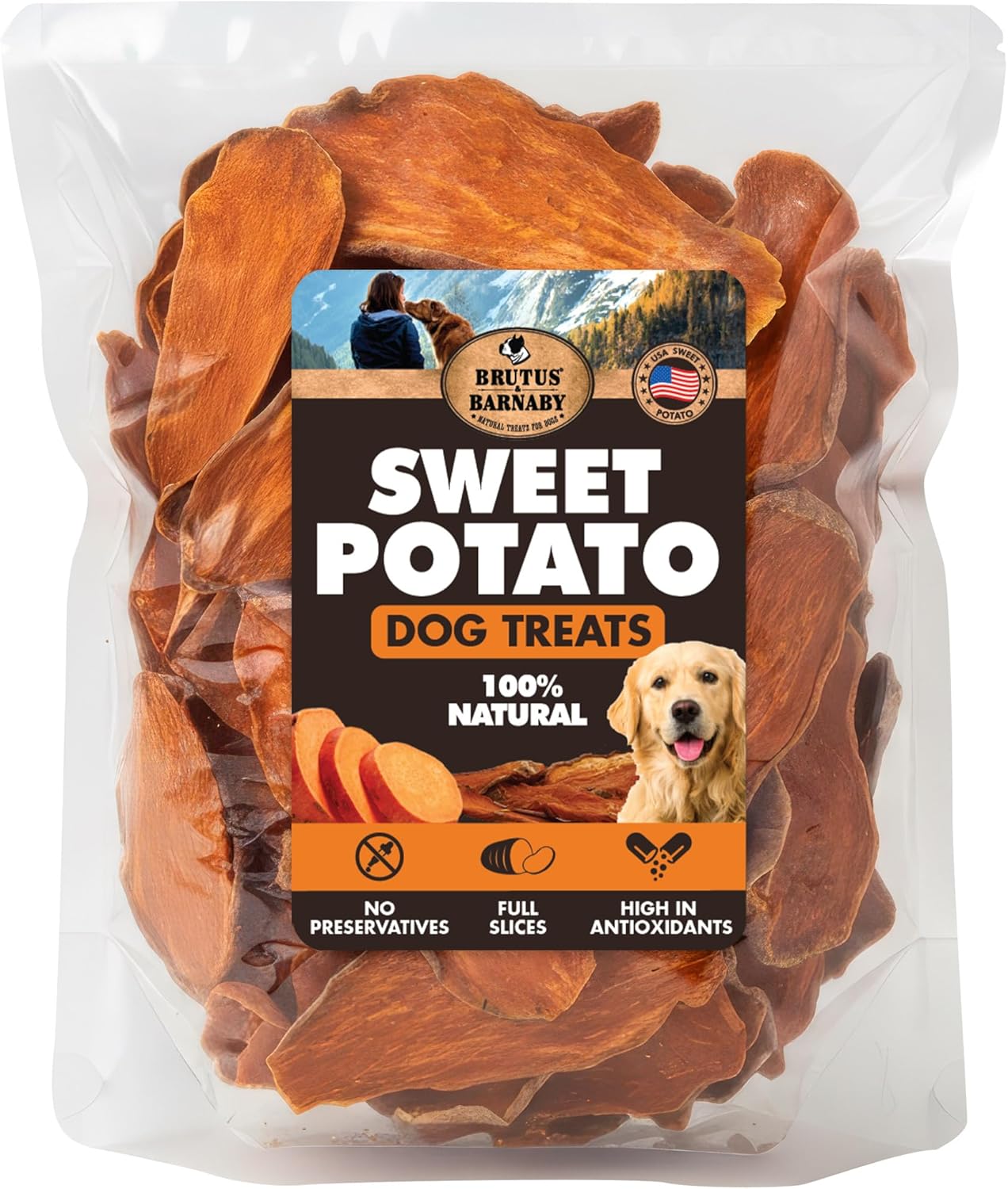
Sweet Potato Dog Treat Slices
A chewy, dehydrated sweet potato treat that can be divided into smaller manageable portions when appropriate for your puppy.
Slices or Fries: Which Sweet Potato Format Works Better for Puppies?
There is no universal winner. Brutus & Barnaby currently lists the same single sweet potato ingredient and the same calorie density for its Sweet Potato Slices and Sweet Potato Fries. The biggest practical difference is the cut.
Choose by the puppy, not the product name: a narrower piece is not automatically safe for every puppy, and a broad slice is not automatically too large if it is appropriately divided before serving.
Can You Use Sweet Potato Treats for Puppy Training?
You can use appropriately sized pieces as rewards, but puppy training often involves many repetitions. That makes portion size particularly important.
Practical tip: decide the total amount of treats you will use before the training session starts. Divide that allowance into tiny rewards instead of reaching repeatedly into the bag without tracking how much your puppy has eaten.
For high-repetition training, you can also reserve part of the puppy’s measured regular food for reinforcement, depending on the feeding plan recommended for your puppy.
What About Teething Puppies?
Teething can make puppies especially interested in chewing, but a food treat should not automatically be treated as a teething device. The puppy still needs to be able to manage the texture safely.
Watch the mouth
Pause a treat if chewing seems painful, gums bleed more than expected, the puppy repeatedly drops the food, or there is difficulty chewing or swallowing.
Watch the behavior
Some puppies chew deliberately while others gulp food quickly. A treat that works for one puppy may need to be divided further—or avoided—for another.
When to Ask Your Veterinarian Before Adding Sweet Potato Treats
Most healthy puppies do not need a complicated treat plan, but individual health and growth circumstances can change the answer.
Ask first when your puppy
Seek urgent care for
Learn More About Sweet Potato Treats
Compare preparation methods, portions, and different Brutus & Barnaby sweet potato formats before building them into your puppy’s treat routine.
Helpful Puppy Nutrition & Sweet Potato Resources
Use these resources for additional guidance on puppy calorie balance, treat limits, and properly prepared sweet potato.
VCA Animal Hospitals — Feeding Growing Puppies Guidance on growth nutrition, changing calorie needs, body condition, and keeping treats within the puppy’s overall diet. VCA Animal Hospitals — The 10% Treat Guideline Why treats and extras should remain a small share of total calorie intake instead of displacing complete nutrition. American Kennel Club — Can Dogs Eat Sweet Potatoes? Preparation and moderation guidance, including why raw sweet potato pieces should be avoided.Sweet Potato Treats for Puppies: Common Questions
Can puppies eat sweet potato?
Many puppies can have properly prepared sweet potato as an occasional treat. Use a manageable portion, avoid raw or heavily seasoned human food, and make sure treats remain a small part of the complete puppy diet.
How much sweet potato can a puppy eat?
There is no universal number of slices or grams for every puppy. Start with a small amount and count sweet potato together with all other treats. Treats and snacks should generally remain within about 10% of the puppy’s total daily calories.
Are dehydrated sweet potato treats safe for puppies?
They may be suitable for puppies that can safely manage the texture and tolerate the ingredient. Choose a dog-specific product, break larger pieces into manageable portions when directed, supervise eating, and remove unsafe fragments.
At what age can a puppy have sweet potato treats?
There is no single age cutoff that makes every sweet potato treat appropriate. Your puppy should already be able to eat solid food and safely manage the treat’s texture and size. Ask your veterinarian about very young puppies or when you are uncertain about feeding readiness.
Can sweet potato treats give puppies diarrhea?
Yes, some puppies may develop loose stool or other digestive upset after a new food or an excessive portion. Start small and stop the treat if symptoms develop. Contact your veterinarian when vomiting or diarrhea is repeated, severe, bloody, or accompanied by other concerning signs.
Are sweet potato treats good for teething puppies?
A puppy may enjoy chewing an appropriate sweet potato treat, but it should not be considered a universal teething solution. Choose a manageable texture, supervise closely, and stop if chewing appears uncomfortable.
Can a puppy have sweet potato treats every day?
Daily use may fit some puppies when the portion is small, the treat is well tolerated, and all treats remain within the puppy’s calorie allowance. Daily treats are not nutritionally necessary, and the puppy’s complete growth diet should remain the priority.
Sweet Potato Can Be a Treat—Not a Puppy Nutrition Shortcut
Sweet potato treats for puppies can be a practical occasional reward when the ingredient agrees with your puppy, the portion fits the daily calorie allowance, and the piece is appropriate for the puppy’s mouth and chewing style. Start small, supervise every treat, provide fresh water, and keep the vast majority of your puppy’s calories coming from a complete and balanced growth diet.
Find the Right Sweet Potato Format for Your Puppy
Compare current ingredients, textures, package sizes, calorie information, and feeding instructions before choosing a treat for your puppy.
Educational disclaimer: This article provides general educational information and is not veterinary, nutritional, diagnostic, or emergency advice. Treat suitability depends on your puppy’s age, size, growth stage, body condition, chewing and swallowing behavior, regular diet, calorie needs, digestive tolerance, medical history, allergies, and current medications. Always supervise treats, provide fresh water, use manageable portions, and follow the current product instructions. Consult your veterinarian before changing the diet of a puppy with ongoing digestive symptoms, a prescribed diet, growth concerns, food reactions, or another health condition. Product ingredients, analysis, calories, sizes, packaging, availability, and page information may change, so review the current product page and package before feeding.