



Are Beef Cheek Rolls Good for Heavy Chewers? Durability, Size & Safety
Beef cheek rolls can be a substantial, long-lasting option for many heavy chewers, but durability alone does not determine whether the chew is a good fit. Size, chewing technique, tooth condition, supervision, and how the roll changes during the session matter just as much.
A “heavy chewer” is not simply a large dog. Some smaller dogs chew with intense force, while some large dogs slowly soften a chew. Watch how your dog uses the chew rather than choosing by body weight alone.
Yes, beef cheek rolls can be a good chew for many heavy chewers because their broad, rolled format gives determined dogs a more substantial piece to work on than a quick treat. They are not automatically appropriate for every power chewer, however. Choose a roll that starts too large to swallow whole, supervise continuously, inspect the softened end, remove loose or swallow-sized pieces, and avoid dense chews when a dog has painful, damaged, loose, or vulnerable teeth.
Are Beef Cheek Rolls Good for Heavy Chewers?
For the right dog, they can be. Brutus & Barnaby's current Original Beef Cheek Rolls are made from beef cheek and are offered in 5–7 inch and 10–12 inch variants. Their broader rolled shape can give a strong chewer more material to grip and gradually soften than many smaller treats.
The important distinction is between a powerful dog that chews deliberately and a dog that tries to crush, tear off, or swallow large sections. The first may be a reasonable candidate for a beef cheek roll. The second needs much more caution regardless of how durable the chew appears.
Why Beef Cheek Rolls Can Last Longer for Strong Chewers
Chew durability comes from more than ingredient type. Starting dimensions, thickness, moisture, natural variation, jaw strength, chewing technique, and how much of the roll a dog can grip at once all affect how quickly it is reduced.
A broad rolled starting shape
A beef cheek roll gives the dog a relatively substantial cylinder to work around. For a deliberate chewer, that can create a longer project than a thin strip or small snack.
No chew-time guarantee
One heavy chewer may work on a roll across several sessions while another reduces a similar piece much faster. Natural variation and individual technique make an exact number of minutes or hours unreliable.
Durability is not the same as safety: a chew lasting a long time does not automatically mean the texture is suitable for that dog's teeth or that the final softened portion is safe to swallow.
Beef Cheek Roll Size for Heavy Chewers
Brutus & Barnaby currently offers Original Beef Cheek Rolls in 5–7 inch and 10–12 inch options. These length ranges give you two starting formats, but length should not be used as the only sizing rule.
What Actually Determines Beef Cheek Roll Durability?
The words “heavy chewer” do not predict exactly how long one roll will last. Several variables work together.
Jaw strength & technique
A dog that repeatedly attacks one end may reduce the roll differently from a dog that rotates it and gnaws across the surface.
Natural variation
Edible animal chews are not perfectly identical. Thickness, shape, moisture, and density can vary from piece to piece.
How long it is offered
One roll used across several supervised sessions may appear to “last” much longer than the same roll left with a dog for one extended session.
A More Substantial Natural Chew for Strong Chewers
If your dog already tolerates beef and handles dense edible chews deliberately, Brutus & Barnaby Original Beef Cheek Rolls provide a broad rawhide-free format available in two current length ranges.
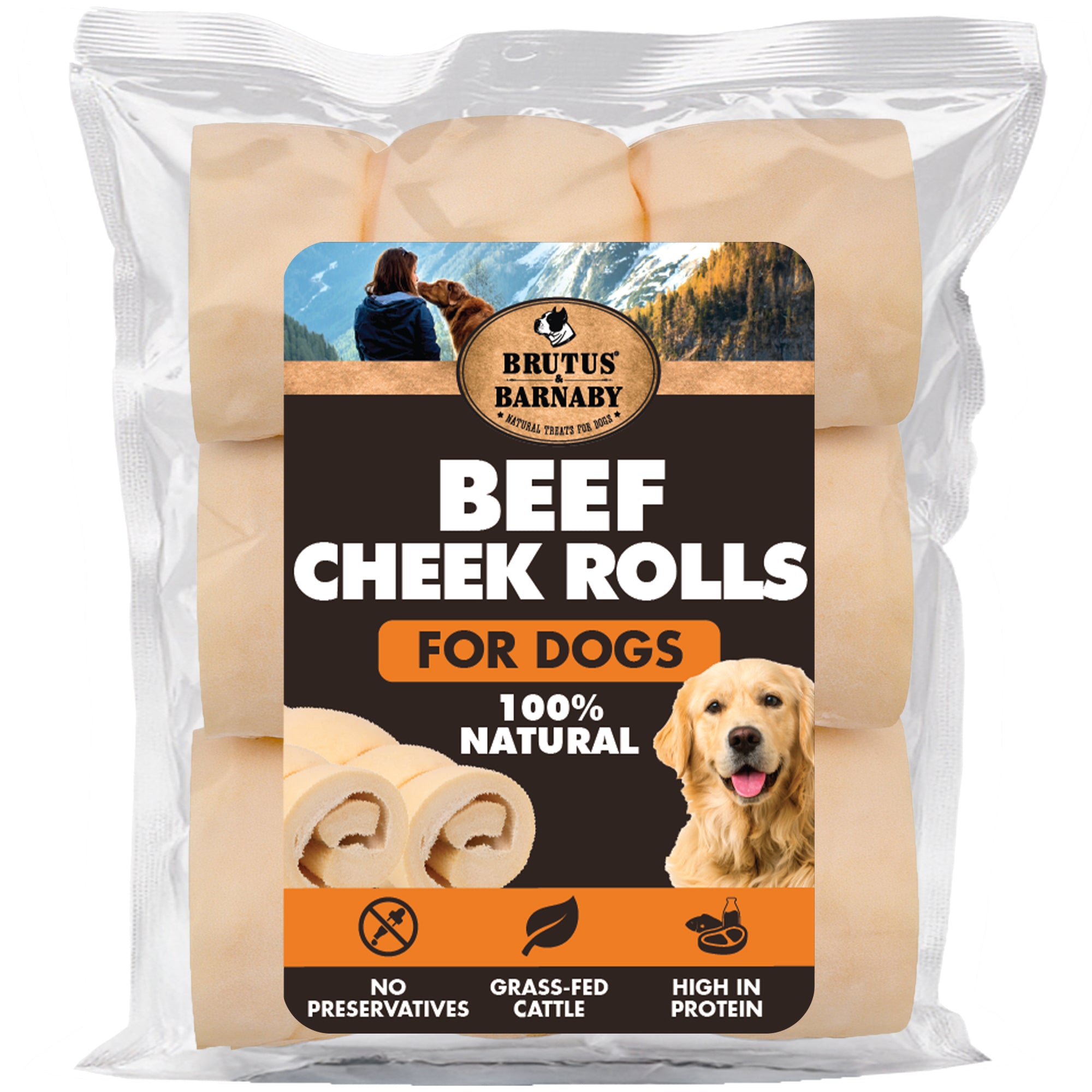
Original Beef Cheek Rolls for Dogs
A broad rolled beef chew for dogs that need something more substantial than a quick treat and can safely work through a dense texture under active supervision.
Heavy Chewers Still Need Tooth-Safety Checks
Strong jaws do not mean indestructible teeth. Veterinary dental guidance warns that very hard chewing objects can contribute to tooth fractures, so the goal should not be to find the hardest possible chew.
Natural edible chews can also change during a session. Inspect the roll before offering it and continue checking as saliva softens the surface and your dog exposes new layers.
A better session looks like
Stop the session when
How Long Should a Heavy Chewer Have a Beef Cheek Roll?
There is no universal session length that makes a beef cheek roll appropriate for every dog. A practical approach for a dog trying one for the first time is to use a short supervised session as an observation period and adjust only after seeing how the dog handles the chew.
About 10–15 minutes can be a useful observation period
This is a cautious introductory routine rather than a universal veterinary time limit. Check how quickly the roll softens, whether pieces separate, whether your dog tries to gulp, how much material is consumed, and how digestion responds afterward.
A calm dog that handles the roll well may eventually have longer supervised sessions. A powerful gulper may need the chew removed much sooner—even when only a few minutes have passed.
Digestibility Does Not Remove Swallowing Risk
Brutus & Barnaby Original Beef Cheek Rolls are an edible beef chew rather than a non-food toy. That does not mean owners should encourage dogs to swallow large sections.
Any piece that is too large to move normally through the digestive tract can create a serious problem. If your dog swallows a concerningly large piece, contact your veterinarian for individualized advice and watch closely for symptoms.
Call a veterinarian promptly after a concerning ingestion if your dog develops repeated vomiting, loss of appetite, abdominal pain, unusual lethargy, diarrhea, repeated gagging, or another significant change. Trouble breathing or active choking requires emergency attention.
Do Beef Cheek Roll Calories Matter for Heavy Chewers?
Yes. A long-lasting edible chew is still part of the day's food intake. The current Brutus & Barnaby Original Beef Cheek Roll product page lists approximately 100 calories per ounce.
That figure does not tell you exactly how many calories your dog consumes during one session because natural pieces vary in weight and your dog may consume only part of the roll.
Keep treats and extras within about 10% of daily calories
General veterinary nutrition guidance recommends that most of a dog's calories come from a complete and balanced diet, with treats and other extras making up no more than about 10%. Dogs with weight concerns or medical diets may need a more individualized allowance.
When a Beef Cheek Roll May Not Be the Right Heavy-Chewer Option
A supervised trial may make sense when
Ask your veterinarian first when
A Five-Step Beef Cheek Roll Routine for Heavy Chewers
Learn More About Beef Cheek Rolls
Continue with guides covering chew time, alternative beef-chew formats, and choosing between Original and flavored beef cheek rolls.
Helpful External Resources
These veterinary resources provide additional context on tooth fractures, swallowed-object emergencies, and managing treat calories.
Cornell University College of Veterinary Medicine — Risks From a Fractured Tooth Veterinary guidance on hard chewing objects, tooth fractures, appropriate chew sizing, and signs of dental pain. Cornell University College of Veterinary Medicine — Gastrointestinal Foreign Body Obstruction Information on obstruction risks, warning signs, diagnosis, and why prompt veterinary attention matters. VCA Animal Hospitals — Dog Treats Veterinary nutrition guidance on treat calories, the 90/10 approach, food allergies, and medical-diet considerations.Beef Cheek Rolls for Heavy Chewers: Common Questions
Are beef cheek rolls good for aggressive or heavy chewers?
They can be a good fit for many strong chewers because the rolled format provides a substantial piece to work on. Suitability still depends on tooth condition, mouth size, chewing technique, supervision, and whether the dog tries to swallow large sections.
How long does a beef cheek roll last for a power chewer?
There is no dependable universal chew time. One dog may use a roll across several sessions while another reduces a similar piece quickly. Roll dimensions, natural variation, jaw strength, chewing style, and session length all affect durability.
What size beef cheek roll should I give a heavy chewer?
Choose a roll that begins too large to swallow whole and suits the dog's mouth and chewing technique. Brutus & Barnaby currently offers 5–7 inch and 10–12 inch Original Beef Cheek Rolls. Larger dogs and determined chewers may benefit from a more substantial starting piece, but length alone does not determine safety.
Can beef cheek rolls break a dog's teeth?
Any sufficiently hard chewing object can create dental-injury concerns, particularly when a dog bites down with substantial force. Dogs with broken, loose, painful, worn, or recently treated teeth should be evaluated before being offered dense chews.
When should I take a beef cheek roll away?
Remove it when the remaining section becomes small enough to swallow, large layers detach, the dog begins gulping instead of chewing, the roll becomes contaminated or spoiled, or your dog shows mouth pain, bleeding, gagging, vomiting, or another concerning sign.
Can my dog finish an entire beef cheek roll?
Finishing the roll should not be the goal. Many dogs can use one across multiple supervised sessions. End the session before the remaining portion becomes small enough to swallow without adequate chewing.
How many calories are in a beef cheek roll?
Brutus & Barnaby's current Original Beef Cheek Roll page lists approximately 100 calories per ounce. Natural rolls vary in weight, so that does not provide one exact calorie number for every individual roll. Count the amount consumed toward the dog's daily treat allowance.
What if my dog swallows a large piece of beef cheek?
Contact your veterinarian for guidance, particularly when the piece was large relative to the dog. Seek prompt care for repeated vomiting, abdominal pain, appetite loss, marked lethargy, repeated gagging, or other concerning signs, and seek emergency care for active choking or difficulty breathing.
Beef Cheek Rolls Can Fit Heavy Chewers—When Chewing Stays Controlled
Beef cheek rolls can be a useful long-lasting chew for many heavy chewers because their broad rolled format provides a substantial starting piece. The best candidate is a dog with suitable teeth that gnaws deliberately instead of crushing or gulping. Choose an appropriate starting size, supervise every session, monitor calories, inspect softened sections frequently, and remove the chew before the final portion becomes easy to swallow.
Explore Brutus & Barnaby Beef Cheek Rolls
Compare the current 5–7 inch and 10–12 inch Original Beef Cheek Roll options and choose according to your dog's mouth size, dental condition, chewing style, and treat-calorie needs.
Educational disclaimer: This article provides general educational information and is not veterinary, dental, nutritional, diagnostic, or emergency advice. Chew suitability depends on your dog's age, size, mouth anatomy, tooth and gum condition, chewing behavior, medical history, regular diet, calorie needs, allergies, digestive tolerance, and current medications. Always supervise chewing, provide fresh water, remove loose or swallow-sized sections, and consult your veterinarian when your dog has dental disease, repeated digestive symptoms, a history of swallowing foreign objects, a prescribed diet, or another health condition. Product ingredients, analysis, sizes, packaging, availability, and page information may change, so review the current product page and package before feeding.