



How Long Should a Dog Chew a Beef Cheek Roll?
A long-lasting chew does not need to become one long, uninterrupted session. The right stopping point depends less on one universal timer and more on your dog's chewing style, the condition of the roll, digestion, calories, and whether the remaining piece can still be handled safely.
The most common mistake is assuming a beef cheek roll should stay with the dog until either the clock runs out or the entire chew disappears. Neither rule works for every dog.
Start with a short supervised session, then adjust by what your dog shows you
For a dog trying a beef cheek roll for the first time, a cautious 10–15 minute introductory session is a practical starting routine—not a universal veterinary rule. Use that first session to watch how your dog chews, whether large pieces come loose, how quickly the roll softens, and how your dog's digestion responds afterward.
Dogs that chew calmly and tolerate the product well may gradually have longer supervised sessions. Strong gulpers, dogs new to dense chews, smaller dogs, and dogs watching calories may need shorter sessions. Always stop earlier when the chew itself or your dog's behavior gives you a reason.
“How Long Does It Last?” and “How Long Should My Dog Chew?” Are Not the Same Question
A beef cheek roll can potentially last through multiple supervised sessions. That total lifespan is different from the amount of uninterrupted chewing time that makes sense today.
How long one roll lasts overall
This depends on the roll's size, your dog's jaw strength, chewing style, and whether the chew is used across several sessions.
How long your dog chews right now
This depends on supervision, the condition of the chew, your dog's behavior, calorie needs, and digestive tolerance.
That is why one owner may put the same roll away after a calm session and offer it again later, while another may need to remove it much sooner because their dog starts trying to swallow softened pieces.
A Better First-Session Routine
The first beef cheek roll should be an observation session, not a test of how long your dog can keep going.
Choose a calm time
Offer the chew when you can stay nearby and pay attention. Do not make the first session the moment you need to leave the house.
Start conservatively
Around 10–15 minutes can be a useful first-session checkpoint for a dog that is new to beef cheek rolls. The point is to learn how the dog handles the chew.
Inspect the roll before giving it back
Look for loose sections, unusual sharp areas, or an end piece that has become small enough for your dog to fit fully in the mouth.
Watch what happens afterward
Appetite, stool quality, vomiting, unusual discomfort, and other digestive changes matter when deciding whether the next session should be longer, shorter, or skipped.
Adjust Chew Time by the Dog in Front of You
Do not assume a power chewer automatically deserves the longest session. A dog that attacks a chew aggressively may actually need more frequent check-ins than a calm, methodical chewer.
| Dog or Situation | Better Session Approach | Watch Most Closely For |
|---|---|---|
| First-time beef cheek chewer | Start with a short supervised introduction and reassess. | Chewing style, loose pieces, digestive response. |
| Calm, experienced chewer | Longer supervised sessions may be reasonable when the chew remains manageable. | Gradual size reduction and the remaining end piece. |
| Power chewer | Use frequent check-ins rather than assuming stronger jaws mean unlimited time. | Large pieces separating, rapid size changes, frantic chewing. |
| Small dog | Use shorter sessions and choose the product size carefully. | Calorie intake, oversized pieces, difficulty managing the chew. |
| Gulper or frantic chewer | Keep sessions tightly supervised and stop as soon as chewing turns into swallowing attempts. | Whole-mouth gripping, swallowing chunks, ignoring normal chewing. |
There is no universal minute limit that makes every beef cheek roll safe for every dog. Session quality and chew condition matter more than chasing an exact number.
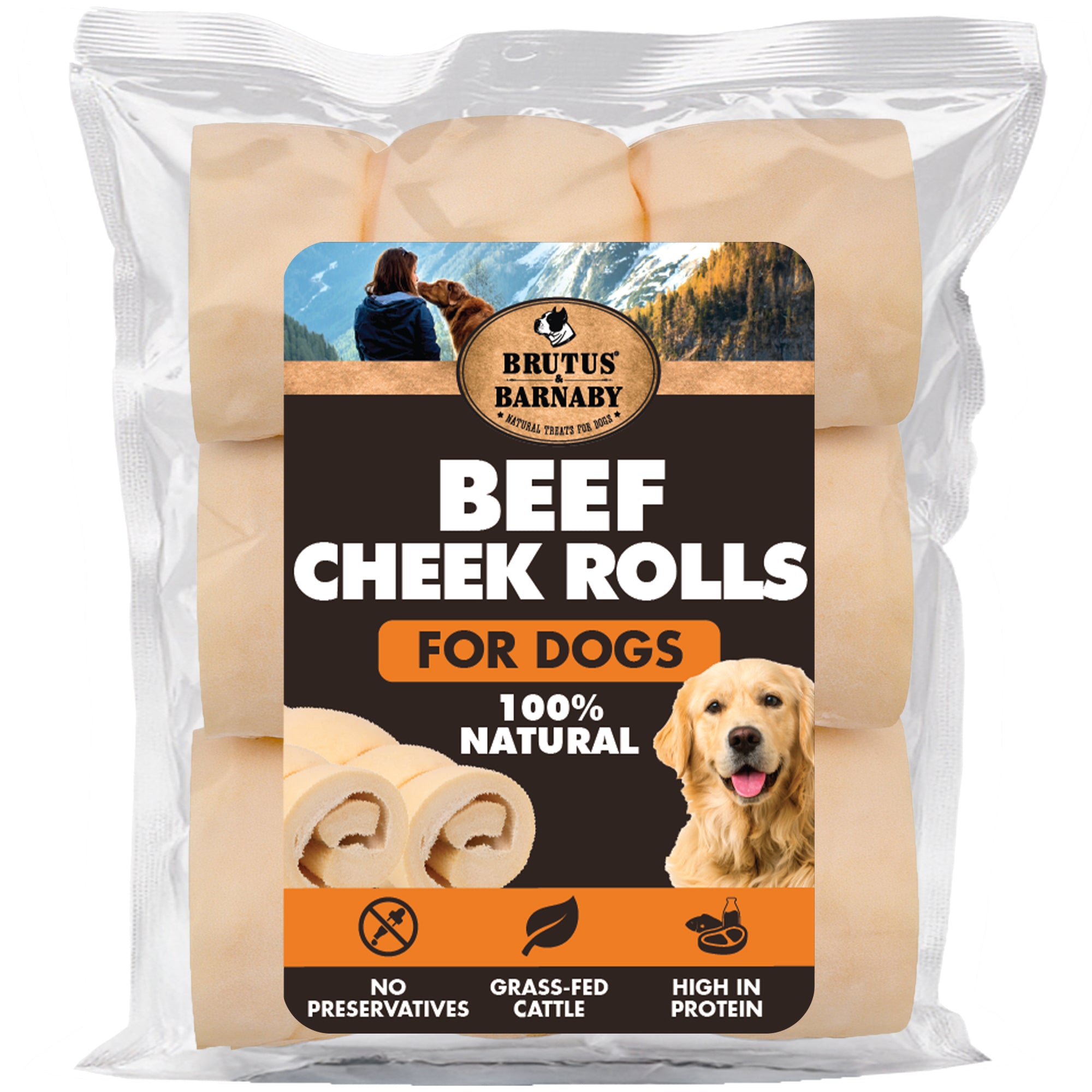
Beef Cheek Rolls for Dogs | Long-Lasting Rawhide-Free Chews
A more substantial chew for dogs that need longer engagement than a quick treat. Available in shorter and longer size options so the chew can be matched more carefully to the individual dog.
- Made from natural beef cheek
- Rawhide-free long-lasting chew
- Available in 5"–7" and 10"–12" options
- Best used during supervised chew time
The Four Stop Signals Matter More Than the Timer
A timer is useful for remembering to check the session. It should never overrule what you can see happening in front of you.
The remaining piece can fit fully in the mouth
Once the chew becomes small enough to swallow rather than work on gradually, it is time to take it away.
Large sections begin coming loose
Pause the session when your dog is separating pieces faster than they can chew them down safely.
Chewing turns into frantic gulping
A dog trying to swallow the chew or softened sections needs the session ended even if only a few minutes have passed.
Your dog shows discomfort
Stop for coughing, repeated gagging, mouth pain, bleeding, unusual pawing at the mouth, vomiting, or other concerning changes.
The clock can tell you when to check. The chew tells you when to stop.
A dog that is calmly working on a large, intact roll may be in a very different situation from a dog that has quickly reduced the same chew to a small, slippery end piece.
Should a Dog Finish a Whole Beef Cheek Roll in One Sitting?
Not necessarily. Finishing the entire roll is not the goal of the session.
Some larger, experienced dogs may eventually consume more of an appropriately sized roll. Other dogs are better served by having the same chew spread across several supervised sessions. The better choice depends on:
- How quickly the dog reduces the roll
- Whether pieces separate or stay manageable
- The size of the remaining chew
- How much has actually been consumed
- The dog's total treat intake that day
- Digestive tolerance
Calm chewing on a large, manageable roll
Your dog is working gradually, the chew remains appropriately sized, and you can continue supervising.
“My dog wants to keep going”
Enthusiasm alone is not a safety signal. Many dogs would happily continue past the point where the chew should be removed.
Long Chew Time Still Counts as Treat Intake
It is easy to think of a beef cheek roll as an activity instead of food. It is both.
The current Brutus & Barnaby Beef Cheek Rolls product page lists the chew at 100 calories per ounce. That does not tell you exactly how many calories your dog consumes in one session because the amount actually eaten varies, but it does mean a long chew session can contribute meaningful calories.
Do not judge intake only by how much of the roll is left
A dog may soften, strip, and consume part of the chew without finishing it. Count beef cheek chewing alongside training treats, snacks, toppers, table extras, and other edible chews when planning the day.
A common veterinary nutrition guideline is to keep treats and other extras within about 10% of daily calories, although individual needs vary. Dogs with weight concerns, medical conditions, prescription diets, or a history of digestive problems need more specific veterinary guidance.
The Right Session Starts With the Right Size
A timer cannot fix a chew that is too small for the dog from the beginning. Brutus & Barnaby Beef Cheek Rolls are currently offered in 5"–7" and 10"–12" options.
5"–7" options
May be easier for appropriately sized dogs to handle, but the chew still needs to remain too large to swallow whole.
10"–12" options
Often a better direction for larger dogs and stronger chewers that need a more substantial piece to work on under supervision.
Choose by mouth size and chewing behavior, not weight alone. When in doubt, read our guide to choosing the right chew size for your dog before the first session.
Can You Give the Same Beef Cheek Roll Again Later?
An unfinished roll may be used across more than one session when it remains in good condition and is handled according to the product's storage guidance. Before offering it again, inspect it as carefully as you did the first time.
For a deeper routine, read our guide to storing dog chews to maintain freshness.

Peanut Butter Beef Cheek Rolls for Dogs | Long-Lasting Rawhide-Free Chews
The same long-chew format with added peanut butter flavor for dogs that need extra motivation to stay interested in supervised chew time.
- Beef cheek chew base
- Added peanut butter flavor
- Available in 5"–7" and 10"–12" options
- Designed for longer supervised chewing
What If Your Dog Swallows a Large Piece?
Do not assume that every swallowed piece will cause a problem, but do not ignore a large swallowed section either. The concern depends on the dog's size, the size and shape of the piece, and how the dog is acting.
- Your dog is choking or struggling to breathe
- Repeated coughing, gagging, or retching occurs
- Your dog vomits repeatedly
- Appetite disappears
- The abdomen appears painful or swollen
- Your dog becomes unusually lethargic
- Stool changes or straining become concerning
For dogs that repeatedly try to swallow chews rather than work on them gradually, read our guide to dogs swallowing chews whole before offering another long-lasting chew.
Related Beef Cheek and Long-Chew Guides
For the dental-use angle, read how beef cheek rolls fit into a broader dental routine.
For dogs that destroy ordinary treats quickly, see our guide to long-lasting dog chews for power chewers.
For a wider comparison, explore bully sticks vs. ears vs. beef cheek rolls.
Helpful External Resources
These veterinary resources provide additional guidance on supervision, swallowed objects, chew selection, and keeping edible treats within a balanced diet.
Useful veterinary context on chewing, tooth damage, choking concerns, and why individual supervision matters.
Explains why objects that can be swallowed and signs of possible obstruction deserve veterinary attention.
Helpful guidance on treat calories, the 90/10 approach, introducing new treats gradually, and individual health considerations.
Beef Cheek Roll Chew Time FAQs
How long should I let my dog chew a beef cheek roll?
There is no universal time for every dog. For a dog that is new to beef cheek rolls, a cautious 10–15 minute introductory session can help you observe chewing style and tolerance. Calm, experienced dogs may gradually have longer supervised sessions when the chew remains appropriately sized and in good condition.
Can my dog finish a whole beef cheek roll?
Sometimes, depending on the dog and the size of the roll, but finishing the entire chew should not be the goal. Many dogs are better served by having the chew across multiple sessions. Remove it before the remaining piece becomes small enough to swallow whole.
How long does one beef cheek roll last?
Total chew life varies widely. A calm chewer may use one roll across multiple sessions, while a powerful chewer may reduce it much faster. Roll size, jaw strength, chewing style, and how often the chew is offered all affect total duration.
How often can dogs have beef cheek rolls?
Frequency depends on the dog's size, calorie needs, diet, health, and how much of the roll is consumed during each session. The current Brutus & Barnaby product guidance says many dogs can enjoy a beef cheek roll a few times per week, but individual needs vary and edible chews should count toward overall treat intake.
Can I give my dog the same beef cheek roll again tomorrow?
An unfinished roll may be used again when it remains in good condition and has been handled according to the product's storage guidance. Inspect it before every session and discard it if it smells sour, looks moldy, has become unsafe in size, or has changed in a concerning way.
When should I throw away a beef cheek roll?
Throw it away when the remaining piece is small enough to swallow whole, the chew develops unsafe loose sections, contamination or spoilage is suspected, or the product has changed in a way that concerns you.
Are beef cheek rolls good for power chewers?
Beef cheek rolls can be a strong fit for many medium and large power chewers because they are more substantial than quick treats. Powerful chewing does not remove the need for supervision, correct sizing, frequent inspection, and removal of small end pieces.
What should I do if my dog swallows a large piece of beef cheek?
Contact your veterinarian for advice, especially when the piece was large relative to the dog or symptoms appear. Urgent concerns include trouble breathing, repeated gagging or retching, repeated vomiting, abdominal pain or swelling, loss of appetite, unusual lethargy, or concerning stool changes.
Use the timer as a checkpoint—not permission to ignore the chew
A beef cheek roll may last through several sessions, but no dog earns unlimited chewing time just because the product is designed to last. Start conservatively, learn how your dog handles the roll, and let the chew's changing condition decide when the session ends.
The safest beef cheek session is not the longest one—it is the one that ends while the chew is still appropriately sized, your dog is still chewing calmly, and you are still paying attention.
Choose the Beef Cheek Roll That Fits Your Dog's Routine
Pick original for a classic natural beef cheek chew or peanut butter flavor for dogs that need extra motivation—then size carefully, supervise the session, and remove the end piece before it becomes a gulping risk.
This article is for educational purposes and is not a substitute for veterinary advice. Every dog is different, and chew time should be adjusted for the individual dog's size, age, dental health, diet, chewing style, digestive tolerance, and medical needs. Always supervise edible chews, choose an appropriate size, remove pieces that could be swallowed whole, and count edible chews within the dog's overall treat intake. Contact your veterinarian about swallowed pieces, ongoing digestive problems, mouth pain, choking concerns, or other health symptoms.