



Original vs. Peanut Butter Beef Cheek Rolls: Which Is Better?
Same long-lasting chew category. Two different reasons to choose. The Original keeps the ingredient list as simple as possible, while the Peanut Butter version adds a more exciting flavor profile.
Your dog cannot read ingredient labels. Your dog can, however, make it very clear when one chew is far more exciting than another. So should you keep things simple with Original — or go straight for Peanut Butter?
Choose Original Beef Cheek Rolls when you want the shortest ingredient list: 100% beef cheek. Choose Peanut Butter Beef Cheek Rolls when your dog benefits from a more flavor-forward chew: the live ingredient panel lists beef cheek plus peanut butter flavoring. Both versions are currently listed at 100 calories per ounce with the same guaranteed analysis, so the better choice is mainly about ingredient simplicity, flavor preference, size, and your dog's chewing style.
The Biggest Difference Is Simpler Than It Looks
Both products belong to the same beef cheek roll family. Both are designed for longer supervised chewing, both are rawhide-free, and both come in short and long size options.
The main difference is what gets added to the base chew.
The useful takeaway: the Peanut Butter version is not automatically a lighter, richer, longer-lasting, or lower-calorie product based on the current live nutrition panels. The real decision is simpler recipe versus added flavor.
Choose Original When Ingredient Simplicity Comes First
The Original version has the easiest ingredient panel to understand: 100% beef cheek.
That makes it the more logical starting point when your priority is keeping the treat routine straightforward or when you simply do not need extra flavor to keep your dog interested.
Your dog already loves beef chews
Plain chews keep getting ignored
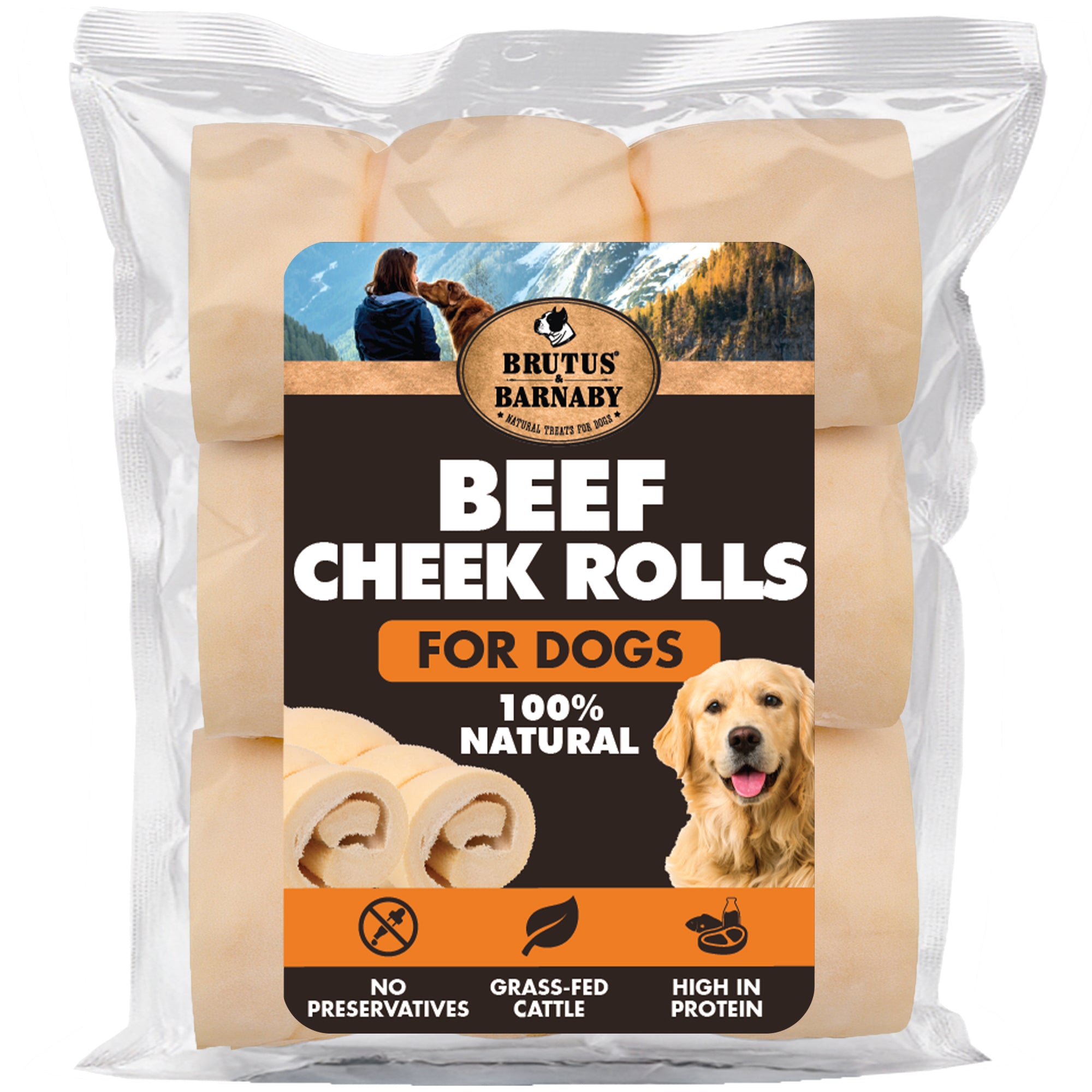
Beef Cheek Rolls for Dogs | Long-Lasting Rawhide-Free Chews
The straightforward choice when you want the beef cheek roll experience without added flavoring.
Choose Peanut Butter When Flavor Appeal Matters More
The Peanut Butter version keeps the same beef-cheek base but adds peanut butter flavoring.
That does not automatically make it better for every dog. It makes it a more interesting choice for dogs that need a reason to stay engaged with a longer chew.
The flavor advantage: a dog that walks away from plain long-lasting chews may be more interested in a flavor-forward option. Preference is individual, so the better chew is the one your dog will actually use safely.
A stronger flavor profile can make a familiar chew format feel more interesting.
Rotate flavor while keeping the same general long-lasting cheek-roll category.
A more exciting option for dogs that need a substantial supervised chewing session.

Peanut Butter Beef Cheek Rolls for Dogs | Long-Lasting Rawhide-Free Chews
A flavor-forward beef cheek option for dogs that need more excitement from a longer supervised chew.
Which One Is Better for a Picky Dog?
The Peanut Butter version is the more obvious first choice when a dog's main problem is lack of interest.
That does not mean every picky dog will prefer it. Dogs can reject treats because of texture, size, timing, stress, dental discomfort, overfeeding, or simple personal preference. Flavor is only one part of the decision.
For a broader strategy, read our dog treat rotation guide before constantly buying a completely new treat every time your dog loses interest.
Which One Lasts Longer?
There is no verified reason to promise that Peanut Butter lasts longer than Original — or that Original lasts longer than Peanut Butter — simply because of flavor.
Chew time depends heavily on the individual dog's size, jaw strength, chewing technique, the dimensions of the roll, and how long the session is allowed to continue.
Flavor is only one small part of the experience
A better comparison is size versus chewing style, not flavor versus flavor.
5–7 Inches vs. 10–12 Inches: Size May Matter More Than Flavor
Both live product pages currently offer shorter 5–7 inch rolls and longer 10–12 inch rolls.
The right length should be chosen around your dog's size, mouth, chewing style, and ability to handle the chew safely — not simply around which package looks like the better value.
The more compact starting point
Consider the shorter format when a longer roll would be excessive for the individual dog or when you want a more compact supervised chew session.
The larger-format option
Consider the longer format for larger dogs and strong chewers that need a more substantial chew that remains easier to hold and supervise.
Sizing rule: a chew that begins large can become swallow-sized as the session continues. Supervise throughout and remove the remaining piece before your dog can gulp it whole.
Are the Calories Different?
According to the current live Brutus & Barnaby product pages, no difference is listed in calorie density.
Both Original and Peanut Butter Beef Cheek Rolls are currently listed at 100 calories per ounce.
Do not turn 100 calories per ounce into a fixed calorie claim per roll. Natural chews vary in dimensions and weight. The amount your dog actually consumes matters more than simply counting one roll as one identical serving.
Does the Peanut Butter Flavor Mean You Should Add Your Own Peanut Butter?
No. A ready-made peanut butter flavored dog chew is not an invitation to cover every chew with whatever human peanut butter happens to be in the kitchen.
The FDA warns that xylitol is toxic to dogs and can appear in some human foods and products. Never assume a human peanut butter or spread is safe simply because dogs usually enjoy peanut butter.
Use the dog treat as formulated
Follow the product information, introduce it gradually, and let the existing flavor profile do the work.
Random human spreads
Do not add a human peanut butter or sweetened spread unless you have checked every ingredient and know it is appropriate for your dog.
Which Version Is Better for a First-Time Beef Cheek Dog?
Original is usually the cleaner first test when your dog has never had beef cheek before.
Starting with fewer variables makes it easier to judge three separate things: whether your dog likes the base chew, how your dog handles the dense texture, and how the ingredient fits their digestive routine.
See our complete guide to safely introducing new dog chews before turning a new long-lasting chew into a regular routine.
Can You Rotate Between Original and Peanut Butter?
Yes. You do not have to make one permanent choice.
A simple rotation can make sense when your dog enjoys the base chew but responds better to occasional novelty than to seeing the exact same treat every time.
Rotation does not mean doubling the treats. Original and Peanut Butter chews still count toward the same overall daily treat allowance.
Which One Is Better for Dental Health?
Do not choose between the two flavors based on a promise that one will clean teeth better.
The meaningful factor is the chewing action and whether the dog safely spends time working on an appropriate chew. Flavor itself is not a replacement for brushing, veterinary dental examinations, or professional treatment when dental disease is present.
Safe, appropriate chewing
Match the size and texture to your dog's current teeth, chewing strength, and ability to gnaw rather than gulp.
The need for real dental care
A flavored or unflavored chew does not replace toothbrushing, veterinary checkups, or treatment for existing dental disease.
Read our dedicated guide to beef cheek rolls and natural chewing action for the full dental-routine discussion.
The Safety Rules Do Not Change With Flavor
A dog being more excited about Peanut Butter does not make supervision less important. In fact, a very excited dog may chew or swallow differently from a calm dog.
For more help, read our guides to avoiding choking hazards with dog chews and knowing when a dog chew may be too hard.
The Fastest Way to Choose
Still standing between the two bags? Use this decision order.
Helpful External Resources
These veterinary and government resources provide useful guidance on treat moderation, chew supervision, dental care, and peanut-butter-related ingredient safety.
FDA — Paws Off Xylitol; It's Dangerous for Dogs Why dog parents should check human peanut butter and other foods for the dangerous sweetener xylitol. WSAVA — Feeding Treats to Your Dog Guidance on treat portions, appropriate sizing, supervision, and keeping extras within a balanced diet. AVMA — Pet Dental Care Veterinary guidance on why oral health requires regular examinations and a broader dental-care routine. Cornell University College of Veterinary Medicine — Choosing Chews Carefully Useful context on tooth damage, choking hazards, and matching chew items to the individual dog.Original vs. Peanut Butter Beef Cheek Rolls: Common Questions
What is the difference between Original and Peanut Butter Beef Cheek Rolls?
The biggest difference is the ingredient and flavor profile. The live Original product page lists 100% beef cheek. The Peanut Butter version lists beef cheek plus peanut butter flavoring.
Which beef cheek roll is better for a picky dog?
Peanut Butter is the more flavor-forward option and may be the better first test for a dog that ignores plain chews. Individual preference still matters, so no flavor is guaranteed to win with every dog.
Do Peanut Butter Beef Cheek Rolls have more calories?
Not according to the current live Brutus & Barnaby product pages. Both versions are listed at 100 calories per ounce. The total amount consumed still depends on the weight of the natural chew and how much your dog eats.
Do Peanut Butter Beef Cheek Rolls last longer than Original?
There is no verified reason to promise a longer chew time based on flavor alone. Longevity depends more on the roll's size and thickness and the individual dog's size, strength, and chewing technique.
Which version should I try first?
Original is the simpler starting point for a dog that has never tried beef cheek because it uses the shortest ingredient list. Peanut Butter can be a useful alternative when plain chews do not hold your dog's interest.
Should I choose a 5–7 inch or 10–12 inch beef cheek roll?
Choose based on your dog's size, mouth, chewing style, and strength. Larger dogs and stronger chewers may benefit from a more substantial format, while other dogs may need the shorter option. Supervise every size and remove the remainder before it becomes swallow-sized.
Can I rotate between Original and Peanut Butter Beef Cheek Rolls?
Yes. Original can serve as the simpler regular option while Peanut Butter adds occasional flavor variety. Both still count toward the same overall daily treat allowance.
Are Peanut Butter Beef Cheek Rolls the same as adding human peanut butter to a chew?
No. The product is sold as a dog chew with its own ingredient information. Do not add random human peanut butter or spreads without checking the full ingredient list. The FDA warns that xylitol, which can appear in some human products, is toxic to dogs.
The Better Beef Cheek Roll Depends on Why Your Dog Needs It
These are not two completely different chews competing to be healthier. They are two versions of the same long-lasting chew concept, designed for different priorities.
Start with what your dog actually needs: Original for ingredient simplicity, Peanut Butter for extra interest, and the right size for safer, more satisfying chew time.
Keep It Simple or Add More Flavor
Choose Original Beef Cheek Rolls for a 100% beef-cheek ingredient list or Peanut Butter Beef Cheek Rolls when your dog needs a more flavor-forward chew.
Disclaimer: This article is for general educational purposes only and does not replace veterinary or nutritional advice. Every dog is different. Chew suitability depends on age, size, weight, diet, health, allergies, ingredient tolerance, dental condition, chewing behavior, and individual calorie needs. Treats should not replace a complete and balanced diet. Introduce new chews gradually, choose an appropriate size, provide fresh water, supervise every session, and remove pieces before they become small enough to swallow whole. Contact your veterinarian if your dog has dental disease, dietary restrictions, persistent vomiting or diarrhea, a suspected food reaction, choking symptoms, or any other concerning response. Product ingredients, nutrition information, sizes, pack options, packaging, and availability may change, so always review the current product page and packaging before feeding.