



What Are Beef Cheek Rolls Made Of? Ingredients, Processing & Safety
The short ingredient list is only part of the answer. Here is what beef cheek actually means, what the Brutus & Barnaby labels confirm, what is not currently disclosed about processing, and how to offer the finished chew more carefully.
A beef cheek roll looks very different from a cut of beef at the butcher counter. That can make a simple question—what is this chew actually made of?—feel harder than it should.
What are beef cheek rolls made of? Brutus & Barnaby Original Beef Cheek Rolls currently list one ingredient: 100% beef cheek. Beef cheek is muscular and connective tissue from the cheek area of cattle—not the outer hide used to make rawhide. The Peanut Butter version lists beef cheek plus peanut butter flavoring. The live pages identify the chews as rawhide-free and made in the USA, but they do not currently publish a detailed manufacturing flow, drying method, or time-and-temperature process.
What Are Beef Cheek Rolls Made Of, Exactly?
Start with the animal part rather than the shape. The U.S. Department of Agriculture's beef purchasing specification describes beef cheek meat as the group of muscles outside the upper and lower jaw bones, together with associated mouth lining and connective tissue. In that specification, cheek meat should be practically free of lip material, lymph nodes, and salivary glands.
That definition helps clear up two common misunderstandings. First, “cheek” is not a cute name for an unidentified animal by-product; it refers to tissue from a specific anatomical area. Second, cheek meat is different from cattle hide. A product can therefore be made from beef cheek and still be rawhide-free.
Cheek tissue
Muscle and connective tissue from around the cattle jaw and cheek area.
A dense roll
The cheek material is sold in a rolled chew format rather than as a loose strip or soft treat.
Traditional rawhide
The current Brutus & Barnaby product pages identify both versions as rawhide-free.
Original vs. Peanut Butter: Read the Ingredient Line
“Beef cheek roll” describes a chew category, not one universal recipe. Flavoring changes the ingredient list, so check the exact bag rather than assuming every version is single-ingredient.
Label-first rule: ingredients, sizes, and packaging can change. Review the current product page and the ingredient panel on the bag you receive, especially if your dog has a known food sensitivity or follows a veterinarian-directed diet.
How Are Beef Cheek Rolls Processed?
A one-ingredient chew is still processed in the ordinary sense of the word: the original tissue does not naturally come off the animal as a neat cylinder in a retail bag. From the finished shape, it is reasonable to infer that cheek material has been prepared and formed into a roll. That observation does not reveal the exact manufacturing method.
The current Brutus & Barnaby pages confirm product-level facts such as the ingredient, rolled format, rawhide-free positioning, and U.S. manufacture. They do not currently publish enough detail to responsibly claim a particular washing method, drying technology, cooking temperature, processing time, irradiation step, or production sequence. Unless the packaging or manufacturer supplies those details, words such as “air-dried,” “baked,” or “slow-dried” should not be assumed.
Does “Processed” Mean Filled With Chemicals?
No. Processing and additives are separate questions. Cutting, trimming, shaping, and preparing an animal ingredient for sale are all forms of processing. None of those words automatically proves that preservatives, bleach, glue, color, or flavoring were added.
The reliable way to evaluate a specific chew is to separate what the label says from what marketing language implies. For Original Beef Cheek Rolls, the current listed ingredient is 100% beef cheek, and the product page states there are no artificial preservatives, added colors, or unnecessary fillers. For the Peanut Butter version, flavoring is part of the recipe. If a manufacturing detail matters to you and it is not printed, ask the company a precise question rather than relying on a category-wide assumption.
Use the exact current label
Ask when details are missing
Are Beef Cheek Rolls Safe for Dogs?
Beef cheek rolls can be appropriate for some dogs when the product, size, and chewing setup fit the individual dog. They are not automatically safe simply because they are natural, edible, or rawhide-free. Any substantial chew can create problems if a dog cracks a tooth, bites off a large piece, gulps a short end, eats too much, or does not tolerate the ingredient.
VCA advises supervising dogs with chew items and notes that very hard objects can fracture teeth, while swallowed pieces can cause choking or gastrointestinal blockage. A veterinarian who knows your dog's teeth, health history, diet, and chewing behavior is the best person to judge whether a dense chew is suitable.
Five conditions matter together
A Safer Beef Cheek Roll Checklist
Use this as a routine, not a guarantee. Your dog may need a different chew or no edible chew at all.
Before the session
During and after
If your main question is what happens after a dog swallows softened material, see our guide to beef cheek roll digestibility. For session planning, use our separate guide to beef cheek roll chew time.
Portions, Storage, and Clean Handling Still Matter
A long-lasting chew is still a treat. The World Small Animal Veterinary Association recommends keeping all treats combined to no more than 10% of a dog's daily calories, with the appropriate amount depending on the individual dog's energy needs. If the calories for a natural chew are unclear, ask your veterinary team how to fit it into the dog's diet rather than guessing from length alone.
For handling, the FDA recommends washing hands with soap and hot water before and after touching pet food or treats. Keep the product in a cool, dry, secure place, preserve the original packaging and lot information, and prevent your dog from reaching the full supply. Follow any storage directions printed on the package, particularly after a chew has been used.
When to contact a veterinarian
Difficulty breathing, collapse, blue or pale gums, or suspected choking needs immediate emergency veterinary care. Contact a veterinarian promptly if your dog swallows a large piece or develops repeated gagging, retching, vomiting, abdominal pain or swelling, marked tiredness, loss of appetite, or trouble passing stool. Do not wait for a swallowed chunk to “digest” if your dog is showing concerning signs.
Ingredient and Safety Resources
These government and veterinary resources support the anatomy, nutrition, handling, and chew-safety guidance in this article.
USDA Agricultural Marketing Service — Beef Cheek Meat Specification A technical description of the muscles and connective tissue included in beef cheek meat. WSAVA — Feeding Treats to Your Dog Guidance on keeping treats within the dog's overall calorie plan. FDA — Safe Handling of Pet Food and Treats Practical food-safety guidance for clean hands, dry storage, and secure handling. VCA Animal Hospitals — Teeth, Teething and Chewing Veterinary cautions about supervision, hardness, tooth damage, choking, and swallowed pieces.Beef Cheek Roll Ingredients and Safety: Common Questions
Are beef cheek rolls made from cow skin?
Beef cheek refers to muscle and connective tissue from the cheek and jaw area. It is not the outer cattle hide used for traditional rawhide. The current Brutus & Barnaby pages label their beef cheek rolls rawhide-free.
Do beef cheek rolls contain glue or bleach?
Do not answer for every brand from the category name alone. Brutus & Barnaby currently lists Original Beef Cheek Rolls as 100% beef cheek and states there are no unnecessary fillers, artificial preservatives, or added colors. The live page does not publish a complete step-by-step manufacturing protocol.
Are all beef cheek rolls single-ingredient?
No. The Original Brutus & Barnaby version currently lists 100% beef cheek, while the Peanut Butter version lists beef cheek and peanut butter flavoring. Other brands and flavors may use different recipes, so read the specific ingredient panel.
Are Brutus & Barnaby beef cheek rolls air-dried?
The live product pages reviewed for this article do not currently identify the exact drying method. It would therefore be inappropriate to claim air-dried, oven-dried, baked, or another specific process without additional manufacturer documentation.
Can dogs digest beef cheek rolls?
They are intended as edible chews, but digestible does not mean safe to swallow whole or in large chunks. A piece can create a choking or obstruction risk before digestion is complete. Supervise and remove pieces your dog may gulp.
Are beef cheek rolls safe for puppies?
There is no universal puppy age or chew rule. Tooth development, mouth size, chewing behavior, diet, and health all matter. Ask your veterinarian before offering a dense edible chew to a puppy, and supervise any approved chew closely.
What should I do if my dog swallows a large piece?
Contact your veterinarian or an emergency clinic promptly for case-specific instructions. Trouble breathing, collapse, blue or pale gums, or active choking is an emergency. Do not assume a large piece will pass simply because the chew is edible.
How should I store beef cheek rolls?
Follow the package directions, keep the original packaging and lot code, and store the chews in a cool, dry, secure place. Keep moisture and dirty hands away from the supply, and prevent your dog from accessing the entire package.
The Ingredient Is Simple; Safe Use Still Takes Judgment
Original Beef Cheek Rolls currently list 100% beef cheek: muscular and connective tissue from the cattle cheek area, shaped into a rawhide-free rolled chew. The flavored version adds peanut butter flavoring. That is the verified ingredient answer; the exact drying and production sequence is not currently published on the live pages.
Ingredient transparency helps you choose. Active supervision helps you use the chew more responsibly.
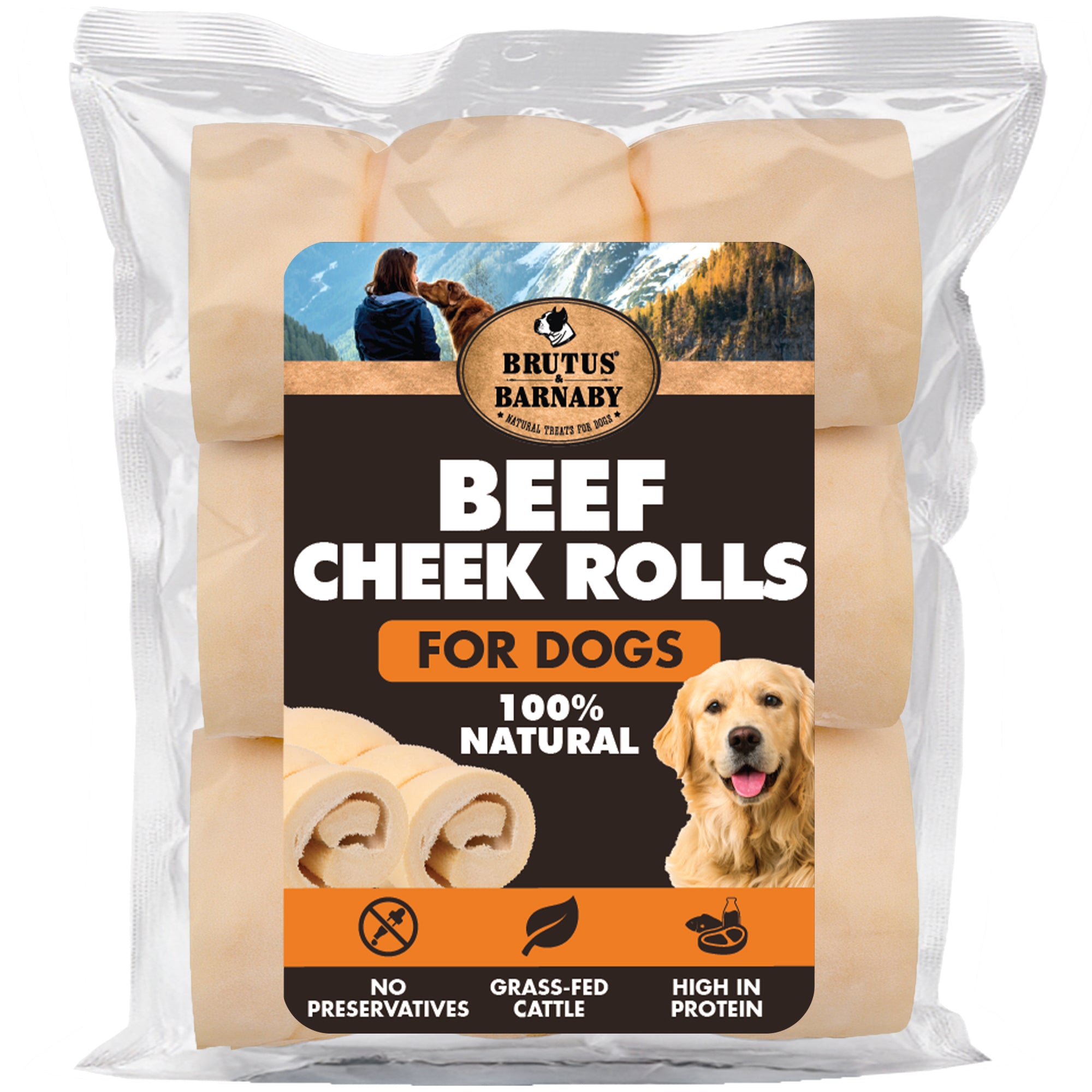
Original Beef Cheek Rolls
A rawhide-free rolled chew currently made with 100% beef cheek and offered in 5–7-inch and 10–12-inch size options. Choose a format appropriate for your dog and supervise every session.
Shop Beef Cheek RollsDisclaimer: This article is for general educational purposes only and does not replace veterinary or nutritional advice. Every dog is different. Chew suitability depends on age, size, teeth, diet, health, allergies, ingredient tolerance, eating behavior, and individual calorie needs. Treats should not replace a complete and balanced diet. Introduce new treats gradually, offer manageable portions, provide fresh water, and supervise your dog while chewing. Stop use and contact a veterinarian if your dog develops oral pain, persistent vomiting or diarrhea, appetite changes, unusual tiredness, or other concerning signs. Suspected choking or difficulty breathing requires immediate emergency veterinary care. Product ingredients, sizes, packaging, and availability may change, so review the current product page and package before feeding.