



Can Dogs Have Beef Cheek Rolls Every Day? Frequency & Portion Tips
Daily chew time is not the same as eating a whole new roll every day. The right routine depends on how much your dog actually consumes, the rest of the diet, digestive tolerance, chewing behavior, and the condition of the roll.
Can dogs have beef cheek rolls every day? A long-lasting edible chew can blur two questions: “May my dog chew today?” and “How much treat did my dog eat today?” A sensible routine answers both.
Can dogs have beef cheek rolls every day? Some dogs may be able to have a supervised session on consecutive days, but a whole new roll every day should not be the automatic plan. Brutus & Barnaby's current product guidance says many dogs can enjoy a beef cheek roll a few times per week, depending on size, diet, calorie needs, and chewing habits. If an unfinished roll is reused safely, daily access may involve only a small amount eaten each day. Count the amount consumed toward all daily treats, introduce the chew gradually, provide fresh water, and ask your veterinarian for an individual plan when health, weight, or a prescribed diet is involved.
“Every Day” Can Mean Two Very Different Things
Beef cheek rolls are edible chews, but many dogs do not finish one in a single session. That makes frequency more useful when it is split into access and consumption.
Reoffering an unfinished roll
Your dog may work on the same roll during separate supervised sessions, provided it remains appropriately sized, intact, uncontaminated, and handled according to the package's storage directions.
Eating part or all of the chew
The portion swallowed is food. It belongs in the same daily treat allowance as training rewards, toppers, table extras, and every other edible chew.
The useful question is not only “Did I offer a roll?” Also ask, “How much disappeared, and does that amount fit today's complete diet?”
Can Dogs Have Beef Cheek Rolls Every Day? A Frequency Framework
There is no universal schedule for every dog. The current Brutus & Barnaby product page gives “a few times per week” as general guidance for many dogs, while emphasizing that size, diet, calories, and chewing habits matter. Treat that as a starting framework, not permission to ignore the individual dog.
The World Small Animal Veterinary Association's guide to feeding treats says treats should make up less than 10% of daily calorie intake, should not replace a complete and balanced diet, and should be selected with the dog's health and choking risk in mind.
Portion Tip: Track What Was Eaten, Not Just What Was Offered
Brutus & Barnaby's current Original Beef Cheek Rolls page lists 100 calories per ounce. It does not list one calorie number for every roll, and individual rolls can vary in weight. That is why “one roll” is not a precise portion measurement.
Ounces consumed × 100 calories per ounce = estimated calories eaten.
A kitchen scale can provide a rough estimate by comparing the roll's weight before use with its weight after it has been handled and stored according to the product directions. Saliva and moisture can affect the reading, so this is a planning estimate, not laboratory measurement. Always confirm the current calorie statement on the product page or packaging because formulations and labels may change.
Do not casually shrink a complete and balanced meal just to make room for a large chew. The FDA explains that treats and snacks are typically not complete and balanced. Ask your veterinarian before changing the main diet or calorie target.
Build a Repeatable Beef Cheek Routine
A repeatable routine is more reliable than deciding by how excited your dog looks. Appetite for a chew does not tell you whether the portion, frequency, or remaining piece is appropriate.
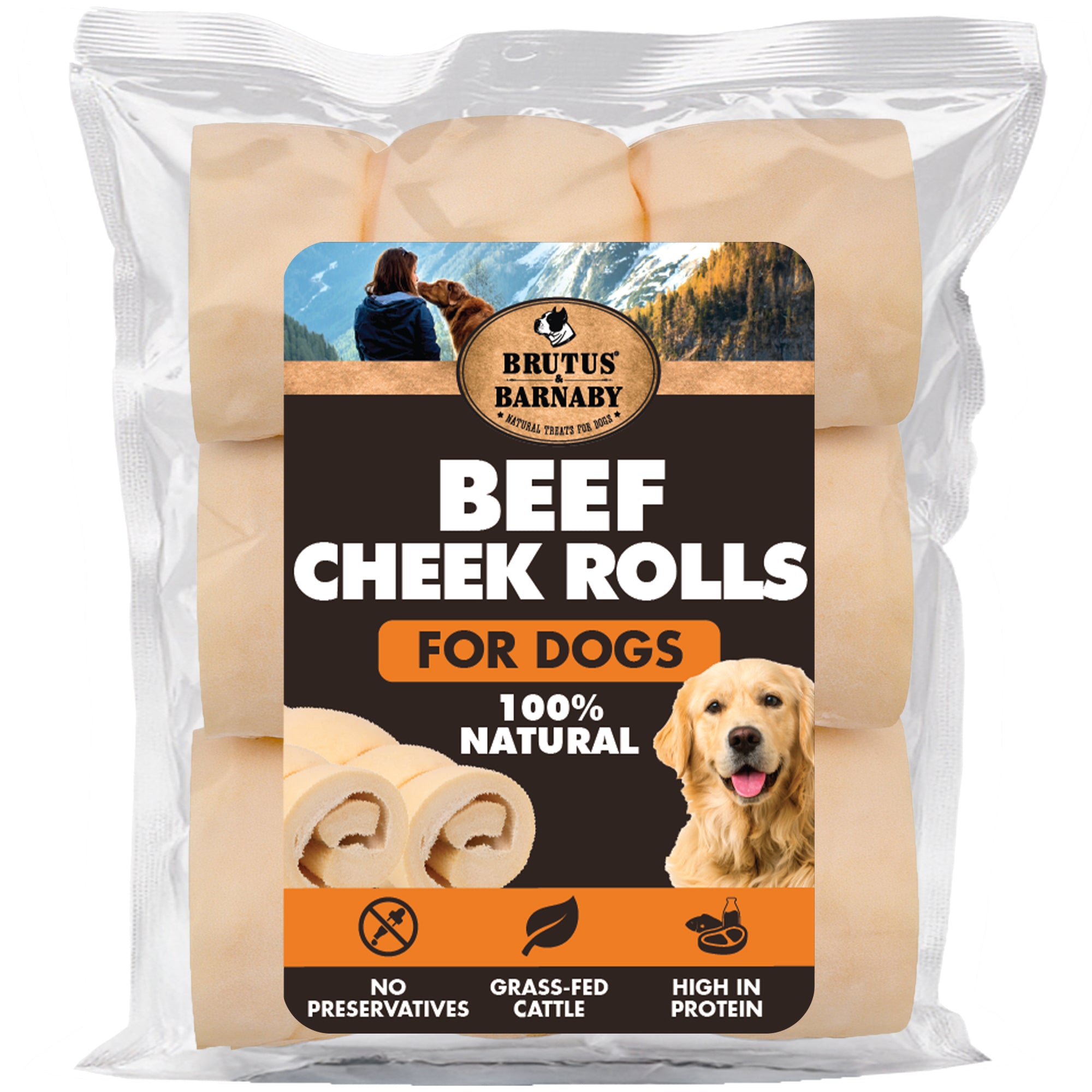
Original Beef Cheek Rolls for Dogs
A rawhide-free chew made from 100% beef cheek. The current product page lists 5"–7" and 10"–12" options, with 100 calories per ounce.
When Daily Beef Cheek Sessions May Be a Poor Fit
“My dog loves it” is not enough reason to make any edible chew a daily habit. Reduce the frequency, pause, or ask the veterinary team when any of these conditions apply.
The portion crowds out the diet
The amount consumed repeatedly pushes total treats beyond the dog's calorie plan or tempts you to replace nutritionally balanced food without veterinary direction.
Digestive changes appear
Loose stool, repeated vomiting, appetite changes, straining, abdominal discomfort, or unusual lethargy means the next chew should wait while you seek veterinary advice.
Chewing becomes swallowing
Dogs that gulp, strip off large pieces, or try to swallow the end whole need a different management plan and may not be good candidates for this type of chew.
The dog has special dietary needs
Dogs on weight-loss plans, prescribed diets, ingredient trials, or medical nutrition plans need the veterinarian's approval before a recurring beef chew is added.
Teeth or gums are a concern
Stop if chewing causes bleeding, sudden reluctance, pawing at the mouth, or pain. Ask a veterinarian whether the texture is appropriate for your dog's dental condition.
Supervision is unavailable
A beef cheek roll should not become an unsupervised “keep busy” item when no one can remove unsafe pieces or respond to a problem.
Call a Veterinarian After a Concerning Chew Event
Trouble breathing or active choking is an emergency—contact an emergency veterinary clinic immediately. Sudden excessive drooling, repeated gagging or attempts to swallow, regurgitation, or distress after swallowing a piece can indicate an esophageal problem. The Merck Veterinary Manual advises that esophageal foreign objects require prompt veterinary care.
Also contact your veterinarian promptly for repeated vomiting, loss of appetite, abdominal pain or swelling, marked lethargy, straining, or concerning stool changes after a large piece is swallowed.
Related Brutus & Barnaby Guides
This guide focuses on frequency and the amount consumed. Use these articles for adjacent questions without mixing their search intent:
Helpful External Resources
Beef Cheek Roll Frequency & Portion FAQs
Can dogs have beef cheek rolls every day?
Some dogs may be able to have supervised sessions on consecutive days, especially when one roll is spread across several sessions and only a small portion is consumed. A whole new roll every day is not a universal recommendation. Frequency must fit the dog's calorie needs, complete diet, digestion, health, chewing behavior, and veterinary guidance.
How often should I give my dog a beef cheek roll?
Brutus & Barnaby's current product guidance says many dogs can enjoy one a few times per week, depending on size, diet, calorie needs, and chewing habits. Start gradually and adjust to the amount eaten, the dog's response, and advice from the veterinary healthcare team.
Can I give my dog the same beef cheek roll tomorrow?
An unfinished roll may be reoffered when it remains appropriately sized and in good condition and was handled according to current storage directions. Inspect it first. Discard it if contamination, mold, unusual odor, loose or sharp areas, or an unsafe small end is present.
How much beef cheek roll should my dog eat?
There is no single portion that fits every dog. The amount should stay within the dog's total treat allowance alongside every other extra. The current product listing gives 100 calories per ounce, so the amount consumed matters more than simply counting rolls.
Does a beef cheek roll count as a treat if my dog does not finish it?
Yes. Any portion swallowed contributes calories even when most of the roll remains. Add the estimated amount eaten to training rewards, toppers, table extras, and other treats for that day.
Should small dogs have beef cheek rolls less often?
They may need smaller consumed portions because a given number of calories can represent more of a small dog's daily needs. Frequency also depends on mouth size, chewing style, health, and tolerance. Choose the roll carefully, supervise, and ask the veterinarian for a calorie target.
What should I do if beef cheek causes diarrhea or vomiting?
Stop offering the chew and contact your veterinarian for advice, especially if symptoms repeat, continue, include blood, or occur with weakness, pain, poor appetite, or a swallowed large piece. Do not test tolerance again until the veterinarian says it is appropriate.
Plan Beef Cheek by the Portion Eaten, Not the Calendar Alone
A daily supervised session and a whole daily roll are not equivalent. For many dogs, a few sessions per week is a more practical general starting point. Consecutive-day use may fit some dogs when the same safe roll spans several sessions, the consumed amount stays within the treat budget, and digestion and chewing behavior remain appropriate.
The best frequency is the one that keeps the chew manageable, the portion accountable, and the complete diet in charge.
Shop Original Beef Cheek Rolls
Choose a manageable roll, introduce it gradually, supervise every session, and count the portion your dog actually eats.
Shop Beef Cheek RollsDisclaimer: This article provides general educational information and does not replace veterinary or nutritional advice. Every dog is different. Treat suitability and frequency depend on age, size, body condition, complete diet, health, medications, ingredient tolerance, eating behavior, dental condition, and individual calorie needs. Treats should not replace a complete and balanced diet. Introduce new chews gradually, use manageable portions, provide fresh water, and supervise every session. Stop feeding the chew and contact your veterinarian if your dog develops persistent vomiting or diarrhea, appetite changes, unusual tiredness, oral pain, repeated gagging, signs of obstruction, or another concerning reaction. Trouble breathing or active choking requires immediate emergency veterinary care. Product ingredients, sizes, calorie statements, packaging, and availability can change, so review the current product page and package before feeding.