



Best Dog Treats for Sensitive Stomachs: Gentle Options to Try
If your dog gets loose stool, gas, or food-related upset easily, the best treat routine is usually simple, slow, and carefully portioned.
The best dog treats for sensitive stomachs are not necessarily the fanciest ones. Most sensitive dogs do better with predictable ingredients, smaller portions, slower introductions, and fewer rich extras at once. Treats should support your dog’s routine — not create a new digestive problem.
What Makes a Dog Treat Easier on the Stomach?
A sensitive stomach can mean different things: loose stool after new treats, gas after rich chews, vomiting after sudden diet changes, or a dog who does best with a very limited routine. The American Kennel Club explains that dogs with sensitive stomachs may need simpler, well-managed diets, and the same idea applies to treats.
The goal is not to find a miracle treat. The goal is to reduce variables. If your dog is sensitive, choose treats with clear ingredients, start with tiny portions, and avoid stacking too many new foods in the same week.
For a deeper ingredient-focused approach, pair this with our allergy-friendly dog treats guide and our dog treat rotation guide.
Simple rule: when a dog has a sensitive stomach, introduce one new treat at a time and keep the first portion smaller than you think.
Best Treat Types for Sensitive Dogs
Gentle Treat Picks for Sensitive Stomachs
These are smart starting points because they are easy to portion, simple to explain, and flexible enough for a slow treat routine.

Sweet Potato Slices
A simple plant-based treat for dogs who do better with predictable ingredients and a chewy texture instead of rich, greasy snacks.
- Single-ingredient sweet potato
- Simple plant-based option
- Easy to rotate away from meat treats
- Great for moderate daily reward moments

Pumpkin & Cinnamon Sweet Potato Sticks
A crunchy sweet potato-based option for dogs who enjoy a little variety while still staying in a simple treat lane.
- Sweet potato-based crunchy stick
- Grain-free and gluten-free style treat
- Useful for rotation routines
- Break into smaller portions for sensitive dogs
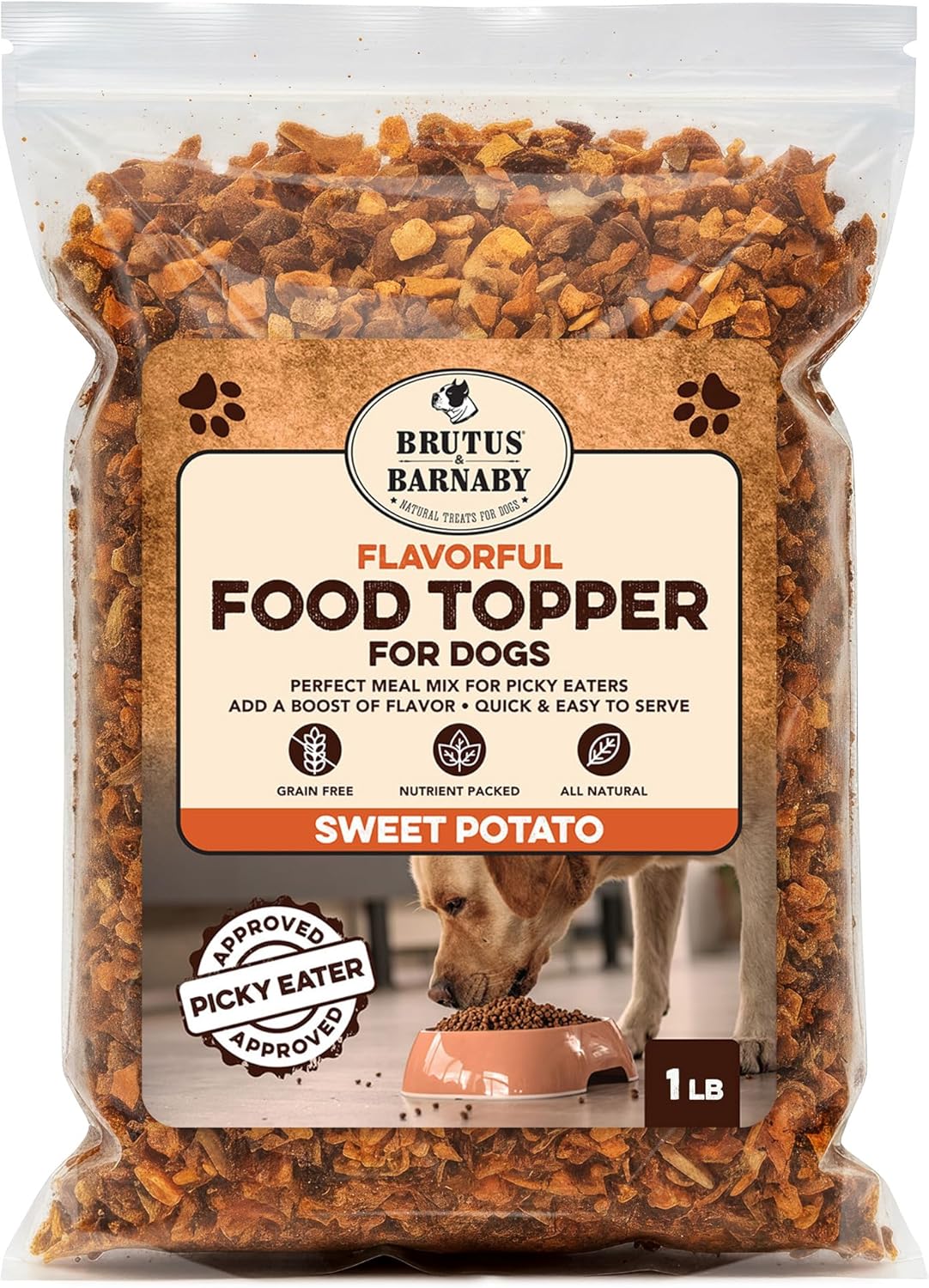
Sweet Potato Dog Food Topper
For dogs who need mealtime interest without a long chew, a simple topper can help refresh food while keeping the routine easy to manage.
- Sprinkle over regular meals
- Plant-based flavor boost
- Useful for picky eaters
- Easy to portion gradually
How to Introduce New Treats Without Upset
Abrupt changes can cause digestive upset. AKC recommends gradual transitions when changing a dog’s food, and that same slow mindset is helpful when testing treats. Their food-transition guidance is a useful model for treat changes too.
Do This
- Start with a tiny piece.
- Try one new treat at a time.
- Watch stool, appetite, gas, and vomiting.
- Use small rewards for training.
- Keep a simple treat log for sensitive dogs.
Avoid This
- Opening five new treat bags at once.
- Giving rich chews after a new meal.
- Using human leftovers as “safe” treats.
- Ignoring repeated diarrhea or vomiting.
- Letting treats replace balanced meals.
Treats count toward the diet. VCA notes that treats should not exceed 10% of daily calorie intake, and even less may be better for some pets. Read VCA’s treat calorie guidance before turning any snack into a daily habit.

Beef Lung Bites
A light, breakable reward that works well when you need motivation but want to keep portions small and controlled.
- Easy to break into tiny pieces
- Good for training and recall
- High-value aroma in small portions
- Useful when bigger chews are too much

Lamb Lung
A simple protein reward for dogs who need variety from beef or chicken. Introduce slowly and use small pieces first.
- Single-protein style reward
- Breakable for smaller portions
- Helpful for rotation variety
- Great for high-value reward moments
What to Avoid for Dogs With Sensitive Stomachs
Many stomach problems start when a dog gets too many extras: table scraps, rich chews, flavored biscuits, new toppers, and leftovers all in the same day. Keep human food out of the routine unless you know it is safe and your vet agrees. The ASPCA list of people foods to avoid feeding pets is a helpful safety reference.
Vet note: If your dog has repeated vomiting, diarrhea, blood in stool, weight loss, appetite loss, dehydration, or symptoms lasting more than a day or two, call your veterinarian instead of trying to solve it with treats.
A Simple Sensitive-Stomach Treat Rotation
This is not a feeding prescription. It is a simple way to think about treat purpose while keeping portions modest.

Sweet Potato Sticks with Salmon & Kelp
A sweet potato-based stick with fish flavor variety for dogs who enjoy something different from plain meat treats.
- Sweet potato, salmon, and kelp
- Crunchy and easy to portion
- Good flavor variety option
- Useful alternative to richer chews
Frequently Asked Questions
Build a Simpler Treat Routine
Brutus & Barnaby makes it easy to choose natural treats by purpose: simple snacks, tiny rewards, meal toppers, and gentle rotation picks for dogs who need a cleaner routine.
Shop Natural Dog Treats