



Allergy-Friendly Dog Treats: How to Choose Safer Options
When your dog is itchy, gassy, or dealing with recurring ear trouble, treat shopping can feel risky. Here’s how to read labels, avoid common triggers, and choose simpler treats that fit your dog’s needs.
Your golden retriever scratches constantly, her ears are always red, and every new treat makes you wonder whether you’re helping or making things worse. Food allergies and sensitivities can be confusing because the signs often overlap with environmental allergies, yeast issues, digestive upset, and other skin problems. This guide explains how to think about allergy-friendly dog treats, what ingredients to watch, and how to choose simpler options without overpromising what treats can do.
Food Allergies vs. Sensitivities: Why the Difference Matters
A true food allergy involves the immune system reacting to a dietary ingredient, usually a protein. A food sensitivity or intolerance may cause digestive upset, gas, loose stools, or itch-like discomfort without the same immune response. To make things more confusing, environmental allergies can cause similar signs, including scratching, paw licking, red ears, and recurring skin irritation.
That means the best treat is not simply the one labeled “hypoallergenic.” It is the treat that matches your dog’s known safe ingredients, your vet’s guidance, and your dog’s current diet plan.
Important: if your dog has severe itching, chronic ear infections, vomiting, diarrhea, facial swelling, hives, or sudden symptoms, talk to your veterinarian before changing treats. Treats can support a simpler routine, but they are not a diagnosis or treatment.
Common Treat Ingredients That Can Cause Trouble
Dogs can react to almost any food ingredient, but some ingredients show up more often simply because they are used so widely in pet food and treats. If your dog is sensitive, read labels carefully for hidden versions of these ingredients.
Possible Trigger Ingredients
What to Choose Instead
How to Spot Allergy-Friendly Dog Treats
The best allergy-friendly dog treats are not complicated. They use fewer ingredients, list those ingredients clearly, and avoid common fillers that make it harder to identify what your dog can tolerate.
Elimination Diets: The Treat Rule Most Dog Parents Miss
If your vet recommends an elimination diet, the goal is to remove possible triggers long enough to see whether symptoms improve, then reintroduce ingredients one at a time. During that trial, treats matter as much as meals. A single biscuit, dental chew, or flavored supplement can confuse the results.
For many dogs, skin-related diet trials take 8–12 weeks. Digestive signs may improve sooner, but your veterinarian should set the plan and decide what, if anything, your dog can receive as a reward during the trial.
Simple rule: if your dog is on a strict elimination diet, do not add new treats unless your veterinarian says they fit the trial. If your dog is not on a trial, introduce one treat at a time and wait 48–72 hours before adding another new food.
B&B Treat Picks for Sensitive Dogs
No treat is guaranteed to work for every allergic dog. These Brutus & Barnaby options are included because they have simpler ingredient profiles and are easier to evaluate than heavily processed multi-ingredient treats.
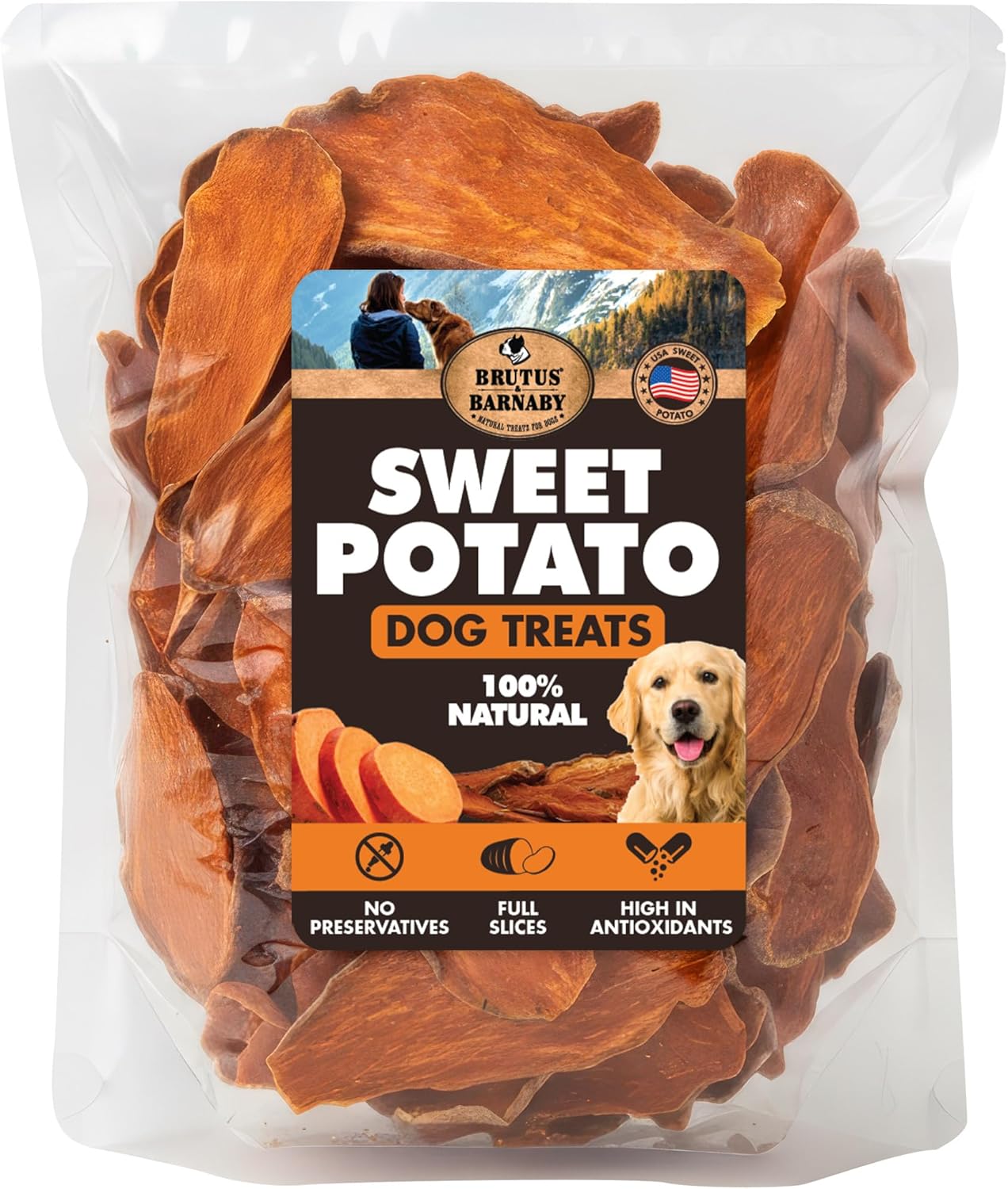
Sweet Potato Slices
A simple plant-based choice for dogs avoiding common animal proteins. Great when you want a treat with only one ingredient to evaluate.
- One ingredient: sweet potato
- No wheat, corn, soy, gluten, or meat protein
- Chewy texture for supervised snacking
- Helpful for simple treat routines
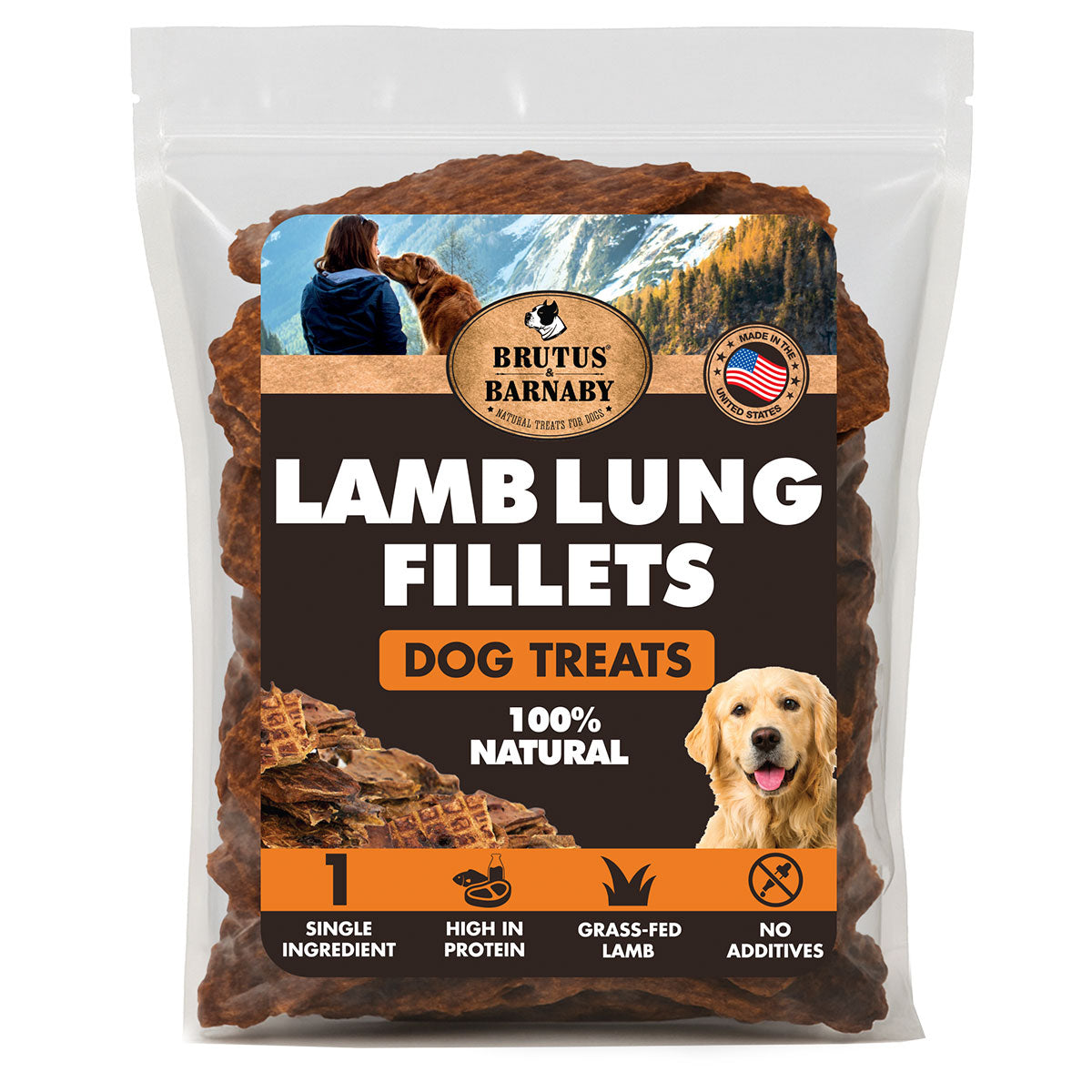
Lamb Lung Fillets
A single-ingredient lamb option for dogs who tolerate lamb and need a breakable, high-protein training reward.
- 100% lamb lung
- No additives, fillers, grains, or artificial ingredients
- Easy to break into smaller pieces
- Introduce slowly with sensitive dogs

Bison Lung Fillets
A single-ingredient bison treat that can be portioned small for training or cautious introductions.
- 100% bison lung
- No additives, fillers, grains, or chemicals
- Light, airy, and easy to break
- Recommended for sensitive stomachs

Sweet Potato Sticks with Salmon & Kelp
A grain-free option made with sweet potato, salmon, and kelp. Best for dogs who tolerate fish and need a cleaner treat with skin-and-coat-supporting ingredients.
- Made with real salmon
- Omega-3 support for skin and coat
- Sweet potato base with kelp
- No fillers, preservatives, or artificial ingredients
How to Introduce a New Treat to a Sensitive Dog
Even simple treats should be introduced slowly. Start with a tiny piece, then watch your dog’s stool, skin, ears, and energy for the next two to three days. If your dog does well, you can gradually increase the portion while keeping treats under about 10% of daily calories.
Keep a simple treat log: date, treat, portion size, stool quality, itching, ear redness, and any vomiting or gas. This makes it easier for you and your vet to spot patterns instead of guessing.
When to Call Your Vet
Treat swaps are helpful only when food is actually part of the problem. Contact your vet if your dog has severe or sudden itching, facial swelling, hives, repeated vomiting, diarrhea, lethargy, open sores, chronic ear infections, or symptoms that appear seasonally. Your dog may need evaluation for environmental allergies, parasites, yeast, bacteria, thyroid changes, or another condition that looks like food sensitivity.
Frequently Asked Questions
Find a Simpler Treat for Your Sensitive Dog
Start with real ingredients, clear labels, and slow introductions. Brutus & Barnaby makes natural treats and chews designed for dog parents who want to know exactly what they’re feeding.
Shop Natural Treats