



Natural Dog Anxiety Treats: What Helps and What Doesn’t
Treats can support a calmer routine, but they are not a cure for anxiety. Here’s how to use natural chews, training rewards, and vet-guided care the right way.
If your dog trembles at the sound of fireworks, paces when you grab your keys, or refuses to settle during thunderstorms, you are not alone. Anxiety in dogs is real — but natural dog anxiety treats need to be understood honestly. A treat or chew can give your dog a calming job, create a positive association, and support a predictable routine. It cannot replace training, environmental changes, or veterinary care when anxiety is severe.
First, Know What Kind of Anxiety You’re Seeing
Not every nervous behavior has the same cause. Some dogs react to loud noises. Some panic when left alone. Some are stressed by new places, car rides, vet visits, or changes in the home. A dog who chews a bed during fireworks may need a different plan than a dog who destroys a door ten minutes after you leave.
This matters because treats work best when the trigger is predictable and the dog can still eat, chew, and respond. If your dog is too panicked to take food, a chew is not enough and your vet or a qualified behavior professional should be involved.
Key insight: treats and chews are support tools. They can help with routine, redirection, and enrichment, but clinical anxiety often needs desensitization, counterconditioning, environmental management, and sometimes medication prescribed by a veterinarian.
How Natural Treats Can Support a Calmer Routine
The biggest benefit of a natural chew is not magic ingredients. It is giving your dog a safe, satisfying activity during moments when stress usually builds. Chewing gives dogs something predictable to do, helps redirect nervous energy, and can be paired with training so stressful triggers start to predict something good.
What Treats Cannot Do
Where Chews Can Help
When to Use Treats for Dog Anxiety
Treats work best when used before stress peaks. Waiting until your dog is already trembling, barking, or trying to escape often makes the treat less useful because many anxious dogs cannot eat once they are over threshold.
A Note on “Calming Ingredients”
Some dog anxiety treats include ingredients like L-theanine, chamomile, magnesium, hemp, or other calming compounds. If you are considering a supplement-style product, check with your veterinarian first — especially if your dog takes medication, has seizures, has liver or kidney disease, is pregnant, or has a history of unusual reactions.
Brutus & Barnaby treats are best positioned as natural chew enrichment: real ingredients, satisfying textures, and reward routines that can support a calmer environment. They should not be presented as sedatives, medications, or treatments for anxiety disorders.
B&B Chews for Calm-Time Enrichment
Use these during supervised calm-time, crate practice, mat work, or pre-event routines. Always choose a chew that matches your dog’s size, chewing strength, digestion, and health needs.

Beef Cheek Rolls
A rawhide-free, long-lasting chew for dogs who need something substantial to keep them busy during supervised downtime.
- Made from natural beef cheek
- Rawhide-free with no mystery ingredients
- Great for longer chew routines
- Best for medium and large dogs

12 Inch Bully Sticks
A single-ingredient beef chew that gives dogs a focused, satisfying job during quiet time.
- Single-ingredient beef chew
- Rawhide-free and digestible
- Extra-long chew time
- Useful for boredom and routine support
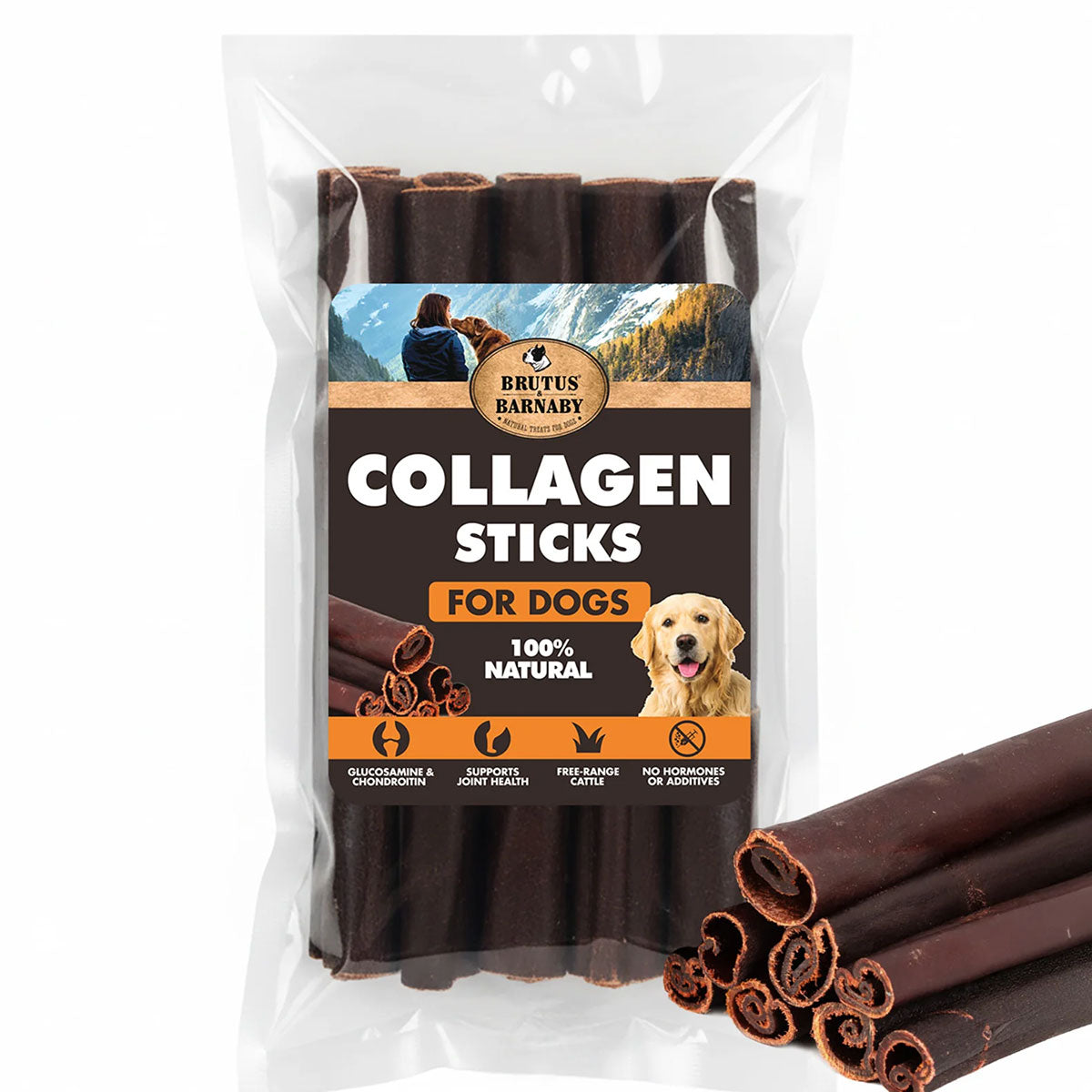
Beef Collagen Sticks
A durable chew for dogs who need satisfying chew time without the heaviness of richer treats.
- 100% beef collagen
- Rawhide-free
- Satisfying chew time
- Good for supervised calm routines

Cow Ears
A single-ingredient chew for dogs who enjoy satisfying texture but need a lighter option than richer chews.
- Single-ingredient cow ear
- Rawhide-free and low fat
- Good for moderate chewers
- Works well in a chew rotation
Build a Better Calm-Time Plan
A treat works better when it is part of a repeatable routine. Choose a safe spot, offer the chew before stress peaks, and pair it with calm behavior instead of frantic behavior. Over time, your dog learns that the safe space, mat, crate, or quiet room predicts something good.
Simple Pre-Stress Routine
- Choose a quiet spot before the event starts
- Give water and comfortable bedding
- Offer a supervised chew while your dog is still calm
- Use white noise or calm music if sound is the trigger
- Remove small chew pieces before they become a choking risk
When to Call the Vet
- Your dog panics, escapes, or hurts themselves
- Your dog destroys doors, crates, or walls
- Your dog cannot eat or settle during stress
- Anxiety appears suddenly in an older dog
- There is aggression, confusion, pain, or major behavior change
Frequently Asked Questions
Give Your Dog a Better Calm-Time Routine
Start with supervised chew time, a predictable safe space, and natural treats you can feel good about. Brutus & Barnaby chews make calm routines easier to build one snack at a time.
Shop Natural Chews