



Grain-Free Dog Treats: Are They Really Better?
Grain-free treats can be helpful for some dogs, but they are not automatically healthier for every pup. Here’s how to choose based on ingredients, sensitivities, and your dog’s real needs.
You’ve probably stood in the treat aisle and noticed the explosion of grain-free dog treats. The packaging sounds healthy, clean, and modern — but grain-free is not automatically better. Some dogs genuinely benefit from avoiding grains, while many healthy dogs tolerate grains just fine. The real question is not “grain-free or not?” It is: what ingredients are inside, does your dog digest them well, and does your vet have a reason to avoid grains?
What Does Grain-Free Actually Mean?
A grain-free treat contains no wheat, corn, barley, oats, rye, rice, or other cereal grains. That does not mean it is lower in carbohydrates, more natural, or automatically easier to digest. Many grain-free treats replace grains with ingredients like potatoes, peas, chickpeas, lentils, or sweet potatoes.
That replacement matters. A simple, single-ingredient sweet potato treat is very different from a heavily processed grain-free biscuit loaded with starches, gums, and flavoring. The label matters more than the marketing claim.
Simple rule: grain-free is a feature, not a guarantee. A great grain-free treat still needs clean ingredients, clear sourcing, appropriate calories, and a texture that suits your dog.
Who Actually Needs Grain-Free Dog Treats?
Most dogs do not need grain-free treats simply because they are dogs. Properly cooked grains can be well tolerated by many healthy dogs. But grain-free can make sense in specific situations.
Marketing-Driven Switching
Dog-Specific Needs
What About Grain-Free Diets and Heart Disease?
The DCM conversation mostly concerns complete diets, not occasional treats. The FDA has investigated reports of non-hereditary dilated cardiomyopathy in dogs eating certain diets, many of which were labeled grain-free and used legumes or potatoes heavily. The concern is not simply “grain-free,” but how a full diet is formulated, what replaces the grains, and your dog’s individual risk factors.
For treats, the practical takeaway is simple: do not let treats make up a large share of your dog’s daily calories, and avoid using heavily processed, legume-heavy snacks as a major part of the diet. For dogs with heart concerns, large-breed dogs, or breeds with known DCM risk, ask your veterinarian before making major diet changes.
Balanced view: grain-free treats are not automatically dangerous, and grain-inclusive treats are not automatically better. The safest choice is a high-quality treat used in moderation alongside a complete, balanced diet.
Grain-Free vs. Grain-Inclusive Treats
How to Read Grain-Free Treat Labels
When comparing treats, look past the front of the bag and read the ingredient list. A better grain-free treat should be simple, clear, and easy to understand.
- Choose named ingredients like sweet potato, beef cheek, cow ear, pig ear, salmon, or kelp.
- Avoid vague meat terms like “animal digest,” “meat by-products,” or mystery flavors.
- Watch heavy fillers like pea starch, lentils, chickpeas, and potato starch when they dominate the label.
- Keep treats moderate so they do not replace your dog’s complete and balanced meals.
- Use your dog’s response as your guide: stool, itching, gas, appetite, and energy all matter.
B&B Grain-Free Treat Picks
These Brutus & Barnaby options are naturally grain-free and easy to understand. Choose based on your dog’s size, chewing style, digestion, and any known sensitivities.
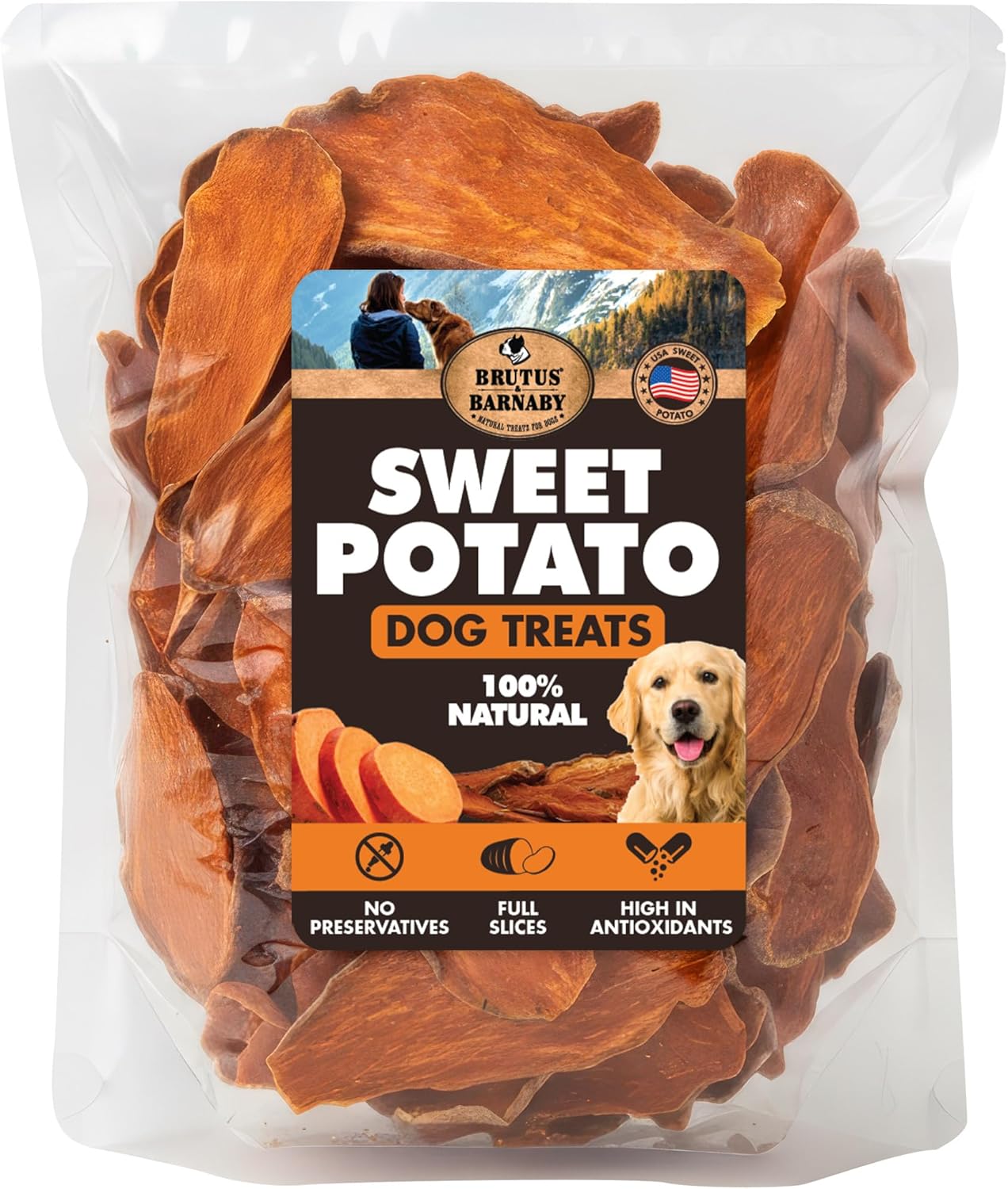
Sweet Potato Slices
A single-ingredient treat for dogs who need a simple, grain-free snack without animal protein.
- One ingredient: sweet potato
- No wheat, corn, soy, gluten, grains, or meat protein
- Chewy texture
- Helpful for limited-ingredient routines

Sweet Potato Sticks with Salmon & Kelp
A grain-free stick with sweet potato, salmon, and kelp for dogs who tolerate fish and like a crunchier treat.
- Made with real salmon
- Grain-free and natural
- No fillers, preservatives, or artificial ingredients
- Easy to snap into smaller pieces

Pig Ear Halves
A naturally grain-free, single-ingredient chew for dogs who enjoy a satisfying but manageable chew session.
- One ingredient: real pig ear
- No grains, gluten, artificial flavors, or preservatives
- Good for small dogs and lighter chewers
- Always supervise chew time
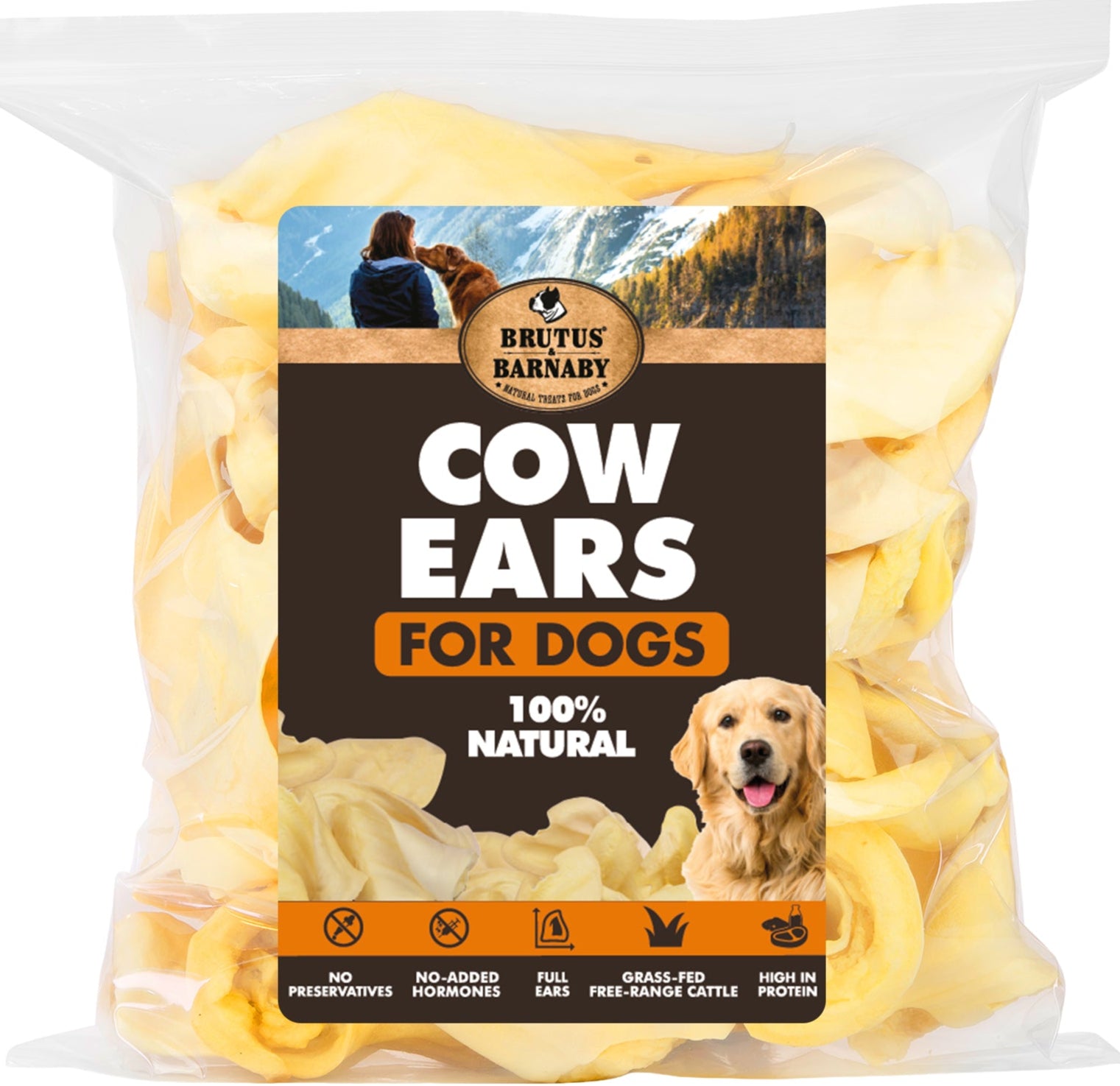
Cow Ears
A single-ingredient, rawhide-free chew that is naturally grain-free and lighter than many richer chews.
- One ingredient: cow ear
- Rawhide-free, grain-free, and gluten-free
- Lower fat chew option
- Good for moderate chewers
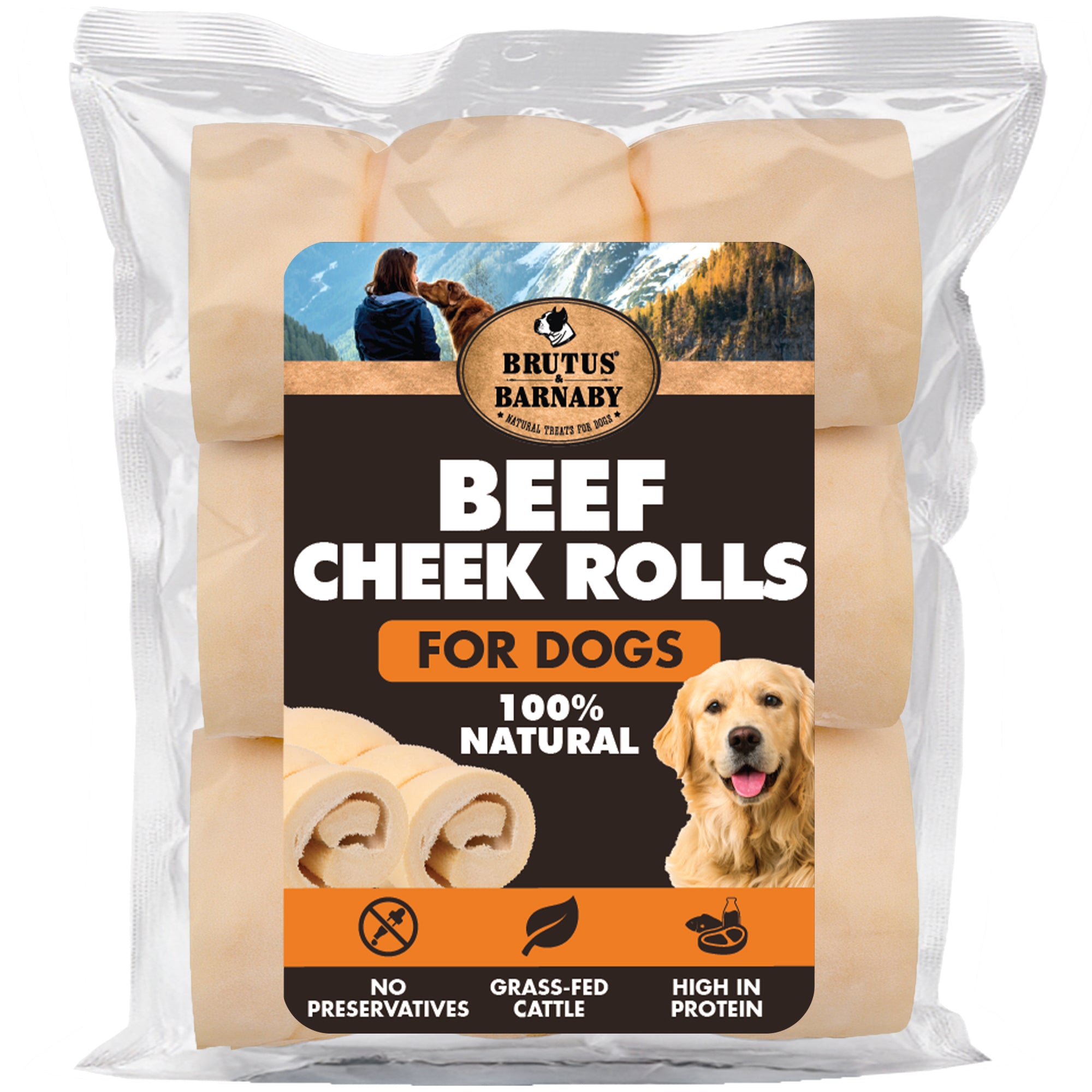
Beef Cheek Rolls
A natural beef chew for dogs who need a longer chew session and tolerate beef well.
- Made from natural beef cheek
- No rawhide, grains, gluten, or artificial preservatives
- Long-lasting chew time
- Best for medium and large dogs
Frequently Asked Questions
Choose Treats by Ingredients, Not Hype
Whether your dog needs grain-free or simply needs cleaner treats, Brutus & Barnaby makes natural chews and snacks with real ingredients you can understand.
Shop Natural Treats