



High-Protein Dog Treats: When They Help and When They Don’t
Protein-rich treats can be a smart choice for active dogs, training rewards, and muscle support — but “more protein” is not automatically better for every pup. Here’s how to choose with confidence.
You’ve probably noticed your dog eyeing your protein-rich lunch plate with unbridled enthusiasm — and it makes you wonder: should you be feeding more protein? The pet industry certainly wants you to think so, plastering “high-protein” across treat packages like it’s the golden ticket to canine health. But here’s the truth: high-protein dog treats are not one-size-fits-all, and more protein does not automatically mean a healthier dog.
Understanding Your Dog’s Protein Baseline
The first thing to understand is that treats are supplemental. Your dog’s main food should already provide the protein, fat, vitamins, and minerals needed for daily health. That means high-protein treats should complement a balanced diet, not make up for one that is incomplete.
AAFCO nutrient profiles for complete dog foods set minimum crude protein levels for adult maintenance and growth/reproduction diets. Those numbers are for complete meals, not treats. So when you see a treat labeled as “high protein,” the better question is not “is the number high?” — it is “does this fit my dog’s age, activity level, calorie needs, and health status?”
Protein Claims That Need Context
Better Protein Treat Choices
Which Dogs Benefit Most From High-Protein Dog Treats?
Not every dog needs a protein boost. A couch-loving adult dog eating a complete and balanced food may not need much more than an occasional reward. But there are situations where higher-protein treats can make sense.
Simple rule: high-protein treats are most useful when they serve a clear purpose — training motivation, active-day support, chew enrichment, or a simple protein reward your dog digests well.
Protein Sources: Why Ingredient Quality Matters More Than the Number
Two treats can both say “high protein” on the label but deliver very different value. A simple animal-based treat made from beef lung, lamb lung, or real beef will generally be easier to understand than a long ingredient list built around protein concentrates, starches, and flavoring.
How to Assess Your Dog’s Current Protein Intake
Before adding any high-protein dog treats to your rotation, do a quick nutrition check. This helps you choose based on your dog’s actual needs instead of package claims.
Step 1: Check the Main Food
Look at the crude protein percentage on your dog’s kibble, wet food, or vet-approved home-prepared diet. If your adult dog already eats a complete food with appropriate protein, treats are a bonus — not the foundation.
Step 2: Match Activity Level
Daily walks, couch time, agility, hiking, and senior muscle maintenance all call for different reward strategies. Active dogs usually make better use of protein-rich rewards.
Step 3: Keep Calories in Check
Treats should generally stay around 10% of daily calories. A high-protein chew can still be high-calorie, so portioning matters.
Step 4: Ask Your Vet When Needed
If your dog has kidney disease, pancreatitis, liver disease, obesity, or a prescription diet, ask your veterinarian before changing treat routines.
Best Brutus & Barnaby High-Protein Treats to Consider
These options work well because they focus on simple animal-based ingredients, meaningful protein, and practical use cases — training, chewing, senior snacking, and active-day rewards.
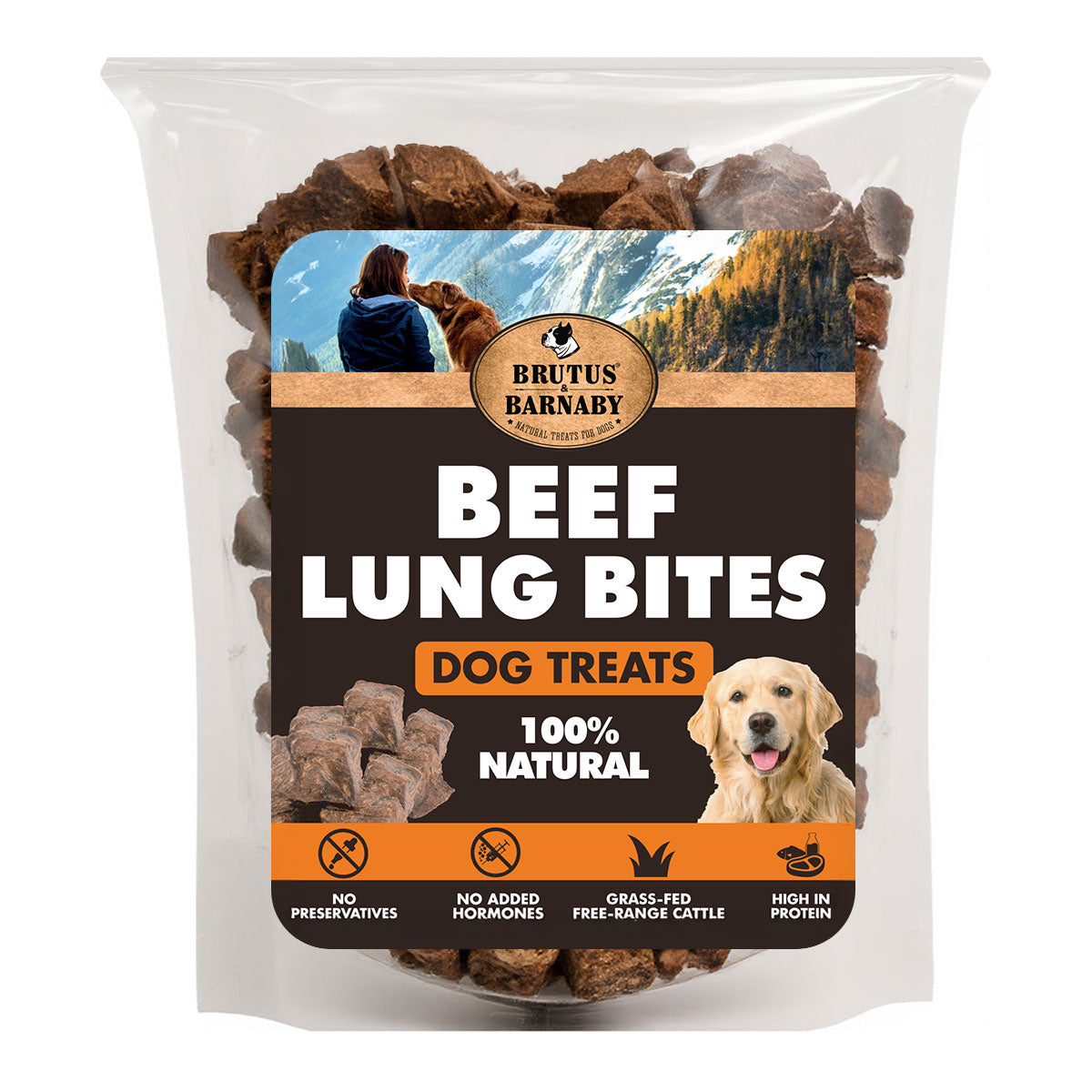
Beef Lung Bites
Light, crunchy, and naturally protein-rich, Beef Lung Bites are easy to use as high-value rewards without handing over a large chew every time.
- 100% beef lung
- Made in the USA
- Great for training and rewards
- Easy to portion for daily use
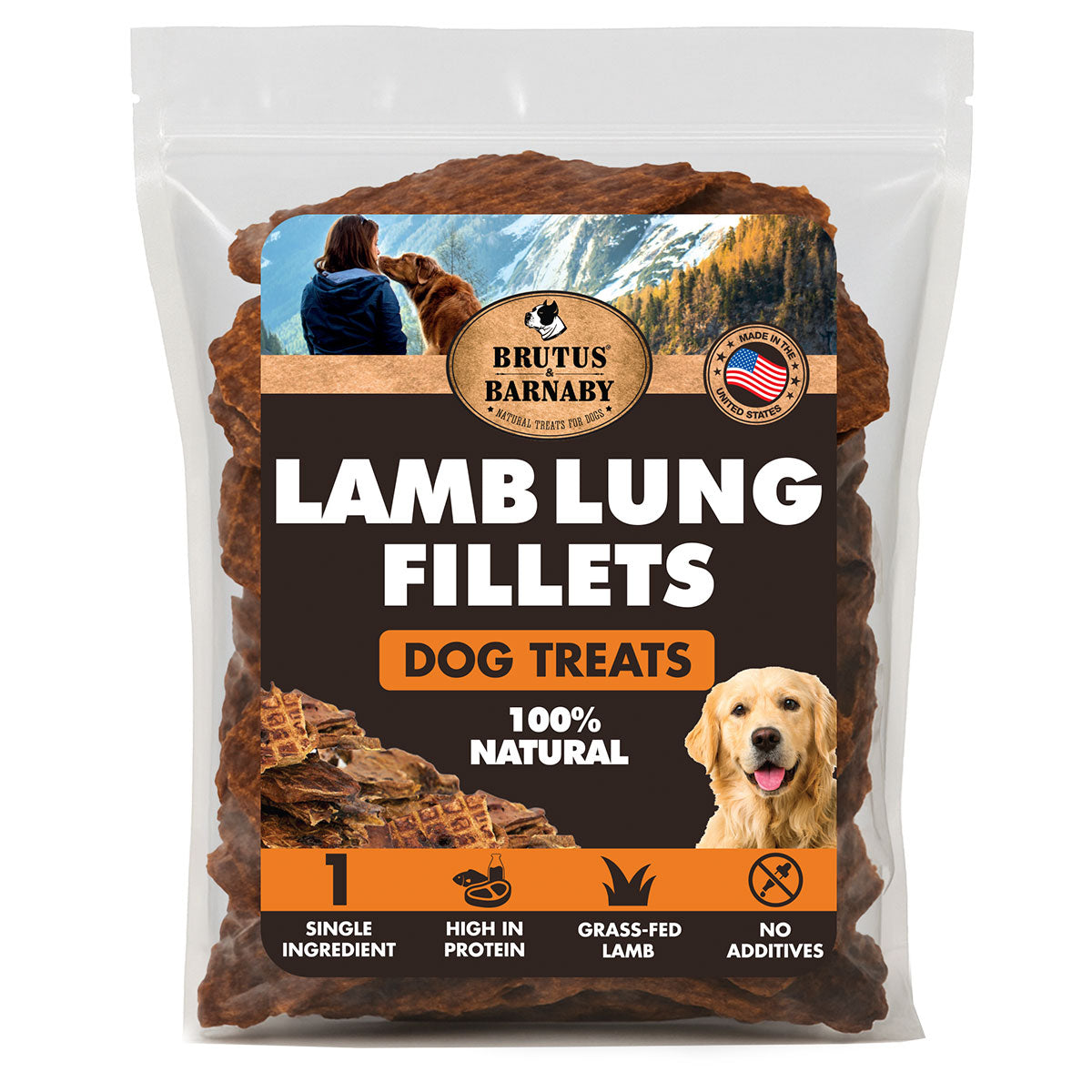
Lamb Lung Fillets
A clean single-ingredient option for dogs who do well with lamb and need a protein-forward reward that breaks easily.
- 100% lamb lung
- No fillers, grains, or artificial ingredients
- Over 60% protein
- Easy to break for smaller servings

Beef Lung Filets
For dogs who love bigger crunchy pieces, Beef Lung Filets offer the same simple protein focus with a breakable texture.
- Pure beef lung
- High-protein treat option
- Break into smaller pieces
- Great for seniors, training, or snacks

12 Inch Bully Sticks
A classic high-protein chew for dogs who need more than a quick reward. Best for supervised chew time and dogs who can handle firmer chews.
- Single-ingredient beef chew
- Rawhide-free
- Longer chew time
- Best for supervised chewing
Frequently Asked Questions About High-Protein Dog Treats
Choose Protein-Rich Treats With a Purpose
From crunchy lung treats to longer-lasting bully sticks, Brutus & Barnaby makes it easy to choose simple, natural treats that fit your dog’s real routine — not just a label claim.
Shop High-Protein Treats