



Beef Cheek Roll Size Guide: Choosing the Right Roll for Your Dog
A 5–7-inch roll may feel easier to handle, while a 10–12-inch roll gives a dog more length to hold and may stay oversized longer. The right choice depends on your dog’s mouth, chewing behavior, grip, and ability to work the chew slowly.
The printed length is a starting point, not a complete sizing system. Natural rolls can vary, and a dog can turn any long chew into a short, slippery remainder during the session.
Choose a 5–7-inch beef cheek roll only when it remains clearly too large for your dog to swallow whole and your dog can hold it comfortably. Consider the 10–12-inch roll for larger mouths, strong chewers, or dogs likely to fit the shorter roll deeply inside the mouth. If you are unsure between the two, the longer option may provide a more conservative starting size, but every roll still requires active supervision and early removal.
Beef Cheek Roll Size Guide: 5–7 vs. 10–12 Inches
Brutus & Barnaby currently lists both Original and Peanut Butter Beef Cheek Rolls in two length ranges: 5–7 inches and 10–12 inches. Length is the verified distinction. Exact diameter, weight, and total calories per individual natural roll are not listed as fixed values, so do not assume that every roll within a length range will be identical.
Use this table as a decision aid, then inspect the actual roll before every session.
When a 5–7-Inch Beef Cheek Roll May Fit
The shorter roll can be a practical choice when your dog needs less length to brace the chew between the paws and work on one end. A smaller dog may find this format easier to maneuver, but body size alone does not settle the decision.
The roll stays obviously oversized
The shorter roll disappears inside the mouth
When a 10–12-Inch Beef Cheek Roll May Fit
The longer roll is often the more sensible starting point when the 5–7-inch option looks small relative to the dog’s mouth or when the dog is a determined gulper. More starting length can make it easier for you to see and inspect the opposite end while the dog chews.
That does not make the 10–12-inch roll universally appropriate. A dog that cannot grip it, attacks it with crushing bites, or breaks off chunks may need a different size, texture, or chew category rather than a longer session.
Important: “Size up” means choosing a starting chew that is less easy to swallow whole. It does not mean leaving the dog alone, ignoring detached material, or allowing the roll to shrink to a dangerous remainder.
More starting length
Useful when the shorter roll can fit too deeply inside the mouth.
More roll to monitor
May remain visibly oversized longer, although chew speed is never guaranteed.
A cautious first test
If rapid consumption continues, stop and choose another chew rather than relying on length alone.
Five Checks Matter More Than Your Dog’s Weight Alone
A weight label can be convenient, but it cannot capture the way an individual dog uses a chew. For a broader overview, see our guide to choosing dog chew sizes. For beef cheek rolls specifically, run these checks in order:
Adjust the Size Decision When You See These Behaviors
Do not use chew time as the only success measure. A roll lasting longer is not useful if the dog cannot manage it calmly or if pieces are being swallowed faster than you can inspect them. Our beef cheek roll chew-time guide explains how condition and intake should determine the stopping point.
Size and Flavor Are Separate Decisions
Both current product pages offer the 5–7-inch and 10–12-inch lengths. Choose the length around mouth size and chewing behavior. Then choose Original or Peanut Butter around ingredient needs and flavor preference.
The Original product lists 100% beef cheek. The Peanut Butter product lists beef cheek and peanut butter flavoring. Both are currently listed as made in the USA, rawhide-free, and 100 calories per ounce. That calorie figure is per ounce, not per complete roll.
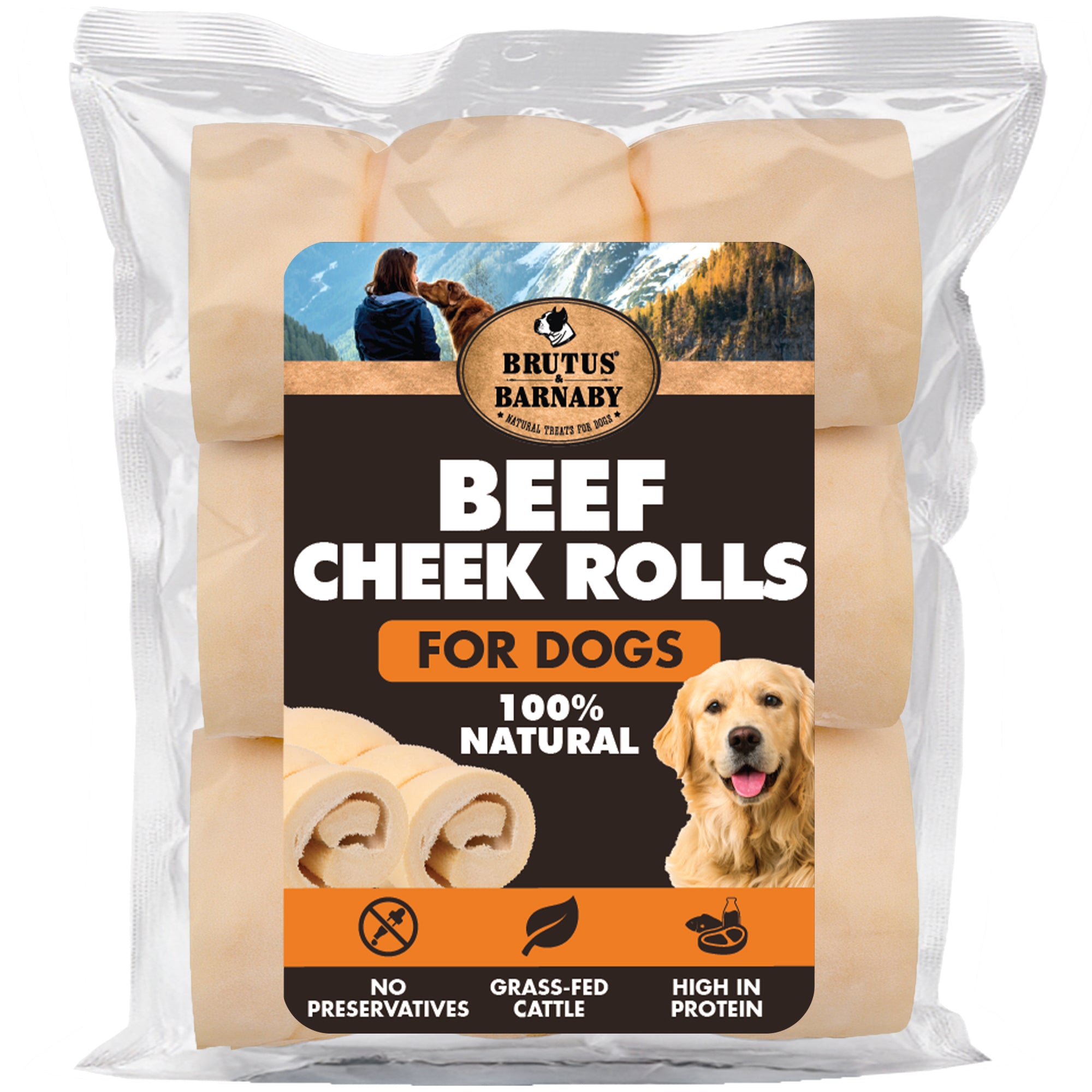
Original Beef Cheek Rolls for Dogs
The current listing offers shorter and longer formats with a single listed ingredient.

Peanut Butter Beef Cheek Rolls for Dogs
The current listing offers the same two length ranges with added peanut butter flavoring.
Account for Calories, Age, Teeth, and Health
A longer roll usually contains more material than a shorter roll, but the current listings do not provide one fixed weight or total calorie count for every natural piece. Track how much your dog actually consumes. WSAVA advises keeping all treats combined below 10% of daily calories so treats do not displace a complete and balanced diet.
Puppies, seniors, dogs with dental disease, dogs with swallowing problems, and dogs with previous gastrointestinal obstruction need individual guidance. A puppy’s birthday or body weight does not prove readiness for a dense chew. Read our puppy beef cheek roll safety guide and ask your veterinarian before offering one.
Digestible also does not mean safe to swallow whole. Large pieces can still cause choking or obstruction. Our guide to beef cheek roll digestibility explains why gradual chewing and early removal matter.
Helpful External Resources
These veterinary, animal-welfare, and government resources support the sizing, supervision, calorie, handling, and emergency guidance used here.
ASPCA — Position Statement on Dog Chews and Treats Guidance on matching chews to a dog’s size and chewing habits, preventing rapid consumption, and removing swallowable material. WSAVA — Feeding Treats to Your Dog Advice on keeping treats below 10% of daily calorie intake and preserving a complete and balanced diet. FDA — Safe Handling of Pet Food and Treats Practical guidance for clean hands, clean surfaces, secure storage, and handling pet treats. Merck Veterinary Manual — What to Do in a Pet Emergency Recognizing signs of choking and understanding why urgent veterinary help may be necessary.Beef Cheek Roll Size Questions
What size beef cheek roll is best for a small dog?
Some small dogs may handle a 5–7-inch roll more comfortably, but only if it remains clearly too large to swallow whole. If the shorter roll fits deeply in the mouth or the dog gulps, the 10–12-inch option or a different chew may be more appropriate. Ask your veterinarian when uncertain.
Should a large dog always get a 10–12-inch roll?
Not automatically. The longer roll is often a more suitable starting format for a larger mouth, but jaw strength, chewing technique, dental condition, grip, and tendency to swallow pieces also matter. Observe the actual dog and roll together.
Is a bigger beef cheek roll safer?
A longer starting roll may be harder to swallow whole, but no size removes risk. The roll becomes smaller during use, and any dog can detach material, chew too aggressively, or struggle with an awkward size. Supervision and early removal remain necessary.
Will a 10–12-inch roll last twice as long as a 5–7-inch roll?
There is no verified two-to-one chew-time promise. Longevity depends on the individual roll’s dimensions and weight, plus the dog’s jaw strength, chewing technique, and session length. More length can mean more material, but actual chew time varies.
When should I throw away a beef cheek roll?
Remove it when the remainder is easy to swallow, fits deeply inside the mouth, develops loose layers or sharp areas, becomes difficult to inspect, or is heavily soiled. Do not wait for one universal remaining length; mouth size differs between dogs.
Do Original and Peanut Butter rolls come in the same sizes?
Yes. The current Brutus & Barnaby listings offer both versions in 5–7-inch and 10–12-inch lengths. The size decision can therefore be made separately from the flavor decision.
Does the longer beef cheek roll have more calories?
It may contain more total material, but the product pages do not list one fixed total calorie count for every natural roll. Both versions list 100 calories per ounce. Count the amount actually consumed toward your dog’s daily treat allowance.
What if neither beef cheek roll size works for my dog?
Stop using the chew if the shorter option is swallowable and the longer option is unmanageable, or if either produces frantic chewing or large detached pieces. Ask your veterinarian about another chew texture or non-edible enrichment option suited to your dog.
Choose the Roll Your Dog Can Hold but Cannot Swallow Whole
Use the printed length to narrow the options, then let mouth size, grip, chewing behavior, and the changing remainder make the final decision.
The safest sizing habit is simple: inspect the real roll, watch the real dog, and remove the chew before its usable size changes into a swallowable one.
Compare Brutus & Barnaby Beef Cheek Rolls
Review the current 5–7-inch and 10–12-inch options, then select Original for the shortest ingredient list or Peanut Butter for added flavor.
Disclaimer: This article provides general educational information and does not replace veterinary, dental, nutritional, or emergency advice. No edible chew is appropriate for every dog. Suitability depends on age, mouth size, dental health, diet, medical history, allergies, swallowing ability, and chewing behavior. Introduce new treats gradually, use manageable portions, provide fresh water, supervise every session, and remove loose pieces and swallowable remainders. Contact your veterinarian if your dog swallows a large piece or develops repeated vomiting, diarrhea, appetite loss, abdominal discomfort, difficulty swallowing, or unusual tiredness. Difficulty breathing, collapse, pale or blue gums, or obvious choking requires immediate emergency veterinary care. Product ingredients, sizes, packaging, calorie information, and availability may change; review the current product page and package before feeding.