



Cow Ears for Dogs With Sensitive Stomachs: What to Consider
Choosing cow ears for dogs with sensitive stomachs takes more than reading a simple ingredient list. Beef tolerance, portion size, chewing behavior, current symptoms, and medical history all matter.
If your dog often gets loose stool, gas, vomiting, or discomfort after new foods, the right question is not simply whether cow ears are “good” or “bad.” It is whether this beef chew fits your individual dog's diet and history.
Cow ears for dogs with sensitive stomachs may suit some individuals, but they are not automatically gentle or appropriate for every dog. A single-ingredient cow ear can make ingredient tracking straightforward, yet it is still beef, still contributes calories, and still presents chewing and swallowing risks. Do not introduce one while your dog is actively unwell. Start with limited supervised exposure only when appropriate, offer fresh water, and stop if digestive or other concerning signs appear.
Cow Ears for Dogs With Sensitive Stomachs: Are They a Good Fit?
They can be an option for a dog that already tolerates beef and has no veterinary restriction against this type of chew. They can also be a poor fit for a dog that reacts to beef, is following a prescription or elimination diet, gulps chews, or develops symptoms after eating them.
“Sensitive stomach” is a useful description, not a diagnosis. Similar symptoms can have different causes, including a sudden dietary change, overeating, food intolerance, food allergy, infection, parasites, medication effects, or another gastrointestinal condition. Repeated or unexplained symptoms deserve veterinary assessment rather than repeated treat testing at home.
A Single Ingredient Helps With Tracking, Not Certainty
The current Brutus & Barnaby product page lists one ingredient: 100% free-range cow ears. It also lists crude fat at 3.0%, crude protein at 87.0%, and metabolizable energy at 96.3 kcal per ounce. Those numbers describe the product, but they do not tell you whether a specific dog will tolerate it.
A one-ingredient chew narrows the number of variables. If you introduce only the cow ear and keep the rest of the diet unchanged, it is easier to record what happened. That is different from calling the chew hypoallergenic. Beef is a recognized food allergen for some dogs, and any dog can have an individual adverse response.
Make the test easier to interpret
Guarantee tolerance or safety
When Cow Ears May Not Be the Right Test
Do not use a cow ear as an informal experiment when the result could interfere with a veterinary plan or when your dog is already showing signs of illness.
Known or suspected beef reaction
Cow ears contain beef. Ask your veterinarian before offering them if beef has caused digestive or skin signs, or if beef is being investigated.
Prescription or elimination diet
A diet trial works only when every food source is controlled. Treats, chews, supplements, and flavored medications can all matter.
Active vomiting or diarrhea
Pause new treats. Adding another variable can make it harder to identify the cause and may worsen the situation.
Gulping or unsafe chewing
A dog that tries to swallow large pieces may need a different chew format or a non-food enrichment activity.
If your dog has already reacted to a treat, use the more specific guide on what to do after a dog gets an upset stomach from a treat.
How to Introduce a Cow Ear More Carefully
There is no universal first portion or session length for a sensitive dog. Use a conservative plan based on your dog's size, calorie needs, chewing style, health, and veterinary guidance.
Size is a management choice: whole ears, halves, and slivers provide different starting formats, but smaller is not automatically safer. Match the piece to the dog's mouth and swallowing behavior. See the whole, halves, and slivers cow-ear size guide before choosing.
Portions Still Matter for a Sensitive Dog
Even when an ingredient is tolerated, too much extra food can upset the balance of the regular diet or contribute more calories than intended. Count the cow ear together with training treats, toppers, table food, and every other extra.
Less than 10% means all treats combined
The World Small Animal Veterinary Association advises keeping treats below 10% of a dog's daily calorie intake. That is a ceiling for the total treat category, not a target for each product. Ask your veterinary team to calculate the appropriate allowance for your dog, especially when weight, disease, or a therapeutic diet is involved.
Because natural ears vary in size, use the product's calorie-per-ounce information and the actual amount consumed rather than assuming every ear contributes the same calories. For a dog with a sensitive stomach, the tolerated amount may be lower than the calorie ceiling.
What to Watch After the First Cow Ear
A simple log helps you separate a possible response from guesswork. Stop the cow ear if new signs appear, and do not keep retesting while symptoms continue.
Pause and contact your vet for advice
Seek urgent veterinary help
Cornell University's veterinary guidance advises seeking care when diarrhea is accompanied by appetite loss, lethargy, black or tarry stool, or vomiting, or when it does not resolve within 48–72 hours. Puppies, seniors, and dogs with existing medical conditions may need help sooner; call your veterinarian if you are unsure.
Safe Handling and Storage
Digestive tolerance is not the only consideration. Pet treats can carry harmful bacteria, so clean handling and proper storage belong in every chew routine.
Before and after handling
Wash hands with soap and hot water. Keep the chew off food-preparation surfaces, and clean any bowl or utensil used with treats.
Between chew sessions
Follow the package directions. Keep treats cool, dry, secured from pets, and in the original bag so the product name, lot number, and best-by information remain available.
Veterinary and Food-Safety Resources
Use these sources for treat portions, food-allergy evaluation, diarrhea warning signs, and safe handling.
WSAVA — Feeding Treats to Your DogTreat-calorie guidance, chew considerations, and individualized energy needs. Merck Veterinary Manual — Food Allergy in AnimalsWhy elimination trials and controlled challenges are used to evaluate food allergy. Cornell University — Diarrhea in DogsSigns that should prompt veterinary care and why dehydration matters. FDA — Safe Handling of Pet Food and TreatsClean hands, sound packaging, dry storage, and secure treat handling.Cow Ears and Sensitive Stomachs: Common Questions
Are cow ears good for dogs with sensitive stomachs?
They may be suitable for some dogs that tolerate beef, but the label “sensitive stomach” does not predict an individual response. Consider the dog's history, diet, symptoms, portion, and chewing behavior, and ask a veterinarian when problems are chronic or recurring.
Can cow ears cause diarrhea?
Yes, an individual dog can develop diarrhea after a cow ear because of intolerance, allergy, a sudden new food, the amount eaten, or another unrelated condition. Stop the chew and contact your veterinarian if signs repeat, worsen, or occur with other concerning symptoms.
Are cow ears hypoallergenic?
No. A single-ingredient product is not the same as a hypoallergenic product. Cow ears contain beef, and beef can trigger adverse reactions in some dogs.
Can a dog with a beef allergy have a cow ear?
A cow ear is a beef product, so it should be avoided when beef is a confirmed trigger unless your veterinarian gives different, case-specific instructions.
Are halves or slivers better for a sensitive stomach?
A smaller starting format may help with portion control, but it does not change the core beef ingredient or guarantee tolerance. Smaller pieces can also be easier for some dogs to gulp, so choose by mouth size and chewing behavior as well as portion.
How often can a sensitive dog have a cow ear?
There is no schedule that fits every dog. Frequency depends on calories, the amount consumed per session, all other treats, body condition, health, and tolerance. Keep all treats combined below 10% of daily calories and ask your veterinary team for an individualized plan.
Should I stop cow ears after one loose stool?
Pause the cow ear and avoid introducing more new foods while you monitor. Contact your veterinarian if diarrhea persists, returns with re-exposure, or occurs with vomiting, lethargy, appetite loss, blood, black stool, pain, or dehydration concerns.
Can my dog have cow ears during an elimination diet?
Only if the veterinarian managing the trial explicitly approves them. An elimination diet requires strict control of food sources, and an unplanned beef chew can interfere with the results.
Judge the Cow Ear by the Dog, Not the Ingredient Count Alone
A single-ingredient cow ear gives you a clear label, but it does not guarantee an easy stomach. The best candidate is symptom-free, tolerates beef, can chew without gulping, and has room in an individualized treat plan.
Simple can be useful. Individual tolerance is what decides.
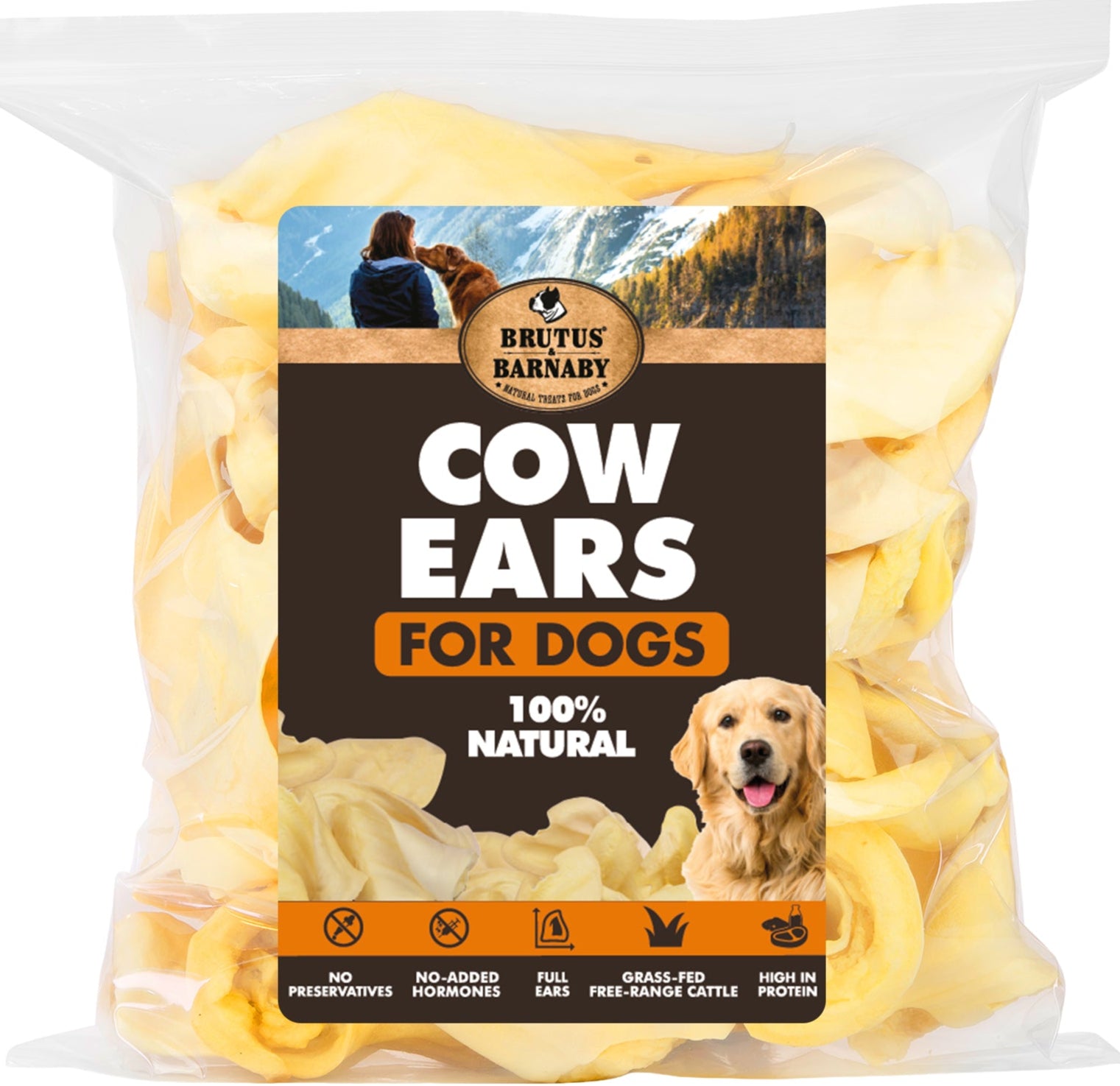
Brutus & Barnaby Cow Ears for Dogs
Whole cow-ear chews made from 100% free-range cow ears. Consider them only when beef fits your dog's diet and a whole-ear format suits the dog's chewing behavior and portion plan.
Disclaimer: This article provides general educational information and does not replace veterinary or nutritional advice. “Sensitive stomach” is not a diagnosis, and every dog's needs differ. Treat suitability depends on age, size, diet, health, allergies, ingredient tolerance, chewing and swallowing behavior, and calorie needs. Treats should not replace a complete and balanced diet. Introduce new treats gradually, use manageable portions, provide fresh water, and supervise every chew session. Stop feeding the product and contact your veterinarian if your dog develops vomiting, diarrhea, appetite changes, unusual tiredness, itching, pain, or another concerning reaction. Seek urgent veterinary care for choking, breathing difficulty, collapse, severe weakness, repeated vomiting, blood or black stool, a swollen or painful abdomen, or other emergency signs. Product ingredients, analysis, sizes, packaging, and availability may change; review the current product page and package before feeding.