

Can Dogs Digest Cow Ears? Safety, Supervision & Portion Tips
Cow ears are edible chews, but digestibility depends on more than the ingredient. Learn how portion size, chewing behavior, supervision, and your dog’s health affect what happens after every bite.
Watching your dog work through a cow ear can raise an obvious concern: will those pieces actually break down after they are swallowed? Many dogs can digest properly chewed cow-ear tissue, but a chew being edible does not make every piece—or every chewing style—equally low-risk. Large swallowed chunks can still cause choking, regurgitation, stomach upset, or an intestinal obstruction.
What “digestible” actually means
A cow ear is animal tissue intended to be eaten, not a plastic toy or recreational object that should remain completely intact. Chewing mechanically breaks the tissue into smaller pieces. After swallowing, the stomach and intestines continue processing the edible material.
That process is not identical for every dog. A slow, steady chewer may soften the ear and swallow small bites. A gulper may tear off a broad flap and attempt to swallow it before it has been reduced. The ingredient is the same, but the immediate risk is different.
Digestible is not the same as obstruction-proof. Even edible material may lodge in the throat, esophagus, stomach, or intestine if the swallowed piece is too large, folded, or poorly chewed.
Individual tolerance also matters. A dog may be able to digest beef protein yet develop loose stool after eating too much at once. Another dog may have a diagnosed beef allergy, a prescription diet, swallowing difficulty, previous obstruction, or a medical condition that makes an edible chew inappropriate.
Chewing style can matter more than body size
Body size helps with portion planning, but it does not tell you how carefully a dog will chew. Watch what your dog actually does with the ear.
Steady chewer
Gnaws repeatedly, softens the ear, and removes smaller bites. Continue supervising and remove the remaining piece before it becomes easy to swallow whole.
Shredder
Tears the ear into strips or flakes quickly. Check the size and shape of the pieces and end the session if broad sections are being pulled off.
Gulper
Tries to swallow large portions with minimal chewing. Cow ears may not be an appropriate chew unless your veterinarian recommends a workable approach.
Whole ears, halves, or slivers: choosing a starting format
There is no reliable rule saying every dog within a particular weight range should receive the same amount. Choose a piece your dog can hold and chew but cannot immediately fit entirely inside the mouth.
| Format | Current product options | Practical use | Main supervision point |
|---|---|---|---|
| Whole Cow Ears | 12, 30, or 100 large ears | A fuller chew session for a dog already comfortable handling an ear | Remove the remaining section before it becomes swallowable |
| Cow Ear Halves | 12, 30, or 100 half-ear pieces | A more compact starting piece without moving to a small reward format | Do not assume a half is automatically the correct portion for every dog |
| Cow Ear Slivers | 100-gram or 250-gram bags | Smaller-format pieces for controlled rewards and lighter chewing | Small pieces can be swallowed quickly, so supervision still matters |
Current product formats were verified from Brutus & Barnaby product pages. Natural pieces vary in shape, thickness, and weight.
Portion size affects digestion and calories
A whole ear is not automatically one serving. For a new dog, begin with a small amount or a short session, then monitor appetite, stool, and comfort before offering more on another day.
Current Brutus & Barnaby labels list approximately 96.3 calories per ounce for whole ears, halves, and slivers. That makes portion weight more useful than counting ears because natural ears are not uniform. At that calorie density, 0.25 ounce is approximately 24 calories and 0.5 ounce is approximately 48 calories.
Include every edible portion in the daily treat budget. The WSAVA treat guide advises that treats should make up no more than 10% of a dog’s daily calories. Your veterinarian can help calculate a suitable daily target for your individual dog.
Dogs with weight concerns, pancreatitis risk, chronic digestive symptoms, or a prescription diet need individualized guidance. A relatively low crude-fat number on a label does not prove that a chew is suitable for a particular medical condition.
How to introduce a cow ear safely
- Check health and chewing history. Avoid experimenting without veterinary guidance if your dog has swallowing problems, damaged teeth, chronic stomach symptoms, a previous obstruction, pancreatitis risk, a beef allergy, or a therapeutic diet.
- Choose the starting format. Select a piece large enough that your dog cannot immediately swallow it, while still being manageable to hold and chew.
- Start with a short session. A first introduction is a tolerance test, not a challenge to finish the entire ear. Do not introduce several new treats on the same day.
- Stay close and watch the mouth. Supervision means being near enough to see whether your dog is gnawing, shredding, or trying to gulp—not merely being somewhere in the house.
- Remove risky pieces. End the session when the remaining portion can fit fully inside the mouth, becomes folded into a swallowable lump, or starts breaking into pieces your dog is gulping.
- Monitor afterward. Watch for vomiting, repeated gagging, diarrhea, appetite changes, unusual lethargy, abdominal discomfort, or difficulty passing stool.
- Handle it like food. Wash your hands, clean surfaces and bowls, keep the bag dry, and store it away from children and other pets.
Cow ear safety: when to stop and when to call a veterinarian
Take the chew away if your dog is trying to swallow a large piece, repeatedly gagging, bleeding from the mouth, showing tooth pain, or becoming unusually frantic or possessive around it.
Seek emergency help immediately
- Difficulty breathing or obvious choking
- Blue, gray, or very pale gums
- Collapse or severe weakness
- Repeated unproductive retching with distress
Do not blindly sweep inside the mouth or induce vomiting unless a veterinary professional specifically instructs you to do so.
Contact your veterinarian promptly
- Repeated swallowing, drooling, gagging, or regurgitation
- Persistent vomiting or inability to keep water down
- Loss of appetite, lethargy, or abdominal pain
- Bloody stool, straining, or difficulty passing stool
These signs can have several causes and require professional assessment rather than an online diagnosis.
Allergies and sensitive dogs
A single-ingredient treat can simplify label reading, but it is not hypoallergenic. Cow ears contain beef tissue and are unsuitable for a dog with a diagnosed beef allergy unless the treating veterinarian says otherwise. Stop offering the treat and ask for veterinary advice if a new reaction includes persistent itching, facial swelling, hives, repeated vomiting, or diarrhea. Facial swelling or breathing difficulty is urgent.
Puppies, seniors, and dental concerns
Age alone does not determine readiness. Puppies with developing teeth and seniors with worn, loose, or painful teeth may need another texture. Dogs that bite down forcefully can damage a tooth on many types of chews. Ask your veterinarian to assess dental comfort if you are uncertain.
Brutus & Barnaby cow-ear options
These products share a cow-ear ingredient but offer different starting formats. Check each live page for current packaging, availability, ingredients, and nutrition information before ordering.
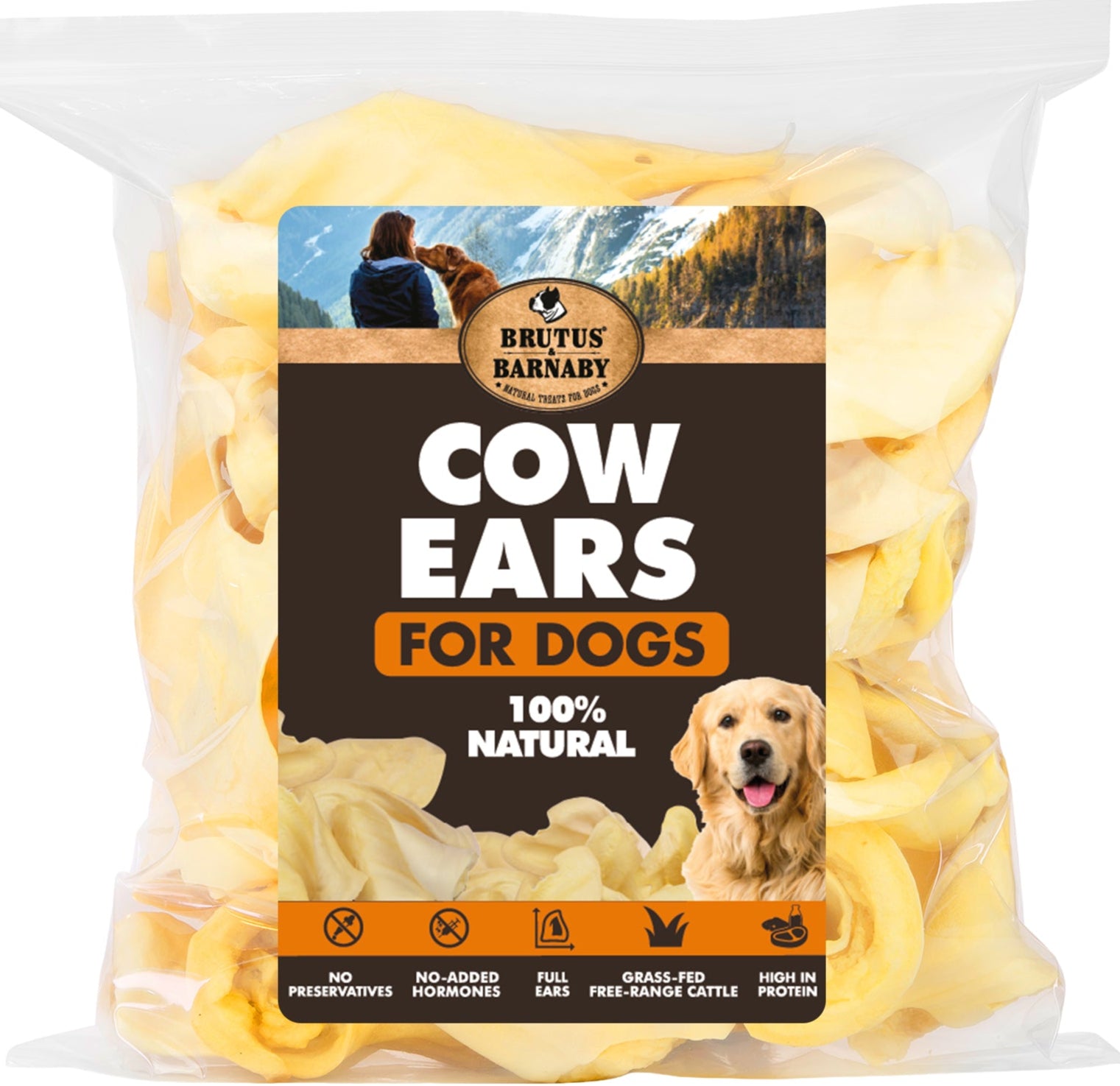
Cow Ears for Dogs | Natural Single Ingredient Dog Treats
A full-size cow-ear format for supervised chew sessions. The current product page lists 100% free-range cow ears as the ingredient.
- 12, 30, and 100 large-ear options currently listed
- Current label: 87% crude protein and 3% crude fat
- Approximately 96.3 calories per ounce
- Rawhide-free and made in the USA

Cow Ear Halves for Dogs | Thick-Cut Long-Lasting Dog Chews
A more compact half-ear format. The current page lists 100% grass-fed cow ears as the single ingredient.
- 12, 30, and 100 half-ear options currently listed
- Current label: 87% crude protein and 3% crude fat
- Approximately 96.3 calories per ounce
- Rawhide-free and made in the USA
Trusted Reading
Guidance on treat calories and maintaining a balanced daily diet.
Veterinary information about obstruction signs, diagnosis, and treatment.
Clinical signs such as gagging, drooling, regurgitation, and repeated swallowing.
Practical hygiene and storage guidance for pet owners.
Frequently Asked Questions
Are cow ears fully digestible for dogs?
Cow ears are edible animal tissue, and many dogs can digest properly chewed portions. However, no chew should be treated as risk-free. A large swallowed piece may cause choking, regurgitation, or an obstruction before it can be adequately broken down.
What should I do if my dog swallows a large piece?
If your dog cannot breathe, is collapsing, or has pale or blue gums, seek emergency veterinary care immediately. If your dog is breathing normally, contact your veterinarian for advice based on the piece size and your dog’s size and history. Do not induce vomiting unless instructed.
How long does a cow ear take to digest?
There is no reliable universal number of hours. Digestion varies with the amount eaten, size of the swallowed pieces, the dog’s gastrointestinal function, other food consumed, and individual health. Persistent vomiting, appetite loss, pain, or lethargy needs veterinary attention.
Can cow ears cause diarrhea?
Yes. A new protein, an excessive portion, or an individual intolerance may cause loose stool or vomiting. Introduce cow ears gradually and stop if symptoms develop. Repeated, severe, or bloody diarrhea should be discussed with a veterinarian.
Can puppies digest cow ears?
Some puppies may handle small, supervised portions, but readiness depends on teeth, chewing control, size, diet, and health—not age alone. Ask your veterinarian before introducing an edible chew to a very young puppy or one with digestive or dental concerns.
How often can a dog have a cow ear?
There is no one schedule for every dog. Frequency depends on portion weight, daily calorie needs, body condition, other treats, and digestive tolerance. Keep total treats within the daily calorie budget recommended by your veterinary team.
Are cow ears suitable for dogs with beef allergies?
No—not without direction from the veterinarian managing the allergy. Cow ears contain beef tissue. They can also interfere with a veterinary elimination-diet trial even when they contain only one ingredient.
Can cow ears cause an intestinal blockage?
They can if a dog swallows a piece too large to pass normally. Proper chewing reduces piece size but cannot eliminate risk. Supervise every session, remove swallowable end pieces, and seek veterinary advice if obstruction warning signs appear.
Final Takeaway
Many dogs can digest cow ears, but safe chew time depends on how the dog eats them. Start with an appropriate format, limit the edible portion, supervise closely, and remove the chew before the remainder can be swallowed whole. Digestibility is only one part of the decision—calories, allergies, dental condition, medical history, and individual tolerance matter too.
Find the right cow-ear format
Compare whole ears, halves, and slivers to choose a manageable starting format for your dog’s supervised chew routine.
Shop Cow Ear Treats