



Whole, Half, or Sliver? How to Choose the Right Cow Ear Format for Your Dog
They all come from the same familiar chew category, but they do not create the same treat experience. The right format depends on whether your dog needs a fuller chew session, a more compact piece, or a smaller reward you can manage more easily.
One dog wants a real chew session. Another needs something smaller. A puppy may only be ready for a manageable piece. The answer is not always buying a completely different treat — sometimes it is choosing a different version of the same one.
Choose Whole Cow Ears when you want the largest starting format and a fuller supervised chew session. Choose Cow Ear Halves when you want a chunky, more compact chew without starting with a full ear. Choose Cow Ear Slivers when you need smaller pieces for small dogs, puppies, teething puppies, sensitive-stomach routines, or controlled reward moments. The best format depends on your dog's size, chewing style, diet, and how you plan to use the treat.
Same Chew Family, Three Different Starting Sizes
The main difference is not whether one format is “real” cow ear and another is not. All three live products are single-ingredient cow-ear chews.
The important difference is how much chew you start with and what job you need the treat to do.
The fastest way to decide: do not ask which product sounds best. Ask how large you want the starting piece to be before the chew session begins.
Choose Whole Cow Ears for a Fuller Chew Session
Whole Cow Ears make the most sense when you want the largest starting format and your dog is comfortable handling it.
The live product page currently offers 12, 30, and 100 Large Ear options and recommends the product for small, medium, and large dogs, moderate and aggressive chewers, and sensitive-stomach routines.
You want the largest starting format
The full format creates more chew than you need
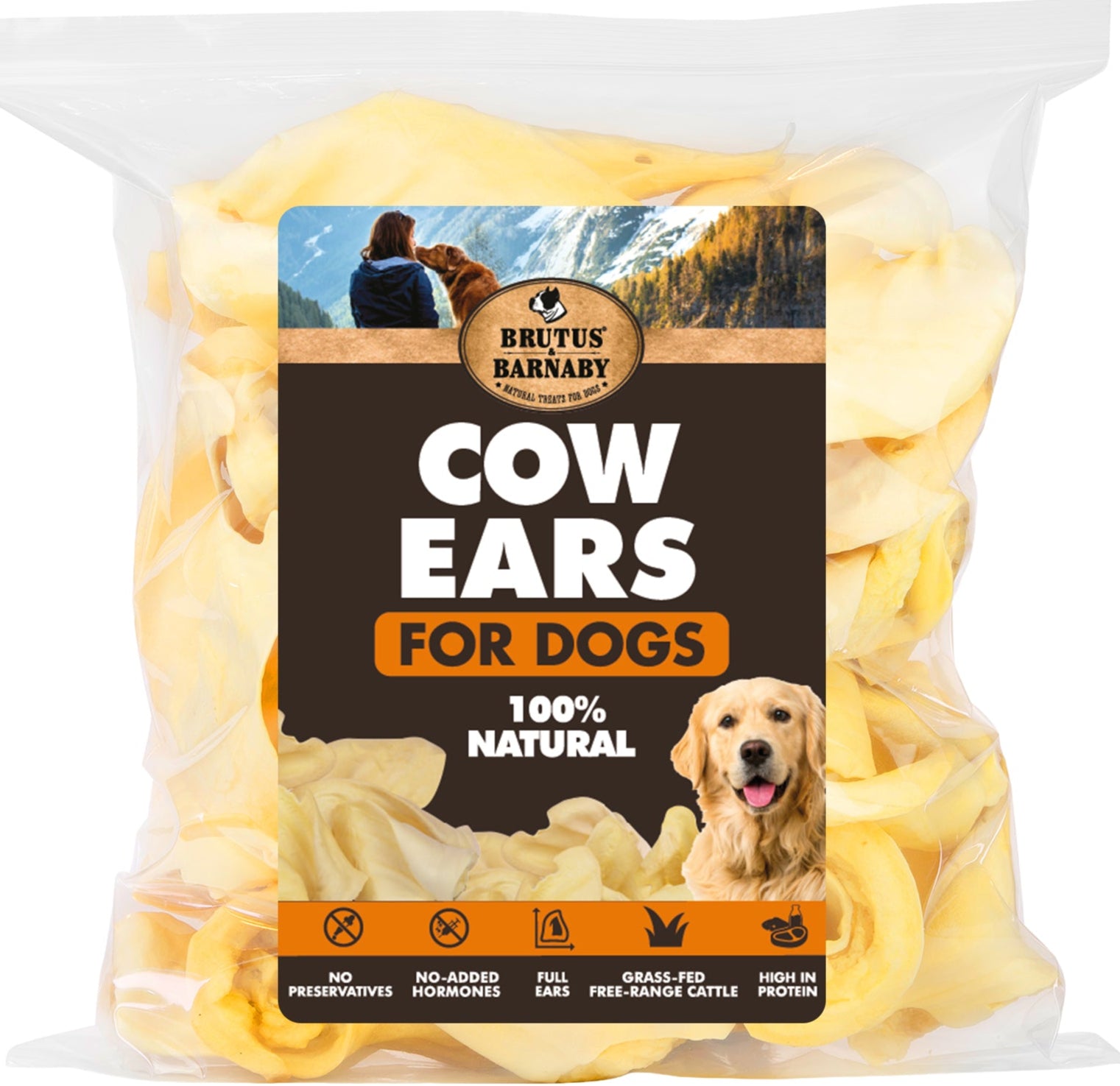
Cow Ears for Dogs | Natural Single Ingredient Dog Treats
The largest starting format for dogs that enjoy a full crunchy cow-ear chew session.
Choose Cow Ear Halves When You Want a Chunky Middle Ground
Halves are not tiny scraps. The live product page describes them as chunky half-ear pieces and positions them for a satisfying natural chew.
That makes Cow Ear Halves the logical middle ground between handing over a full large ear and moving all the way down to smaller slivers.
The halves advantage: you get a pre-cut, more compact starting format without turning the experience into a tiny reward.
Useful when you want a more compact starting piece without choosing slivers.
Halves maintain a substantial ear-chew format instead of becoming a quick snack.
A practical option when you do not want to manage a whole ear yourself.
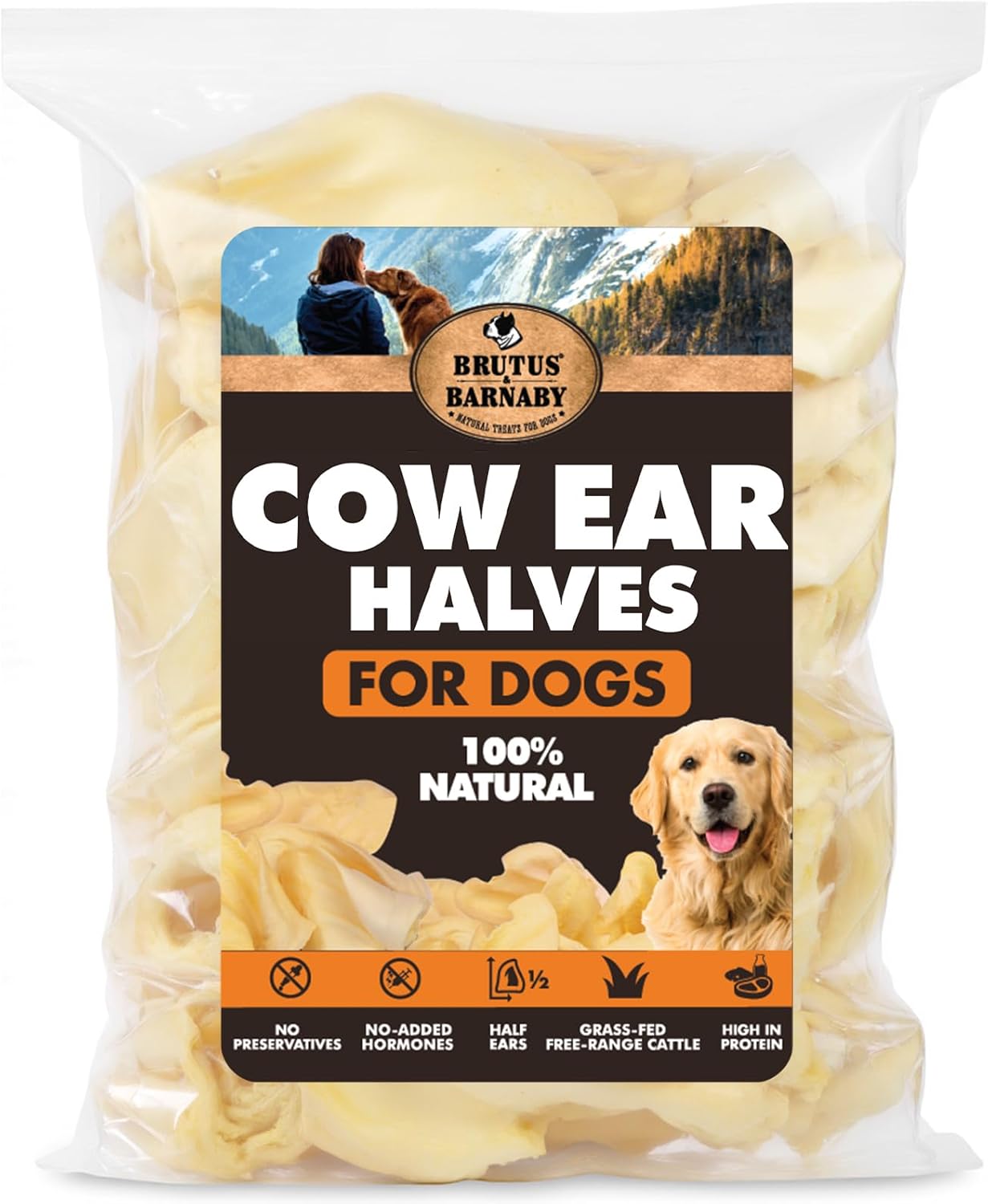
Cow Ear Halves for Dogs | Thick-Cut Long-Lasting Dog Chews
Chunky half-ear pieces for dog parents who want a more compact starting chew without moving all the way down to small slivers.
Choose Cow Ear Slivers When Smaller Pieces Are the Point
Slivers are not trying to compete with whole ears for the biggest chew session.
Their advantage is the smaller format itself. The live product page currently recommends them for small dogs, puppies, teething puppies, sensitive stomachs, training rewards, and rawhide-alternative routines.
Important distinction: smaller does not automatically mean safer. A piece still needs to be appropriate for the individual dog's mouth and swallowing behavior.

Cow Ear Slivers for Dogs | Low-Fat Easy-to-Chew Dog Treats
Smaller cow-ear pieces for dogs and routines where a whole or half ear creates more chew than the moment needs.
Which Format Is Best for Small Dogs?
Slivers are the most obvious starting point when your main priority is a smaller format, but they are not the only option a small dog can use.
Some small dogs are slow, careful chewers and may handle a larger ear format well under supervision. Others try to swallow smaller pieces too quickly. That is why body weight alone should not decide the chew.
When a smaller treat format is the goal
Useful for lighter chewing, controlled reward moments, and dogs that do not need a full chew session.
When your dog tries to gulp small pieces
A larger, easier-to-hold chew may make more sense for some dogs that swallow small treats too quickly.
For a broader size-specific routine, read our guide to the best dog chews for small dogs.
Which Format Makes the Most Sense for Puppies?
Slivers are the live product specifically positioned for puppies and teething puppies, while the Halves page also lists puppies among its recommended users.
That does not mean every puppy is automatically ready for either product. A puppy should be old enough for the chew format, comfortably eating solid food, able to chew safely, and supervised throughout the session.
Does a Smaller Piece Automatically Mean Fewer Calories?
A smaller piece will usually weigh less than a larger piece, but the safest way to compare the products is by the amount actually eaten.
The current live product pages list Whole Cow Ears, Cow Ear Halves, and Cow Ear Slivers at the same calorie density: 96.3 calories per ounce.
“One ear” and “one sliver” are not nutrition units
Natural pieces vary in shape and weight. Count the actual amount your dog consumes and include cow ears with every other treat, chew, training reward, and table scrap given that day.
Useful guardrail: WSAVA recommends keeping treats below 10% of a dog's daily calorie intake. The right format is the one that helps you manage the treat routine without crowding out the complete diet.
The Nutrition Panels Are Similar — But Not Identical
Whole Cow Ears and Cow Ear Halves currently share the same listed guaranteed analysis. Cow Ear Slivers have a different live analysis.
The practical buying decision should still begin with the dog and the intended use. A few percentage points on a guaranteed analysis do not tell you whether your dog needs a full chew session or a smaller reward.
Which Format Is Better for Training?
Cow Ear Slivers are the clear starting point inside this specific product family because the live product page includes training rewards among the recommended uses.
That does not mean they should replace purpose-built soft training treats for every session. Slivers create a crunchier reward experience, while soft training treats are usually easier for fast repetitions.
For a crunchy higher-interest reward
Useful when the dog enjoys cow ear texture and the piece can be managed appropriately for the training moment.
For rapid repeated cues
Better when the dog needs to finish each reward quickly and immediately continue the session.
Which Format Lasts the Longest?
A larger starting piece can create more available chew than a smaller starting piece, but there is no universal clock for any of these products.
Your dog's chewing strength, technique, mouth size, experience, and the individual natural piece all affect how long the session lasts.
Do not buy by time claims alone: one dog may slowly work on a sliver while another destroys a full ear quickly. Watch the dog in front of you.
A Smaller Chew Can Still Become a Choking Risk
Size selection is not simply a race to find the smallest product your dog can physically eat.
Cornell's veterinary guidance on foreign-body obstruction advises keeping easily swallowed objects away from dogs, while WSAVA recommends choosing treats with an appropriate size and shape to reduce choking risk.
Read our dedicated guide to avoiding choking hazards with animal ears and dog chews before building a regular routine.
Can Cow Ears Help With a Dental Routine?
The live B&B product pages describe natural chewing action as supportive of cleaner teeth, but the size you choose should still be based on safe chewing behavior rather than a promise that one format will clean teeth better.
A Whole Ear does not automatically provide better dental care than a Half or Sliver. The American Veterinary Medical Association recommends regular veterinary dental evaluation and a broader home-care plan.
An appropriate chewing routine
Choose the format your dog can work on comfortably and safely under supervision.
Real dental care
Chews are not a substitute for veterinary exams, toothbrushing, or treatment of existing dental disease.
Can One Dog Use All Three Formats?
Yes. The choice does not have to become a permanent identity for your dog.
One dog may use different cow-ear formats for different jobs, as long as the total treat routine still fits the diet and each piece is appropriate for the dog's chewing behavior.
For help matching any chew to your dog's mouth and chewing behavior, use our complete dog chew size guide.
What If You Are Switching From Rawhide?
The format decision still matters after you have decided to choose a rawhide-free cow-ear chew.
A dog used to one type of chew may approach a cow ear differently. Start with the format you can supervise most confidently rather than automatically buying the largest package or biggest piece.
New to cow ears?
Introduce one format slowly, watch the chewing style, and monitor digestion before building a regular routine.
Already confident with ears?
Choose between Whole, Halves, and Slivers based on the size of the treat moment you need.
Read our full comparison of Cow Ears vs. Rawhide for the broader chew-category decision.
The Fastest Way to Choose Your Cow Ear Format
Still not sure? Start with the job.
Store Every Format Like a Food Product
Whole, Half, or Sliver — good storage habits stay the same.
Do
Avoid
Use our full guide to storing dog treats and chews for a cleaner long-term routine.
Helpful External Resources
These veterinary and government resources provide useful guidance on treat sizing, choking risk, dental care, calorie limits, supervision, and safe handling.
WSAVA — Feeding Treats to Your Dog Guidance on appropriate treat size, supervision, choking risk, and keeping treats below 10% of daily calories. Cornell University College of Veterinary Medicine — Foreign Body Obstruction in Dogs Veterinary guidance on preventing dogs from swallowing small objects and recognizing obstruction concerns. AVMA — Pet Dental Care Why veterinary dental checks and broader home care still matter even when dogs enjoy chew products. FDA — Safe Handling of Pet Food and Treats Practical guidance on dry storage, clean handling, and keeping the full treat supply secure.Choosing a Cow Ear Format: Common Questions
What is the difference between Whole Cow Ears, Halves, and Slivers?
The main difference is the starting format. Whole Ears are the largest option, Halves provide chunky half-ear pieces, and Slivers provide smaller cow-ear pieces for dogs and routines that do not need a full chew.
Which cow ear format is best for small dogs?
Cow Ear Slivers are the clearest smaller-format starting point and are recommended on the live product page for small dogs. However, the safest choice also depends on whether the individual dog chews steadily or tries to gulp small pieces.
Are Cow Ear Halves just broken leftovers?
No. Brutus & Barnaby sells Cow Ear Halves as their own product format and describes them as chunky half-ear pieces designed to provide a satisfying natural chew.
Which cow ear format is best for puppies?
Cow Ear Slivers are specifically recommended on the current product page for puppies and teething puppies, while Halves also list puppies among the recommended users. The puppy still needs to be ready for the chew format and supervised throughout.
Do Whole Ears have more calories than Slivers?
The current live pages list all three formats at the same calorie density of 96.3 calories per ounce. A larger natural piece may contain more total calories because it can weigh more, so compare the amount actually eaten rather than the product name alone.
Are Cow Ear Slivers good for training?
The live Cow Ear Slivers page includes training rewards among its recommended uses. They create a crunchier reward experience than soft training treats, so choose based on the speed and purpose of the session.
Do Whole Cow Ears always last longer than Halves or Slivers?
Not automatically. A larger starting piece provides more available chew, but actual chew time depends on the dog's size, strength, technique, experience, and the individual natural piece.
Can I rotate between all three cow ear formats?
Yes. You might use Whole Ears for fuller chew sessions, Halves for more compact chew days, and Slivers for smaller reward moments. Count every format toward the same overall daily treat allowance.
Choose the Size of the Treat Moment, Not Just the Size of the Dog
A large dog does not need a full ear every time, and a small dog does not automatically need the tiniest available piece. The better question is what kind of chewing or reward moment you are trying to create.
Whole, Half, or Sliver — the right cow ear is the one that gives your dog enough chew for the moment without giving them more treat than the moment needs.
One Cow Ear Family. Three Different Treat Moments.
Go Whole for a fuller chew session, choose Halves for the chunky middle ground, or keep Slivers ready for smaller dogs and lighter reward moments.
Disclaimer: This article is for general educational purposes only and does not replace veterinary, nutritional, dental, or emergency advice. Every dog is different. Chew suitability depends on age, size, weight, complete diet, health, allergies, ingredient tolerance, dental condition, chewing strength, and swallowing behavior. Treats should not replace a complete and balanced diet. Introduce new chews gradually, choose an appropriate format, provide fresh water, and supervise every session. Remove pieces before they become small enough for your dog to swallow whole. Contact your veterinarian if your dog develops persistent vomiting, diarrhea, appetite changes, unusual tiredness, dental pain, choking symptoms, trouble swallowing, abdominal discomfort, or any other concerning response. Product ingredients, nutrition information, pack sizes, packaging, and availability may change, so always review the current product page and packaging before feeding.