



Whole Cow Ears vs. Halves vs. Slivers: Which Size Is Best?
The biggest cow ear is not automatically too much, and the smallest piece is not automatically the safest. The right format depends on your dog's mouth size, chewing style, session goal, portion needs, and whether the piece stays too large to swallow whole.
Dog owners often choose the smallest cow ear format because it looks easier to manage. That can work for many smaller dogs—but a piece that is too small for a large or fast-gulping dog may actually become easier to swallow instead of easier to chew.
Choose the format by chewing behavior first—and dog size second
Whole cow ears are usually the best starting format for medium and large dogs that need a more substantial piece to hold and work on during a supervised chew session.
Cow ear halves sit in the middle: more substantial than slivers, but easier to portion than a full ear.
Cow ear slivers are usually the better fit for smaller dogs, lighter chewers, shorter sessions, or owners who want a smaller individual portion. The exception is a dog that tries to swallow smaller pieces whole—in that case, a larger format may be the safer direction.
Same Basic Cow Ear. Three Different Jobs.
The current Brutus & Barnaby pages for whole cow ears, halves, and slivers all use cow ear as the core single ingredient. The practical difference is the physical format you put in front of the dog.
Changing the cut changes how easy the chew is to hold, how quickly a dog may finish it, how much portion control you get before the session begins, and how soon the piece may become small enough to swallow.
Whole ears and halves
Better when the dog needs a more substantial piece to grip, chew gradually, and enjoy during a defined supervised session.
Halves and slivers
Better when you want the portion reduced before the dog begins rather than taking away a larger chew after part has been consumed.
There is no universal ranking from safest to least safe. A format that works beautifully for a slow 15-pound nibbler may be a poor match for a 70-pound dog that immediately tries to gulp anything small enough to fit inside the mouth.
Whole Cow Ears vs. Halves vs. Slivers at a Glance
Use this as a starting point, then adjust for the individual dog in front of you.
| Comparison Point | Whole Cow Ears | Cow Ear Halves | Cow Ear Slivers |
|---|---|---|---|
| Format | Full-size ear | Thick half-ear pieces | Smaller cut pieces |
| Best starting fit | Medium and large steady chewers | Moderate chewers and shorter sessions | Small dogs and lighter chewers |
| Portion control | Lowest before chewing begins | Moderate | Highest |
| Grip for larger dogs | Usually easiest | Depends on the individual piece | May be too small for gulpers |
| Short chew session | Take away before finished | Strong middle-ground option | Often easiest to plan |
| Main caution | More total chew available | Can still become a swallowable end piece | Small pieces may tempt fast gulpers |
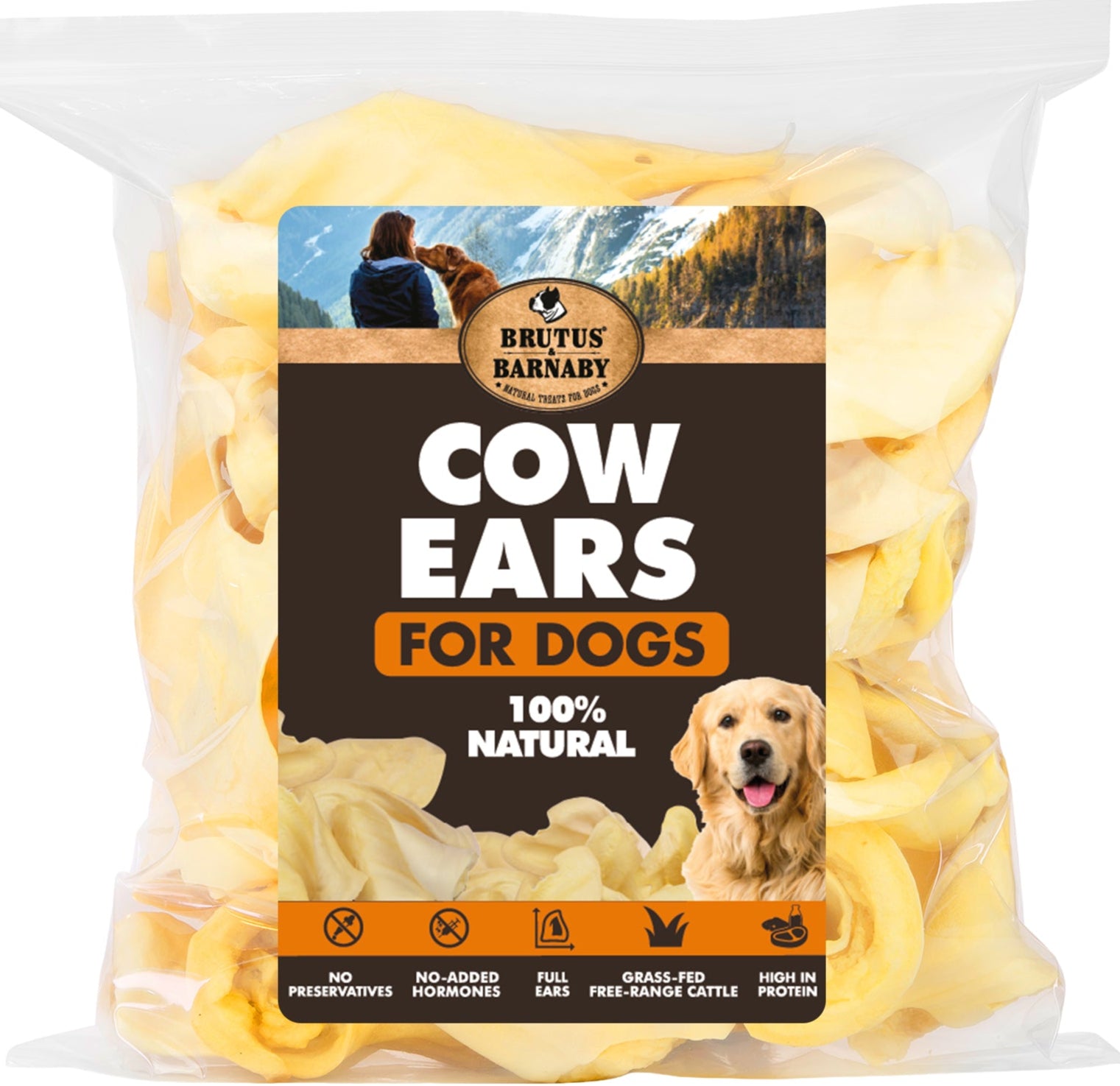
Cow Ears for Dogs | Natural Single Ingredient Dog Treats
The full-size format for dogs that benefit from having a larger piece to hold and work on during supervised chew time.
- 100% cow ear
- Full-size chew format
- Good for medium and large dogs
- Useful for supervised longer chew sessions
The Safest Cow Ear Size Is Not Always the Smallest One
This is the most important idea in the entire comparison.
A smaller piece can make portion control easier, but it can also become easier for a larger dog to fit entirely inside the mouth. Once the dog stops working on the chew gradually and starts trying to swallow the piece, the advantage of a smaller portion disappears.
Choose a piece your dog has to chew—not one your dog can simply gulp
A large calm chewer may handle a whole ear beautifully. The same dog may try to swallow a small sliver after only a few bites. Meanwhile, a small dog may struggle to manage a full ear but work calmly on an appropriately sized sliver.
That is why body weight alone cannot make the decision. Watch how your dog uses the mouth, paws, and jaw: does the dog hold the chew, work one edge gradually, and pause between bites—or clamp down, reposition rapidly, and try to swallow pieces as fast as possible?
Match the Format to Both Dog Size and Chewing Style
Start with size, then let chewing behavior overrule the first guess when necessary.
| Dog Type | Better Starting Format | What to Watch |
|---|---|---|
| Small, slow nibbler | Slivers | Whether the piece stays large enough to chew instead of swallow. |
| Small, determined chewer | Slivers or halves | Rapid size reduction and loose pieces. |
| Medium, steady chewer | Halves or whole ears | How much is consumed during one session. |
| Large, calm chewer | Whole ears | The remaining end piece as the chew gets smaller. |
| Large, fast gulper | Larger format with close supervision | Attempts to swallow rather than chew. |
These are starting directions, not permanent rules. Some small dogs handle larger cow ear pieces slowly and confidently. Some large dogs should not receive small pieces because they treat them like one-bite snacks.
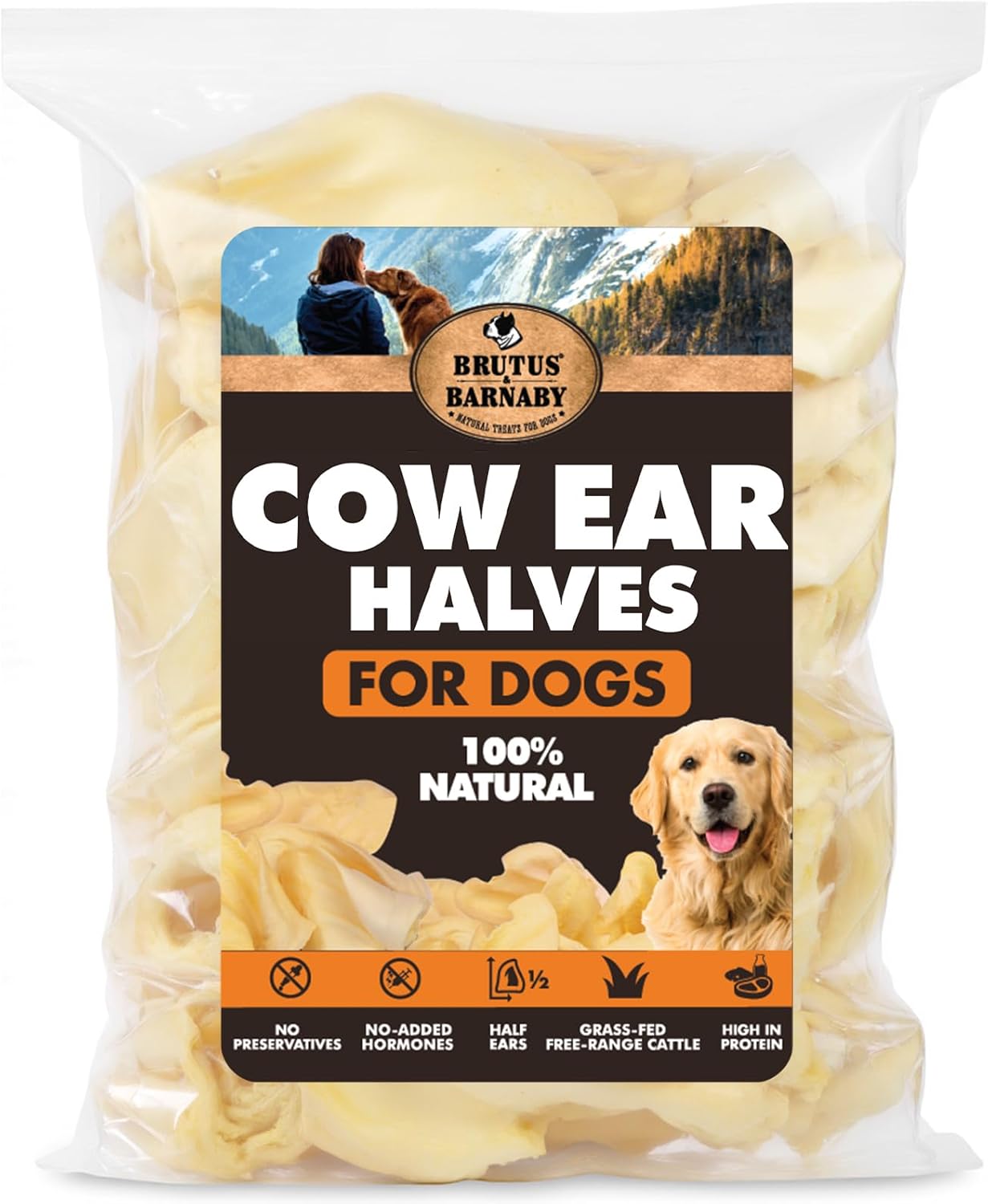
Cow Ear Halves for Dogs | Thick-Cut Long-Lasting Dog Chews
A thick-cut option for owners who want a more substantial chew than a sliver without starting every session with a full ear.
- 100% cow ear
- Chunky half-ear pieces
- Good for moderate chewers
- Useful for shorter full-chew sessions
Cow Ear Halves Work Best When You Want the Middle Ground
Halves solve a specific problem: a full ear feels like more chew than today's session needs, but a sliver feels too small for the dog to manage comfortably.
- A whole ear feels excessive for one session
- A sliver disappears too quickly
- Your dog chews steadily rather than gulps
- You want more portion control before chewing begins
- Your large dog tries to swallow the half
- Your small dog cannot manage the piece comfortably
- You need a very short, controlled portion
- You want the largest possible grip area
A half is not automatically half the calories of every whole ear because natural ears vary in size and weight. Portion awareness still depends on how much product is actually consumed.

Cow Ear Slivers for Dogs | Low-Fat Easy-to-Chew Dog Treats
The smallest cow-ear format for dogs that need a more manageable piece, shorter chew time, or tighter control over the amount offered at once.
- 100% cow ear
- Smaller cut pieces
- Good for small dogs and lighter chewers
- Useful for shorter supervised sessions
Cow Ear Slivers Are Best When Smaller Really Solves a Problem
A sliver should have a clear job. It should make the chew easier for the individual dog to manage, make the portion easier for you to control, or create the shorter chew session you actually want.
Do not choose slivers for a dog that treats them like one-bite snacks
If your dog repeatedly tries to swallow the entire piece, stop using that size. A larger format that forces more gradual chewing may be the better direction.
Smaller Format Does Not Mean “Free Calories”
Smaller pieces make portion planning easier, but the format does not erase the calories in the amount your dog actually eats.
The current Brutus & Barnaby pages for whole cow ears, halves, and slivers each list 96.3 calories per ounce. That makes the practical point simple: if your dog consumes the same weight of cow ear, cutting it into smaller pieces does not magically make that amount calorie-free.
How much did my dog actually consume?
Count the amount eaten during the session alongside every other treat and chew given that day.
Was it technically a sliver or a whole ear?
The product name alone does not tell you how much your individual dog ate.
A widely used veterinary nutrition guideline is to keep treats within about 10% of a dog's daily calories. Individual calorie needs vary, so dogs with weight concerns, medical conditions, prescription diets, or special nutrient restrictions need personalized veterinary guidance.
Choose by the Session You Want Today
The same dog does not always need the same format. A dog may use a whole ear for supervised weekend downtime and a smaller cow ear format on a shorter chew day.
| Today's Goal | Better Starting Format | Why |
|---|---|---|
| Longer supervised chew time | Whole ear | Starts with the largest grip area and most material. |
| Moderate chew session | Half | Provides a substantial chew without starting with a full ear. |
| Shorter controlled portion | Sliver | Makes the starting portion easier to control. |
| Large dog that gulps small pieces | Whole ear | A larger format may encourage more gradual chewing. |
| Small dog that chews slowly | Sliver | A smaller piece may be easier to hold and manage. |
Every Cow Ear Size Eventually Becomes a Small Piece
Choosing the right starting format does not remove the need to watch how the chew changes.
- Your dog is chewing calmly
- The piece remains manageable
- No large sections are coming loose
- You can continue supervising
- The piece can fit fully in the mouth
- Chewing turns into gulping
- Large pieces separate rapidly
- Your dog shows pain or distress
Trouble breathing is an emergency. Repeated gagging, retching, vomiting, abdominal pain, loss of appetite, marked lethargy, or other concerning changes after swallowing a large piece also require prompt veterinary advice.
The Right Cow Ear Format Can Change Over Time
You are not choosing one format for the rest of your dog's life.
Related Cow Ear and Chew Guides
Deciding between animal-ear chews? Read cow ears vs. pig ears for dogs.
Comparing cow ears with a traditional alternative? See cow ears vs. rawhide.
Choosing for a smaller mouth and body size? Start with our guide to the best dog chews for small dogs.
Helpful External Resources
These veterinary and government resources provide additional guidance on treat calories, dental health, swallowed objects, and handling pet treats safely.
A practical dog-specific guide to keeping treats within the broader daily calorie budget.
Useful context on dental health, warning signs such as abnormal chewing, and why chews are not a replacement for veterinary dental care.
Explains the seriousness of swallowed objects that become lodged in the gastrointestinal tract and the symptoms that need veterinary attention.
Straightforward guidance on handwashing, storage, damaged packaging, and safe treat handling at home.
Cow Ear Size FAQs
What size cow ear should I give my dog?
Choose a format your dog can hold and chew gradually but cannot easily swallow whole. Small steady chewers may do well with slivers, moderate chewers may suit halves, and many medium or large dogs are better starting candidates for whole ears. Chewing behavior should overrule body size when necessary.
Are cow ear slivers safer than whole cow ears?
Not automatically. Slivers can be easier for smaller dogs and make portion control simpler, but a sliver may be too small for a large or fast-gulping dog. The safer format is the one your individual dog has to chew gradually rather than swallow whole.
Are cow ear halves better than whole cow ears?
They are better when you want a smaller starting portion or a moderate chew session. Whole ears are usually better when the dog needs a larger piece to grip and work on. Neither format wins for every dog.
Are cow ear slivers good for small dogs?
They can be a good fit for many small dogs because the smaller format may be easier to hold and manage. Supervise closely and stop using the size if your dog repeatedly tries to swallow the piece instead of chewing it.
Should large dogs have whole cow ears?
Whole ears are often the better starting direction for larger dogs because the bigger format can provide more grip and may be harder to swallow whole. Large dogs still need supervision because the ear becomes smaller as they chew.
Do cow ear slivers have fewer calories than whole ears?
A single sliver usually represents a smaller starting portion than a full ear, but calorie intake depends on the amount by weight that your dog actually consumes. The current Brutus & Barnaby pages for all three formats list 96.3 calories per ounce.
When should I take a cow ear away?
Take it away when the remaining piece becomes small enough to swallow whole, your dog starts gulping instead of chewing, large sections are coming loose rapidly, or you notice pain, repeated gagging, or other concerning behavior.
Can I rotate between whole ears, halves, and slivers?
Yes. Different formats can serve different session goals. A dog might have a whole ear for a longer supervised chew, a half for a moderate session, and a sliver when a smaller portion makes more sense. Recheck safety each time rather than assuming every size suits every situation.
Do not choose the smallest cow ear—choose the size your dog actually chews well
Whole ears, halves, and slivers all have a useful place. The decision comes down to whether your dog needs more grip, more portion control, or a shorter chew session—and whether the chosen piece stays large enough to encourage chewing instead of gulping.
The right cow ear size is the one that makes your dog slow down and chew—not the one that simply looks most convenient in your hand.
Start With the Format That Matches How Your Dog Actually Chews
Explore the full cow-ear collection for different chew formats, or start with whole ears for a more substantial supervised session and slivers for smaller, controlled portions.
This article is for educational purposes and is not a substitute for veterinary advice. Every dog is different, and cow ear size should be chosen for the individual dog's mouth size, age, dental health, diet, digestive tolerance, and chewing behavior. Always supervise edible chews, provide fresh water, remove pieces that become small enough to swallow whole, count the amount consumed within the dog's overall treat intake, and contact your veterinarian about choking, swallowed pieces, dental pain, repeated vomiting, digestive problems, or other health concerns.