



Beef Lung Bites vs. Filets for Dogs: Which Format Is Better?
Both formats give your dog the same simple beef lung foundation. The real decision is whether you want ready-to-grab pieces for fast rewarding or larger filets you can break into custom portions.
Beef lung bites and beef lung filets are not two completely different treats. They are two ways of solving different reward problems: one prioritizes speed and convenience, while the other gives you more control over the final piece size.
Choose Bites for convenience. Choose Filets for flexibility.
Beef Lung Bites are the better fit when you want ready-to-use crunchy pieces for treat pouches, quick rewards, recall practice, and everyday treating without breaking every piece first.
Beef Lung Filets are the better fit when you want a larger piece that can be offered more substantially or broken by hand into different reward sizes for different dogs and activities.
Neither format is automatically healthier or better for every dog. The best choice depends on how often you reward, how small you need the pieces, where you use them, and how much prep you want to do.
The Biggest Difference Is the Format—not the Basic Ingredient
The current Brutus & Barnaby product pages list beef lung as the core ingredient for both products. That means this comparison is less about choosing between two different proteins and more about deciding how you want to handle, portion, carry, and deliver the reward.
Think of it like choosing between pre-cut pieces and a larger sheet you can portion yourself.
Ready-to-grab pieces
Best when you want to reach into the bag or treat pouch, reward quickly, and move straight back to the next repetition.
Larger pieces you control
Best when you want to decide whether today's reward should stay substantial or be broken into several smaller portions.
Beef Lung Bites vs. Filets at a Glance
There is no universal winner. The easier choice comes from matching the format to the job.
| Comparison Point | Beef Lung Bites | Beef Lung Filets |
|---|---|---|
| Main format | Smaller ready-to-use pieces | Larger breakable filets |
| Fast training | Easiest straight from the bag | Better when broken before the session |
| Custom portioning | Pieces can still be broken smaller | More flexibility from one larger piece |
| Treat pouch convenience | Strong fit | Best prepared in advance |
| Larger jackpot reward | Offer several small pieces | Keep a larger section intact |
| Mixed dog sizes | Convenient for repeated small portions | Easy to customize for each dog |
| Enrichment use | Good for scatter games and searches | Good when different piece sizes are useful |
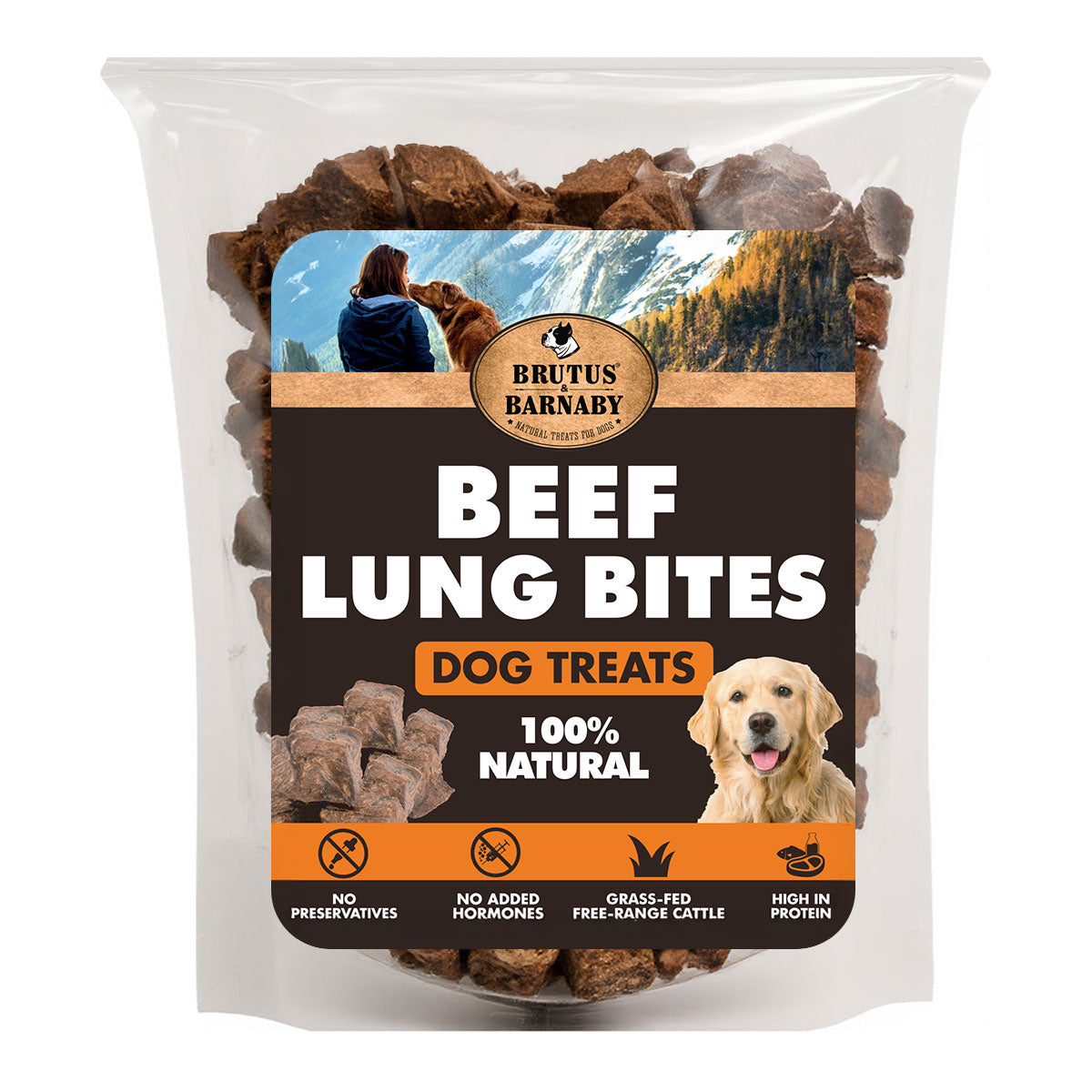
Beef Lung Bites for Dogs | High-Protein Crunchy Training Treats
Choose the Bites when you want crunchy beef lung pieces that are already in a convenient format for quick rewards, treat pouches, and everyday training.
- 100% beef lung
- Ready-to-use crunchy pieces
- Strong fit for training and recall
- Can still be broken smaller when needed
Choose Bites When Reward Speed Matters
During training, the reward itself is only part of the job. How quickly you can deliver it matters too.
When you are reinforcing several good decisions in a short period, repeatedly stopping to break a larger treat can interrupt your timing. That is where Beef Lung Bites have the clearest practical advantage.
Repeated quick reinforcement
Reach into the pouch, deliver the reward, and get ready for the next repetition without preparing each piece during the lesson.
Pre-planned custom rewards
Break the filet before training when you want exact small pieces, medium pieces, and a few larger rewards ready for different moments.
Reward-based training works best when the reward is genuinely motivating to the individual dog. That means the practical winner is the format that helps you reinforce the desired behavior clearly without turning treat preparation into the main event.
Choose Filets When One Reward Size Does Not Fit Every Situation
The main strength of a filet is that you decide what it becomes.
One larger section can be divided differently depending on the job:

Beef Lung Filets for Dogs | High-Protein Crunchy Training Treats
Choose the Filets when you prefer a larger crunchy format that can stay substantial or be broken into the exact reward sizes your dog and activity need.
- 100% beef lung
- Larger breakable filet format
- Easy to customize by hand
- Useful for training, snacks, and enrichment
Which Beef Lung Format Fits Your Dog?
Dog size matters, but it is not the only factor. Also consider how quickly your dog eats rewards, how often you train, and whether you prefer to portion treats before or during use.
| Dog or Routine | Better Starting Format | Why |
|---|---|---|
| Small dog | Either | Bites are convenient; Filets allow very small custom portions. |
| Frequent daily trainer | Bites | Less preparation when many quick rewards are needed. |
| Multi-dog household | Filets | One larger piece can be divided differently for each dog. |
| Recall practice | Bites | Easy to carry and deliver immediately after the dog returns. |
| Owner who likes custom portions | Filets | Larger pieces provide more control over the final reward size. |
| Picky dog | Test either | Preference is individual; let the dog's response decide. |
For Small Dogs, the Better Format Depends on Your Patience
Both Bites and Filets can work for small dogs because both formats can be broken into smaller portions.
The difference is how much work you want to do.
When convenience wins
Start with a smaller ready-made piece and break it again only when your individual dog needs an even tinier reward.
When control wins
Portion the larger filet yourself and create exactly the size range you want before the training session begins.
Whichever format you choose, the reward should be easy for the dog to manage and should not become a long chewing interruption during fast-paced training.
For Recall Training, Bites Usually Have the Convenience Advantage
Recall rewards have one demanding requirement: they need to be available when the dog reaches you.
This is where the ready-to-use Bite format can be especially practical. You can carry several pieces in a pouch and reward immediately without trying to tear a larger filet while holding a leash or watching the environment.
Prepare the reward before you need the response
Bites can go straight into the treat pouch. Filets can work just as well when broken into several pieces before you leave the house. The poor option is waiting until the dog returns and then starting to prepare the reward.
The reward format does not teach recall by itself. Positive reinforcement, careful difficulty increases, and rewarding successful returns are what build the behavior. The treat simply needs to make that process easier to execute consistently.
Filets Give You More Ways to Build a “Jackpot”
A jackpot reward is a noticeably better payoff for an especially strong response. Both formats can create one, but they do it differently.
Several rewards in a row
Deliver several small pieces one after another so the dog experiences a longer, more valuable reward event.
Save a larger section
Keep one noticeably larger piece available for the hardest or most important success of the session.
Neither approach is automatically better. The important part is that the special reward actually feels different from the dog's ordinary payment.
For Enrichment, the Activity Decides the Winner
Beef lung treats can be used for more than formal training. The better format changes with the game.
| Activity | Better Starting Format | Why |
|---|---|---|
| Scatter feeding | Bites | Convenient pieces can be spread across the search area. |
| Puzzle with small openings | Either | Bites may fit directly; Filets can be broken to match the puzzle. |
| Scent search | Bites | Easy to place several separate finds. |
| Mixed-difficulty puzzle | Filets | Different piece sizes can create different reward levels. |
Introduce enrichment games at an easy level first. The goal is to let the dog succeed, not to hide food so well that the activity becomes frustrating.
Do Not Confuse a Smaller Piece With Unlimited Treating
The Bites format can feel lighter because each individual piece looks small. Filets can feel easier to track because you physically break the portion yourself. Neither impression replaces actual portion awareness.
The current Beef Lung Bites product page lists 119.1 calories per ounce. That does not mean every Bite contains the same number of calories, because natural pieces can vary in size. It means owners should pay attention to the amount used across the entire day rather than counting every differently sized piece as identical.
Prepare the day's training amount separately
Whether you use Bites or Filets, set aside the amount you plan to use before the first training session. That makes it easier to see what has already been given and prevents repeated handfuls from quietly becoming the routine.
Treats should remain a limited part of an otherwise complete and balanced diet. Dogs with weight concerns, medical conditions, prescription diets, or specific nutrient restrictions need individualized veterinary guidance.
You Do Not Have to Pick One Format Forever
For some homes, the most useful answer is to give each format a different job.
For fast everyday rewards
- Recall practice
- Walks
- Quick reinforcement
- Daily reward jar
For custom reward planning
- Multi-dog homes
- Different reward levels
- Puzzle preparation
- Custom portion sizes
The ingredient does not have to change every time the training job changes. Sometimes changing only the format is enough to make the reward easier to use.
The 30-Second Decision Guide
Still unsure? Answer these questions in order.
Will you use most of the bag for fast training?
Start with Bites when convenience and fast delivery matter most.
Do you enjoy preparing custom reward sizes?
Start with Filets when portion flexibility is the main attraction.
Will several dogs share the same bag?
Filets offer more control, although Bites can still be broken smaller for individual dogs.
Do you train on walks or away from home?
Bites are usually easier when the treat needs to travel in a pouch and be ready immediately.
Does your dog strongly prefer one?
Let the dog break the tie. A theoretically perfect reward is not useful when your dog is less interested in it.
Introduce Either Format Gradually
The fact that a treat has one simple ingredient does not mean every dog should receive a large amount on day one.
- Start with a small amount
- Introduce one new treat at a time
- Watch digestion afterward
- Provide fresh water
- Use manageable pieces
- Giving a large amount immediately
- Adding several new proteins together
- Ignoring repeated digestive changes
- Assuming all natural pieces are identical
- Using oversized pieces for small dogs
Repeated vomiting, ongoing diarrhea, marked lethargy, significant appetite changes, or other concerning symptoms deserve veterinary advice.
Related Training and Beef Lung Guides
For a wider comparison of reward types, read our guide to the best dog training treats for faster learning.
For sniffing, puzzles, and search games, explore how to make treats part of your dog's enrichment routine.
For the bigger portioning picture, read how many treats a dog can have per day.
Helpful External Resources
These veterinary and behavior resources explain how food rewards fit into positive reinforcement, training, calorie planning, and real-world recall work.
Practical guidance on high-value food rewards, daily calorie awareness, measuring treats, and adjusting rewards as behaviors become reliable.
A useful explanation of rewarding behaviors you want to see more often and how reward-based methods are defined.
A veterinary-school guide showing how food rewards, toys, praise, and positive reinforcement can be used while teaching recall.
Beef Lung Bites vs. Filets FAQs
What is the difference between beef lung bites and filets?
The main difference is the physical format. Bites come as smaller ready-to-use pieces, while Filets come as larger pieces that can be kept substantial or broken into custom portions. Both current Brutus & Barnaby products use beef lung as the core ingredient.
Are beef lung Bites or Filets better for training?
Bites are usually more convenient for fast repeated rewards because they are already in smaller pieces. Filets may be better when you want to prepare several custom reward sizes before the session. Both can work well when the final piece size suits the dog and the training task.
Can I break beef lung Filets into training treats?
Yes. The current Brutus & Barnaby Filets are specifically described as easy to break, making them useful when you want to prepare smaller portions for training, small dogs, seniors, or other reward situations.
Which beef lung format is better for small dogs?
Either can work. Bites are convenient when you want smaller ready-made pieces, while Filets give you more control over how tiny each portion becomes. Choose pieces that your individual dog can manage comfortably and introduce the treat gradually.
Are beef lung Bites better for recall training?
They often have a convenience advantage because ready-to-use pieces are easy to carry and deliver immediately when the dog returns. Filets can work just as well when you break them into the needed pieces before going outside.
Can dogs have beef lung treats every day?
Some dogs may tolerate beef lung as a regular reward, but frequency and amount should fit the individual dog's size, diet, health, and total daily treat intake. Treats should remain a limited part of an otherwise complete and balanced diet.
Are beef lung treats good for senior dogs?
Beef lung can work for many senior dogs because both formats can be broken into more manageable pieces. Dental condition, digestion, medical history, and individual chewing ability still matter, so dogs with health concerns may need veterinary guidance.
Should I buy both beef lung Bites and Filets?
You do not need both, but they can serve different jobs. Some owners keep Bites ready for walks and quick training while using Filets when they want custom reward sizes, larger special rewards, or different portions for multiple dogs.
The better beef lung treat is the format that makes rewarding your dog easier
Bites and Filets share the same basic beef lung foundation, so the decision is mostly practical. Choose the form that fits the way you actually train, portion treats, travel, manage multiple dogs, and build enrichment activities.
Choose Bites when you want the treat ready for the dog; choose Filets when you want the treat ready for your hands.
Ready-to-Reward or Break-It-Yourself?
Grab Beef Lung Bites for fast, convenient rewarding or choose Beef Lung Filets when you want larger pieces with more control over every portion.
This article is for educational purposes and is not a substitute for veterinary advice. Every dog is different, and treats should be appropriate for the individual dog's size, age, diet, dental condition, health needs, and digestive tolerance. Introduce new treats gradually, use manageable portions, provide fresh water, supervise as appropriate, count rewards within the dog's overall diet, and consult your veterinarian about health concerns or individualized nutrition needs.