



Cow ears can encourage the kind of sustained chewing that creates some mechanical rubbing against tooth surfaces, but they should be treated as a supervised chew—not as a replacement for tooth brushing, professional dental care, or a dental product with a validated plaque or tartar claim.
If you are asking whether cow ears are good for dogs’ teeth, the most accurate answer is that they may support a dental-care routine through chewing, but their benefit depends on your dog’s mouth, chewing style, the chew’s texture and size, and how the product is used.
Cow ears can be a useful supervised chew for some dogs, and the chewing action may help rub food debris and some soft plaque from exposed tooth surfaces. However, they do not brush below the gumline, cannot treat dental disease, and should not be presented as a proven substitute for daily tooth brushing or veterinary dental care.
How Cow Ears May Help a Dog’s Teeth
Chewing creates friction. As a dog works a chew across the premolars and molars, the surface of the chew can rub against the visible crown of the tooth. That physical contact is one reason chewing is often included in broader oral-care routines. Cornell University’s College of Veterinary Medicine notes that safe chewing can be part of dental health and enrichment, while also emphasizing that tooth brushing remains the most effective home-care method for preventing dental disease.
Chewing creates surface rubbing
A dog that chews slowly may get repeated contact between the ear and exposed tooth surfaces. This may help dislodge some food debris and soft buildup.
More chewing than a quick treat
Cow ears are meant to be worked rather than swallowed like a small training reward, so they may provide more tooth contact than a treat that disappears in seconds.
Chewing is not brushing
A cow ear cannot clean every tooth surface or reach plaque beneath the gumline, where periodontal disease can develop.
Use the right expectation: think of a cow ear as an enrichment chew that may provide some mechanical cleaning during chewing—not as a toothbrush, tartar treatment, or cure for bad breath.
Are Cow Ears Good for Dogs’ Teeth Compared With Brushing?
They serve different purposes. The Cornell University College of Veterinary Medicine’s dental-disease and home-care guidance describes brushing as the most effective home-care method for helping prevent dental disease. The American Animal Hospital Association’s dental-care guidance likewise recommends daily brushing and notes that appropriately selected dental chews can play a supporting role.
If your priority is a product with a specifically evaluated plaque or tartar claim, use the Veterinary Oral Health Council accepted-products list as a reference and ask your veterinarian which option fits your dog.
When Cow Ears May Not Be a Good Dental Choice
A chew can be enjoyable for one dog and inappropriate for another. Dental comfort, chewing strength, swallowing habits and existing mouth problems matter more than the product name alone.
For dogs that chew steadily
- Chews rather than gulps
- Has no known painful, loose or fractured teeth
- Can be supervised for the full session
- Uses an appropriately sized chew
For dogs with mouth or swallowing concerns
- Broken, loose or painful teeth
- Bleeding or inflamed gums
- A history of gulping chew pieces
- Veterinary instructions to avoid firm chews
Very hard chewing objects can fracture teeth. The VCA guide to fractured teeth in dogs specifically warns about hard, non-bending items such as antlers and bones. Cow ears are a different type of chew, but natural chews still vary in thickness and firmness, so watch how your dog bites and stop if the chew causes discomfort or your dog tries to crush it forcefully.
Choose the Right Cow Ear Size and Supervise the Chew
The potential dental benefit of chewing matters only if the chew is handled safely. A cow ear that is too small for a dog that gulps can become a choking hazard, while a chew that encourages forceful crunching may not suit a dog with dental weakness.
A Natural Cow Ear for Supervised Chew Time
If a cow ear fits your dog’s dental condition and chewing style, choose a clearly labeled product and keep the session supervised. Brutus & Barnaby’s current cow ear product is listed as a single-ingredient cow ear chew and is sold in multiple pack sizes.
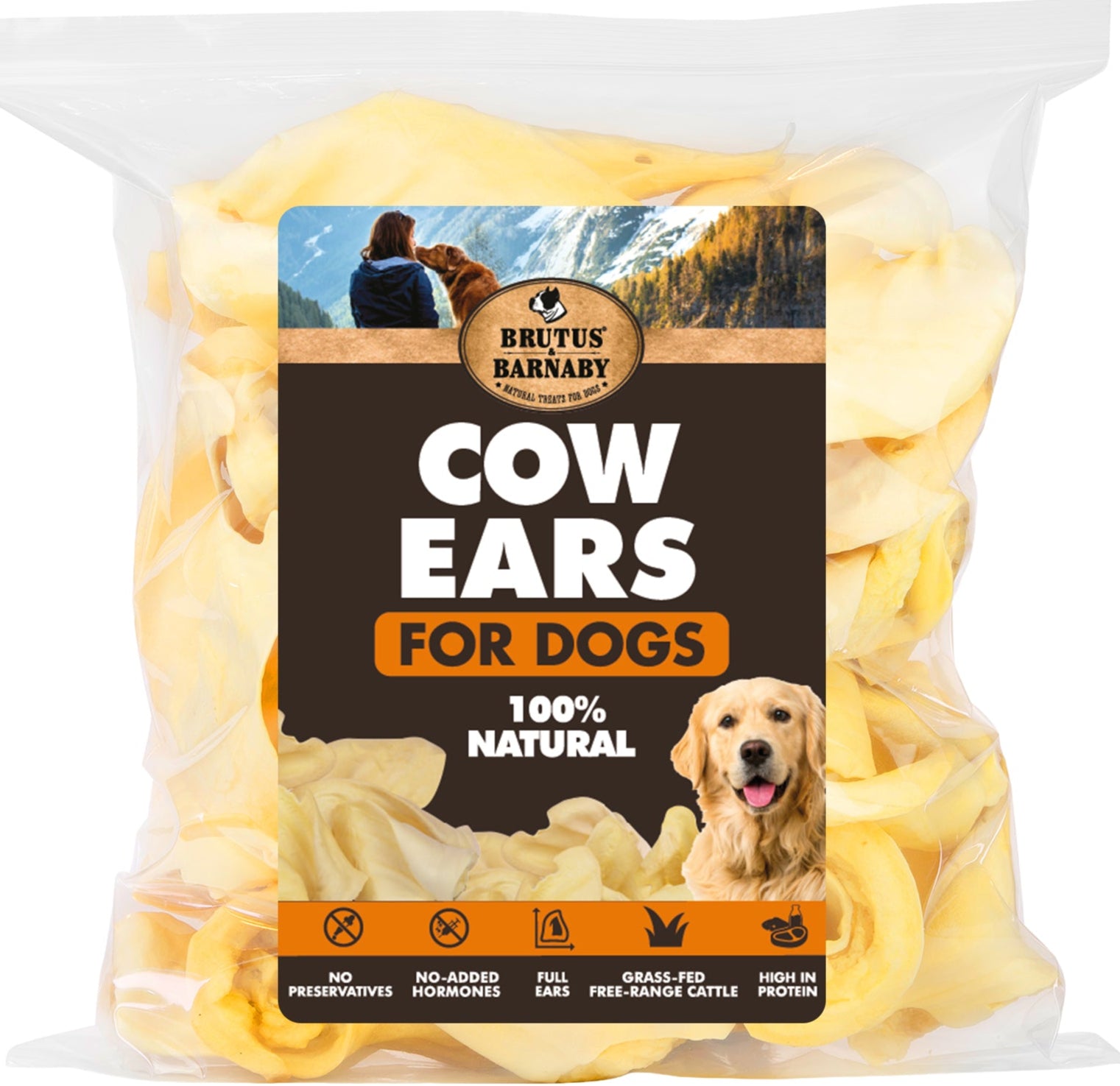
Cow Ears for Dogs | Natural Single Ingredient Dog Treats
The product page lists 100% cow ears as the ingredient and recommends supervised use, fresh water, appropriate sizing and removal of small fragments that could create a choking risk. Introduce any new animal-protein chew gradually.
Shop Cow Ears for DogsBuild a Better Dental Routine Around Chew Time
The strongest approach is not to choose between brushing and chewing. Use each for what it does best. If you want a wider overview of chew-based oral care, Brutus & Barnaby’s dental treats for dogs guide explains how chews can fit into a broader routine without replacing brushing or veterinary checkups.
At home
- Brush regularly with dog-safe toothpaste and an appropriate toothbrush.
- Use cow ears only when your dog’s teeth and chewing style make them suitable.
- Supervise the entire chew session.
- Look at the teeth and gums regularly for changes.
With your veterinarian
- Have the mouth checked during routine veterinary exams.
- Ask about professional dental cleaning when recommended.
- Discuss chews if your dog has previous fractures or periodontal disease.
- Seek care for persistent bad breath, pain, bleeding or eating difficulty.
For dogs with existing dental problems: comfort comes first. Dogs with missing teeth, painful gums or a history of fractures may need softer or no-chew rewards. See the Brutus & Barnaby guide to soft dog chews for dental problems and ask your veterinarian what texture is appropriate.
Signs a Cow Ear Should Come Out of the Routine
Dental pain is not always obvious. Cornell’s guide to dental disease and home dental care lists signs such as bad breath, difficulty eating, bleeding from the mouth, facial or jaw swelling and drooling as reasons to contact a veterinarian.
A chew session looks comfortable when
Stop and reassess when
Cow Ears and Dog Dental Health
Do cow ears actually clean dogs’ teeth?
Chewing a cow ear can create mechanical rubbing against exposed tooth surfaces, so it may help remove some food debris or soft buildup. The effect varies by dog and should not be considered equivalent to brushing or a validated dental treatment.
Do cow ears remove tartar?
Do not rely on cow ears to remove established tartar. Once mineralized deposits are firmly attached to teeth, a veterinarian may need to assess whether professional dental cleaning is appropriate. Choose VOHC-accepted products when you specifically want an evaluated plaque or tartar claim.
Can cow ears replace brushing?
No. Brushing physically disrupts plaque across accessible tooth surfaces in a controlled way, while chewing is less predictable and does not reach every area of the mouth. Cow ears are better viewed as optional supervised enrichment within a wider dental routine.
Can cow ears crack a dog’s teeth?
Any chew can become a dental concern if it is too firm for the dog, if the dog bites down with excessive force, or if the dog already has weakened teeth. Stop if your dog appears painful, tries to crush the chew aggressively, or has a history of dental fractures.
Are cow ears good for puppies’ teeth?
Puppies have changing teeth and chewing habits, so suitability depends on teething stage, mouth size, texture and supervision. Ask your veterinarian if you are unsure, and avoid firm chews when a puppy has mouth pain, damaged teeth or is trying to swallow large pieces.
How often should dogs have cow ears for dental benefits?
There is no universal cow-ear schedule for dental health. Frequency should account for your dog’s total diet, calories, digestive tolerance, chewing style and dental condition. Do not increase chew frequency simply to try to replace brushing.
Cow Ears Can Support Chew Time—But Brushing Still Leads the Routine
Are cow ears good for dogs’ teeth? For some dogs, they can be a useful supervised chew that provides enrichment and some mechanical rubbing against exposed tooth surfaces. Their role is supportive, not curative. Choose a size that fits your dog, supervise the entire session, remove small pieces, and stop if your dog shows mouth pain or difficulty chewing. Keep brushing and veterinary dental care at the center of your dog’s oral-health plan.
Educational disclaimer: This article provides general educational information and is not veterinary, dental, nutritional, diagnostic or emergency advice. Dogs differ in age, size, dental health, chewing strength, swallowing behavior, diet and medical history. Supervise all edible chews, choose an appropriate size, remove small fragments and provide fresh water. Contact your veterinarian if your dog has persistent bad breath, bleeding gums, mouth pain, facial swelling, difficulty eating, a broken tooth, repeated gagging, vomiting or other concerning symptoms. Product ingredients, packaging, availability and feeding directions can change, so review the current product page and package before feeding.