



How Much Chicken Jerky Can a Dog Have?
There is no universal number of chicken jerky strips that every dog should eat. A more useful approach is to calculate your dog’s total treat-calorie allowance, subtract any other treats or extras, and then portion chicken jerky by weight rather than by piece count.
Chicken jerky may look like a simple snack, but dried meat can be calorie-dense. Counting strips alone can be misleading because individual pieces can differ in size and weight.
For most generally healthy dogs, all treats combined should usually stay at or below about 10% of daily calories. Chicken jerky shares that allowance with training treats, chews, toppers and table-food extras. Instead of deciding that your dog gets “one strip” or “two strips,” determine the calorie allowance first and portion the jerky accordingly.
How Much Chicken Jerky Can a Dog Have Per Day?
A practical starting point is the widely used treat guideline that all treats and extras together should provide no more than about 10% of a dog’s daily calories. The World Small Animal Veterinary Association’s guidance on feeding treats uses this same 10% ceiling while emphasizing that an individual dog’s needs can differ.
Daily calorie requirement × 0.10 = approximate maximum calories from all treats and extras. This is a ceiling, not a target your dog needs to reach every day.
For example, a dog whose veterinarian has established a daily requirement of 500 calories would generally have about 50 calories available for all treats combined under the 10% guideline. If the dog also receives training rewards, a food topper or another chew that day, those calories should be subtracted before calculating the chicken jerky portion.
For a broader explanation of how different snacks share the same allowance, see our guide to how many treats a dog can have in a day.
Calculating a Portion of Brutus & Barnaby Chicken Jerky
The current product page for Brutus & Barnaby Chicken Jerky for Dogs | USA-Made Chicken Jerky Treats lists an energy density of 102.1 calories per ounce. Because jerky pieces naturally vary in size, weighing a portion provides a more consistent estimate than counting complete strips.
*Important: These are mathematical examples, not dog-size feeding recommendations. They assume this chicken jerky is the dog’s only treat or extra food for the entire day. Your dog’s actual calorie requirement should be determined from body condition, age, activity, health and veterinary guidance rather than assumed from these example numbers.
Why Counting Chicken Jerky Strips Is Less Accurate
Owners often ask whether a dog can have one strip, two strips or several pieces of jerky. The problem is that a “piece” is not a standardized unit. One strip may be wider, thicker or heavier than another.
Strips are not identical
Natural dried meat can vary in length, thickness and weight, making piece counts an imprecise way to track calories.
Other treats still count
Training rewards, toppers, chews and table-safe extras reduce the calories available for chicken jerky.
Smaller can still reward
A strip can be torn into smaller portions so your dog receives several reward moments without receiving several full strips.
For frequent training: a complete strip may be unnecessarily large for each repetition. Our comparison of chicken jerky vs. training treats explains when torn jerky pieces make sense and when small training treats are easier to use.
What Changes the Right Chicken Jerky Portion?
Two dogs of the same weight can still need different amounts of food and different treat limits. Use your dog’s complete diet and individual needs rather than relying only on body size.
Factors that may affect the portion
- Daily calorie requirement
- Body condition and weight goals
- Age and activity level
- How many other treats are given
- Whether chicken is already familiar
- Any veterinary diet or medical restrictions
Dogs needing extra caution
- Dogs on weight-loss plans
- Dogs with food sensitivities
- Dogs with digestive disease
- Dogs on prescription diets
- Very young puppies
- Dogs with medical conditions affecting nutrition
If calorie control is especially important, consider rotating in smaller or more easily portioned rewards. Our guide to lower-calorie dog treat strategies explains why portion size and total intake matter as much as the type of treat.
A Chicken Jerky You Can Portion by Weight
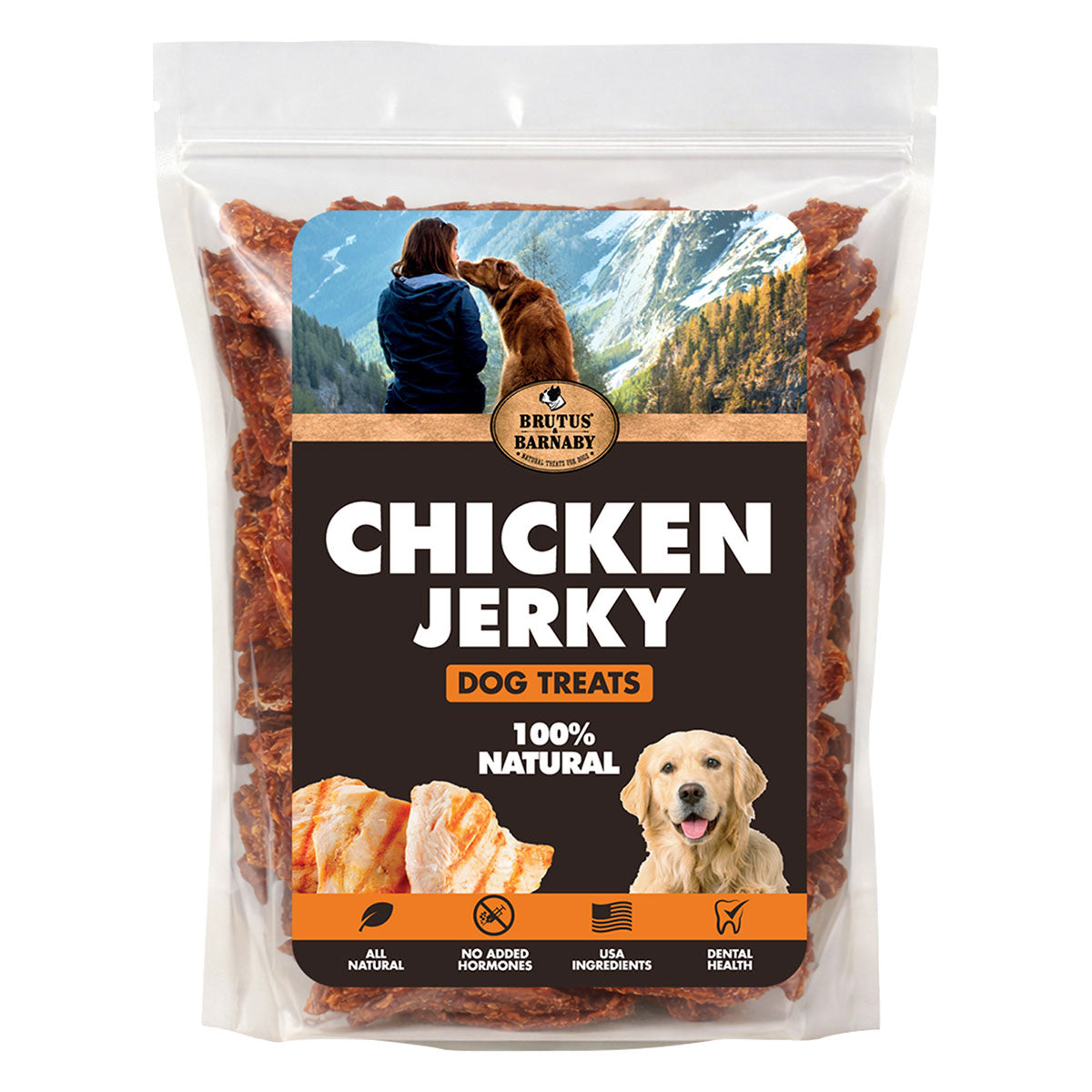
Chicken Jerky for Dogs | USA-Made Chicken Jerky Treats
The current product page lists 100% USA chicken breast as the ingredient and 102.1 calories per ounce. Because the calorie information is provided by weight, owners can use a kitchen scale to plan smaller portions instead of relying on the number of strips.
- Single listed ingredient: USA chicken breast
- 102.1 calories per ounce on the current product page
- Can be broken into smaller, manageable pieces
- Should be given as a supervised treat rather than a meal replacement
Can a Dog Have Chicken Jerky Every Day?
Many generally healthy dogs that tolerate chicken can have an appropriately portioned dog-specific chicken jerky treat as part of their routine. Daily use, however, does not mean unlimited use. The jerky still belongs inside the day’s treat-calorie allowance.
Treats also should not gradually replace the dog’s normal food. The FDA explains the importance of “complete and balanced” pet food and notes that treats and snacks are typically not intended to serve as the animal’s sole diet.
Think of chicken jerky as an extra: the nutritionally complete portion of your dog’s diet should remain the foundation, while jerky is used for rewarding, training, bonding or occasional snacking.
How to Portion Chicken Jerky More Carefully
What Happens If a Dog Eats Too Much Chicken Jerky?
Eating more jerky than planned can add substantial extra calories and may cause digestive upset in some dogs, especially if the treat is new or consumed quickly. Possible signs include loose stool, diarrhea, vomiting, reduced appetite, gas or abdominal discomfort.
The Cornell University College of Veterinary Medicine’s diarrhea guidance recommends veterinary care when diarrhea is persistent or is accompanied by concerning signs such as vomiting, lethargy, appetite loss or blood in the stool.
For mild, isolated concern
Contact a veterinarian when
Chicken Jerky Safety Still Matters
Portion control is only one part of responsible treating. Choose jerky made specifically for dogs, review the current ingredient label, introduce a new product gradually and supervise while your dog eats it. Break large pieces into a manageable size when appropriate and remove pieces that your dog may attempt to swallow whole.
Jerky treats also have a documented safety history worth understanding. The FDA has investigated reports of illnesses associated with jerky pet treats, including poultry jerky. That history does not mean every modern chicken jerky product will cause a problem, but it reinforces the importance of clear sourcing, careful product selection and monitoring your dog after feeding.
For a deeper discussion of ingredient labels, sourcing and symptoms to watch for, read our separate guide on whether chicken jerky treats are safe for dogs.
What About Puppies and Senior Dogs?
Puppies: young dogs have smaller mouths, smaller calorie allowances and specific nutritional requirements for growth. Use small, manageable pieces and avoid letting treats crowd out complete puppy food. Ask your veterinarian about treat choices if your puppy has digestive issues, is very young or is on a specialized feeding plan.
Senior dogs: older dogs may have lower calorie needs, dental changes, swallowing difficulty or medical conditions that change which treats and portions are suitable. A previously appropriate jerky portion may no longer fit the dog’s current diet, activity level or chewing ability.
Chicken Jerky Portion Questions
How many pieces of chicken jerky can I give my dog?
There is no universal piece count because jerky strips can vary in weight. Calculate the dog’s treat-calorie allowance, account for other extras and then weigh or divide the jerky into an appropriate portion.
Can I give my dog a whole chicken jerky strip?
That depends on the strip’s weight, your dog’s daily calorie needs, the product’s calorie density and what else your dog has eaten. For many reward situations, tearing a strip into smaller pieces makes portion control easier.
How many calories are in Brutus & Barnaby Chicken Jerky?
The current Brutus & Barnaby Chicken Jerky product page lists 102.1 calories per ounce. Because individual strips can vary in weight, the page does not provide one universal calorie number for every piece.
Can dogs eat chicken jerky every day?
A generally healthy dog that tolerates chicken may be able to have a measured amount regularly, provided all treats remain within the dog’s overall calorie plan and do not displace complete and balanced food.
Can too much chicken jerky cause diarrhea?
Eating too much of a treat or introducing a new food too quickly can contribute to digestive upset in some dogs. Stop the treat and contact your veterinarian if diarrhea is severe, persistent, bloody or accompanied by vomiting, lethargy or appetite loss.
Should I reduce my dog’s regular food when giving chicken jerky?
Treat calories should be included in the complete daily calorie plan, but do not make major reductions to a nutritionally complete diet without veterinary guidance. This is especially important for puppies, dogs on prescription diets and dogs with medical conditions.
Measure Chicken Jerky by Calories, Not Just by Strips
So, how much chicken jerky can a dog have? There is no single strip count that works for every dog. Start with the dog’s appropriate daily calorie requirement, keep all treats and extras within roughly 10% of that total unless your veterinarian recommends otherwise, and portion jerky by weight when possible. Break larger strips into smaller rewards, supervise your dog and reduce or stop the treat if digestive problems develop.
Shop Chicken Jerky for DogsEducational disclaimer: This article provides general educational information and is not veterinary, nutritional, diagnostic or emergency advice. Dogs differ in size, body condition, age, activity, health, dietary needs and ingredient tolerance. Treat portions should be considered within the dog’s complete daily diet. Supervise your dog while feeding treats, provide fresh water and contact your veterinarian if vomiting, diarrhea, appetite loss, unusual thirst or urination, lethargy, swelling, breathing difficulty or other concerning symptoms occur. Product ingredients, calorie information, packaging and availability can change, so review the current product page and package before feeding.