



Find the Right Topper Format for Your Dog’s Bowl
When comparing liquid vs. dry dog food toppers, start with what you want to change about the meal. Liquids add moisture and can soften kibble. Dry powders, flakes, and crumbles add flavor or texture with less liquid handling. Neither format is automatically healthier: ingredients, portions, and your dog’s needs matter more.
Choose a liquid topper when added moisture or a softer meal is the priority. Choose a dry topper when you want a measured sprinkle of flavor or texture. Some dry toppers can also be mixed with a little water, following their directions. Keep supplemental additions modest and preserve a complete and balanced main diet.
What Counts as a Liquid or Dry Dog Food Topper?
A topper is something added to your dog’s usual food. The term describes how a product is used, rather than guaranteeing a particular nutritional benefit. A broth, vegetable powder, and meat crumble can all be sold as toppers despite having very different ingredients and calorie contents.
Liquid toppers
These include dog-appropriate broths, gravies, and sauces. Some are thin and watery; others are thicker. Their effect depends on the recipe, amount served, and how thoroughly they are mixed into the meal.
Dry toppers
These include powders, flakes, dried vegetable pieces, and meat crumbles. Fine powders may coat kibble, while larger pieces add a more noticeable texture. Some products require rehydration before feeding.
Check the nutritional adequacy statement as well as the format. The FDA explains how “complete and balanced” pet food is identified. A supplemental meal enhancer should not be treated as a complete diet simply because its ingredients sound nutritious.
Liquid vs. Dry Dog Food Toppers: A Practical Comparison
Compare the specific products you are considering. A thin broth and a rich gravy can differ substantially, just as a vegetable sprinkle differs from a meat-based powder.
| Consideration | Liquid Topper | Dry Topper |
|---|---|---|
| Moisture | Adds fluid directly to the bowl. | Adds little moisture unless prepared with water. |
| Kibble texture | May soften kibble depending on quantity and soaking time. | Usually preserves more of the existing texture when served dry. |
| Coverage | Can spread through the meal when stirred. | Fine particles may settle; a little water can help some products adhere. |
| Measuring | Use the volume or weight specified on the label. | Use the stated weight or defined scoop size; avoid heaping estimates. |
| Storage | Many products need refrigeration after opening. | Many can be stored sealed in a cool, dry place; check the package. |
| Calories | Depend on the recipe and serving size. | Depend on ingredients and concentration; small amounts still count. |
| Convenience | Consider spills, refrigeration, and opened-container life. | Consider resealing, keeping the scoop dry, and any rehydration instructions. |
When a Liquid Topper May Fit Better
You want to change a dry meal’s moisture
A liquid topper makes sense when your goal is a wetter bowl. However, the amount of fluid actually consumed matters: a light drizzle is different from a thoroughly moistened meal. Continue providing fresh drinking water, and do not use flavored liquids to manage suspected dehydration without veterinary advice.
Your dog prefers a softer texture
Allowing kibble to absorb suitable liquid may change its firmness. If moisture is the only goal, plain water may be enough; buying a flavored topper is optional. Follow food-preparation instructions and serve at a comfortable temperature.
New difficulty chewing, dropping food, or avoiding previously familiar textures deserves veterinary attention. Softening food can change the eating experience, but it does not address the cause of mouth pain.
You can manage the storage requirements
Before choosing a large carton, check how long it remains usable after opening. A smaller package may suit a small dog better if most of a larger container would go unused. Follow the product’s refrigeration and discard instructions.
When a Dry Topper May Fit Better
You want flavor without substantially wetting the meal
A measured dry sprinkle can change a familiar bowl without turning it into a soft mixture. That may suit a dog that enjoys its usual kibble texture or already eats wet food and does not need additional liquid.
You prefer a compact feeding routine
A resealable dry topper can be convenient for everyday meals or travel when its storage directions allow. Keep the original packaging available, close it promptly, and use a clean, dry utensil. Dry products still need appropriate handling.
You want flexibility over coating
Some powders work dry or with a small amount of water. If the label permits, dampening the meal can help distribute the topper rather than leaving loose powder at the bottom. This does not make the resulting bowl equivalent to a formulated broth or gravy.
If your dog consistently eats the added pieces and leaves the main food, consider particle size and mixing technique before increasing the portion. Our guide to choosing toppers for picky eaters explores other factors that can influence meal acceptance.
Check Ingredients Before Choosing a Format
“Liquid” does not mean easy to digest, and “dry” does not mean unsuitable for a sensitive dog. Review every ingredient, including flavorings and added fats, against your dog’s known dietary restrictions.
Human broths and gravies are not interchangeable with dog-appropriate products. Avoid recipes containing onion or garlic, and do not assume that a low-sodium label makes the entire formula suitable. Check the full recipe rather than relying on the front of the package.
For a dog with a history of food reactions, a familiar ingredient is often a more useful starting point than an unfamiliar blend. Our ingredient guide for sensitive-stomach toppers explains how to keep changes easier to evaluate.
Special diets need individual guidance: Ask the veterinarian managing a prescription or elimination diet before adding either format. A small topping can still introduce an ingredient that conflicts with the feeding plan.
How to Compare Portions, Calories, and Cost
Compare the amount you will actually serve. A tablespoon of liquid and a tablespoon of powder do not necessarily provide similar calories, nutrients, or weight. Use the package’s calorie information and a clearly defined measure.
The WSAVA guide to feeding treats recommends keeping treats below 10% of daily calories. Count supplemental toppers alongside chews, training rewards, and other extras within that allowance, unless your veterinarian has prescribed another plan.
For a hypothetical dog with a veterinarian-established target of 500 calories daily, 10% equals 50 calories. That is an upper boundary for all extras combined, not an additional 50-calorie allowance for each category.
For cost, divide the package price by the number of suitable portions it provides. Include potential waste from opened liquids and any preparation needed for dry products. A lower package price does not always mean a lower cost per meal.
Two Dry Toppers to Compare
These Brutus & Barnaby products are sprinkle-on meal enhancers. Their feeding directions allow a small amount of water to help coating. Choose according to ingredient tolerance and your dog’s overall feeding plan.

Pork Dog Food Topper | High-Protein Meal Enhancer for Dogs
The current ingredient list identifies 100% pork. Consider it when pork already fits your dog’s diet and you want a dry meat-based addition.
Measure the portion and mix through the main food. Single ingredient does not mean appropriate for dogs that react to pork.
View Pork Dog Food Topper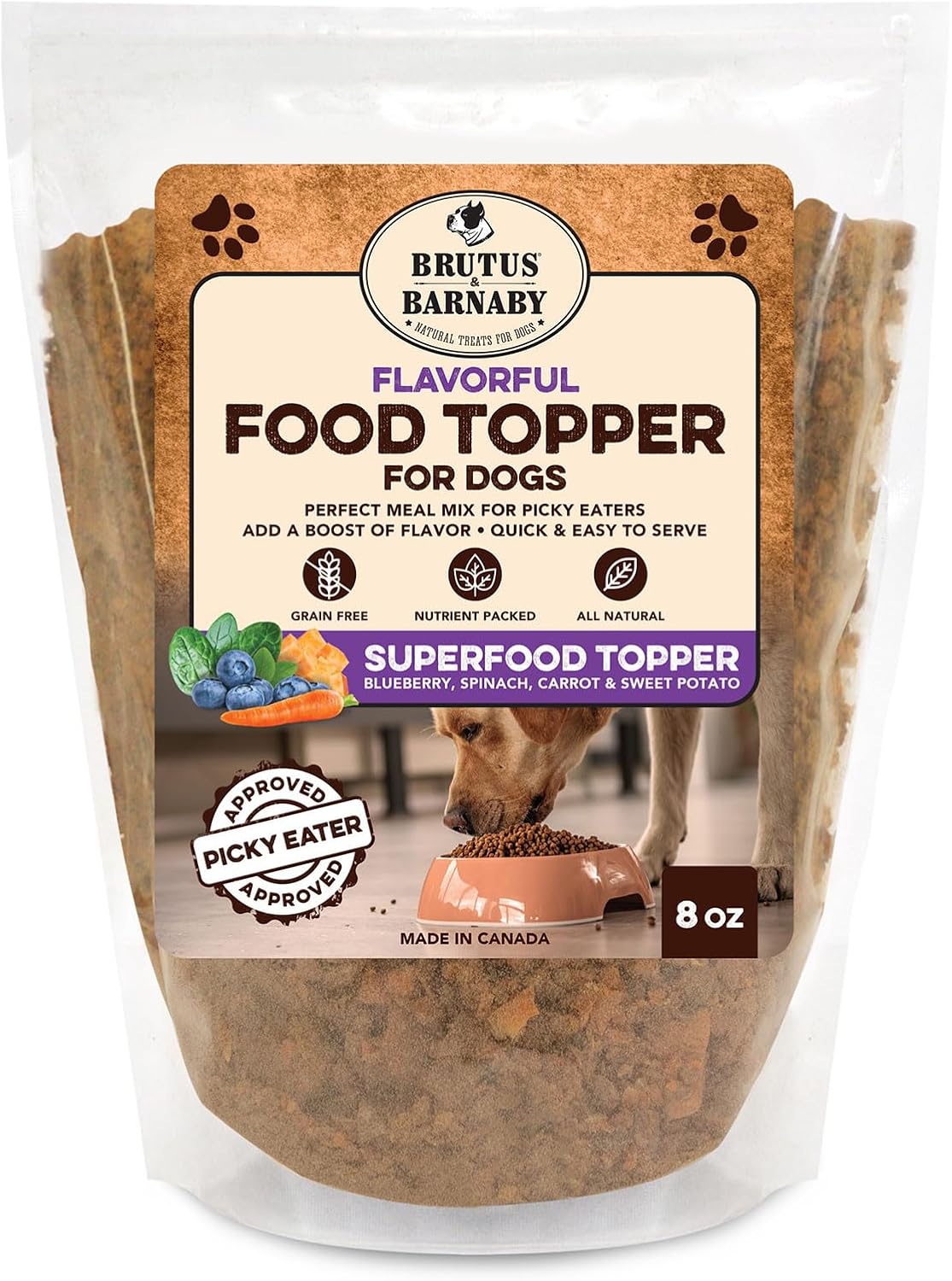
Vegan Dog Food Topper | Meal Enhancer for Picky Eaters
The current ingredient list includes sweet potato, blueberry, spinach, and carrot. It offers a plant-based sprinkle when those ingredients suit your dog.
This is a supplemental meal enhancer, not a complete vegan diet. Review all four ingredients before introducing it.
View Vegan Dog Food TopperReview current packaging for ingredients, calories, feeding directions, and storage instructions. Availability and packaging may change.
Build a Simple, Consistent Topper Routine
- Choose one goal: moisture, coating, flavor, or texture.
- Check the label: confirm ingredients, calories, intended use, and preparation instructions.
- Introduce one change: begin with a small amount while keeping the rest of the diet stable.
- Measure and mix: distribute the portion through the food rather than repeatedly adding more.
- Observe your dog: watch meal intake, stool consistency, and comfort.
Handle the finished bowl according to its ingredients. Once you add liquid or rehydrate a dry product, do not assume it can sit out like dry kibble. Prepare only what you need and follow the relevant leftover instructions.
The FDA’s pet-food handling guidance recommends washing bowls and measuring utensils after each use and promptly refrigerating or discarding unused canned or pouched food.
Stop the new addition and contact your veterinarian for severe, persistent, or recurring vomiting or diarrhea, unexplained weight loss, or concerning appetite changes. Do not keep switching toppers to cover up a developing problem.
Liquid and Dry Dog Food Topper FAQs
Are liquid dog food toppers healthier than dry toppers?
Neither format is inherently healthier. Liquids add moisture, while dry products offer different coating and texture options. Compare ingredients, calories per serving, nutritional adequacy, and suitability for your dog.
Can I add water to a dry dog food topper?
Yes, when its directions permit or require it. Follow any specified water quantity and preparation time. Adding water does not remove the topper’s calories or make it nutritionally complete.
Which format is better for senior dogs?
Age alone does not determine the answer. A moistened meal may suit a dog that prefers softer food, while another senior may enjoy its usual texture. New chewing difficulties or appetite changes should be evaluated by a veterinarian.
Can I combine liquid and dry toppers?
Potentially, if both fit your dog’s diet and their directions allow it. Count their combined calories and avoid introducing two unfamiliar products together. Plain water may provide the desired moisture without another flavored addition.
Can either type replace my dog’s regular food?
A supplemental topper should not replace complete and balanced food. Some complete foods can be used as toppings, but their nutritional adequacy statement and feeding plan determine whether they can also serve as meals.
Choose the Format That Solves Your Mealtime Need
Comparing liquid vs. dry dog food toppers comes down to the change you want: added moisture, a different texture, easier coating, or a convenient sprinkle. Start with suitable ingredients, use a measured portion, and keep complete nutrition at the center of the meal.
If a dry format fits your routine, compare the Pork Dog Food Topper and Vegan Dog Food Topper to find an ingredient profile that works with your dog’s existing diet.
Educational disclaimer: This article provides general information and does not replace individualized veterinary advice. Consult your veterinarian about toppers for puppies, dogs with medical conditions, or dogs following prescription or elimination diets. Seek veterinary advice for severe, persistent, recurring, or unexplained symptoms.