



Bone Broth vs. Powder Dog Food Toppers: Comparing Ingredients and Convenience
Comparing bone broth vs. powder dog food toppers starts with one useful distinction: bone broth describes what a product is, while powder describes its form. Bone broth can come as a powder, too. The better choice depends on ingredients, preparation, storage, and what you want to change about your dog's meal.
Choose ready-to-serve bone broth when you want a pourable addition; choose a suitable dry topper when you prefer a measured sprinkle or compact storage. Reconstituted bone broth powder sits between those options. Neither format is automatically healthier, nutritionally complete, or suitable for every dog.
Bone Broth vs. Powder Dog Food Toppers: What Are You Comparing?
Bone broth is a liquid made by simmering animal bones and associated tissues in water, then separating out the solids. Commercial recipes vary, and some contain additional ingredients. Products may be sold as liquids, frozen portions, concentrates, or dehydrated powders.
Powder dog food toppers are a broader category. They may contain dried meat, vegetables, bone broth, or a blend of ingredients. Some are intended for sprinkling; others require water before serving. A dry topper may also be flakes or fine pieces rather than a uniform powder.
For a useful comparison, identify the exact products first: ready-to-pour broth, broth powder prepared with water, or a non-broth dry topper. That avoids assuming every powder becomes broth or every liquid has the same composition.
Ready-to-serve broth
Already contains water. Check whether it needs shaking, thawing, refrigeration, or another preparation step.
Bone broth powder
Requires the manufacturer's preparation directions. The dry scoop and prepared liquid are different serving measurements.
Other dry toppers
May add meat or vegetable flavor without broth. Particle size and suitability for mixing with water vary.
Compare Ingredients Before Comparing Formats
A familiar name on the front of a package does not tell you everything in the recipe. Read the full ingredient list, feeding instructions, calorie information, and intended nutritional role.
Check the animal source and additional ingredients
For broth, identify the animal source and any added meat, vegetables, flavorings, or other ingredients. For powders, look for the same information rather than assuming a scoop contains only the ingredient pictured on the label.
If your dog has a known food restriction, consider every ingredient. A beef-based broth is not an appropriate workaround for a beef restriction simply because it is liquid. A plant-based powder is not automatically suitable for every elimination or prescription diet either.
Do not substitute seasoned kitchen stock
Human soup broth, bouillon, and stock may contain ingredients inappropriate for dogs. The ASPCA's guidance on foods to avoid feeding pets identifies onion and garlic as potentially harmful and warns about excessive salt intake. Check for powdered onion and garlic as well as whole ingredients.
“Low sodium” on a human-food package does not establish that the rest of its recipe is suitable. When a dog's diet requires sodium restriction, ask your veterinarian what information and limits apply to that individual dog.
Keep health promises separate from ingredient facts. A broth or powder should not be assumed to treat joint problems, repair digestion, or correct a nutritional deficiency. Its name and format cannot establish those benefits.
A Practical Comparison for Everyday Feeding
Use this table as a shopping checklist. Exact instructions on the product you buy take priority over category-level expectations.
| Consideration | Liquid Bone Broth | Bone Broth Powder | Other Dry Toppers |
|---|---|---|---|
| Preparation | Measure and pour after any required thawing or shaking. | Measure and prepare with water as directed. | Sprinkle or mix according to the label. |
| Water in the serving | Already present. | Added during preparation. | Depends on whether water is added. |
| Finished texture | Usually a liquid coating; consistency varies. | Depends on formulation and mixing directions. | May remain powdery, flaky, or textured. |
| Storage | Check unopened and after-opening instructions separately. | Check dry storage and prepared-liquid instructions separately. | Follow package directions and keep measuring tools dry. |
| Travel | May require a cooler and leak-resistant container. | Needs suitable water and a mixing container. | A direct sprinkle may need fewer preparation supplies. |
| Calorie comparison | Check calories in the actual measured serving. | Count the powder used, even after adding water. | Check calories per stated weight or measure. |
Which Option Fits Your Routine?
When you want a moist coating
A suitable liquid broth can distribute through kibble without a separate reconstitution step. Broth powder may achieve a similar result when prepared correctly. If moistening is your only goal, clean water may also be an option when compatible with the food's directions.
Adding liquid does not guarantee that kibble becomes soft throughout. Check the finished texture rather than assuming a wet surface means a soft center. Dogs with chewing or swallowing difficulties need veterinary guidance about the entire meal.
When you prefer a quick sprinkle
A topper labeled for direct sprinkling can be convenient when you want added flavor without preparing liquid. Mix it through the food instead of leaving a concentrated pile on top. Some products permit a little water to improve adhesion; others require specific preparation.
When storage space or waste matters
Consider how quickly you will finish an opened package. A large carton may be inconvenient for a small dog if its after-opening instructions leave little time to use it. Dry products can reduce the amount of water you store, but they still have storage requirements and expiration dates.
Compare cost per intended serving rather than package size alone. Include preparation time and potential leftovers. A scoop of powder and a spoonful of liquid are not nutritionally equivalent simply because the measures look similar.
Keep Portions Consistent and Complete Nutrition Central
Neither “bone broth” nor “powder topper” means complete dog food. The FDA explains how a complete and balanced nutritional adequacy statement identifies food intended to provide complete nutrition for its stated life stage.
For more context on that distinction, our guide to whether dog food toppers can replace a meal explains how supplemental additions differ from a complete diet.
For healthy dogs at an appropriate weight, AAHA's feeding-plan guidance recommends that complete and balanced food supply at least 90% of calories, with treats and other extras making up no more than 10%. Toppers share that allowance with other extras.
Adding water to powder changes its volume, not the calories contributed by the measured powder. Use the label's stated serving basis, and ask the manufacturer if calorie information is unclear. A medically managed feeding plan may require different limits.
A Dry Vegetable Topper to Consider Alongside Broth
If you are considering a non-broth addition, Brutus & Barnaby offers a sweet potato meal enhancer. It is a finely diced dry topper rather than bone broth powder, so expect vegetable particles rather than a clear liquid after adding water.
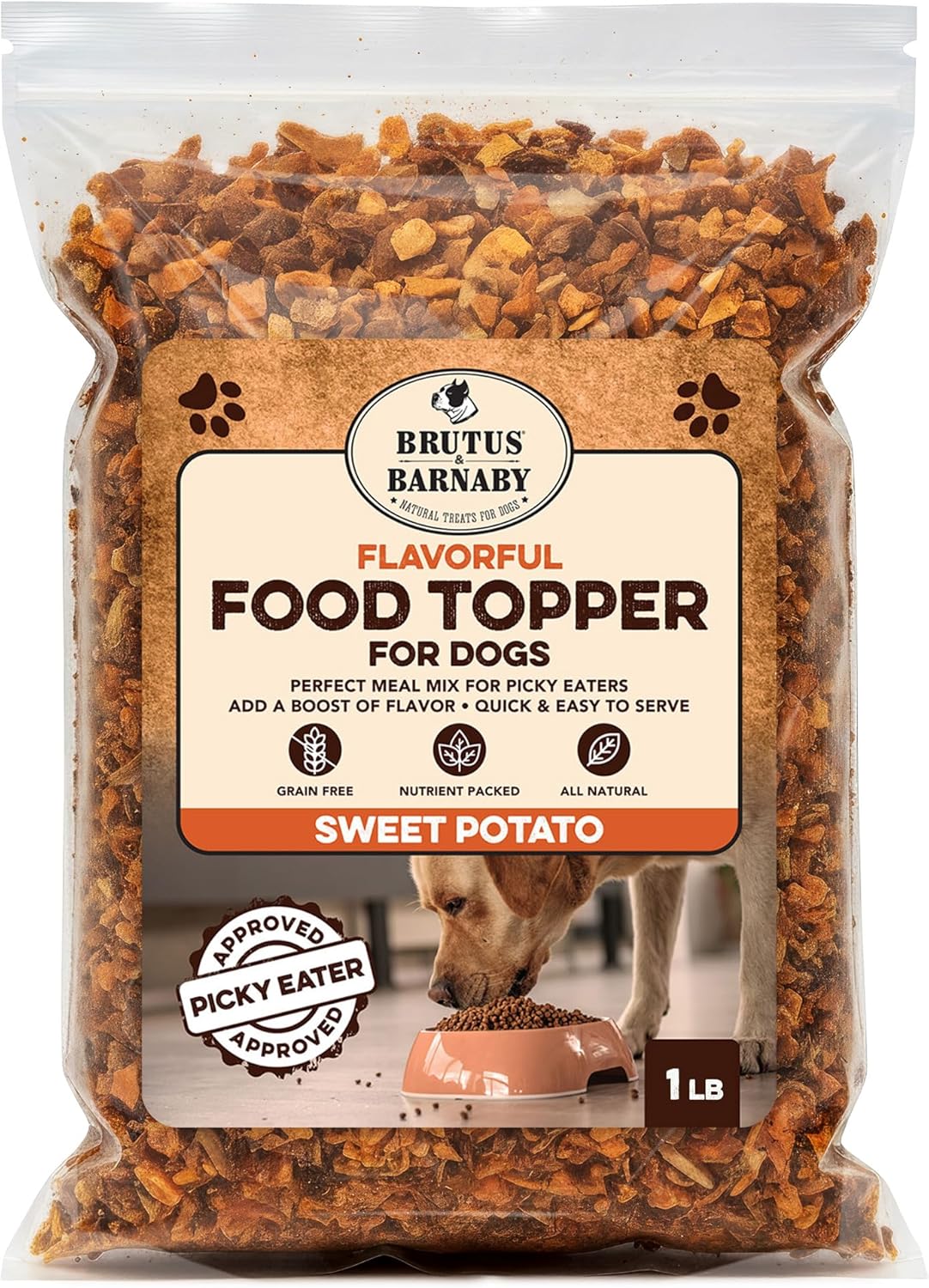
Sweet Potato Dog Food Topper | High-Fiber Meal Enhancer for Dogs
View Sweet Potato Dog Food Topper | High-Fiber Meal Enhancer for DogsFor ingredient-specific selection and serving considerations, see our sweet potato dog food topper use and portion guide.
Prepare, Store, and Introduce Toppers Carefully
- Choose one suitable product. Introducing several new additions together makes it harder to identify what your dog tolerates.
- Measure before mixing. Follow the product directions and your dog's calorie plan rather than free-pouring.
- Check preparation instructions. Use the specified water ratio when reconstitution is required. Serve at a comfortable temperature.
- Separate dry and prepared storage rules. Do not assume prepared broth powder can be stored like the dry product.
- Observe the response. Watch appetite, stool, and comfort. Stop the new addition and contact your veterinarian for severe, persistent, recurring, or otherwise concerning symptoms.
The FDA's pet-food handling recommendations include washing bowls and measuring utensils and promptly refrigerating or discarding unused canned and pouched food. Follow each topper's specific instructions, including those for prepared leftovers.
Ask before experimenting if your dog follows a prescription or elimination diet, has a condition requiring nutrient restrictions, or has difficulty swallowing. A topper should not conceal a new refusal to eat or unexplained weight loss. Suspected toxic-ingredient ingestion warrants prompt veterinary advice.
Bone Broth and Powder Topper FAQs
Is bone broth better than powder dog food toppers?
Neither category is universally better. Compare specific ingredients, calories, intended use, and preparation requirements. A powder may itself contain bone broth, so the categories can overlap.
Is bone broth powder the same as liquid bone broth?
Not necessarily. Products may differ in ingredients, concentration, and serving instructions. Compare the prepared serving and label information rather than assuming equal amounts provide the same nutrients.
Can I sprinkle bone broth powder directly on kibble?
Only when the manufacturer permits that use. Some products require reconstitution. Follow the directions for the exact product rather than using instructions from another powder.
Can I use bone broth and another topper together?
Possibly, if both fit your dog's diet and their combined calories remain within the feeding plan. Introduce them separately first. Combining products is optional and can complicate portion tracking.
Does adding broth replace the need for drinking water?
No. Broth adds liquid to the meal, but fresh drinking water should remain available. If you are worried about dehydration or a change in drinking, seek veterinary advice instead of relying on a topper.
Choose the Ingredients First, Then the Format
When comparing bone broth vs. powder dog food toppers, start with dietary compatibility and a clear purpose. Then consider measuring, mixing, storage, and leftovers. Keep complete food at the center of the bowl and use an amount that fits your dog's feeding plan.
If a dry vegetable addition suits that plan, review Brutus & Barnaby's Sweet Potato Dog Food Topper ingredients and directions before choosing your next meal enhancer.
View Sweet Potato Dog Food Topper | High-Fiber Meal Enhancer for DogsEducational disclaimer: This article provides general information rather than an individualized veterinary feeding plan. Review current labels and consult your veterinarian about dietary restrictions, concerning symptoms, or changes in appetite, weight, or swallowing ability.