


Bully Sticks vs. Yak Chews: Texture, Ingredients and Choosing for Your Dog
Comparing bully sticks vs. yak chews starts with two differences: what they contain and how they feel under your dog's teeth. Bully sticks are beef-based chews; yak chews are dense, milk-based cheese chews. The better fit depends on chewing behavior, dental health, ingredient tolerance, and portion size.
Bully sticks can suit dogs that steadily gnaw and tolerate beef, while yak chews require particular caution because of their very hard texture. Neither is suitable for every dog. A dog that crushes hard objects, gulps pieces, or has dental problems may need a different option altogether.
Bully Sticks vs. Yak Chews at a Glance
Both are edible chews, but that shared description does not make them interchangeable. Compare the actual product and your dog's habits before deciding which belongs in your treat routine.
| What to compare | Bully sticks | Yak chews |
|---|---|---|
| Basic ingredient | Beef pizzle; plain versions may contain one ingredient. | Milk-based dried cheese; check the label for milk sources and other ingredients. |
| Starting texture | Firm, tough, and fibrous; the chewed end can soften with moisture. | Very hard and dense; pieces may chip or break during chewing. |
| Dietary considerations | Beef may be unsuitable for a dog with a relevant dietary restriction. | Dairy ingredients may be unsuitable for a dog with milk-related restrictions. |
| Chewing concerns | Swallowing large sections, gulping the end, and chewing discomfort. | Tooth fractures, detached chunks, and swallowable end pieces. |
| How long it lasts | Varies with thickness, size, and the individual dog. | May last through multiple sessions, but hardness is not a safety advantage. |
| Serving approach | Choose appropriate dimensions, monitor consumption, and remove small remnants. | Assess dental suitability first, follow the label, and remove damaged or small pieces. |
Ingredients: Beef Tissue Compared With Dried Cheese
Check the complete ingredient list
Bully sticks are made from beef pizzle, the penis of a bull or steer. Plain products may be single ingredient, while coated or flavored versions can contain additions. Read the package rather than assuming every stick has the same recipe.
Do not assume “yak” means yak milk only
Yak chews are dried cheese chews. Formulas may use yak milk, cow's milk, or a blend, with other recipe ingredients varying by manufacturer. The product name alone does not establish its exact milk content or suitability for your dog.
A short ingredient list makes a product easier to evaluate, but does not guarantee tolerance. A single-ingredient beef chew still contains beef, and a dairy chew still needs a careful label check. Neither should be added casually during a veterinary elimination diet.
Do not assume every yak chew is lactose-free, or that a lactose claim makes it appropriate for a dog with a milk-protein allergy. If your dog has a diagnosed food allergy or prescribed diet, ask your veterinarian before introducing either category.
Texture: Watch How Your Dog Uses Their Teeth
A bully stick usually begins firm and becomes wetter and more pliable where the dog works on it. That change can encourage steady gnawing, but it can also leave a softened section that a determined dog tries to swallow.
A yak chew begins as a very dense cheese block. The important question is whether your dog works at its surface or tries to crack it with powerful bites. A dog that treats a hard chew like something to crush deserves extra caution.
The American Animal Hospital Association specifically includes yak milk chews among hard chewing items that can damage or fracture teeth. Longer chewing time does not outweigh that concern.
Firm does not mean harmless. Bully sticks also require assessment and supervision. Stop if your dog seems uncomfortable, bites off substantial sections, or changes from controlled gnawing to gulping. Supervision helps you respond; it cannot prevent every injury.
Choose Around Chewing Style, Size, and Age
The steady gnawer
A dog that gradually works through a chew may be a candidate for an appropriately sized bully stick if beef fits their diet and their teeth are healthy.
The forceful crusher
A dog that tries to snap hard objects should not automatically receive a harder chew. Discuss a more suitable texture or enrichment activity with your veterinarian.
The fast gulper
If your dog swallows large pieces or entire chews, neither option may be appropriate. Changing brands alone does not address that behavior.
Length and thickness serve different purposes
Length affects how much chew remains outside the mouth; thickness affects how the dog grips and works through it. A longer stick is not automatically harder, and a thicker chew is not automatically safer. Avoid any format your dog can readily swallow whole.
For a closer look at dimensions, the Brutus & Barnaby 6-inch vs. 12-inch bully stick guide explains why length and chewing behavior need to be considered together.
Puppies and senior dogs need individual assessment
There is no universal age that makes either chew appropriate. Puppies have developing mouths and changing teeth. Senior dogs may have missing teeth, restorations, or discomfort that is not immediately obvious. Follow product age restrictions and ask your veterinarian which textures are suitable.
Chew Time, Calories, and Digestive Tolerance
Owners often want the chew that lasts longest. Actual duration depends on the dog's technique, the product's dimensions, and how much is consumed. Neither category comes with a reliable number of minutes, and finishing the whole chew should not be the goal.
Both add calories. Compare labeled calories per piece or gram rather than assuming equal lengths provide equal energy. A chew that lasts several sessions still contributes calories whenever part of it is eaten.
The WSAVA guide to feeding treats recommends keeping treats below 10% of daily calorie intake. Include training rewards, toppers, and other extras in that allowance. Your veterinarian may recommend a tighter limit.
Introduce one new chew at a time with a brief, closely watched session. Watch how much disappears and how your dog responds afterward. Stop offering it if vomiting, diarrhea, or other concerning changes occur, and contact your veterinarian when symptoms are severe, persistent, or recurring.
Edible is not a guarantee against obstruction. A swallowed chunk can cause trouble before digestion has a chance to occur. If your dog swallows a large piece, contact your veterinarian for advice rather than assuming it will dissolve.
A Brutus & Barnaby Bully Stick Option to Consider
If a beef chew fits your dog's diet and chewing behavior, start by reviewing the current product details and available pack options. Brutus & Barnaby's six-inch bully sticks are listed as single-ingredient beef chews.
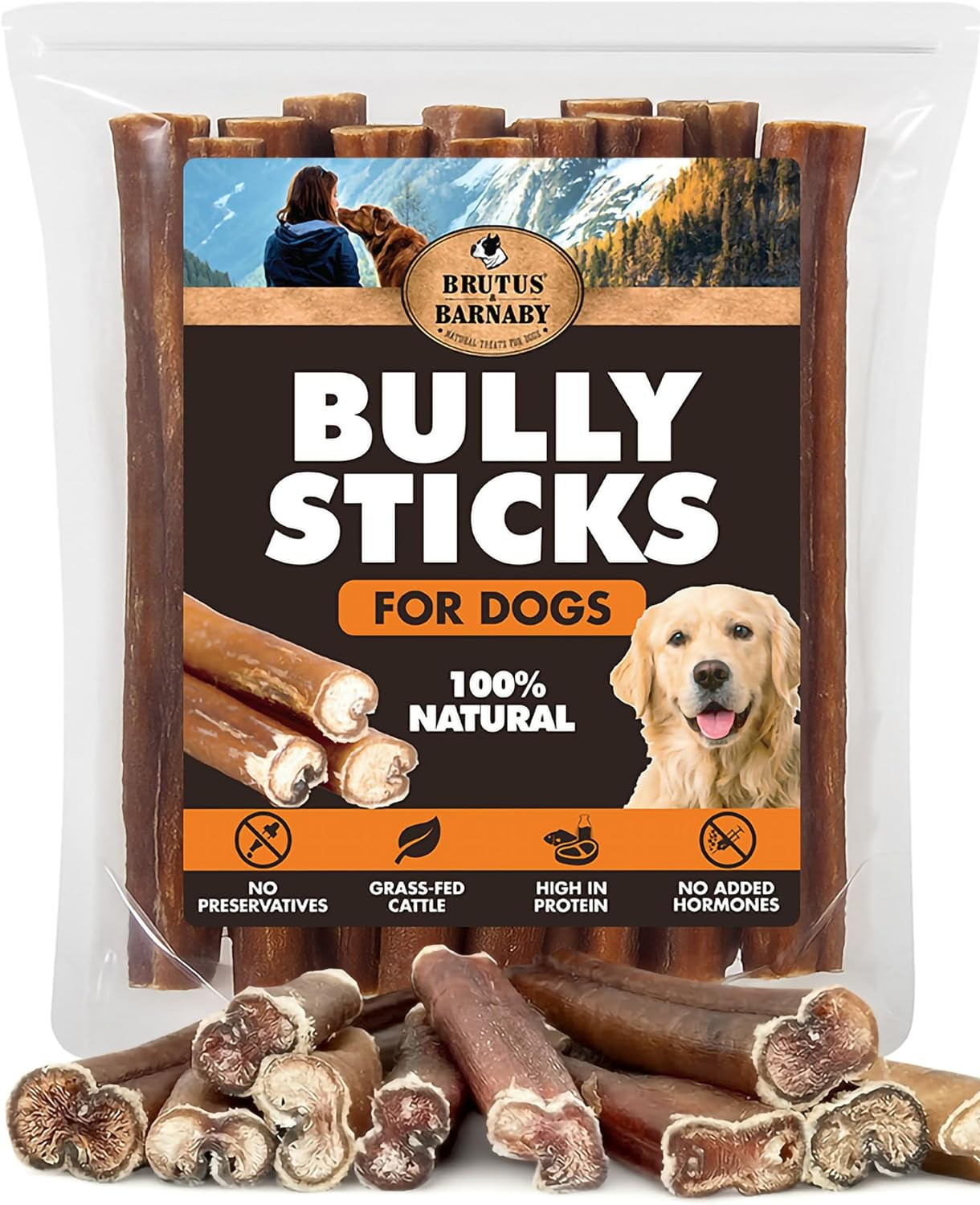
Bully Sticks for Dogs | 6 Inch, Odor-Free & Rawhide-Free Chews
A six-inch format to assess against your dog's mouth size, chewing technique, and treat allowance. Check the current label before feeding and remove the remaining piece before it becomes easy to swallow.
Consider only if: your dog tolerates beef, can manage the format, and chews steadily under direct supervision.
View Bully Sticks for Dogs | 6 Inch, Odor-Free & Rawhide-Free ChewsBuild a More Careful Chew Routine
Offer chews when you can stay nearby and watch the entire session. Choose a calm space, provide drinking water, and separate dogs if competition makes them rush. Keep monitoring the chew as its size and shape change.
Remove swallowable ends, loose chunks, and damaged pieces. A properly fitted holder may help manage a bully-stick end, but it does not eliminate choking risk or replace observation. For dogs that rush through chews, see our guide to dogs swallowing chews whole.
Follow the manufacturer's handling directions. Do not improvise soaking or microwaving instructions for a yak-chew remnant. If the manufacturer provides a preparation method, follow it exactly, allow the result to cool fully, and reassess its size and texture before offering it.
The FDA's pet food and treat handling guidance recommends washing hands before and after handling treats. Clean contacted surfaces and follow storage instructions, including any directions for partially chewed products.
Know when to get help. Trouble breathing, choking, or collapse requires emergency veterinary care. Repeated vomiting, abdominal pain, difficulty swallowing, or suspected tooth damage also warrants prompt veterinary attention. Do not induce vomiting unless a veterinarian instructs you to.
Frequently Asked Questions
Are bully sticks softer than yak chews?
Bully sticks generally become more pliable where they are chewed, while yak cheese chews start very hard and dense. Individual products vary. A bully stick is still a firm chew and may be unsuitable for dogs with dental discomfort or gulping habits.
Do yak chews last longer than bully sticks?
They may for some dogs, but there is no dependable category-wide duration. Size, density, and chewing technique affect both. A longer-lasting chew is not necessarily the better choice when tooth damage or swallowing behavior is a concern.
Which is better for a dog with a sensitive stomach?
Neither is automatically better. Review known ingredient restrictions and prior reactions. Beef and dairy create different considerations, and portion size matters too. Ask your veterinarian before introducing either if your dog has recurring digestive problems or follows a prescribed diet.
Can either chew replace brushing my dog's teeth?
No. Chewing does not replace a veterinarian-recommended dental routine or professional assessment. Do not assume an edible chew has demonstrated plaque or tartar benefits simply because it takes time to eat. Ask your veterinarian about appropriate dental products and brushing.
Can I rotate bully sticks and yak chews?
Only if each product is individually appropriate for your dog. Rotation does not resolve hardness, allergy, or swallowing concerns. Introduce changes separately, monitor tolerance, and count all consumed portions toward the same daily treat allowance.
Make Texture and Behavior Part of the Decision
Choosing between bully sticks vs. yak chews means looking beyond which product lasts longest. Check ingredients, consider your dog's teeth, watch their chewing technique, and measure consumption. Very hard cheese chews deserve particular dental caution, while bully sticks still require appropriate sizing and close supervision.
If a single-ingredient beef chew suits your dog's needs, review Brutus & Barnaby's six-inch bully sticks before planning the next supervised session.
View Bully Sticks for Dogs | 6 Inch, Odor-Free & Rawhide-Free ChewsEducational disclaimer: This article provides general information, not individualized veterinary advice. Chew suitability depends on dental health, age, diet, swallowing behavior, and medical history. Consult your veterinarian about suitable textures and concerning symptoms. Follow current product labels and supervise every chew session.