



How to Teach “Leave It,” “Drop It,” and Trade-Up Using Dog Treats
Three cues can prevent very different problems. Learn when to ask your dog to ignore an item, release something already in their mouth, or move away voluntarily for a better reward.
The safest time to teach an emergency skill is before the emergency happens. Start with boring, safe objects and small rewards—not a guarded chew, dropped medication, cooked bone, or anything your dog may swallow quickly.
“Leave it” means do not approach or pick up the item. “Drop it” means release an item already in the mouth. A trade-up means voluntarily moving away from an item because a better reward is offered separately. Teach all three with low-value objects in a quiet room, mark the correct choice, reward away from the object, and increase difficulty gradually.
Leave It vs. Drop It vs. Trade-Up
These skills are related, but they are not interchangeable. Using the right cue makes your instructions clearer and prevents you from asking for a behavior that is already too late.
| Skill | What It Means | Best Timing | Everyday Example | Important Limit |
|---|---|---|---|---|
| Leave it | Do not approach, touch, or pick up that item. | Before the item reaches the mouth. | Your dog notices a tissue, food wrapper, child’s toy, or sidewalk trash. | It is prevention, not an extraction cue. |
| Drop it | Release an item already held in the mouth. | After the dog has picked up a safe practice object. | Your dog is carrying a toy or sock. | Do not reach toward a dog who is guarding, freezing, or threatening. |
| Trade-up | Move away voluntarily because a better reward appears elsewhere. | When you need space between the dog and the item. | You toss several excellent rewards away from a stolen object, then collect it after the dog moves. | A trade is not a cure for resource guarding or a substitute for emergency care. |
Before You Start: Build a Safe Training Setup
Make success easy
- Choose a quiet room with minimal distractions.
- Keep children and other pets out of the practice area.
- Use a leash or barrier only for calm management, never restraint or confrontation.
Start deliberately boring
- Use a low-value toy, empty cardboard tube, or safe household object.
- Avoid food, chews, socks, medication containers, bones, and swallowable items.
- Practice with toys before food or chews.
Prepare tiny pieces first
- Break rewards before the session begins.
- Use pieces small enough for quick swallowing without interrupting training.
- Count all rewards within your dog’s daily treat allowance.
How Valuable Should the Reward Be?
Reward value depends on the dog and the situation. A treat that works in the kitchen may not compete with a dropped sandwich outdoors. Build a personal reward ladder by observing what your dog chooses, not by assuming every dog values the same food.
| Difficulty | Practice Situation | Reward Level | Example Reward Style |
|---|---|---|---|
| Easy | Quiet room, boring toy, no competing smells. | Normal-value | A tiny soft training treat or part of the dog’s regular food, when appropriate. |
| Medium | Another room, mild movement, safe tissue decoy, or favorite toy. | Higher-value | A small aromatic beef lung bite or another reward the dog reliably chooses. |
| Difficult | Outdoor distractions, a more exciting toy, or practice near—but not directly on—a valuable chew. | Best available safe reward | A tiny pre-torn piece of chicken-and-sweet-potato jerky, several rewards in a row, or distance from the distraction plus food. |
Do not test reward value on a guarded object. If your dog has a history of freezing, growling, snapping, biting, or frantic swallowing, skip do-it-yourself experiments and get qualified behavior support.
Exercise 1: Teach “Leave It” Before the Dog Picks Something Up
Cover a low-value item
Place a boring treat or safe object on the floor and cover it with your hand or foot. Do not repeat the cue yet. Let your dog investigate without allowing access.
Mark the first disengagement
The moment your dog looks away, leans back, pauses, or turns toward you, mark with “yes” or a click. Reward from your other hand, pocket, or treat pouch—not with the item they were told to leave.
Uncover the item gradually
Repeat until your dog backs away quickly. Then uncover the item for a second, ready to cover it again if needed. Keep the reward separate and slightly higher in value.
Add the words after the behavior is predictable
Say “leave it” once, just before presenting the easy setup. Mark and reward when your dog disengages. Avoid chanting the cue while the dog continues trying.
Build one variable at a time
Increase distance, duration, or difficulty separately. For example, move the item farther from your foot before you make it more exciting. If your dog fails twice, make the next repetition easier.
Exercise 2: Teach “Drop It” With a Safe Toy
Begin with a toy your dog likes but does not guard
Let your dog hold or play with it briefly. Do not start with a favorite chew, stolen sock, food wrapper, or dangerous object.
Offer a separate reward or second toy
Present the better option a short distance from the dog rather than pushing food into their face. A small toss to the side can create space and reduce competition around the original object.
Mark the instant the mouth opens
As soon as the object falls, mark the release. Deliver the reward promptly. Timing matters more than repeating “drop it” after the item is already on the floor.
Return the safe object sometimes
After your dog finishes the reward, give the toy back on many practice repetitions. Releasing should not always predict permanent loss. Never return medication, cooked bones, sharp objects, wrappers, or other unsafe items.
Add the cue, then hide the visible food
Once the release is predictable, say “drop it” just before the dog opens their mouth. Next, say the cue with empty hands, pause for one second, mark the release, and reward from your pouch.
Exercise 3: Teach a Calm Trade-Up
A trade-up is especially useful when you need the dog to move away from an item before you pick it up. The goal is voluntary distance—not grabbing the object while the dog is still hovering over it.
Choose a safe, low-value object
Allow your dog to investigate or hold the item. Keep your body loose and stay out of the dog’s space.
Show that something better exists elsewhere
Let your dog notice the higher-value reward, then toss one or several pieces a few feet away. Do not wave food inches from the dog’s nose while reaching toward the object with your other hand.
Mark movement away
Mark when the dog turns, steps away, or follows the reward. The valuable behavior is creating safe distance from the item.
Collect the item only after the dog has moved
Pick it up calmly while the dog is eating away from it. If the dog rushes back, increase distance and use several small rewards rather than racing.
Practice many non-emergency trades
Sometimes return a safe object or restart the game. This prevents the trade cue from becoming a warning that all fun is about to end.
Exercise 4: Add Real-Life Distractions Gradually
Controlled household setups
Place a clean tissue, empty food wrapper, or child’s toy where you can block access. Keep the dog on a loose leash, ask for “leave it,” mark disengagement, and reward from the opposite side.
Movement and mild distance
Roll a boring toy slowly, walk past a safe decoy, or practice from several feet away. Increase only one challenge at a time.
Outdoor practice
Use planned, safe objects on a familiar route before relying on the cue around unknown sidewalk food or trash. A leash and prevention remain essential.
Unpredictable life
Reward generously when your dog notices something tempting and chooses you. Real-world reliability comes from many successful rehearsals, not from testing the dog at maximum difficulty.
Exercise 5: Practice Near Valuable Chews—Not Directly on Them
Do not use a large, valuable chew for the first stages of “drop it” or trade-up. Once your dog is relaxed and fluent with toys, you can practice the supporting skills near a chew routine without reaching for the chew.
Start before the chew appears
Practice “leave it,” “drop it,” recall, and moving to a mat with toys and tiny rewards.
Build a predictable chew area
Give chews only in a calm, supervised location away from children and other pets. Keep trade rewards nearby before the session starts.
Approach only to add value
From a comfortable distance, toss a better reward and walk away. Do not lean over, touch the chew, or test whether the dog will tolerate handling.
Trade early, before the chew becomes tiny
Use the practiced trade while the chew is still large enough that your dog is not racing to swallow the final piece. For more chew-specific guidance, read The Trade-Up Method and The Last Inch Problem.
Stop if body language changes
If the dog freezes, hovers, stares, turns away with the chew, growls, lip lifts, snaps, or swallows frantically, increase distance and end the exercise. Do not reach in.
When “Drop It” Should Not Mean Reaching Toward the Dog
Do not move your hand toward the mouth or item when you see guarding, fear, or bite risk. Warning signs can include:
- Freezing or sudden stillness
- Hard staring
- Body hovering over the item
- Turning away while holding it
- Growling
- Lip lifting or snarling
- Snapping
- Biting or attempted biting
- Frantic swallowing
Do not punish a growl. A growl is information that the dog is uncomfortable. Punishment may suppress the warning without changing the underlying fear or guarding. Repeated guarding, aggression, fear, or bite risk requires help from a qualified reward-based trainer, certified behavior consultant, or board-certified veterinary behaviorist.
What to Do When Your Dog Steals Something
| Item | Immediate Response | What Not to Do | When It Becomes Medical |
|---|---|---|---|
| Sock or clothing | Stay calm, stop chasing, use a practiced trade, and block access to more laundry. | Do not corner the dog or pull from the mouth. | Call a veterinarian promptly if any part may have been swallowed; fabric can cause obstruction. |
| Tissue or food wrapper | Toss several rewards away, collect the item after the dog moves, and improve trash management. | Do not turn it into a chase game. | Call if the wrapper contained toxic food, sharp material, or a large amount was swallowed. |
| Child’s toy | Separate the child, trade from a distance, and store small toys behind a barrier. | Never let a child retrieve the item. | Seek veterinary advice if pieces are missing or the toy contains batteries, magnets, or sharp parts. |
| Medication | Call your veterinarian, emergency clinic, or poison-control resource immediately with the drug name, strength, amount, time, and dog’s weight. | Do not spend several minutes testing cues or induce vomiting without professional instruction. | Immediately. Training must not delay toxic-ingestion response. |
| Cooked bone, sharp object, or unsafe food | Use distance and a high-value trade only if it can be done safely while another person calls for veterinary guidance. | Do not pry open the mouth, chase, or force vomiting. | Immediately if swallowed, lodged, sharp, toxic, or causing coughing, gagging, breathing trouble, pain, or repeated vomiting. |
Emergency Signs: Training Stops Here
Training advice is not emergency-ingestion treatment. Contact a veterinarian or emergency clinic immediately if your dog is struggling to breathe, repeatedly gagging or retching, collapsing, showing blue or pale gums, pawing frantically at the mouth, repeatedly vomiting, developing abdominal pain or swelling, becoming lethargic, refusing food, or showing distress after swallowing an object.
If a toxic substance or medication may have been ingested, call a veterinary professional or poison-control resource right away. Do not induce vomiting unless a veterinarian or poison-control professional specifically instructs you to do so.
Common Owner Mistakes—and Better Corrections
Chasing the dog
Why it backfires: chasing can turn stealing into a game or make the dog swallow faster.
Better move: stop moving toward the dog, scatter rewards away from the item, and manage access next time.
Showing food before every cue
Why it backfires: the visible treat becomes part of the cue.
Better move: say the cue with empty hands, mark the behavior, then reach to your pouch.
Using the forbidden item as the reward
Why it backfires: “leave it” becomes “wait until I release you to take it.”
Better move: reward from a separate hand or location.
Practicing only during emergencies
Why it backfires: the cue predicts panic, conflict, and loss.
Better move: practice short, easy sessions with safe objects and return them sometimes.
Raising difficulty too quickly
Why it backfires: the dog rehearses ignoring the cue.
Better move: change only distance, duration, or distraction—never all three at once.
Punishing growling
Why it backfires: it can increase fear and remove an early warning.
Better move: create distance, manage the environment, and seek qualified professional help.
How to Fade Visible Food Without Ending Reinforcement
Fading the lure does not mean your dog should work for nothing. It means the food is no longer displayed before the behavior.
Move rewards out of your hand
Keep treats in a pouch, jar, or on a counter. Give the cue with empty hands.
Mark first, reach second
The marker tells the dog exactly which choice earned the reward, even if it takes a second to deliver.
Reinforce generously in hard situations
Outdoor distractions, dangerous-item prevention, and difficult releases deserve better and more frequent rewards than easy kitchen practice.
Vary rewards only after the skill is fluent
Sometimes use one treat, sometimes several, sometimes a toy or permission to resume play. Continue reinforcing often enough that the cue remains valuable.
Reward Options for Different Training Moments
Choose rewards by the job they need to perform. The product pages list calorie information per ounce, not per individual piece, so break rewards small and manage the total amount used during the day.
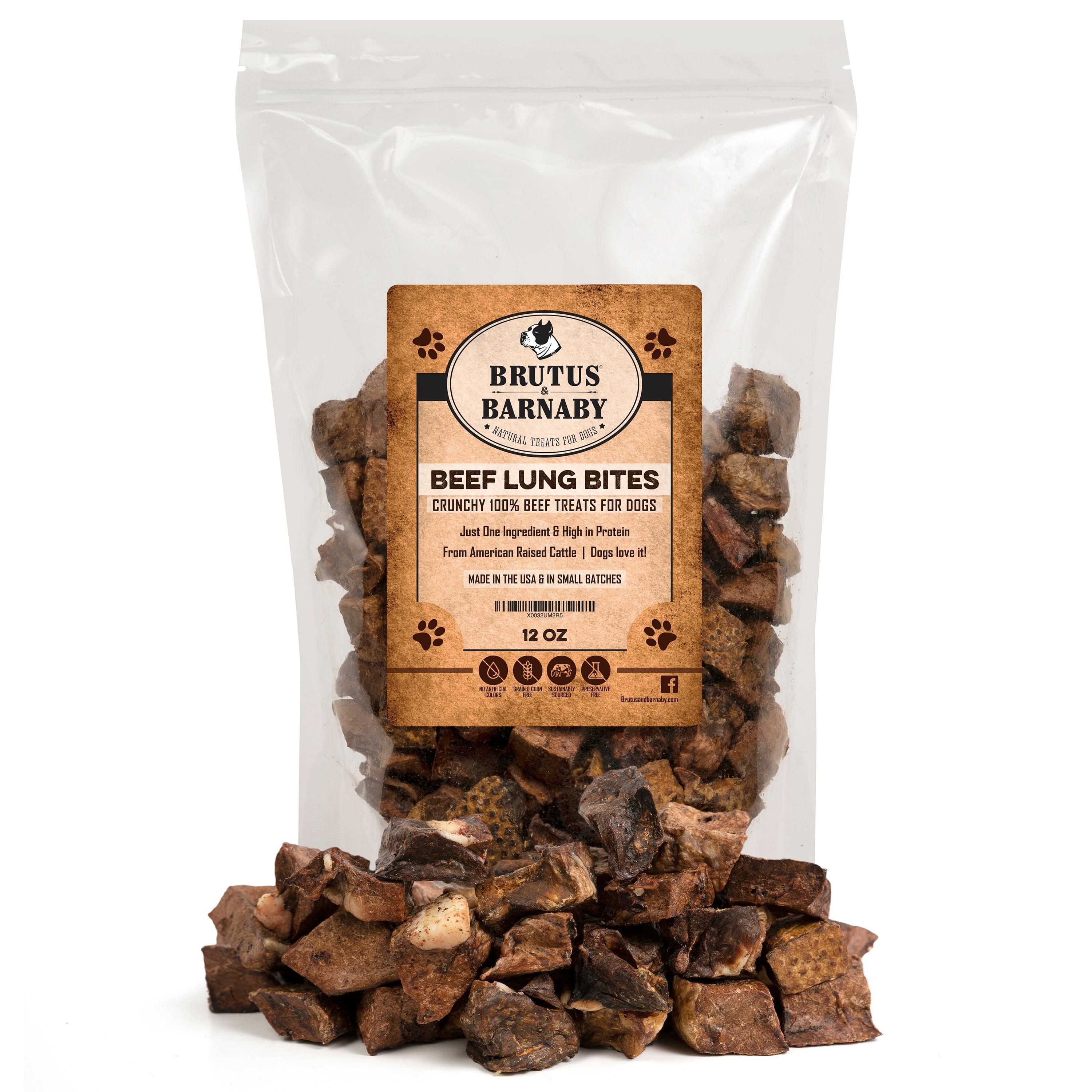
Beef Lung Bites for Dogs | High-Protein Crunchy Training Treats
A crunchy, single-ingredient option for dogs who need more motivation than a normal everyday reward.
- Ingredient: 100% USA beef lung
- Current sizes: 6 oz, 12 oz, and 32 oz
- 119.1 kcal per ounce; per-piece calories are not currently listed
- Break into appropriately sized pieces before training
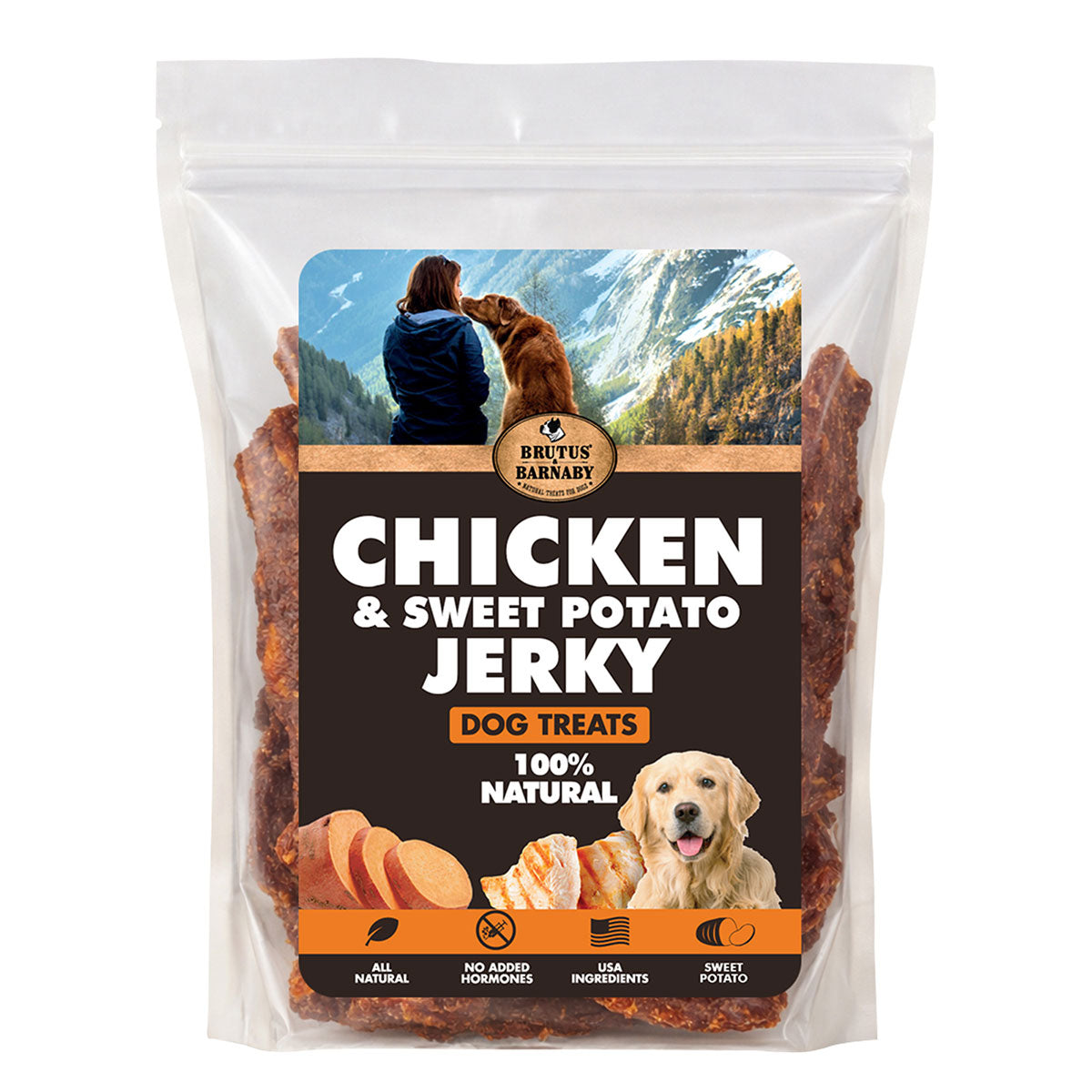
Chicken & Sweet Potato Jerky for Dogs | High-Protein Easy-to-Chew Treats
A tearable reward that can be prepared in tiny pieces for harder distractions and important trade-ups.
- Ingredients include chicken, sweet potato, vegetable glycerin, pea flour, salt, natural smoke flavor, and rosemary extract
- Current sizes: 10 oz and 32 oz
- 123 kcal per ounce; per-piece calories are not currently listed
- Tear into suitable pieces before the session
Introduce new treats gradually. Ask your veterinarian before changing treats if your dog is a puppy or senior, has allergies, digestive disease, pancreatitis risk, kidney or liver disease, a restricted or prescription diet, previous obstruction, pica, or swallowing problems.
Trusted Reading
Reward-based training is the foundation of this guide. Medical emergencies and serious guarding need professional support, not a stronger cue.
Humane Dog Training
American Veterinary Society of Animal Behavior: Reward-Based Training PositionResource Guarding
ASPCA: Food Guarding, Precautions, and Professional HelpSwallowed Objects
Cornell University: Gastrointestinal Foreign-Body Obstruction in DogsPossible Poisoning
Cornell University: First Aid for Poisonous SubstancesRelated Brutus & Barnaby reading: 5 Essential Dog Training Tips and What to Look for Before Feeding a New Treat.
Frequently Asked Questions
What is the difference between “leave it” and “drop it”?
“Leave it” asks the dog not to approach or pick up an item. “Drop it” asks the dog to release something already in the mouth. Use “leave it” early enough to prevent contact whenever possible.
Is trade-up the same as “drop it”?
Not exactly. “Drop it” focuses on opening the mouth and releasing. A trade-up creates voluntary distance by offering a better reward elsewhere, which can make item retrieval safer.
Should I put the treat directly in front of my dog’s nose?
During early teaching, the dog may need to notice the reward, but avoid crowding or waving food in the face while reaching for the object. Present or toss the reward separately so the dog moves away voluntarily.
Should I give the toy back after “drop it”?
Often, yes, when the object is safe. Returning it sometimes teaches that releasing does not always end the fun. Never return unsafe, toxic, sharp, or swallowable objects.
What if my dog only listens when they see food?
Move treats to a pouch, say the cue with empty hands, mark the correct behavior, then deliver the reward. Fade the visible lure, not reinforcement itself.
What if my dog growls when I approach?
Stop approaching and do not punish the growl or reach for the item. Manage access and contact a qualified reward-based behavior professional. A bite history or serious threat should be handled with veterinary-behavior guidance.
What should I do if my dog swallows a sock, medication, bone, or wrapper?
Call your veterinarian or emergency clinic promptly. For possible toxins or medication, contact a poison-control resource as well. Do not delay care to keep practicing and do not induce vomiting without professional instruction.
Can treats cure resource guarding?
No. Food can be part of a professional behavior-modification plan, but treats alone do not cure guarding or aggression. Repeated freezing, growling, snapping, biting, or frantic swallowing requires qualified help.
Final Takeaway
Leave it prevents contact. Drop it releases what is already held. Trade-up creates safe distance.
Teach each skill with low-value, safe objects in a quiet setting. Mark the correct decision, reward with something separate and better, return safe objects sometimes, and build difficulty gradually. Never chase, corner, intimidate, punish growling, pry open the mouth, or reach toward a dog who is guarding.
For dangerous swallowing, airway trouble, medication, toxins, cooked bones, sharp objects, or obstruction signs, stop training and contact a veterinary professional immediately.
Choose the Reward for the Training Moment
Soft Training Treats
Best for many quick repetitions while building the basic cue in a low-distraction environment.
Beef Lung Bites
Use small, pre-broken pieces when an easy reward is not strong enough to compete with a medium-level distraction.
Chicken & Sweet Potato Jerky
Prepare tiny pieces before the session for challenging—but still controlled and safe—training situations.
Teach the Skill Before You Need It
Stock small, motivating rewards for calm practice now—so “leave it,” “drop it,” and trade-up are familiar when real life gets messy.
Shop Brutus & Barnaby Training Rewards