



What to Look for Before Feeding Your Dog Any New Treat
Dog treats should be simple, clear, and easy to understand. Before you hand your dog something new, here is what to check so treat time stays safer, smarter, and more useful.
Being honest about dog treats means looking past the front label. The better question is not just “does my dog like it?” but “does this treat fit my dog’s size, health, chewing style, diet, and daily routine?”
Quick answer: before feeding your dog any new treat, check the ingredients, treat size, texture, calories, chewing risk, your dog’s sensitivities, and how the treat fits into their normal diet.
Why You Should Check Treats Before Feeding
Dogs do not choose treats based on nutrition labels. They choose based on smell, taste, texture, and excitement. That means it is the pet parent’s job to choose treats that make sense for the dog’s body, behavior, and routine.
A treat can be natural and still be the wrong fit for a specific dog. A large chew may be too much for a small dog. A crunchy snack may not work for a dog with dental problems. A rich treat may be too exciting for a dog who guards food.
The goal is not to be scared of treats. The goal is to feed them with purpose.
7 Things to Look for in Dog Treats
Use this checklist whenever you are choosing a new dog treat, chew, topper, or training reward.
Clear Ingredients
Look for ingredients you can understand. Simpler treats are easier to evaluate, especially for dogs with sensitive stomachs.
Right Size
A treat should fit your dog. Small dogs, puppies, seniors, and gulpers often need smaller pieces or softer rewards.
Texture Match
Crunchy, chewy, soft, and long-lasting treats all serve different jobs. Match texture to your dog’s age, teeth, and chewing style.
Treat Purpose
Use small treats for training, crunchy treats for snack time, toppers for meals, and chews for supervised downtime.
Calories Count
Treats should fit into your dog’s daily diet, not sit on top of it. Extra snacks add up quickly.
Your Dog’s History
Allergies, sensitive digestion, dental problems, pancreatitis, diabetes, or weight concerns can change which treats make sense.
How Your Dog Reacts
Watch for loose stool, vomiting, itching, guarding, gulping, or sudden behavior changes after any new treat.
Which Treat Type Fits the Moment?
Better treat choices start with knowing what job the treat is supposed to do.
| Treat Type | Best For | Why It Works | Watch For |
|---|---|---|---|
| Training Treats | Repeated rewards | Small, quick, and easy to use during practice | Do not overfeed during long sessions |
| Single-Ingredient Bites | High-value rewards | Simple ingredient lists are easier to understand | Introduce slowly if your dog is sensitive |
| Sweet Potato Treats | Snack time and rotation | Easy to portion and useful for variety | Still counts as a treat |
| Long-Lasting Chews | Supervised downtime | Gives dogs a focused chewing outlet | Choose correct size and remove small end pieces |
Important: no treat is perfect for every dog. The safest choice depends on your dog’s size, age, health, chewing habits, and daily diet.
Red Flags to Avoid in a New Dog Treat
A treat does not need to be complicated to be good. In fact, the more confusing it is, the more carefully you should read it.
1. Vague Labels
Be careful with treats that make big claims but do not clearly show what they are made from.
2. Wrong Size for Your Dog
A treat that is too small can be a gulping risk. A chew that is too large or hard may not suit every dog.
3. Human-Style Snacks
Salty, greasy, seasoned human snacks are not the same as treats made for dogs.
4. Ignoring Your Dog’s Reaction
Loose stool, vomiting, itching, guarding, coughing, or gulping are signs to stop and reassess.
Pro tip: when trying a new treat, change only one thing at a time. That makes it easier to tell what your dog tolerates well.
Brutus & Barnaby Treats by Feeding Purpose
Use the treat that fits the job: quick rewards, high-value bites, snack rotation, or supervised chewing.

Training Treats
Small, soft rewards for recall, manners, leash practice, crate training, and quick daily wins.
- Easy to portion
- Useful for repeated rewards
- Great for puppy and adult training
- Better than large chews for quick practice
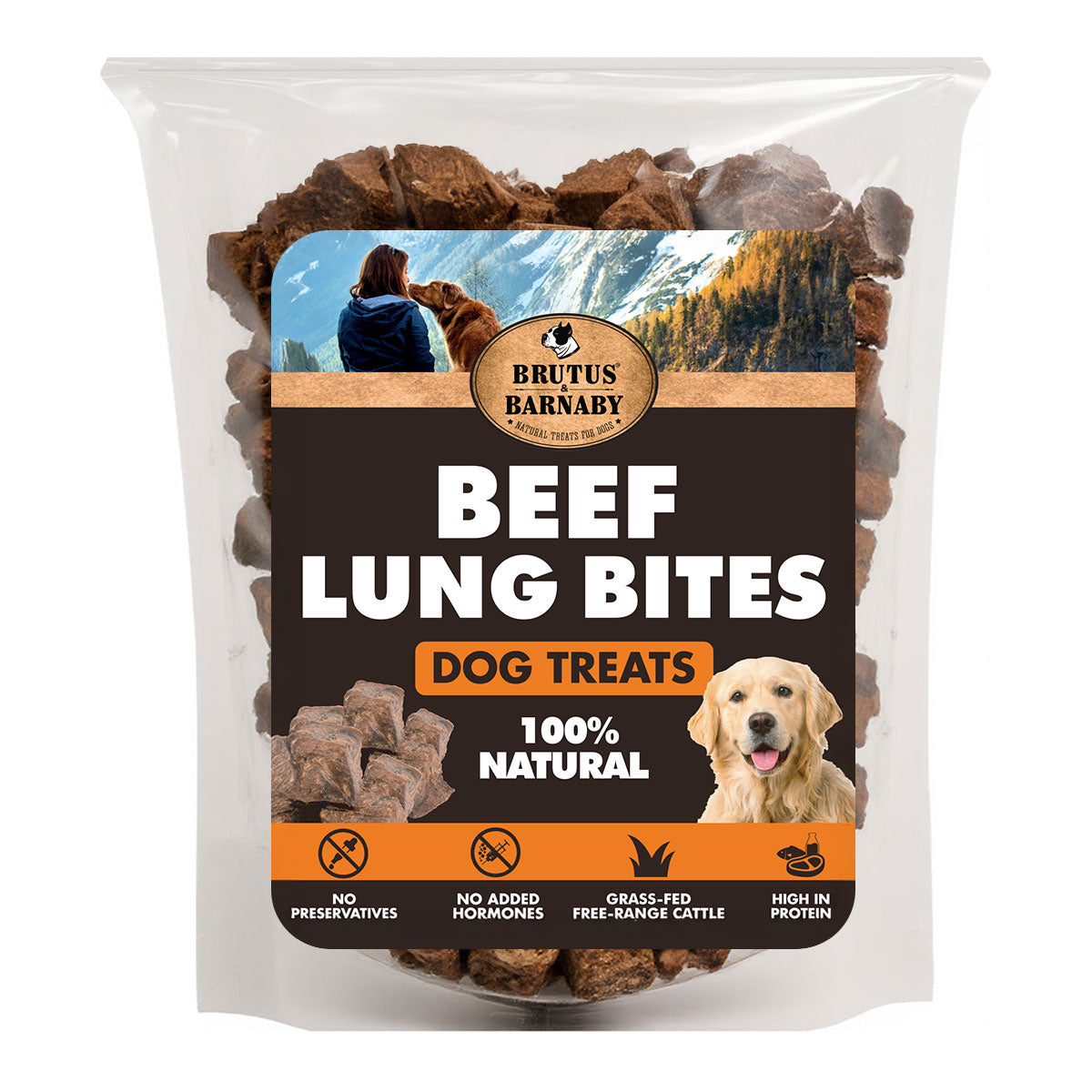
Beef Lung Bites
A simple high-value bite for dogs who need extra motivation during recall, focus work, or special reward moments.
- Single-ingredient beef lung
- High-value reward option
- Great for training and recall
- Easy to break smaller if needed

Sweet Potato Fries for Dogs
A dog-friendly fry-style treat for snack time, topping meals, or rotating away from rich meaty chews.
- Great alternative to human fries
- Easy to portion
- Useful as a snack or topper
- Good for lighter treat moments

Bully Sticks
A natural rawhide-free beef chew for dogs who need a longer, satisfying chewing outlet.
- Great for supervised downtime
- Rawhide-free chew option
- Useful for dogs who love to gnaw
- Remove before the final piece gets small
How to Introduce a New Treat
A slow introduction helps you understand what your dog handles well.
1. Start Small
Give a small amount first instead of a full serving, especially with rich treats or new proteins.
2. Watch Digestion
Monitor stool, appetite, gas, vomiting, or discomfort after trying anything new.
3. Supervise Chewing
If the treat is a chew, watch the full session and remove small pieces before your dog can gulp them.
4. Adjust Portions
On treat-heavy days, use smaller pieces and keep treats within your dog’s daily calorie routine.
Simple rule: new treat, small portion, close supervision. Let your dog’s reaction guide the routine.
Keep Learning Before You Add a New Treat
Pair this guide with related Brutus & Barnaby blog guides and trusted veterinary resources. Internal guide links help you build a better treat routine, while external sources give extra context on treat calories, moderation, and training rewards.
Related Brutus & Barnaby Guides
Trusted Veterinary & Nutrition Resources
Frequently Asked Questions
Choose Treats With Purpose
Brutus & Barnaby makes natural dog treats, chews, and toppers for different reward moments — from training and snack time to supervised chewing and meal variety.
Shop Natural Dog TreatsEducational disclaimer: This article is for general education only and is not veterinary advice. Every dog has different dietary needs, allergies, sensitivities, calorie requirements, dental health, and chewing habits. Ask your veterinarian before introducing new treats if your dog has diabetes, pancreatitis, kidney disease, digestive issues, allergies, obesity, dental problems, or a restricted diet. Always supervise chew sessions and choose treats appropriate for your dog’s size and behavior.