



Long-Lasting Chews for Dogs With Sensitive Stomachs: Ingredient Checklist
A long chew time does not automatically mean a chew will agree with your dog. Use the label, your dog’s known tolerances, the portion, and the chewing format together before choosing.
When a dog has a sensitive stomach, the goal is not to find a chew labeled “perfect for every sensitive dog.” The goal is to make the ingredient list easier to evaluate and the first few chew sessions easier to monitor.
For long-lasting chews for dogs with sensitive stomachs, start with a clearly named protein, the shortest practical ingredient list, no unexplained flavor blend, an appropriate size, and a small first portion. A single-ingredient chew is easier to evaluate, but it is not automatically tolerated. Avoid any protein your dog has reacted to, introduce only one new chew at a time, supervise closely, provide fresh water, and stop if digestive or swallowing problems appear.
Why an Ingredient Checklist Matters More Than a “Sensitive Stomach” Claim
“Sensitive stomach” is a useful everyday description, but it is not one diagnosis. One dog may react to a specific protein. Another may struggle after a rich portion, a sudden diet change, a flavored coating, or simply too much chew at once. Vomiting or diarrhea can also have causes unrelated to food.
That is why the front-of-package promise should never replace the ingredient panel. A short list helps you identify what your dog actually ate, while a clearly named protein helps you avoid a known trigger. Still, the label does not tell you whether your individual dog will tolerate the product.
This guide has a narrower purpose than our broader article on gentle dog chews for sensitive stomachs: it shows you how to audit the label and first-use routine for a chew that is meant to last.
Ingredient Checklist for Long-Lasting Chews for Dogs With Sensitive Stomachs
Start With the Protein Your Dog Already Knows
The first ingredient question is not “Is beef simple?” It is “Has my dog tolerated beef?” Bully sticks, beef cheek rolls, cow ears, and beef collagen all come from cattle. Their formats differ, but they are not alternatives for a dog whose veterinarian has instructed you to avoid beef.
One familiar protein
A plain chew made from a protein your dog already eats without problems gives you fewer new variables to track.
Several new ingredients at once
A new protein, new flavor coating, and large portion introduced together make it difficult to identify what caused an upset.
Food allergy and food intolerance are not the same. Digestive signs can occur with either, and a true food allergy is usually evaluated through a veterinarian-directed elimination and challenge process. Read our separate guide to allergy-friendly dog treats for a closer look at avoiding known or suspected proteins.
Compare Plain Chews Before Flavored Chews
Flavor is not automatically a problem. It simply adds another label question. A peanut-butter-flavored cheek roll, for example, is not the same ingredient test as a plain beef cheek roll. When you are trying to learn whether a chew agrees with your dog, the plain version is usually easier to assess because there are fewer components.
Label rule: read the ingredient panel, not only the flavor name. If your dog is on an elimination diet or prescription diet trial, ask your veterinarian before adding any chew, including a single-ingredient one.
Three Simple-Ingredient Long-Lasting Chews to Evaluate
These are examples of clearly labeled beef chews, not universal sensitive-stomach recommendations. Choose only a protein and format that fit your dog’s dietary history, size, dental health, and chewing behavior.

12-Inch Bully Sticks
The live product page lists 100% grass-fed beef as the ingredient. The longer, extra-thick format is intended for medium and large dogs and stronger chewers.
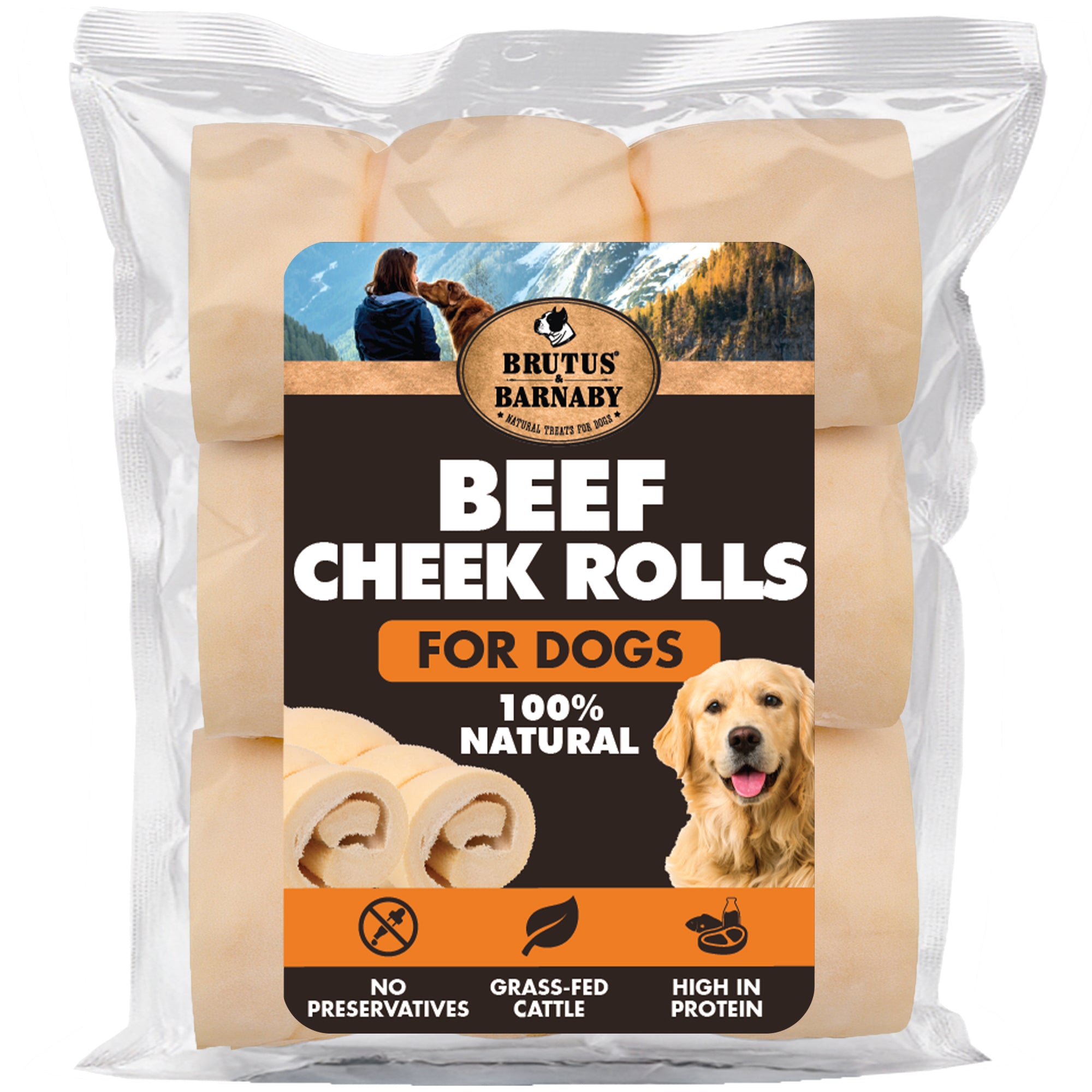
Original Beef Cheek Rolls
The original product page lists 100% beef cheek with no rawhide, fillers, or artificial preservatives. Because the roll is substantial, portion control and end-piece removal matter.
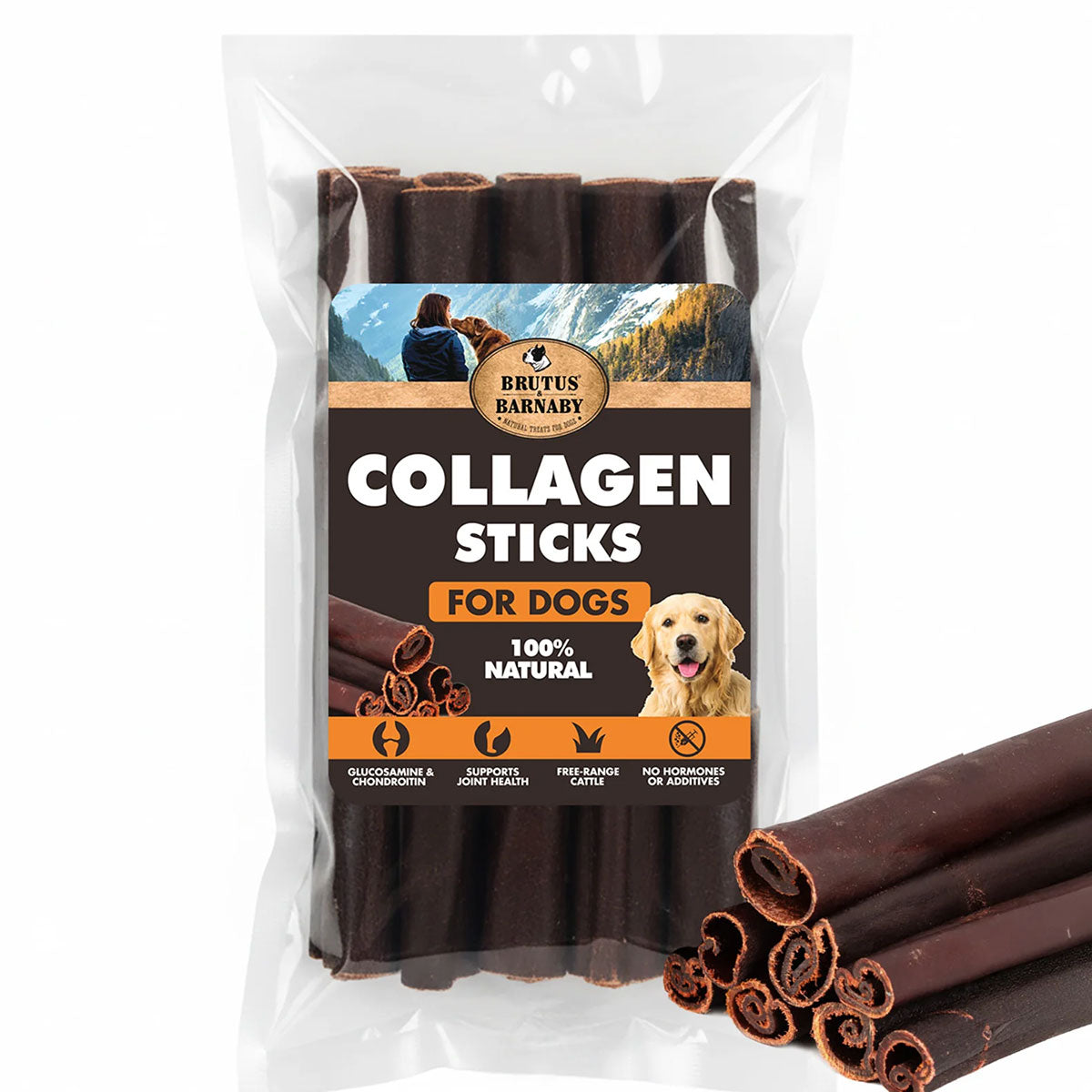
Beef Collagen Sticks
The live product page lists 100% all-natural beef collagen. This is another beef-based option, so it does not create a new protein choice for a dog avoiding beef.
How to Introduce a New Long-Lasting Chew Slowly
A careful first use gives you better information than handing over a full chew and letting the session run indefinitely. Change one variable at a time and keep the rest of your dog’s diet routine steady.
Count the Chew as Part of the Treat Budget
Long-lasting does not mean nutritionally invisible. The edible material your dog consumes belongs in the same daily treat total as training rewards, table scraps, toppers, and food used in enrichment.
Keep extras below 10% of daily calories
WSAVA advises keeping treats below 10% of a dog’s daily calorie intake so the complete and balanced diet remains the main source of nutrition. Your veterinarian can help translate that limit for your dog’s body condition, activity, and medical needs.
A large chew does not have to be finished in one sitting. End the session when appropriate, store the remaining chew according to the product directions, and avoid automatically replacing regular food with treats. For more context, see our guide to fast- versus slow-digesting dog treats.
Digestive Tolerance Does Not Replace Chew Safety
A chew can have a simple ingredient list and still be the wrong size, thickness, or hardness for a particular dog. Supervision matters because dogs may gulp softened ends, crack off large pieces, or continue chewing after the item becomes small enough to swallow.
During every session
Reconsider the format when
Dogs that destroy chews quickly need a size-and-supervision plan as much as an ingredient plan. Our guide to long-lasting chews for power chewers covers that separate decision.
When to Stop the Chew and Call a Veterinarian
Stop offering the new chew if it is followed by vomiting, repeated diarrhea, worsening gas, loss of appetite, itching, ear irritation, or obvious discomfort. Contact your veterinarian when signs are repeated, significant, or difficult to connect to one food.
Seek urgent veterinary care for possible obstruction or a severe reaction
Urgent signs can include repeated vomiting, retching, abdominal pain or swelling, marked lethargy, inability to keep water down, blood in vomit or stool, breathing difficulty, collapse, or a known large piece swallowed whole.
Do not wait for a routine appointment when your dog is struggling to breathe, repeatedly vomiting, collapsing, or showing severe abdominal pain. Contact an emergency veterinary clinic.
Helpful Veterinary and Food-Safety Resources
These resources support the guidance on treat portions, food reactions, safe handling, and urgent digestive warning signs.
WSAVA — Global Nutrition Guidelines and Treat Resources Nutrition tools, food-label guidance, and the recommendation to keep treats below 10% of daily calories. VCA Animal Hospitals — Adverse Reactions to Food in Dogs An overview of food intolerance, food allergy, dietary indiscretion, and gastrointestinal signs. FDA — Safe Handling of Pet Food and Treats Guidance on clean hands, intact packaging, dry storage, and secure treat handling. Merck Veterinary Manual — Gastrointestinal Obstruction Clinical signs associated with swallowed objects and digestive blockage.Long-Lasting Chews and Sensitive Stomachs: Common Questions
Are single-ingredient chews always better for sensitive stomachs?
They are easier to evaluate because fewer ingredients are involved, but they are not automatically better for every dog. A single ingredient can still be a protein your dog does not tolerate, and a large portion can still cause digestive upset.
What ingredients should I avoid in a long-lasting chew?
Avoid any ingredient your dog has a confirmed or veterinarian-suspected reaction to. During a cautious trial, also avoid vague protein descriptions, unexplained flavor blends, several new proteins, and products that conflict with a veterinary elimination or prescription diet.
Are beef cheek rolls good for dogs with sensitive stomachs?
Some dogs may tolerate a plain, single-ingredient beef cheek roll, while others may not tolerate beef, the portion, or the dense format. Start cautiously only when beef fits the dog’s diet, supervise, and stop if symptoms appear.
Can dogs with sensitive stomachs have bully sticks?
A plain bully stick has a simple beef ingredient list, but that does not make it suitable for a dog avoiding beef or every dog with digestive sensitivity. Match the size to the dog, limit the first session, and monitor digestion.
Should I choose low-fat chews?
Fat information can be useful, especially when a veterinarian has recommended a fat-restricted diet, but “low fat” is not the only decision. Protein tolerance, calories, portion size, hardness, and chewing behavior also matter.
How long should the first chew session be?
There is no universal time that fits every dog. Make the first session shorter than a normal full chew session, supervise continuously, remove the chew before it becomes swallowable, and observe digestion before repeating.
What should I do if a new chew causes diarrhea?
Stop the chew, keep the package and ingredient information, and contact your veterinarian if diarrhea is repeated, severe, bloody, accompanied by vomiting or lethargy, or if your dog has an underlying medical condition. Seek urgent care for severe pain, collapse, breathing trouble, or suspected blockage.
Simple Labels Make Better Experiments, Not Guarantees
The best starting point is a clearly named ingredient your dog already tolerates, offered in a manageable amount and an appropriate chew format. Introduce one new chew at a time, count it within the treat budget, supervise every session, provide fresh water, and involve your veterinarian when symptoms are recurring or your dog follows a restricted diet.
Educational disclaimer: This article provides general educational information and is not veterinary advice. Individual dogs differ in digestive tolerance, food reactions, calorie needs, dental health, and chewing behavior. Consult your veterinarian before introducing new chews if your dog has recurring vomiting or diarrhea, suspected food allergy, pancreatitis, a prescription diet, dental disease, obesity, or another medical condition.
``` ## Excerpt Learn how to compare long-lasting chews for dogs with sensitive stomachs using a practical ingredient checklist. This guide covers protein sources, added flavors, fat and calorie information, slow introductions, supervision, and signs that mean it is time to call your veterinarian. ## Search Engine Listing **Page title:** Long-Lasting Chews for Dogs With Sensitive Stomachs **Meta description:** Compare long-lasting dog chews for sensitive stomachs with a practical ingredient checklist, slow introduction steps, supervision tips, and warning signs. **URL handle:** long-lasting-chews-dogs-sensitive-stomachs ## Tags Sensitive Stomachs, Long-Lasting Dog Chews, Ingredient Checklist, Dog Chew Safety, Single-Ingredient Chews, Digestive Sensitivity, Dog Treat Guide, Natural Dog Chews