



Dental Chews for Dogs With Sensitive Stomachs: What to Look For
A dental chew for a sensitive dog should support purposeful chewing without adding ingredients, calories, richness, or a texture that does not suit that individual dog.
“Sensitive stomach” can describe loose stool after rich treats, vomiting after unfamiliar foods, a diagnosed food allergy, an elimination diet, or a digestive condition that needs veterinary management. The right chew depends on the reason behind the sensitivity.
When choosing dental chews for dogs with sensitive stomachs, look for clearly identified ingredients your dog already tolerates, an appropriate size and texture, disclosed calories, manageable richness, and feeding directions that fit the regular diet. For verified plaque or tartar control, check whether the exact product has earned a Veterinary Oral Health Council acceptance claim. Introduce one new chew at a time, supervise every session, provide fresh water, and stop feeding it if digestive or mouth-related problems appear.
A Sensitive-Stomach Dental Chew Must Pass Two Tests
Dental performance and digestive tolerance are separate questions. A chew may have credible plaque or tartar evidence but contain an ingredient your dog cannot tolerate. A simple natural chew may encourage chewing but may not have been evaluated as a dental product.
Use the label and your dog’s health history together instead of relying on front-package phrases such as “natural,” “grain-free,” “limited ingredient,” or “dental.”
What to Look For in a Dental Chew
Look for a specific accepted claim
The Veterinary Oral Health Council reviews submitted product data and awards acceptance for plaque control, tartar control, or both. Check the exact product and claim instead of assuming that every flavor, size, or formula has the same acceptance.
Be cautious with broad wording
Phrases such as “supports dental health,” “tooth-cleaning texture,” or “freshens breath” may describe an intended benefit, but they do not automatically mean the product has earned independent plaque or tartar acceptance.
What to Look For on the Sensitive-Stomach Side
A short ingredient list may make a reaction easier to investigate, but it does not guarantee that a product will agree with every dog. The most useful ingredient list is one you can compare with your dog’s known diet history.
Remember: “Grain-free” is not the same as “suitable for sensitive stomachs.” A grain-free chew can still contain animal proteins, fats, flavorings, legumes, or other ingredients that do not suit a particular dog.
Natural Chews to Consider When Your Dog Tolerates Beef
Brutus & Barnaby does not list these products as Veterinary Oral Health Council accepted dental chews. They are natural chew options that may encourage chewing and can be considered alongside brushing and veterinary dental care.
All three products below contain beef. Do not use them during a strict elimination diet or for a dog with a suspected or confirmed beef reaction unless your veterinarian approves the exact product.
Product-selection rule: choose according to the dog’s known ingredient tolerance, chewing style, mouth size, dental condition, calorie needs, and ability to manage the texture safely—not according to a universal ranking.
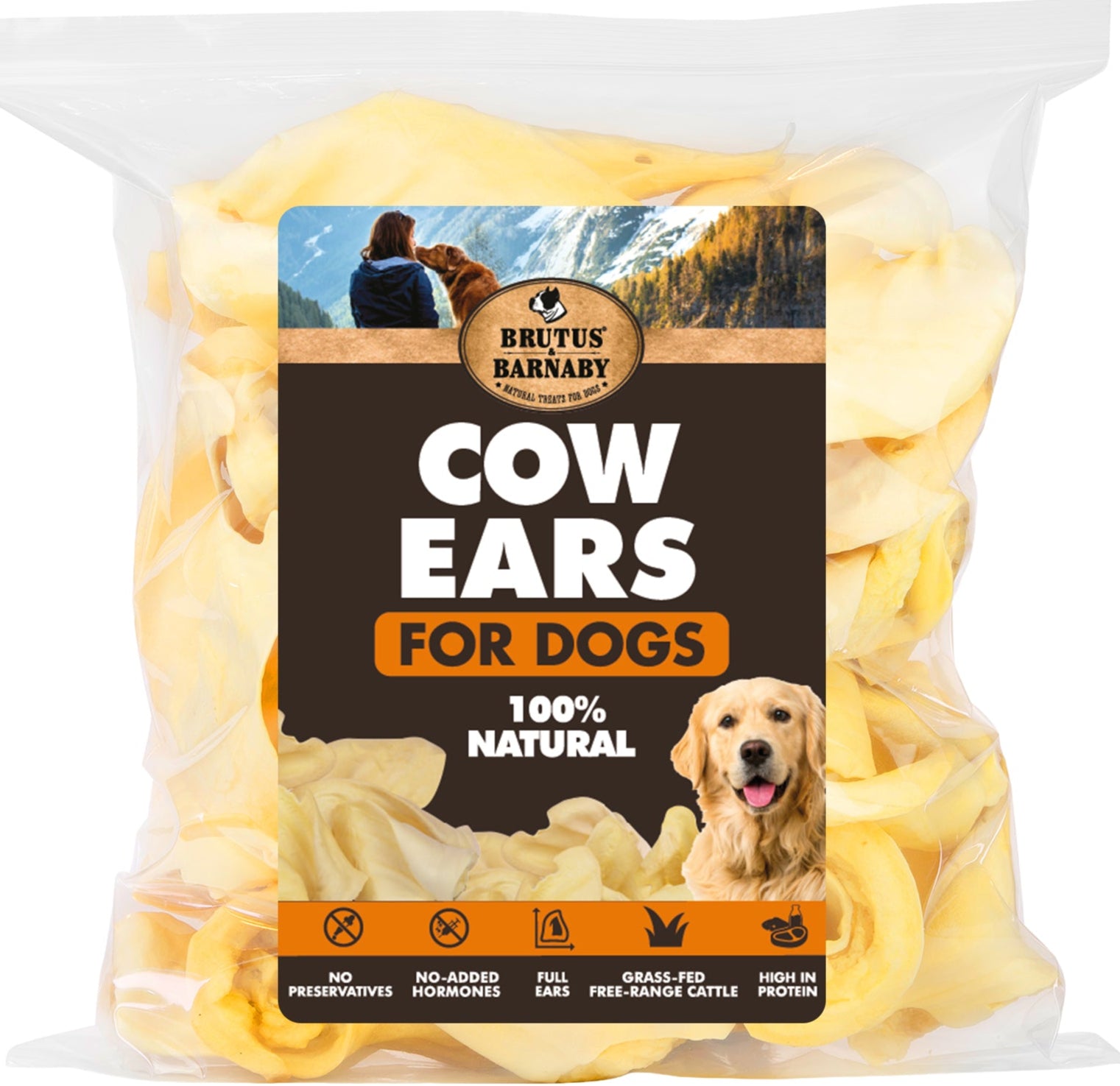
Cow Ears for Dogs
A broad, single-ingredient cow ear chew for dogs that already tolerate beef and prefer a lighter cartilage-based texture instead of a dense rolled chew.
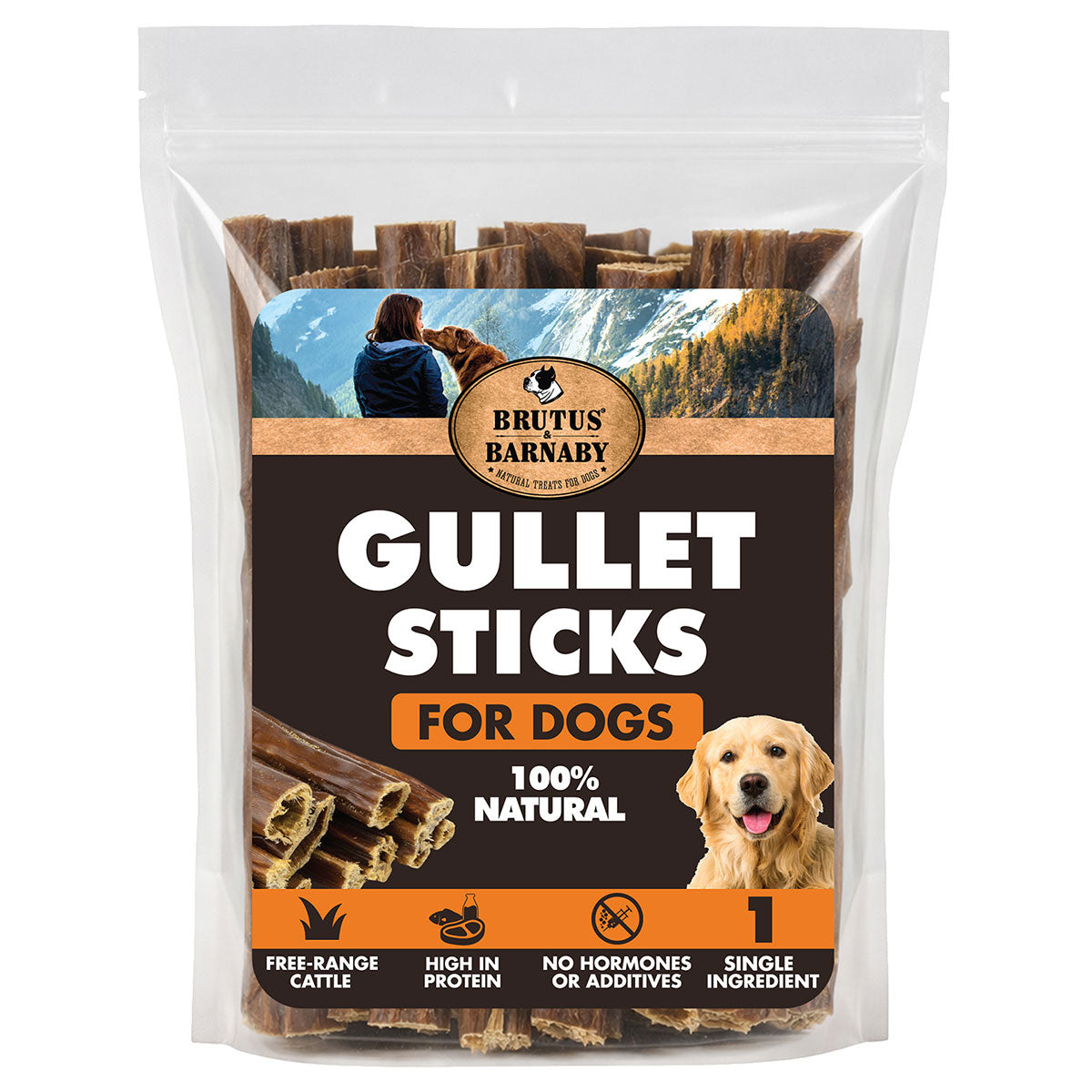
Beef Gullet Sticks for Dogs
A thinner six-inch beef gullet chew for dogs that work through a textured stick steadily and do not require a dense, heavy-duty chew.
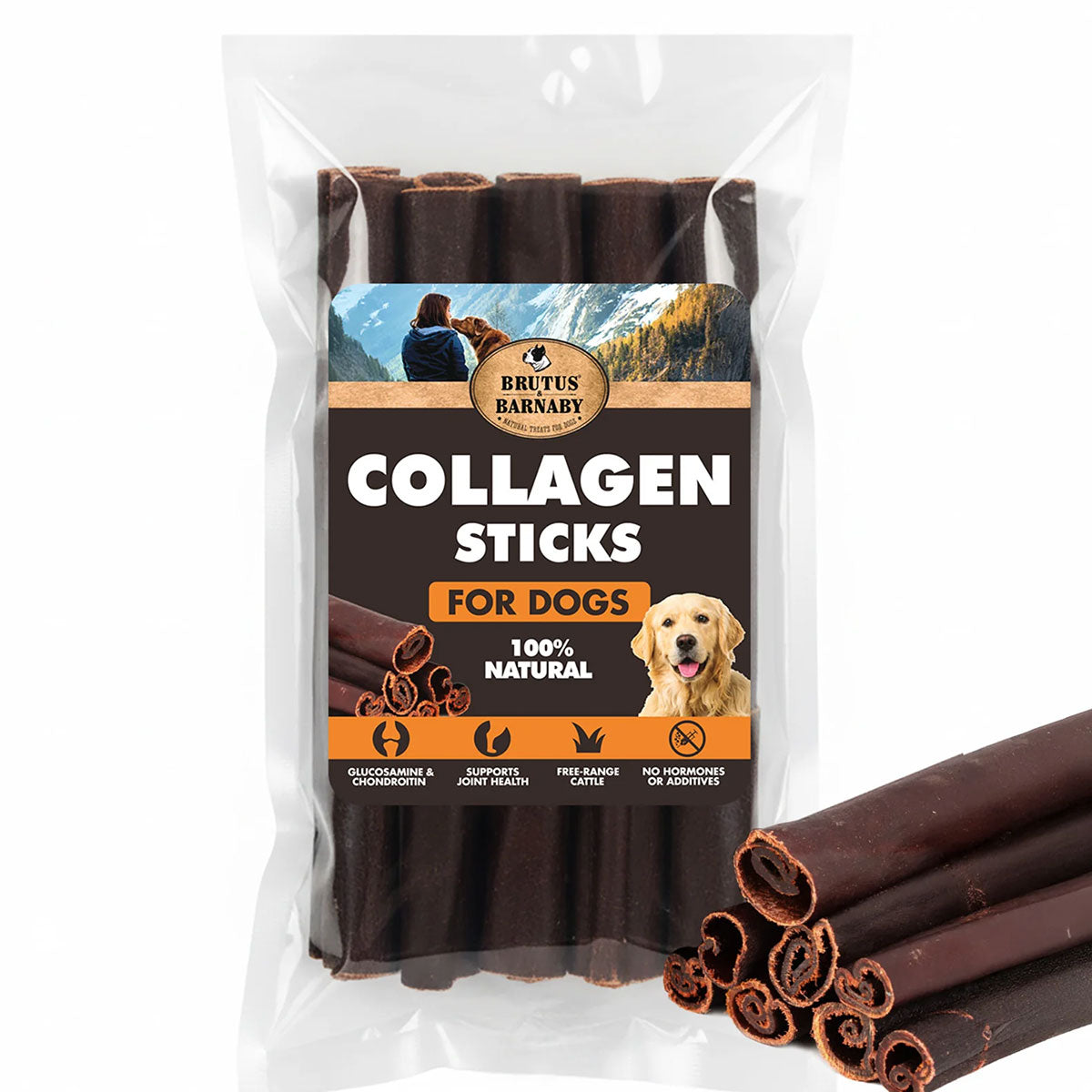
Beef Collagen Sticks for Dogs
A compact, rolled beef collagen chew for dogs that tolerate beef and safely work through a firmer texture without biting off or gulping large sections.
Comparing the Three Natural Chew Options
These products differ mainly in shape, density, richness, and how a dog is likely to work through them. None should be treated as the best choice for every sensitive dog.
Do not choose by fat percentage alone: the amount consumed, calorie density, protein tolerance, texture, chewing behavior, and the rest of the daily diet also matter.
Sensitive Stomach, Food Intolerance, or Food Allergy?
These terms are often used interchangeably, but they do not always describe the same issue. A dog may have digestive upset after a large portion, a sudden food change, a rich treat, an unrelated gastrointestinal condition, or an immune-mediated reaction to an ingredient.
Repeated vomiting, diarrhea, itching, ear problems, weight changes, or reactions to multiple products should not be managed by randomly cycling through chews. A veterinarian may recommend a controlled elimination-challenge diet when a food reaction is suspected.
A careful trial may be reasonable when
Ask your veterinarian first when
During an elimination diet: treats, chews, flavored toothpastes, supplements, and flavored medications can introduce proteins that interfere with the trial. Use only products specifically approved by the veterinarian managing the diet.
How to Introduce a New Chew Carefully
Keep the rest of the routine stable so you can identify whether the new chew agrees with your dog.
Keep Calories and the Complete Diet in View
Natural chews are still treats. Count them together with training rewards, table scraps, food used in enrichment, and every other extra outside the complete and balanced diet.
Keep all treats below 10% of daily calories
General veterinary nutrition guidance recommends keeping treats and other extras below 10% of a dog’s daily calorie intake so they do not displace too much of the complete diet. Your veterinarian can help estimate a suitable allowance for your individual dog.
Calorie figures listed by weight do not tell you the exact calories in every natural ear or stick. Natural pieces can vary, so portion awareness still matters.
Chews Do Not Replace Brushing or Veterinary Dental Care
Chewing can be one part of an oral-care routine, but it cannot examine below the gumline, diagnose dental disease, repair a fractured tooth, or remove every type of buildup.
Daily brushing with dog-safe toothpaste remains an important home-care method when your dog’s mouth is comfortable enough for brushing. Veterinary examinations and professional dental treatment may still be needed.
Tooth brushing
Use pet-specific toothpaste and a method recommended by your veterinary team.
Appropriate dental products
Check the VOHC list when verified plaque or tartar effectiveness is your priority.
Veterinary dental exams
Needed to evaluate pain, disease, tartar, loose teeth, fractures, and problems below the gumline.
When to Stop the Chew and Contact a Veterinarian
Contact your veterinarian promptly
Seek emergency veterinary care
Continue Building a Better Chew Routine
Learn more about dental-care claims, lighter chew formats, ingredient tolerance, and choosing the right texture for the dog in front of you.
Helpful External Resources
Use these veterinary resources to check accepted dental products, understand home oral care, and investigate recurring food reactions.
Veterinary Oral Health Council — Accepted Products Search dog products with accepted plaque or tartar claims and confirm which specific claim applies. AAHA — Your Pet’s Dental Care Guidance on daily brushing, dental chews, warning signs, examinations, and professional care. VCA Animal Hospitals — Elimination-Challenge Diet Trials Why treats, chews, toothpastes, supplements, and flavored medications must be controlled during a food trial. VCA Animal Hospitals — Food Intolerance in Dogs An explanation of adverse food reactions, digestive signs, diet histories, and veterinary investigation.Dental Chews and Sensitive Stomachs: Common Questions
Are dental chews safe for dogs with sensitive stomachs?
Some dogs tolerate dental chews, while others do not. Suitability depends on the ingredients, calories, richness, size, texture, feeding directions, chewing behavior, and the reason for the digestive sensitivity. Ask your veterinarian before use when symptoms are recurring or a medical diet is involved.
Which ingredients should I avoid in a dental chew?
There is no universal ingredient list that every sensitive dog must avoid. Exclude ingredients that have caused a confirmed reaction, conflict with a veterinary diet, or cannot be clearly identified. A veterinarian can help when the trigger is uncertain.
Are single-ingredient chews better for sensitive stomachs?
A single-ingredient chew can make the ingredient source easier to identify, but it is not automatically better for every dog. A dog that reacts to beef may still react to a single-ingredient beef chew, and portion size can also affect tolerance.
How can I tell whether a dental chew actually helps teeth?
Look for a clearly stated plaque or tartar claim and confirm whether the exact product appears on the Veterinary Oral Health Council accepted-products list. A natural chew may encourage chewing without having a verified dental acceptance claim.
Can cow ears, gullet sticks, or collagen sticks replace brushing?
No. These natural chews may encourage chewing, but they do not replace daily brushing, veterinary dental examinations, or professional treatment when dental disease is present.
Can my dog have natural chews during an elimination diet?
Only when the veterinarian managing the trial approves the exact chew. Treats, chews, supplements, flavored toothpastes, and flavored medications can introduce proteins that make an elimination diet difficult to interpret.
What should I do if a chew causes vomiting or diarrhea?
Stop feeding the chew and contact your veterinarian for guidance, especially when symptoms repeat, are severe, contain blood, or occur with pain, weakness, dehydration, or poor appetite. Seek emergency care for choking, trouble breathing, collapse, rapid facial swelling, or a suspected obstruction.
Choose Dental Evidence and Digestive Tolerance Separately
The best dental chew for a dog with a sensitive stomach is one that has an appropriate dental purpose, uses ingredients the dog can tolerate, fits the dog’s mouth and chewing style, stays within the treat-calorie budget, and can be used safely under supervision. Natural chews such as cow ears, beef gullet sticks, and beef collagen sticks may fit some beef-tolerant dogs, but they should not be presented as substitutes for VOHC-accepted products, brushing, or veterinary dental care.
Compare Natural Chew Formats for Your Dog
Review each current product page, ingredient list, analysis, feeding instructions, and available sizes before selecting a chew.
Educational disclaimer: This article provides general educational information and is not veterinary, dental, nutritional, diagnostic, or emergency advice. Chew suitability depends on your dog’s age, size, oral health, chewing behavior, medical history, regular diet, calorie needs, allergies, digestive tolerance, and current medications. Always supervise chewing, provide fresh water, use manageable portions, follow the current product instructions, and consult your veterinarian before changing the routine of a dog with ongoing digestive symptoms, dental disease, a prescribed diet, pancreatitis, or another health condition. Product ingredients, analysis, sizes, packaging, availability, and page information may change, so review the current product page and package before feeding.