



Natural Dog Chews for Heavy Chewers With Sensitive Stomachs
A powerful jaw and a delicate digestive system create a real balancing act. The best natural dog chew is durable enough to slow your dog down, simple enough to evaluate, and introduced carefully enough to reveal whether it truly agrees with them.
A chew can be natural, single-ingredient, and long-lasting without being the right choice for your individual dog. Digestive tolerance matters just as much as durability.
For heavy chewers with sensitive stomachs, start with one appropriately sized, single-ingredient chew that your dog has tolerated before, then introduce it in a short supervised session and monitor digestion. Beef cheek rolls, beef collagen sticks, and thick bully sticks may provide longer chewing for dogs that tolerate beef. They are not suitable for dogs with a confirmed or suspected beef reaction, and no chew is universally gentle or safe.
Why This Combination Is Hard to Shop For
Heavy chewers need a chew that does not disappear immediately or break into easy-to-swallow chunks. Dogs with digestive sensitivities need the opposite kind of shopping discipline: fewer variables, manageable portions, and a careful introduction. Choosing only by the words “long-lasting” or “natural” misses half the problem.
“Sensitive stomach” is also a description, not a diagnosis. Loose stool or vomiting after a chew may be related to the ingredient, the amount eaten, a sudden diet change, gulping, dietary indiscretion, or an unrelated medical problem. Food allergies can cause digestive signs, and beef is among the proteins that may trigger reactions in some dogs. If your dog is on a veterinary elimination diet, treats and chews generally need veterinary approval because an unplanned protein can interfere with the trial.
Ingredient history
Choose a protein your dog has already eaten comfortably whenever possible.
Chewing behavior
A dog who gnaws steadily needs a different plan from a dog who bites off and gulps chunks.
Portion and frequency
Even a tolerated chew can cause trouble when a dog consumes too much too quickly.
What to Look for in Natural Dog Chews for Heavy Chewers With Sensitive Stomachs
Important distinction: “single ingredient” makes a chew easier to evaluate. It does not make that ingredient automatically suitable for every dog.
Best-Fit Natural Chew Types When Beef Is Tolerated
The options below are all beef-based. That makes them straightforward to compare, but it also means they should be skipped when beef is a known or suspected trigger. For a dog with ongoing digestive symptoms or a prescription diet, ask your veterinarian before adding any edible chew.
For a broader durability comparison, read our guide to long-lasting dog chews for power chewers. For lighter options and digestive-first choices, see gentle dog chews for sensitive stomachs.
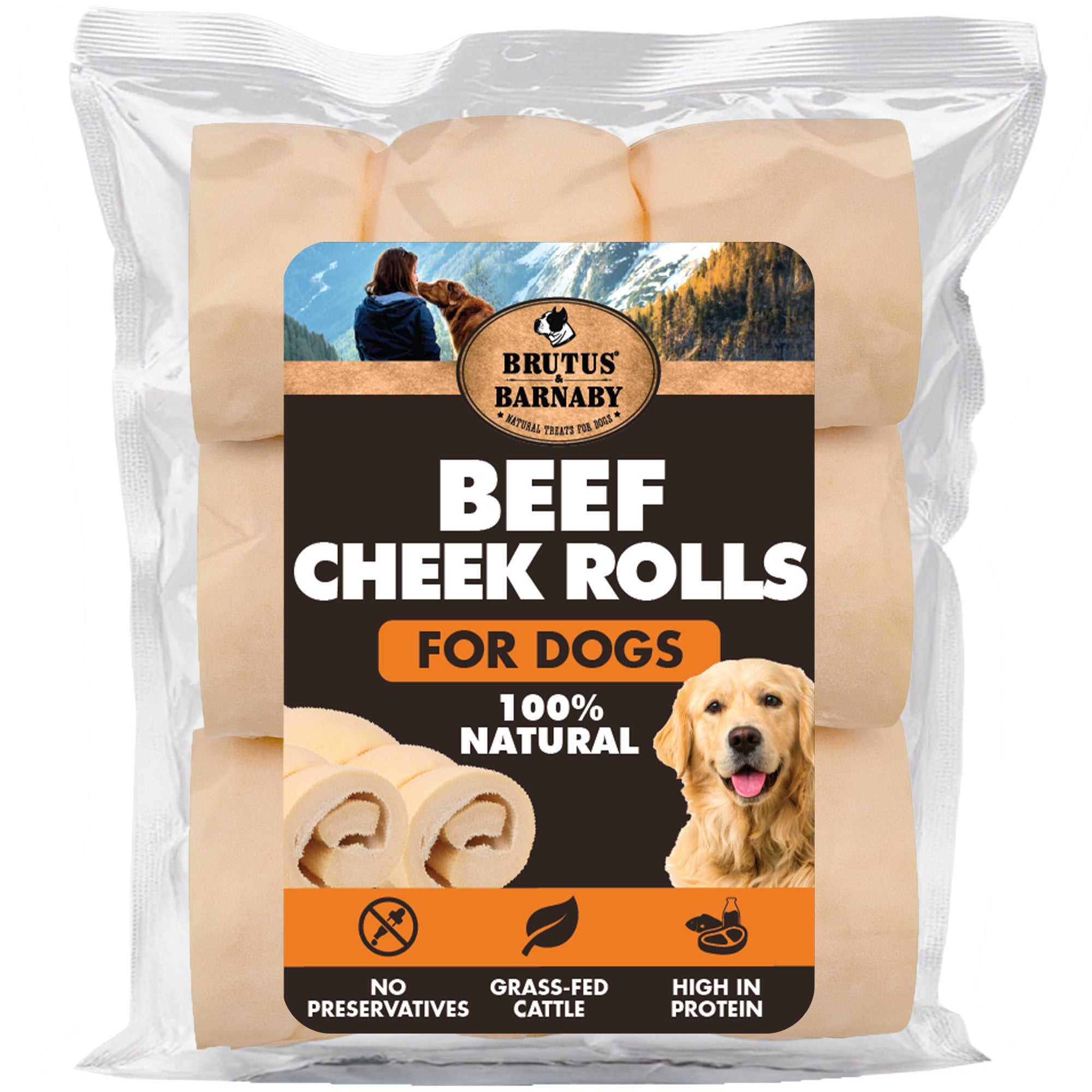
Beef Cheek Rolls for Dogs
A single-ingredient beef cheek chew available in shorter and longer roll sizes. It may suit a steady heavy chewer when beef is tolerated and the roll is introduced gradually under supervision.
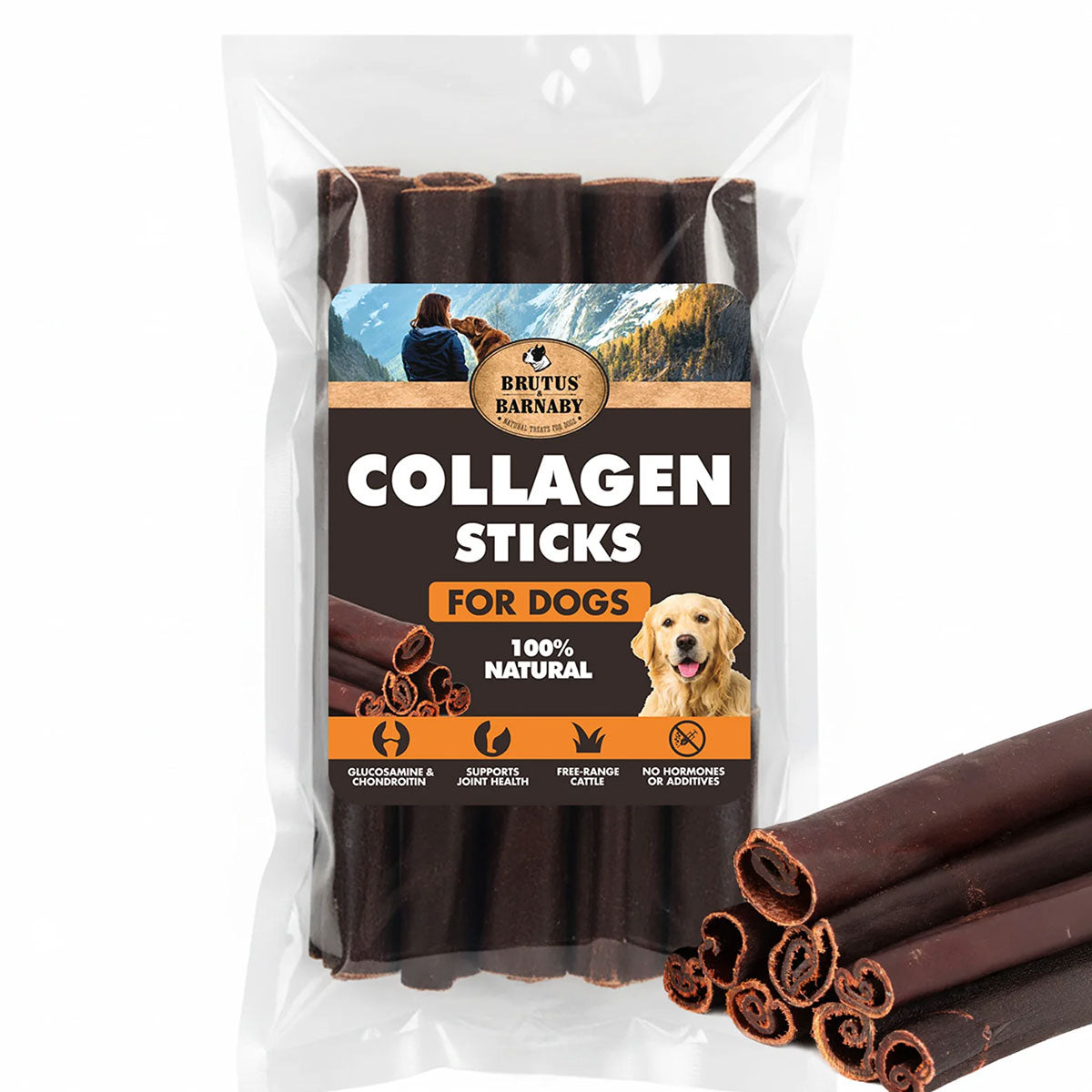
Beef Collagen Sticks for Dogs
A single-ingredient beef collagen chew made for satisfying chew time. Treat it as a new beef-based food, not as a neutral chew, and test tolerance before making it part of the regular routine.
A Safer Trial Plan for a Sensitive-Stomach Power Chewer
A controlled trial gives you more useful information than handing over a full chew and hoping for the best. Change only one variable at a time so you can connect any reaction to the most likely cause.
See our full guide to introducing new dog chews safely for a more detailed transition routine.
Red Flags: When to Stop the Chew
Digestive or general illness signs
Possible choking or obstruction
Remove the chew when it becomes small enough to swallow, when your dog starts breaking off large pieces, or when the chewing changes from steady gnawing to frantic biting or gulping. Fresh water should remain available.
How to Build a Rotation Without Upsetting the Stomach
Rotation can keep chew time interesting, but variety should come after tolerance, not before it. First establish one chew that works. Keep notes on the product, protein, amount consumed, stool quality, appetite, and any skin or ear changes. Once that chew has been tolerated consistently, test a second option on a separate day.
Keep the routine predictable
Use the same meal timing, avoid multiple new treats, and control how much of the chew is consumed.
Count the chew as food
Edible chews belong inside the daily treat allowance, not on top of meals and every other reward.
Calorie guardrail: WSAVA advises that treats, including chews, should make up less than 10% of a dog’s daily calorie intake. Your veterinarian can help determine an appropriate amount for your dog’s body condition, diet, and health needs.
Helpful External Resources
These veterinary, kennel-club, and government resources offer additional guidance on treat calories, food reactions, chew selection, and safe handling.
WSAVA — Feeding Treats to Your Dog Treat calories, appropriate size, supervision, and guidance for dogs with dietary sensitivities. VCA Animal Hospitals — Allergies in Dogs Food-allergy signs, common protein triggers, and veterinary elimination-diet principles. AKC — Choosing Edible Dog Chews How size, hardness, durability, ingredients, and chewing behavior affect chew safety. FDA — Safe Handling of Pet Food and Treats Clean hands, dry storage, intact packaging, and safe disposal practices.Natural Chews for Heavy Chewers With Sensitive Stomachs: Common Questions
What is the best natural chew for a heavy chewer with a sensitive stomach?
There is no universal best chew. Start with an appropriately sized, single-ingredient option made from a protein your dog already tolerates, then limit the first session and monitor digestion. Dogs with ongoing symptoms should be evaluated by a veterinarian.
Are single-ingredient chews always easier on a dog’s stomach?
Not always. A shorter ingredient list makes the chew easier to evaluate, but a dog can still react to the single protein, consume too much, or swallow pieces too quickly.
Are beef cheek rolls good for sensitive stomachs?
They may work for a dog that tolerates beef and handles dense edible chews well. They should be introduced gradually, offered in a suitable size, and removed before the dog consumes too much or swallows a risky piece.
Are collagen sticks safe for dogs with food sensitivities?
Beef collagen sticks are still beef-based. They may fit a dog that tolerates beef, but they are not appropriate for a dog avoiding beef or following an elimination diet unless the veterinarian approves them.
How do I know whether the chew or the portion caused diarrhea?
You may not know from one episode. Stop the new chew, avoid adding other new foods, record what was eaten, and speak with your veterinarian if signs are severe, persistent, recurrent, or accompanied by other symptoms.
Can I give a long-lasting chew every day?
Daily suitability depends on the chew’s calories, how much is consumed, your dog’s complete diet, body condition, health, and digestive tolerance. Count edible chews within the total treat allowance and ask your veterinarian when dietary restrictions apply.
What should I use if my dog gulps edible chews?
A traditional edible chew may not be the best enrichment tool for a determined gulper. Ask your veterinarian or qualified trainer about appropriately sized food-dispensing toys, lick-based enrichment, or other supervised options that do not encourage swallowing large pieces.
Choose for Tolerance First, Then Durability
The right chew for this dog is not simply the toughest one on the shelf. It is the chew that matches the dog’s ingredient history, mouth size, chewing style, calorie needs, and digestive response.
A durable chew is useful only when your dog can chew it safely and digest the amount consumed comfortably.
Compare Two Substantial Rawhide-Free Chews
Choose a suitable size, introduce one product at a time, supervise every session, and stop if your dog shows digestive discomfort or unsafe chewing behavior.
Disclaimer: This article is for general educational purposes only and does not replace veterinary, nutritional, dental, or emergency advice. “Sensitive stomach” can have many causes, and an edible chew is not a treatment for digestive disease or food allergy. Suitability depends on age, size, dental health, chewing style, swallowing behavior, diet, health conditions, medications, allergies, and individual tolerance. Introduce new chews gradually, use manageable portions, count edible chews within daily treat calories, provide fresh water, and supervise continuously. Remove small or damaged pieces. Stop feeding the chew and contact your veterinarian if your dog develops vomiting, diarrhea, appetite changes, unusual tiredness, abdominal discomfort, skin or ear symptoms, or another concerning reaction. Seek emergency veterinary care for breathing difficulty, choking, collapse, repeated unproductive retching, a painful or swollen abdomen, or suspected obstruction. Product ingredients, sizing, sourcing, packaging, and availability may change, so review the current product page and packaging before feeding.