



Natural Treats for Itchy Dogs: What Helps and What to Avoid
Natural treats can support your dog’s skin and coat, but they cannot replace veterinary care. Here’s how to choose limited-ingredient, skin-supporting treats while avoiding common triggers that may make itching worse.
You’re watching your dog scratch relentlessly at their ears, paws, and belly — again — and you’re wondering: Is there anything I can give them beyond medication?
If your dog struggles with itchy skin, natural treats can play a supporting role in overall skin and coat health. The key is understanding what treats can and cannot do. They may help support a healthier skin barrier, improve treat quality, and reduce exposure to unnecessary ingredients — but they are not a cure for allergies, infections, parasites, or chronic skin disease.
Food Allergies vs. Environmental Allergies vs. Skin Conditions
Before you change treats, it helps to understand what may be causing the itching. Different causes need different solutions, and some require veterinary treatment before any diet change will make a noticeable difference.
Important: if your vet has diagnosed an allergy, infection, parasite problem, or chronic skin condition, treats should complement the plan — not replace prescribed medication, special diets, medicated shampoos, or follow-up care.
Skin-Supporting Ingredients to Look For
The best treats for itchy dogs are not magic fixes. They are clean, practical choices that help support overall nutrition while avoiding unnecessary irritants.
Better Treat Choices
Common Red Flags
If your dog is on a strict elimination diet, do not add new treats without your vet’s approval. Even a natural treat can interfere with testing if it contains a protein your dog is not supposed to eat during the trial.
Best Brutus & Barnaby Treats for Skin-Supportive Routines
These products are strong fits for this article because they focus on simple ingredients, gentle digestion, skin-and-coat support, or easier treat control for dogs with sensitivities.

Sweet Potato Sticks with Salmon & Kelp
A crunchy, easy-to-portion treat made with sweet potato, salmon, and kelp for dogs who need a skin-and-coat friendly option.
- Salmon for omega-3 support
- Kelp with naturally occurring minerals
- Sweet potato base
- Great for training rewards or daily rotation
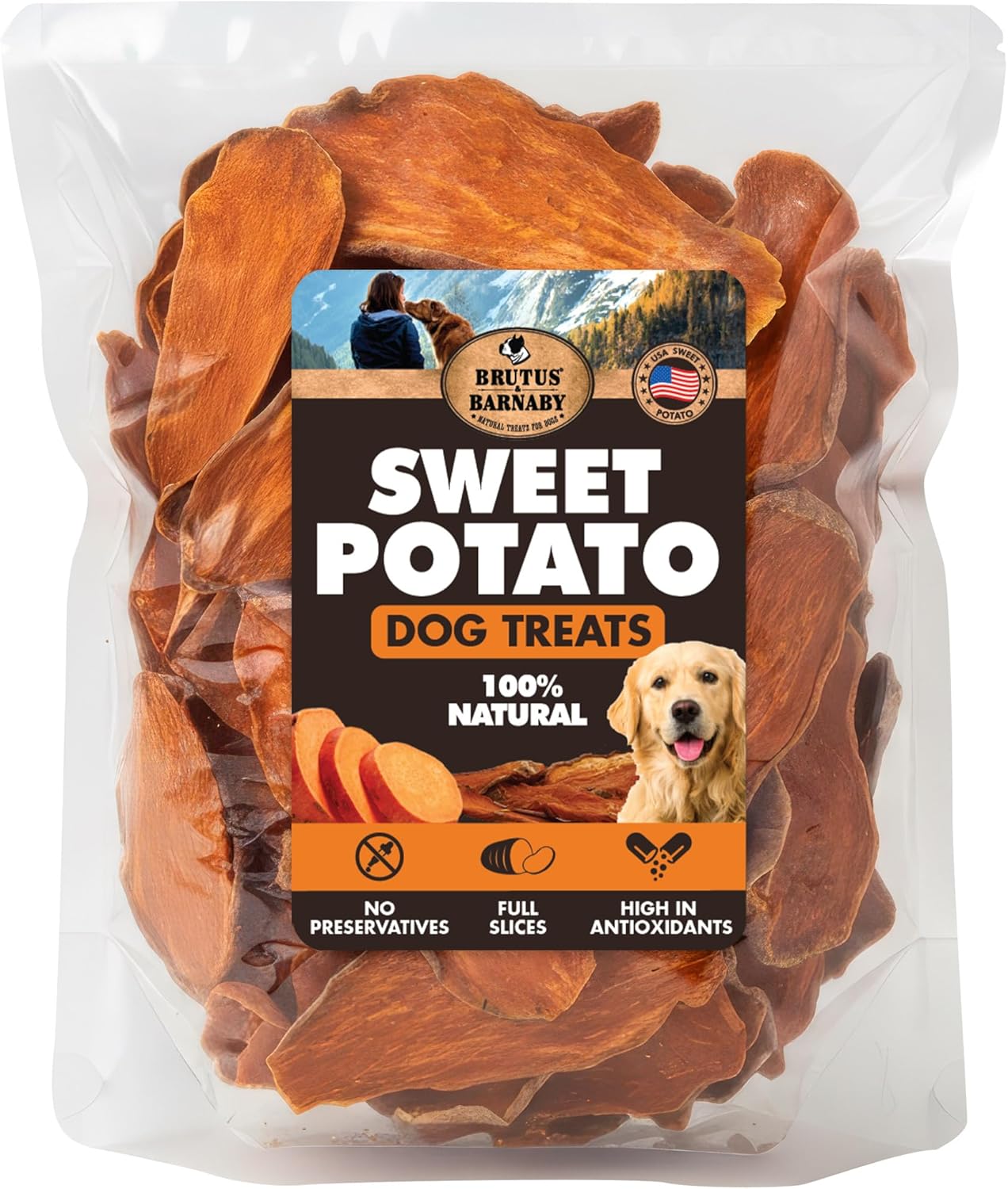
Sweet Potato Slices
A simple plant-based treat for dogs who need a cleaner snack option without common animal proteins.
- Simple plant-based snack
- Great for sensitive stomachs
- Chewy texture
- Helpful when avoiding common proteins
When Your Dog Is Still Itchy on Daily Meds
If your dog is still terribly itchy while on medication, treats should not be your only next step. Persistent itching can mean the trigger has not been identified, the medication needs adjustment, or a secondary infection is present.
Ask your vet whether environmental triggers, food trial contamination, fleas, yeast, bacteria, or another skin condition could be involved. If your dog has been uncomfortable for weeks despite treatment, it may also be worth asking whether a veterinary dermatologist is appropriate.
Truth: treats are a support tool, not a medical treatment. The right treat can help clean up the diet, but it cannot diagnose or treat the root cause of chronic itching.
When Itching Is a Red Flag
Do not wait for treats to help if your dog has open sores, bleeding, scabs, hair loss, foul odor, discharge, swelling around the face, or scratching that disrupts sleep, eating, or normal behavior. Those signs deserve veterinary attention.
A Note on Affordability
Skin issues can get expensive quickly: vet visits, medications, shampoos, supplements, and special diets all add up. Natural treats do not need to be complicated or overpriced to be useful.
The most cost-effective approach is to choose a few simple treats that match your dog’s known safe ingredients, introduce them slowly, and avoid constantly switching products. That way, you support your dog’s routine without adding more guesswork.
Frequently Asked Questions
Support Skin Health with Smarter Treat Choices
Choose simple, natural treats that fit your dog’s needs — and always work with your vet when itching is persistent, severe, or getting worse.
Shop Natural Dog Treats