



Beef Gullet Sticks vs. Flat Strips for Dogs: Which Is Better?
They come from the same beef ingredient, but their shape can create a different chewing experience. Here is how to choose the better format for your dog.
The choice between beef gullet sticks and flat strips is less about finding one universal winner and more about matching the chew's shape to the way your dog actually bites, holds, tears, and finishes treats.
Sticks for more three-dimensional texture. Flat strips for a flatter, easier-to-handle format.
Both Brutus & Barnaby options are single-ingredient beef gullet chews. Choose Beef Gullet Sticks for gentle-to-moderate chewers who enjoy working around a ridged, stick-shaped chew. Choose Beef Gullet Flat Strips when you prefer a flatter format that may be easier to handle, break into smaller portions, or offer as an everyday reward.
Neither format should automatically be treated as a heavy-duty chew for a determined power chewer. Actual chew time depends far more on your dog's size, technique, and chewing intensity than on the word “stick” or “strip.”
What Is Beef Gullet for Dogs?
Beef gullet is beef esophagus prepared as a dog treat or chew. Instead of grinding the ingredient into a biscuit, manufacturers can dry it in different shapes. That is why the same basic ingredient can appear as a narrow stick, a flatter strip, or another textured form.
For dog owners, the important difference is not simply what the chew is made from. Shape changes how a dog can grip and work through it.
The Core Ingredient
Both B&B formats are made from beef gullet. The choice is not between two different proteins or completely different treat categories.
The Physical Format
A stick offers a narrower, more three-dimensional shape. A flat strip spreads the same type of chew material into a broader, flatter piece.
That distinction matters because dogs do not all chew the same way. One dog may hold a stick between the paws and work from one end. Another may prefer pinning a flat strip down and tearing across the surface.
For a broader explanation of the ingredient itself, read our guide to why gullet and trachea chews are useful for texture .
Beef Gullet Sticks vs. Flat Strips: The Main Differences
Because the underlying ingredient is similar, this comparison should focus on practical use rather than trying to make one format sound nutritionally superior.
| Difference | Beef Gullet Sticks | Beef Gullet Flat Strips |
|---|---|---|
| Shape | Narrower and more three-dimensional | Broader and flatter |
| Chewing Experience | Lets a dog work around edges and along the length | Lets a dog grip, tear, and work across a flatter surface |
| Best General Fit | Gentle-to-moderate chewers who enjoy textured sticks | Dogs that prefer flatter treats or easier portion handling |
| Heavy Chewers | May still finish quickly | May still finish quickly |
| Protein | 76.8% crude protein | 76.8% crude protein |
| Fat | 11.3% crude fat | 11.3% crude fat |
| Calorie Density | About 116.2 kcal per ounce | About 113.4 kcal per ounce |
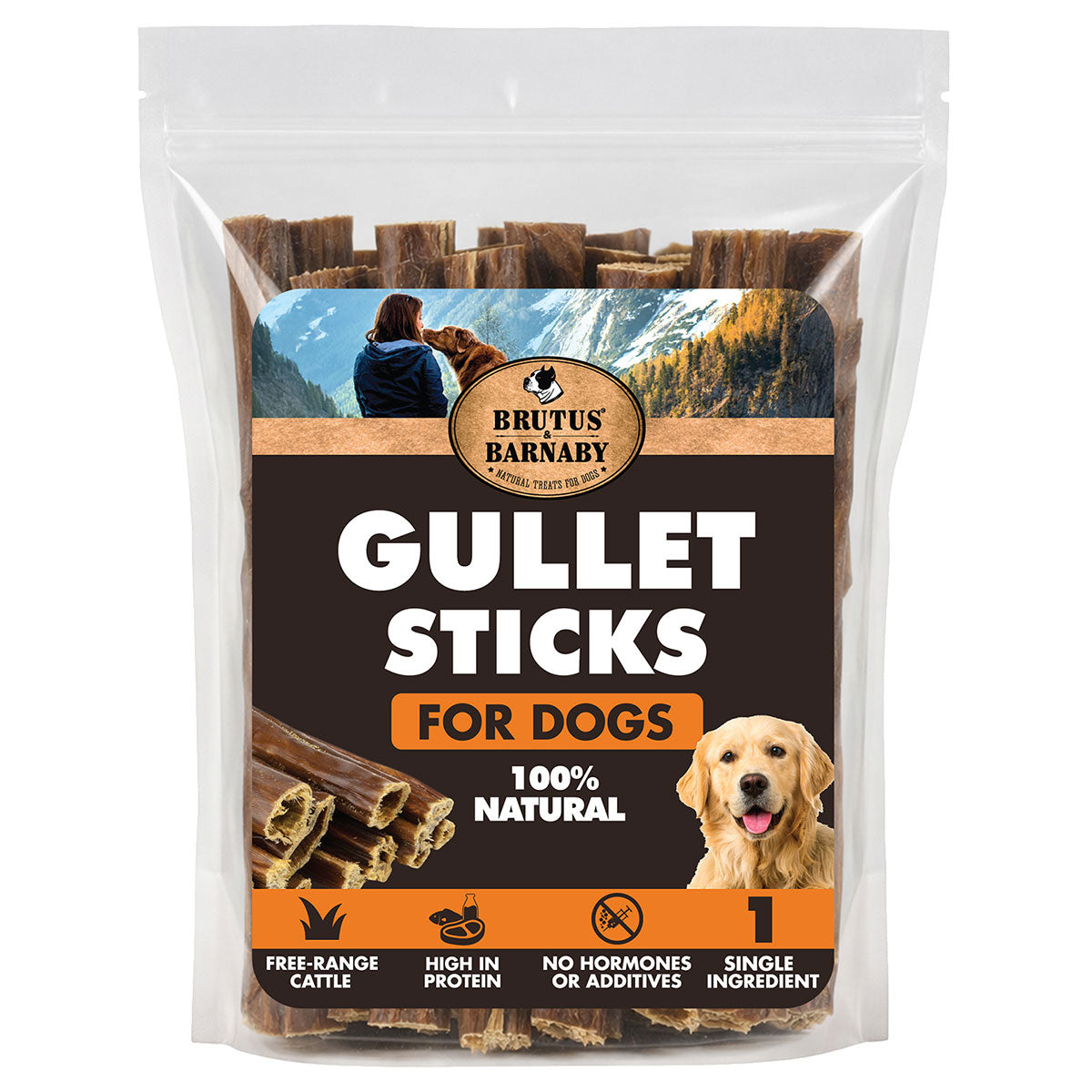
Beef Gullet Sticks
A narrow, textured gullet chew for dogs who enjoy holding and working through a stick-shaped treat.
- Single-ingredient beef gullet
- Good for gentle-to-moderate chewers
- 6-inch textured format
- Easy to add to a chew rotation
Choose Beef Gullet Sticks If Your Dog Likes to Work From One End
The biggest advantage of the stick format is how a dog can interact with it. A narrow chew is easy for many dogs to hold between the paws, reposition, and work through from one end.
Consider the Stick Format When...
Your dog enjoys narrow chews, likes gripping treats between the paws, and is generally a gentle or moderate chewer rather than a dog that tries to swallow everything immediately.
It May Not Be Enough When...
Your dog destroys light chews in seconds, bites off large pieces aggressively, or needs a genuinely dense, longer-lasting chewing session.
Signs Your Dog May Prefer Gullet Sticks
- Your dog likes holding stick-shaped chews between the paws.
- Your dog works gradually from one end instead of gulping.
- Your dog is a gentle or moderate chewer.
- You want something more substantial than a tiny training treat without moving straight to a heavy-duty chew.
Choose Flat Gullet Strips If You Want a Broader, Flatter Treat
Flat strips make sense for a different reason: the shape is simple. There is no need for every dog to receive a thick or rolled chew just because it looks more substantial.
A flatter piece may be easier for some owners to handle or break into a smaller amount, especially when the goal is a controlled reward rather than the longest possible chew session.
Consider Flat Strips When...
You want a broad, easy-to-hold format for a small or moderate chew session, or you prefer a shape that can be managed more easily for portioning.
Flat Does Not Mean Unlimited
A flatter chew is still a treat. Supervise the session, count it toward your dog's treat intake, and remove pieces that become too small to handle safely.

Beef Gullet Flat Strips
A flatter beef gullet chew for dog owners who want natural beef flavor in a broad, easy-to-handle format.
- Single-ingredient beef gullet
- Flat 6-inch chew format
- Useful for controlled treat portions
- Good everyday chew rotation option
Which Gullet Format Is Better for Your Dog?
Instead of choosing based on appearance alone, watch what your dog does with other treats. Their chewing habits usually tell you more than a product label can.
Not sure whether the chew itself is appropriately sized? Use our guide on choosing the right chew size for your dog before focusing on format.
Which Lasts Longer: Gullet Sticks or Flat Strips?
There is no honest universal answer.
Two dogs of the same weight can finish the exact same chew at completely different speeds. One dog may slowly soften and work around a gullet stick. Another may crush it quickly. A third may take longer with a flat strip because they nibble across the surface instead of biting through the center.
For dogs that finish both gullet formats immediately, the solution may not be switching from strips to sticks. It may be choosing a denser chew category that better matches the dog's chewing strength.
How Much Beef Gullet Should You Give Your Dog?
Treat portions should fit into the rest of your dog's diet rather than being added on top without accounting for them.
The World Small Animal Veterinary Association's treat guidance recommends keeping treats below 10% of a dog's daily calorie intake. That includes edible chews.
About 116.2 kcal per ounce
Portion by the amount your dog actually eats, not simply by the number of pieces in the bag.
About 113.4 kcal per ounce
The calorie density is very similar, so shape should not be mistaken for a major nutritional difference.
A Practical Portion Routine
- Start with a smaller amount when beef gullet is new to your dog.
- Watch digestion before increasing the portion or frequency.
- Count edible chews as treats within the overall daily diet.
- Use smaller portions for dogs with lower calorie needs.
- Ask your veterinarian for individualized guidance when your dog has a medical condition or prescribed diet.
How to Offer Either Gullet Format Safely
Neither shape removes the need for basic chew safety. The safer format is the one that is appropriately sized and managed for the individual dog.
Use This Safety Checklist
- Supervise your dog throughout the chew session.
- Choose a piece appropriate for your dog's size and chewing strength.
- Remove fragments that become small enough to swallow whole.
- Keep fresh water available.
- Introduce a new chew gradually and monitor digestion.
- Stop offering the chew if your dog repeatedly tries to gulp large pieces.
- Ask your veterinarian before adding new treats for dogs with significant dietary or medical restrictions.
Chewing can be part of an enrichment and oral-care routine, but it is not a substitute for brushing or veterinary dental care. Cornell University College of Veterinary Medicine notes that brushing is the most effective form of home dental care and also warns that excessively hard objects can wear or fracture teeth.
Read Cornell's full guide to canine dental disease and home dental care .
When Neither Gullet Sticks Nor Flat Strips Are the Best Choice
A good comparison should also make it clear when both options may be wrong.
They May Need More Density
A dog that destroys light chews almost immediately may need a different chew category rather than another gullet shape.
Shape Is Not a Safety Fix
If your dog consistently tries to swallow large pieces, close management and a more appropriate treat format matter more than choosing stick versus strip.
Choose Another Protein
Both options are beef products. Switching the shape does not make either one suitable for a dog that needs to avoid beef.
Do Not Push Through Discomfort
A dog that suddenly avoids chewing, drops food, has oral bleeding, or appears uncomfortable should be evaluated by a veterinarian.
Build a Better Chew Routine
Giving your dog a new chew for the first time? Read how to safely introduce new dog chews before turning a new treat into a regular part of the routine.
How to Store Beef Gullet Chews
Keep the package sealed and stored in a cool, dry place. Avoid leaving the bag open around humidity, heat, or places where your dog can reach the entire supply.
The FDA's pet food and treat handling guidance recommends clean hands when handling pet treats and storing dry pet food products in a cool, dry place.
Helpful External Resources
These sources provide additional guidance on dental care, treat portions, chew supervision, and food handling.
Cornell University — Dental Disease and Home Dental Care Safe chewing, tooth care, and signs of dental problems. WSAVA — Feeding Treats to Your Dog Calorie budgeting, supervision, sizing, and general treat guidance. FDA — Safe Handling of Pet Food and Treats Practical guidance for handling and storing treats safely.Frequently Asked Questions
Are beef gullet sticks and flat strips made from the same ingredient?
Yes. Both Brutus & Barnaby products are made from beef gullet. The main practical difference is the physical format: one is stick-shaped and the other is flatter.
Do gullet sticks last longer than flat strips?
Not always. Chew time depends heavily on your dog's size, bite strength, chewing technique, and the natural variation between individual pieces. Some dogs may work longer on a stick, while others finish both formats quickly.
Are flat gullet strips better for small dogs?
They can be a practical option because the flatter format may be easier to handle or divide. However, the correct choice still depends on the individual dog's mouth size, chewing style, and tendency to swallow pieces.
Are beef gullet sticks good for aggressive chewers?
They may be too light for some aggressive or power chewers. Dogs that destroy moderate chews immediately may need a denser chew category rather than simply switching between gullet shapes.
Can puppies have beef gullet chews?
Puppies that are ready to chew comfortably may be able to enjoy appropriately sized gullet chews under close supervision. Start with a manageable amount and remove pieces that become small enough to swallow whole.
Can senior dogs have gullet sticks or strips?
Some senior dogs can enjoy them comfortably, but age alone should not determine the choice. Consider the dog's current dental health, chewing comfort, diet, and ability to manage the texture safely.
How often can dogs have beef gullet chews?
Frequency depends on the dog's size, total diet, calorie needs, and the amount eaten per session. Count gullet as part of the overall treat allowance rather than adding it on top of the normal diet without adjustment.
Do beef gullet chews clean dogs' teeth?
Chewing can create some mechanical contact with the teeth, but gullet chews should not replace toothbrushing, veterinary dental examinations, or treatment for existing dental disease.
The Better Gullet Chew Is the One That Matches How Your Dog Actually Chews
Beef gullet sticks and flat strips are not competing ingredients. They are two formats of the same type of chew, designed for slightly different handling and chewing preferences.
Watch the dog, not just the package: the right shape is the one your dog can enjoy comfortably, appropriately, and under supervision.
Find Your Dog's Better Gullet Format
Start with the shape that best matches your dog's chewing style, then supervise the first session and adjust from what you actually observe.