



Extra-Thick Bully Sticks for Heavy Chewers: Size & Supervision Guide
Extra-thick bully sticks can give a strong chewer more resistance, but thickness alone does not make a chew suitable. The right fit also depends on length, mouth size, chewing method, swallowing habits, diet, and close supervision.
A dog that finishes a thin chew quickly may need more diameter, but a dog that crushes and swallows chunks may need a different plan rather than an even bigger stick.
Choose extra-thick bully sticks for heavy chewers only when the full chew is too large to swallow, the dog can work the diameter comfortably, and the dog gnaws instead of snapping off large pieces. Thickness may slow a steady power chewer, but it does not prevent choking, obstruction, tooth injury, or stomach upset. Watch the entire session and remove the chew before the remainder becomes swallowable.
What Extra Thickness Changes — and What It Does Not
Thickness is the diameter of the chew. It is different from length. A thicker bully stick places more material between a dog's teeth, so a dog that steadily scrapes and gnaws may take longer to reduce it than a thinner stick of the same length. Natural chews can still vary in shape and density, so no diameter guarantees a specific number of minutes.
When a dog gnaws steadily
Unsafe chewing behavior
Is Your Dog a Heavy Chewer? Watch the Method
"Heavy chewer" is useful only when it describes what your dog actually does. Breed and body weight do not tell you whether a dog will grind an end patiently, clamp through the middle, guard the chew, or gulp the last piece. Observe behavior with every new chew.
Important: a bully-stick holder may help limit access to the final nub, but it is a backup control. Check that the chew remains firmly secured and continue supervising.
How to Choose Extra-Thick Bully Sticks for Heavy Chewers
There is no universal diameter or dog-weight chart that can account for mouth shape, jaw strength, dental condition, and swallowing behavior. Use this fit process instead.
If length is the unanswered part of your decision, the separate 6-inch vs. 12-inch bully stick guide in the related-reading section focuses on handling length; this guide focuses on thickness and supervision for heavy chewers.
The Pre-Chew Fit Check
Complete this check before every session, even when the product has worked before. Natural chews and individual sticks can vary.
Check the chew
Check the situation
Supervision Guide for an Extra-Thick Bully Stick
Supervision means watching closely enough to notice a change in chewing method and ending the session promptly. Being elsewhere in the house is not active supervision.
Watch positioning
Confirm the dog can hold and work the chew comfortably without trying to push the entire stick into the mouth.
Watch the technique
Look for gradual gnawing. Pause immediately if the dog begins clamping off pieces, coughing, gagging, drooling repeatedly, or showing mouth discomfort.
Remove it early
Take the chew away while the remainder is still clearly too large for that dog to swallow. Do not wait for a universal nub measurement.
Plan the handoff: use a trained "drop" or trade cue rather than chasing the dog or reaching into the mouth. If your dog guards food or chews, ask a qualified trainer or veterinary behavior professional for a safe management plan.
When to Stop Chewing and Contact a Veterinarian
Edible does not mean free of choking, obstruction, dental, allergy, or digestive risk. Stop the session when the situation changes.
Do not continue if your dog:
- tries to swallow the full stick or a large piece
- bites off chunks instead of working the end gradually
- reduces it to a remainder that could be swallowed
- coughs, gags, drools repeatedly, or struggles to swallow
- shows mouth pain, bleeding, a damaged tooth, or sudden reluctance to chew
- develops vomiting, diarrhea, itching, swelling, or another concerning reaction
Know what is urgent
Emergency: if breathing is difficult, choking is suspected, or the dog collapses, contact an emergency veterinary clinic immediately.
Prompt veterinary call: seek instructions after a large piece is swallowed or if repeated vomiting, appetite loss, unusual tiredness, abdominal discomfort, or painful unproductive straining develops. These can be signs of a foreign-object problem and should not be watched at home without guidance.
Ask your veterinary team before offering a firm beef chew to a dog with dental disease, weak or damaged teeth, swallowing problems, a previous obstruction, chronic digestive symptoms, pancreatitis risk, a diagnosed beef allergy, a prescription diet, or strict calorie needs.
Portions Still Matter for Heavy Chewers
An extra-thick stick contains more food than a comparable thin stick. Do not treat one whole stick as an automatic serving. What matters nutritionally is how much your dog consumes, plus every other treat received that day.
Brutus & Barnaby's current 12-inch bully-stick page lists 100% grass-fed beef and 99.2 kcal per ounce. Exact calories per individual stick are not currently listed, so use the current package information, account for the amount eaten, and ask your veterinary team for a precise allowance when weight control or a medical diet is involved.
VCA Animal Hospitals advises limiting treats to 10% of a dog's daily calorie intake. Introduce a new bully-stick size gradually, provide fresh water, and monitor stool, appetite, skin, and comfort. To go deeper on frequency and calorie planning, read Can Dogs Eat Too Many Bully Sticks?
Related Brutus & Barnaby Guides
Safety & Nutrition Resources
These veterinary and canine-health resources support the supervision, treat-budget, and foreign-object guidance in this article.
American Kennel Club — Choosing Edible Dog Chews Guidance on matching chews to the dog, watching power chewers, using holders, and removing bully-stick nubs. VCA Animal Hospitals — Dog Treats Veterinary nutrition guidance on limiting treats to 10% of daily calories and accounting for special dietary needs. WSAVA — Pet Nutrition Questions & Myths Owner guidance on keeping treats to about 10% or less of an individual's daily calorie intake. Merck Veterinary Manual — Household Hazards Signs associated with foreign-object obstruction, including vomiting, appetite loss, abdominal discomfort, and unproductive straining.Extra-Thick Bully Sticks for Heavy Chewers: FAQs
Are extra-thick bully sticks better for heavy chewers?
They may be a better fit for a dog that steadily gnaws through thinner sticks too quickly. They are not automatically suitable for a dog that crushes off chunks, swallows end pieces, or shows dental discomfort. The observed chewing method decides whether added thickness helps.
What diameter bully stick does my dog need?
There is no verified universal diameter by breed or weight. Choose a thickness the dog can position and gnaw without forcing, crushing, or swallowing chunks. The full chew must also be too large to fit completely inside the dog's mouth.
Is thickness or length more important for a power chewer?
Both matter, but they do different jobs. Thickness changes resistance; length changes grip, leverage, total material, and handling margin. Check both dimensions against your dog's mouth and chewing behavior instead of choosing by weight alone.
How long should a heavy chewer use an extra-thick bully stick?
There is no single time for every dog. Keep a first trial brief and watch the method continuously. End sooner if the dog bites off pieces, tries to gulp the chew, shows discomfort, or reduces it to a swallowable remainder.
When should I throw away the bully-stick nub?
Remove the chew before the remaining piece can fit fully in your dog's mouth or be swallowed whole. The removal point differs by dog, so do not wait for a universal inch measurement.
Does a bully-stick holder replace supervision?
No. A well-fitted holder may help secure the end and limit access to the nub, but it can loosen or be used incorrectly. Confirm the chew is firmly attached, stay present, and remove it early.
Can puppies or senior dogs have extra-thick bully sticks?
That depends on dentition, jaw strength, swallowing ability, diet, and chewing behavior. Extra-thick does not mean appropriate for developing, worn, weak, or damaged teeth. Ask your veterinarian when age, dental health, or medical history makes a firm chew uncertain.
Extra-Thick Is a Fit Choice, Not a Safety Shortcut
For a steady heavy chewer, more diameter may provide useful resistance. The safest decision still comes from the complete fit: diameter, length, mouth size, chewing technique, diet, and active supervision.
The goal is not the biggest chew your dog can finish. It is a manageable chew you can supervise and remove early.
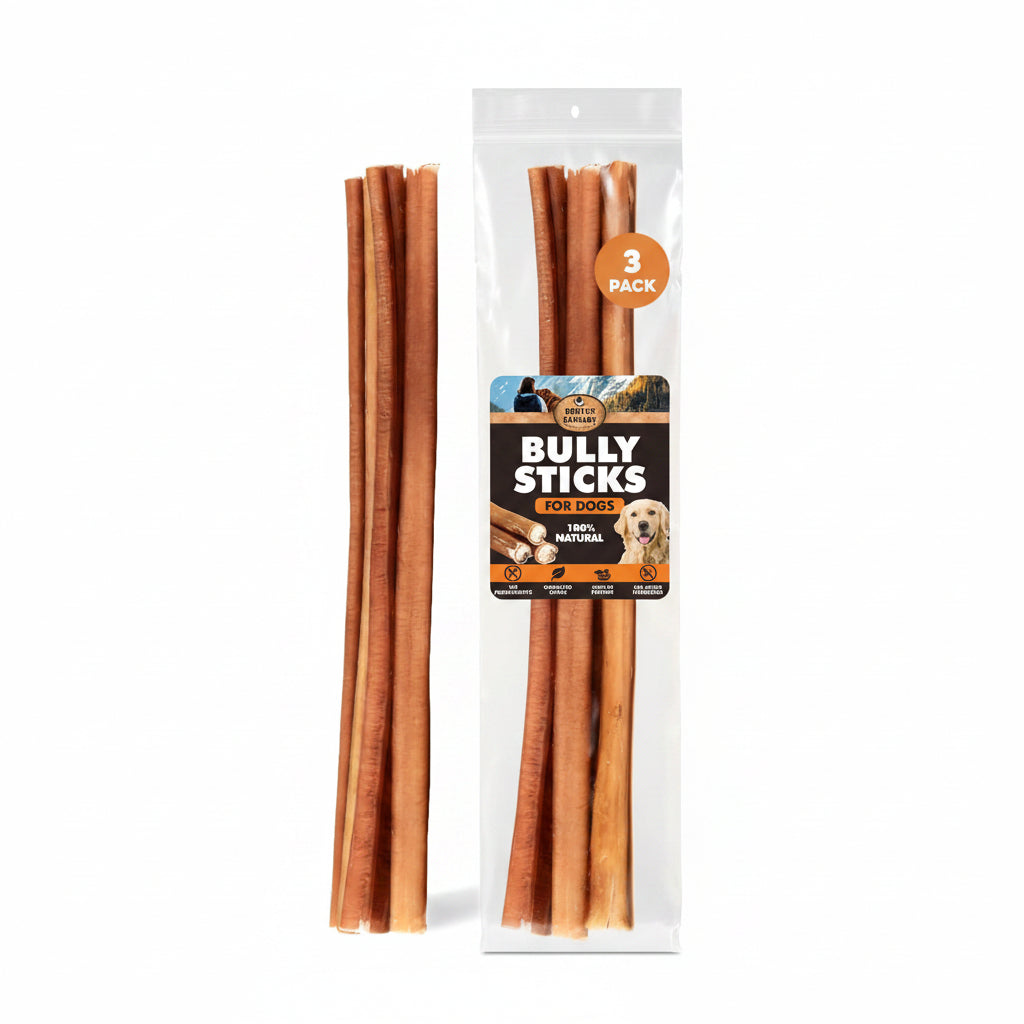
12-Inch Extra-Thick Bully Sticks
Brutus & Barnaby's current product page lists a 12-inch, extra-thick format made in the USA from 100% grass-fed beef. It is presented for medium and large dogs and power chewers, with 3-, 5-, and 10-pack options currently shown.
Disclaimer: This article provides general educational information and does not replace veterinary advice. Suitability depends on your dog's age, mouth size, teeth, chewing and swallowing behavior, diet, health history, allergies, and individual tolerance. Introduce new chews gradually, use manageable portions, provide fresh water, and supervise every session. Stop the chew and contact your veterinarian for persistent vomiting, diarrhea, appetite changes, unusual tiredness, mouth pain, a swallowed large piece, or another concerning reaction. Difficulty breathing, suspected choking, or collapse requires immediate emergency veterinary care. Product ingredients, sizes, packaging, and availability can change, so review the current product page and package before feeding.