



How Often Can Dogs Have Pig Ears? Frequency, Portions & Safety
Pig ears are substantial edible chews, so the right feeding schedule depends on your dog’s calorie needs, body size, diet, digestion, health history, and how much of the ear is actually eaten.
There is no universal rule that every dog should receive one pig ear every day—or even the same number each week. Natural ears vary in size and weight, and dogs vary dramatically in calorie requirements and digestive tolerance.
For most dogs, pig ears are better treated as an occasional chew rather than an automatic everyday snack. For a healthy adult dog that already tolerates pork, a conservative routine may begin around once or twice per week, but the correct frequency can be lower—or occasionally different—depending on the portion eaten and the dog’s total treat-calorie allowance. Count the pig ear together with every other treat, supervise the entire chew, and reduce the portion or frequency if weight gain or digestive problems appear.
How Often Can Dogs Have Pig Ears?
Instead of choosing frequency first, decide how much of your dog’s daily diet can reasonably come from treats. General veterinary nutrition guidance recommends that roughly 90% or more of daily calories come from complete and balanced food, leaving no more than about 10% for treats, chews, toppers, and other extras.
That makes pig-ear frequency a calorie-and-portion question rather than simply a calendar question. A portion that fits comfortably into a large dog’s treat allowance could represent far too many calories for a much smaller dog.
The 10% Treat Rule Matters More Than a Weekly Number
Veterinary nutrition guidance commonly recommends keeping treats and other extras below about 10% of a dog’s daily calorie intake. The remaining calories should come primarily from a complete and balanced diet.
400 kcal per day
About 40 calories would represent 10% of the day’s calories from all treats and extras combined.
700 kcal per day
About 70 calories would represent the full 10% allowance before counting any other rewards.
1,000 kcal per day
About 100 calories could come from treats and extras, assuming the veterinarian has not recommended a stricter limit.
Important: the 10% guideline applies to all extras combined—not 10% for pig ears plus another 10% for training treats, table scraps, toppers, and other chews.
How Many Calories Are in a Pig Ear?
Natural pig ears do not all weigh the same, so there is no reliable calorie number that applies to every individual ear. The current Brutus & Barnaby Pig Ears product page lists approximately 133.2 calories per ounce.
If you want a closer estimate, weigh the portion your dog will actually consume and calculate from the portion weight rather than assuming every whole ear contains the same calories.
*Examples use the approximately 133.2 kcal/oz currently listed for Brutus & Barnaby Pig Ears. Product information can change, so check the current product page and package before calculating portions.
Whole Pig Ear or Smaller Portion?
A whole ear is not automatically the right serving simply because that is the natural shape of the chew. Portion size should reflect the dog consuming it.
The dog can manage the size and calories
More portion control is needed
Can Dogs Have Pig Ears Every Day?
Daily pig ears are not the best default routine for most dogs. The current Brutus & Barnaby whole Pig Ears label lists 23.6% crude fat and approximately 133.2 calories per ounce, so repeated full portions can quickly add to the diet.
A dog may technically have enough calorie allowance for a particular portion, but frequency should also reflect stool quality, body condition, digestive history, the rest of the diet, and whether the dog has a medical reason to avoid richer treats.
How much pig ear fits this dog’s routine?
If one pig ear consumes most of your dog’s treat calories, it makes more sense to offer it less frequently or use a smaller portion than to force it into a daily schedule.
How to Introduce Pig Ears Carefully
Dogs can react differently to unfamiliar proteins and richer edible chews. Introduce pig ears gradually rather than making a whole ear the first test.
When Pig Ears May Need Extra Caution
Ask your veterinarian first when
Stop the chew immediately when
Pig Ear Handling and Hygiene Matter Too
Animal-based pet treats can carry bacteria if contamination occurs during sourcing, processing, storage, or handling. FDA guidance for pig ear treats emphasizes hygienic handling in addition to supervising the dog.
Pig Ears for a Portion-Aware Chew Routine
If pig ears already fit your dog’s diet and chewing style, use the current product information to plan the amount instead of assuming that every whole ear equals one serving.
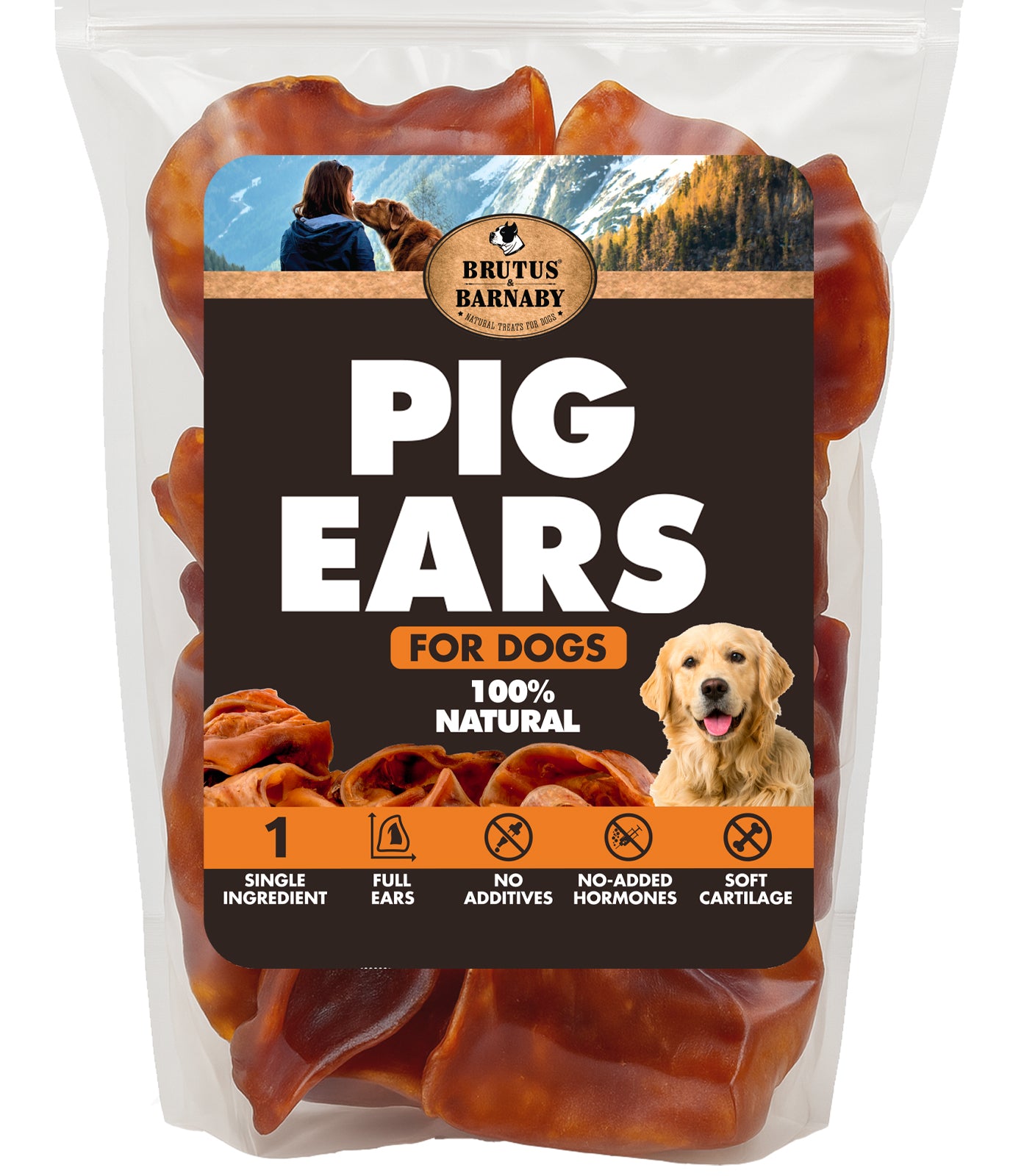
Pig Ears for Dogs
A whole pig ear format for dogs that tolerate pork and can safely manage the size and texture under supervision.
Want More Portion Control? Consider Pig Ear Halves
Brutus & Barnaby also offers Pig Ear Halves. The current product page lists 100% pig ears, approximately 121.9 calories per ounce, and a 17.0% crude-fat minimum. A half-ear format can make portion planning easier for smaller dogs or for owners who do not want to begin with a whole ear.
Smaller format does not mean calorie-free
Natural pieces still vary in weight. Count the amount actually eaten toward the same overall treat allowance.
Shop Pig Ear HalvesPrefer a Leaner Ear Chew?
If the richness of pig ears makes them difficult to fit into your dog’s routine, a different chew format may be easier to manage. Brutus & Barnaby Cow Ears currently list a lower crude-fat percentage and fewer calories per ounce than the whole Pig Ears product.

Cow Ears for Dogs
A broad, cartilage-based ear chew for dogs that tolerate beef and for owners comparing different natural ear-chew formats.
Pig Ears vs. Cow Ears for Portion Planning
Neither product is automatically right for every dog. The comparison simply shows why looking at the current label can help when choosing how frequently to offer an edible ear chew.
Build a Better Pig Ear Routine
Learn more about pig-ear safety, introducing new chews gradually, and comparing calorie levels in other natural ear-chew options.
Helpful External Resources
Use these veterinary and food-safety resources for additional guidance on treat calories, high-fat treats, and safe handling of pig ear pet treats.
VCA Animal Hospitals — Dog Treats Guidance on the 90/10 feeding principle, calorie allowances, introducing treats gradually, and using high-calorie treats less frequently. VCA Animal Hospitals — Nutrition and Pancreatic Disease Why lower-fat diets and treats may be important for dogs with pancreatic disease. FDA — Pig Ear Pet Treat Handling Guidance Food-safety information covering hand washing, supervision, surface cleaning, and responsible handling of pig ear treats.Pig Ear Frequency, Portions & Safety: Common Questions
How often can I give my dog a pig ear?
Pig ears are best treated as occasional chews. For many healthy adult dogs that tolerate pork, approximately once or twice weekly can be a conservative starting routine, but portion weight, calorie needs, body condition, digestion, and other treats should determine the final schedule.
Can dogs have pig ears every day?
Daily pig ears are not an ideal default for most dogs because they can contribute substantial calories and fat. A smaller portion or less frequent schedule may fit the overall diet better.
Should a small dog eat a whole pig ear?
Not necessarily. A full natural ear can represent a large portion of a small dog’s calorie allowance. A smaller portion or pig ear half may make the serving easier to manage while still requiring supervision.
How many calories are in a pig ear for dogs?
It depends on the weight of the individual ear. Brutus & Barnaby currently lists approximately 133.2 calories per ounce for its whole Pig Ears, so weighing the portion provides a better estimate than assigning one calorie number to every ear.
Can pig ears cause diarrhea?
Some dogs can develop loose stool or other digestive upset after an unfamiliar or rich treat. Introduce pig ears gradually, avoid excessive portions, and stop feeding them if digestive problems develop or repeatedly return.
Are pig ears okay for dogs with pancreatitis?
Do not add pig ears to a dog’s routine without veterinary approval when pancreatitis or another condition requiring fat restriction is involved. The current Brutus & Barnaby whole Pig Ears analysis lists 23.6% crude fat.
When should I take a pig ear away from my dog?
Remove the chew when the remaining piece becomes small enough to swallow whole, if your dog begins gulping large sections, or if you notice mouth pain, bleeding, or difficulty chewing.
Feed Pig Ears by Portion and Calories, Not Just by the Calendar
For most dogs, pig ears make more sense as an occasional supervised chew than a daily habit. Around once or twice per week can be a conservative starting routine for some healthy adult dogs, but the better rule is to keep the portion inside the dog’s overall treat-calorie allowance, account for every other extra in the diet, and adjust according to body condition and digestive tolerance. Smaller dogs may need smaller pieces or less frequent feeding, while dogs with pancreatitis, therapeutic diets, recurring digestive problems, dental disease, or pork reactions should have their routine discussed with a veterinarian.
Choose a Pig Ear Format That Fits Your Dog
Review the current ingredient list, calorie information, guaranteed analysis, feeding instructions, and available formats before deciding how much and how often to offer a pig ear.
Educational disclaimer: This article provides general educational information and is not veterinary, nutritional, diagnostic, or emergency advice. Pig-ear suitability and feeding frequency depend on your dog’s age, body size, body condition, chewing behavior, oral health, regular diet, calorie needs, allergies, digestive tolerance, medical history, and current medications. Always supervise chewing, provide fresh water, use manageable portions, practice appropriate hygiene after handling animal-based treats, and consult your veterinarian before changing the treat routine of a dog with ongoing digestive symptoms, pancreatitis, dental disease, a prescribed diet, or another health condition. Product ingredients, analysis, calories, sizes, processing information, packaging, availability, and page details may change, so review the current product page and package before feeding.