



Are Pig Ears Rawhide? How Pig Ears Differ From Rawhide Chews
No, pig ears are not rawhide. Pig ear chews are made from actual pig ears, including natural skin and cartilage, while traditional rawhide chews are made from processed animal hide. Both are animal-based chews, but their structure, processing, texture and digestion characteristics are different.
The fact that pig ears contain skin does not make them rawhide. “Rawhide” refers to a particular type of processed hide chew, not every dog treat that contains animal skin.
Pig ears are rawhide-free when the product is made only from pig ear and contains no added rawhide. A pig ear retains the natural structure of the ear and is eaten as an animal-tissue chew. Traditional rawhide is produced from animal skin or hide that has been separated, cleaned, processed and formed into chew shapes such as rolls, strips, twists or knots.
Pig Ears vs. Rawhide: What Is the Difference?
Pig ears and rawhide can look somewhat similar after drying because both may have a firm, leathery appearance. That similarity is largely where the comparison ends.
Individual products can differ substantially, so the ingredient list and manufacturer's feeding instructions matter more than assumptions based only on appearance.
What Is a Pig Ear Dog Chew?
A pig ear dog chew is the ear of a pig that has been prepared for use as an edible dog treat. The ear contains natural skin, cartilage and connective tissue, which create the chewy-crunchy texture many dogs enjoy.
Brutus & Barnaby's current Pig Ears for Dogs list pig ear as the single ingredient and are sold as a rawhide-free chew.
What Is a Rawhide Dog Chew?
Rawhide is a chew material made from animal skin or hide. According to the American Kennel Club, rawhide chews are made from dried animal skins, with hides undergoing several preparation steps before becoming finished dog chews.
The AKC's rawhide safety guide also notes that rawhide digestibility varies and that large swallowed pieces may create choking or intestinal-obstruction concerns.
Why Do People Confuse Pig Ears With Rawhide?
The confusion makes sense. Rawhide comes from animal skin, and pig ears also contain skin. Once both products are dried, they can look brown, firm and leathery.
The important difference is the form of the finished chew. A pig ear is still an identifiable anatomical ear made up of its natural tissues. Rawhide is a manufactured chew material created from processed sections of animal hide.
Think of it this way: pig ears contain skin, but they are not a rawhide product category. In the same way, the presence of animal skin or connective tissue does not automatically make every natural animal chew “rawhide.”
Are Pig Ears More Digestible Than Rawhide?
Pig ears are edible animal tissue, while traditional rawhide can be substantially tougher for the digestive system to break down. That difference is one reason many dog owners specifically look for rawhide-free animal chews.
However, describing a chew as digestible does not mean a dog can safely swallow large pieces. A dog that tears off a large section of pig ear and gulps it without sufficient chewing may still choke or experience gastrointestinal problems.
The dog's chewing behavior matters as much as the material. Slow gnawers and dogs that thoroughly chew food may handle an edible chew very differently from a dog that tries to swallow anything as quickly as possible.
Are Pig Ears Better Than Rawhide?
Pig ears may be a useful option for owners specifically seeking a recognizable, animal-based, rawhide-free chew. That does not mean pig ears are automatically the better choice for every dog.
Pig ears can be very simple
A single-ingredient pig ear lets you clearly identify the animal protein being offered.
Gulpers need extra caution
Dogs that repeatedly tear off and swallow large pieces may not be good candidates for either chew.
Pig ears are still treats
Pig ears can be relatively rich, so portion size and the rest of the dog's diet still need to be considered.
If your main goal is simply avoiding rawhide, there are also other rawhide-free formats. Dogs that finish ear-style chews extremely quickly may be better matched with a different size or chew type. The Brutus & Barnaby guide to long-lasting dog chews for power chewers explains several alternatives.
Looking for a Single-Ingredient Rawhide-Free Pig Ear?
Brutus & Barnaby Pig Ears are currently made with one listed ingredient: pig ear. Their natural shape and chewy-crunchy texture make them an option for dogs that enjoy edible animal chews and can manage them responsibly under supervision.
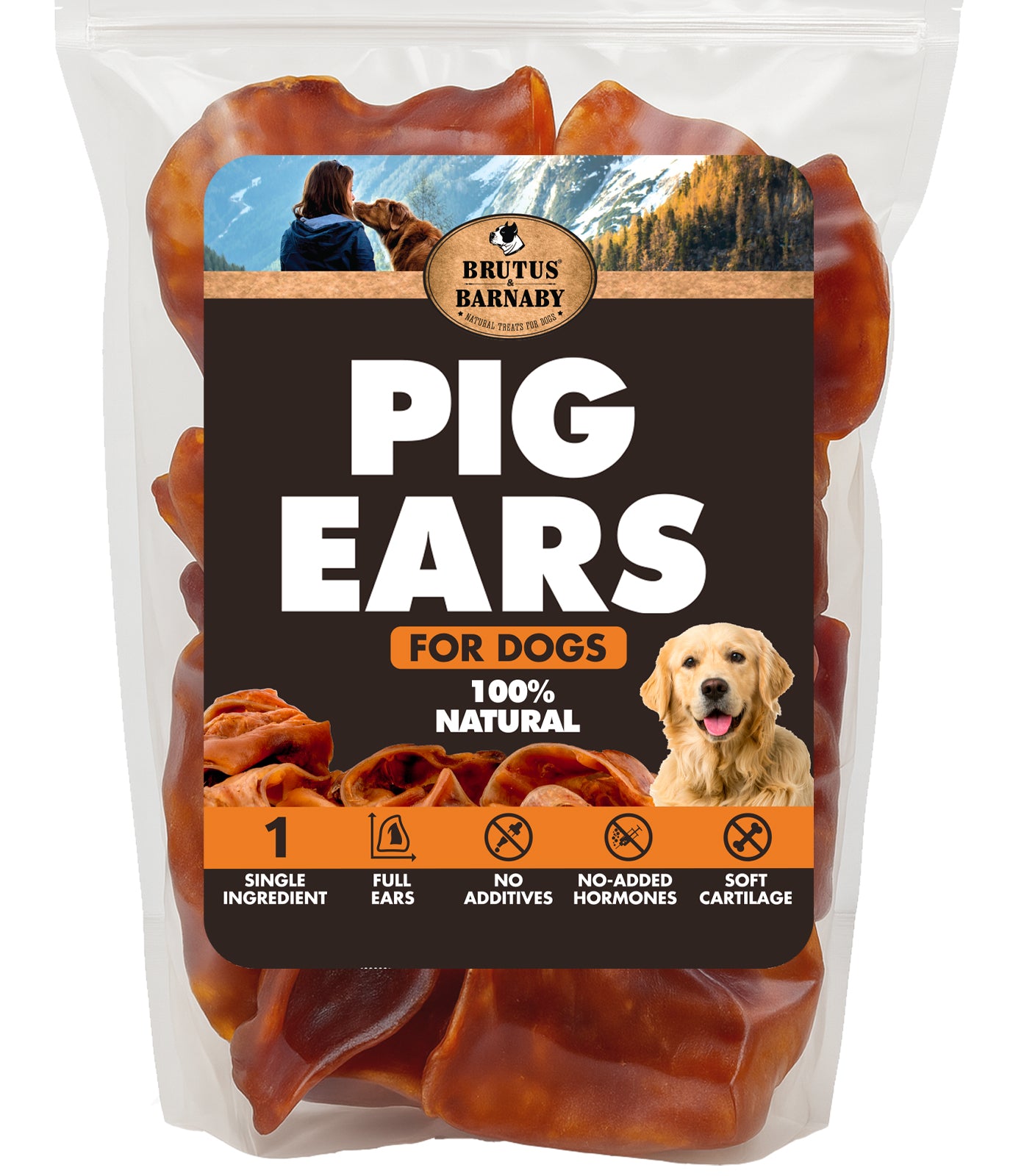
Pig Ears for Dogs | Natural Rawhide-Free Chews
- Current ingredient listing: 100% pig ear
- No traditional rawhide
- Natural ear shape and texture
- Serve as a supervised treat and remove small remnants
Safety Considerations for Pig Ear Chews
Choosing a rawhide-free chew does not eliminate the need for normal chew safety. Pig ears are edible, but choking, swallowing large pieces, digestive upset and food-safety concerns can still occur.
- Supervise the chewing session. Watch whether your dog gnaws gradually or tries to break off and gulp large sections.
- Choose an appropriate size. Do not offer a chew that is small enough for your dog to immediately swallow whole.
- Remove small remnants. Take the remaining piece away once it becomes small enough to create a swallowing hazard.
- Introduce pig ears gradually. A smaller first portion or shorter session can help you observe how your individual dog handles a new, richer treat.
- Keep fresh water available. Dogs should have access to clean drinking water during and after treat time.
- Count the chew as part of the treat allowance. Pig ears should complement rather than replace a complete and balanced diet.
For more detailed guidance, read Are Pig Ears Safe for Dogs? and the guide to how often dogs can have pig ears.
Get veterinary help promptly if a dog develops difficulty breathing, persistent gagging, repeated vomiting, significant abdominal pain, collapse or other signs that a swallowed piece may be causing an emergency.
Pig Ear Food Safety Matters Too
Pig ears are animal-based pet treats, so hygienic handling matters regardless of whether they contain rawhide. The FDA has previously investigated Salmonella contamination involving pig ear pet treats and emphasizes the importance of controlling pathogens during production and handling.
You can review the FDA's information on pig ear pet treats for more detail.
The CDC's dog and pet-safety guidance also recommends washing hands with soap and running water after handling pet food, treats, bowls and related supplies.
Before serving
After serving
How to Tell Whether a Pig Ear Product Is Rawhide-Free
Do not rely only on the shape of a chew or the marketing image on the front of the package. Read the ingredient list and product description.
- Look for an ingredient statement identifying pig ear.
- Check whether the manufacturer specifically identifies the chew as rawhide-free.
- Be cautious with products that do not clearly identify their ingredients.
- Review country-of-origin, storage and feeding information when provided.
- Choose the size and format based on your dog's mouth size and chewing behavior.
If you are comparing different ear-style chews, the Brutus & Barnaby guide to cow ears vs. pig ears explains how the two natural ear formats differ.
Pig Ears and Rawhide FAQs
Are pig ears considered rawhide?
No. A pig ear is an actual ear made from natural pig tissue, while rawhide is a processed animal-hide material formed into dog chews. Pig ears can therefore be sold as rawhide-free when no rawhide is added.
Are pig ears rawhide-free?
A pig ear made only from pig ear tissue is rawhide-free. Always read the ingredient list because ingredients and processing can differ between manufacturers.
Are pig ears easier to digest than rawhide?
Pig ears are edible animal tissue, while traditional rawhide may be more difficult to digest. However, large pieces of any chew can still cause choking or gastrointestinal problems, so supervision remains important.
Can pig ears cause a blockage?
They can potentially cause problems if a dog swallows a piece that is too large to pass normally. Remove the chew once it becomes small enough to gulp and closely supervise dogs that tear off large pieces.
Are pig ears safer than rawhide?
Pig ears and rawhide have different characteristics, but neither is completely risk-free. Pig ears may suit owners looking for an edible, single-ingredient rawhide-free chew, while the right choice still depends on the dog's size, chewing behavior, diet and health.
Can puppies have pig ears instead of rawhide?
It depends on the puppy's age, size, tooth development, diet and chewing behavior. Puppies should be closely supervised with edible chews, and your veterinarian can help determine whether pig ears or another chew type is appropriate for your individual puppy.
Pig Ears Are Not Rawhide
Pig ears and rawhide are both animal-derived chews, but they are not the same product. Pig ears are natural ear tissue containing skin and cartilage, while rawhide is processed animal hide formed into a chew. For pet parents who specifically want to avoid traditional rawhide, a clearly labeled single-ingredient pig ear can be one rawhide-free option. The right chew still depends on your dog's size, diet and chewing habits, and every edible chew should be appropriately sized and supervised.
Educational disclaimer: This article provides general educational information and is not veterinary, nutritional, diagnostic or emergency advice. Dogs differ in age, size, health, dental condition, dietary needs and chewing behavior. Supervise edible chews, select an appropriate size, remove small pieces, introduce unfamiliar treats gradually, account for treat calories and provide fresh water. Contact your veterinarian if your dog has existing dietary or medical concerns or develops severe, persistent or unusual symptoms. Product ingredients, nutrition information, sourcing and availability can change, so review the current product page and package before feeding.