



Pig Snouts vs. Pig Ears: Which Dog Chew Is Better?
Pig snouts and pig ears are both edible pork chews, but they differ in shape, texture, richness and how individual dogs handle them. The better option depends on your dog’s chewing style, size, dental comfort, calorie needs and tolerance for richer treats.
Neither chew is automatically better or safer for every dog. A slow, deliberate chewer may handle either option very differently from a dog that bites off large pieces or tries to swallow chews quickly.
When comparing pig snouts vs. pig ears, choose according to the dog rather than declaring one universally better. Pig snouts provide a crunchy pork chew and the current Brutus & Barnaby nutrition listing shows a relatively rich crude-fat level. Pig ears offer a broader, flatter cartilage-based chew, and the current Brutus & Barnaby whole-ear listing shows a lower crude-fat percentage than its Pig Snouts. Both require portion awareness and close supervision.
Pig Snouts vs. Pig Ears: Key Differences
Both treats come from pork, but their natural anatomy gives them noticeably different shapes and chewing experiences. Product size and thickness also vary from piece to piece because these are natural animal-based treats.
These figures are product-specific guaranteed-analysis values from current Brutus & Barnaby listings. They should not be treated as universal values for every pig snout or pig ear sold by every manufacturer.
What Is a Pig Snout Dog Chew?
A pig snout chew is made from dried snout tissue. Brutus & Barnaby currently lists Pig Snout as the single ingredient in its product nutrition information. The format is crunchy and edible, but digestible does not mean a dog should be allowed to swallow large pieces.
For a deeper look at portioning, digestion and safety, see the Brutus & Barnaby guide to pig snouts for dogs.
What Is a Pig Ear Dog Chew?
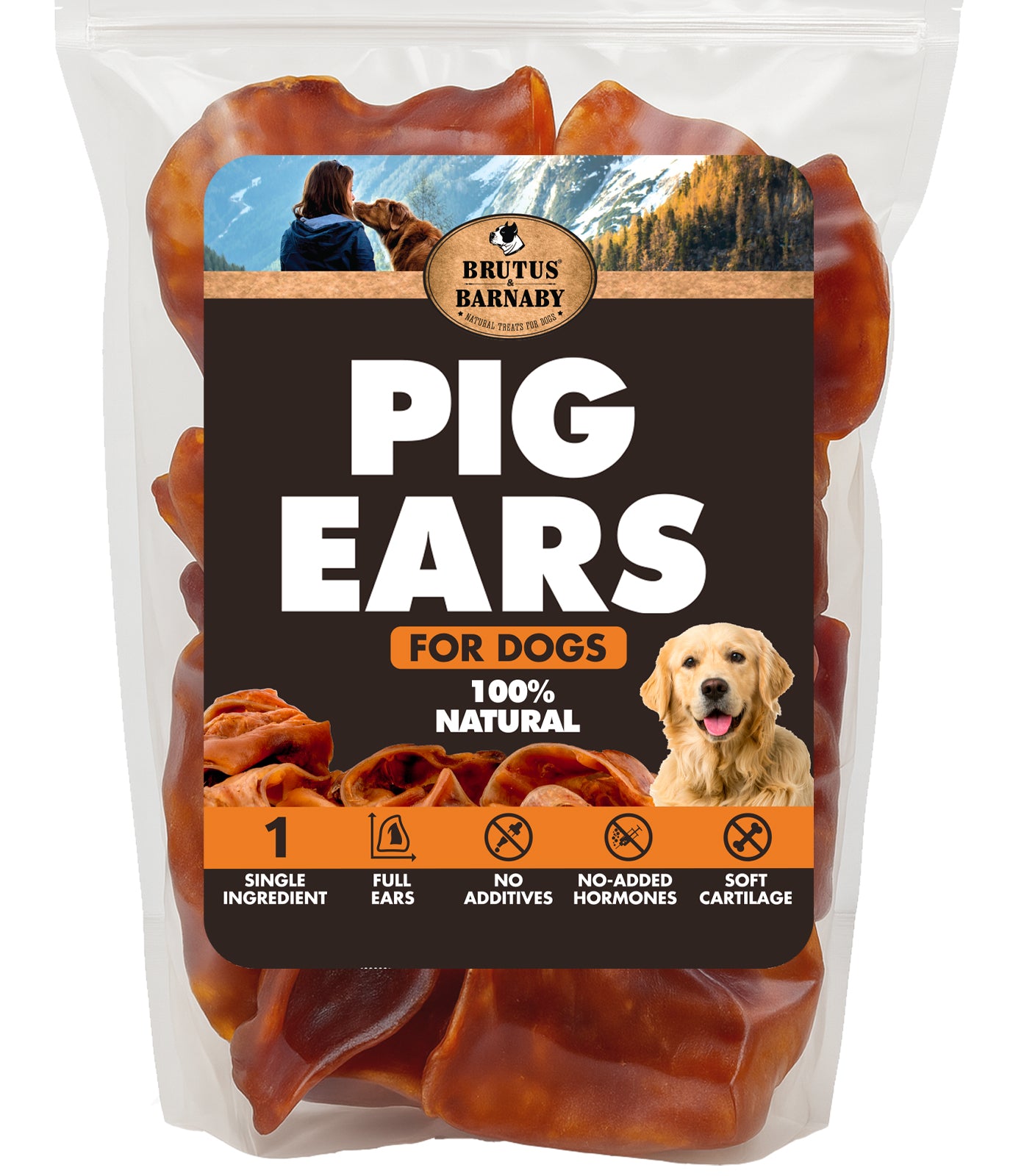
Pig ears consist largely of cartilage covered with skin and are dried into a broad edible chew. Their flatter shape gives many dogs more surface area to hold while gnawing, although individual ears naturally differ in thickness and size.
Dog owners concerned about choking, sizing and supervision can also review the detailed guide on pig ear safety for dogs.
Which One Lasts Longer?
There is no reliable universal winner for chew time. A pig ear may occupy one dog longer because of its broad shape, while another dog may crush and eat it quickly. A pig snout may provide a satisfying crunchy session for a moderate chewer but disappear rapidly when given to a powerful dog.
May enjoy either format
A deliberate dog that gnaws rather than gulps may be able to work through either chew gradually.
Needs closer management
A dog that bites off large sections or tries to swallow pieces may need a different chew entirely.
Texture still matters
Dogs with painful, damaged or fragile teeth should have chew choices discussed with a veterinarian.
Do not judge a chew by minutes alone: the chew that lasts longest is not necessarily the most appropriate chew for your dog.
Which Is Better for Portion and Calorie Control?
Pig snouts and pig ears are treats, not complete meals. Their calories need to fit alongside your dog’s regular food and every other snack given that day.
The current whole Pig Ears product page lists 133.2 calories per ounce, but individual ears naturally vary in weight, so that figure should not be converted into a fixed number of calories per ear without weighing the portion. The current Pig Snouts nutrition information lists 40.5% crude fat but does not provide a verified calorie-per-piece value, so avoid guessing.
Veterinary nutrition guidance commonly recommends keeping treats to a relatively small part of the complete diet. VCA Animal Hospitals explains the general 90/10 approach to dog food and treats, in which roughly 90% of daily calories come from complete and balanced food and no more than about 10% come from treats and snacks.
Important distinction: a lower crude-fat percentage does not automatically mean a specific chew has fewer total calories than another individual piece. Size and weight matter too.
If pig ears are already part of your dog’s routine, the Brutus & Barnaby guide on how often dogs can have pig ears explains why frequency should be based on portion size, diet and individual tolerance rather than a fixed calendar rule.
Which Chew May Suit Your Dog Better?
- Your dog enjoys a distinctly crunchy chew.
- Your dog already tolerates pork well.
- You can closely control the portion and chewing session.
- Your veterinarian has not advised a lower-fat treat routine.
- Your dog manages a broader ear-shaped chew calmly.
- You want the lower crude-fat percentage of these two current B&B products.
- Your dog can gnaw without repeatedly breaking off and gulping chunks.
- A whole-ear format fits the dog’s size and daily treat allowance.
Small dogs may need a reduced portion rather than an entire chew. Puppies, seniors, dogs with dental problems, dogs following therapeutic diets and dogs with a history of digestive trouble should have new chew choices discussed with their veterinarian.
Compare the Two Pork Chews
Both options below are single-ingredient pork chews. Choose based on your dog’s chewing behavior, portion needs and dietary tolerance rather than appearance alone.

Safety Rules for Both Pig Snouts and Pig Ears
Regardless of which chew you choose, supervision and sizing have a greater impact on the chewing routine than simply picking one product category over another.
- Supervise the entire session. Stay close enough to see whether your dog is gnawing steadily or attempting to swallow large pieces.
- Choose a manageable size. A chew should not be small enough for the dog to immediately swallow whole.
- Remove risky remnants. Take the chew away when the remaining piece becomes small enough to gulp.
- Introduce a new chew slowly. A short first session gives you time to evaluate both chewing behavior and digestion.
- Provide fresh water. Keep clean drinking water available during and after treat time.
- Watch afterward. Stop serving the chew if vomiting, diarrhea, appetite changes, discomfort or another concerning reaction develops.
For more help matching size, texture and chewing behavior, see the Brutus & Barnaby guide to choosing safer dog chews.
Seek veterinary help promptly for difficulty breathing, persistent gagging, repeated vomiting, severe abdominal discomfort, collapse or signs that a swallowed piece may be causing an obstruction.
Food Safety and Handling Matter Too
Animal-based dog treats should be handled like other pet foods. The CDC’s pet-food safety guidance recommends washing your hands with soap and water after handling pet food or treats and regularly cleaning items that come into contact with them.
Pig ears have also received specific regulatory attention in the past. The FDA investigated a 2019 Salmonella outbreak associated with pig ear pet treats; the outbreak was later declared over. The event remains a useful reminder that sourcing, pathogen controls, clean handling and proper storage matter for edible animal treats.
Before serving
After serving
Pig Snouts vs. Pig Ears for Dogs
Are pig snouts better than pig ears for dogs?
Not universally. Pig snouts may suit dogs that enjoy a compact, crunchy chew, while pig ears may suit dogs that comfortably manage a broader cartilage-based chew. Individual chewing style, diet and portion needs matter more than declaring one product better for every dog.
Which has more fat, pig snouts or pig ears?
For the current Brutus & Barnaby products compared here, Pig Snouts list 40.5% crude fat while whole Pig Ears list 23.6% crude fat. These are guaranteed-analysis values for these specific products and may change if formulations or product information change.
Are pig snouts or pig ears easier for small dogs?
That depends on the size of the individual chew and the dog’s mouth, chewing style and calorie needs. Small dogs may need a portion rather than an entire chew. Avoid giving any piece small enough to swallow whole.
Can pig snouts or pig ears cause diarrhea?
Either chew may cause digestive upset in an individual dog, particularly when a rich treat is new, the portion is large or the dog eats it very quickly. Stop the treat if digestive problems develop and contact your veterinarian if symptoms are severe, persistent or recurring.
Which chew is better for aggressive chewers?
A powerful chewer is not automatically safer with either product. If your dog breaks off large chunks or tries to gulp edible chews, close supervision is essential and another type or size of chew may be more appropriate.
Can puppies have pig snouts or pig ears?
Suitability depends on a puppy’s age, size, dental development, chewing behavior and diet. Ask your veterinarian before introducing these chews and supervise carefully if an age-appropriate portion is offered.
Pig Snouts vs. Pig Ears Comes Down to the Individual Dog
In a pig snouts vs. pig ears comparison, neither chew wins for every dog. Pig snouts provide a crunchy, relatively rich pork option, while pig ears provide a broader cartilage-based chew and currently show a lower crude-fat percentage in Brutus & Barnaby’s product information. The right choice is the chew your dog can manage comfortably, digest well and enjoy under close supervision.
Educational disclaimer: This article provides general educational information and is not veterinary, nutritional, diagnostic or emergency advice. Dogs differ in size, age, health, dental condition, dietary needs and chewing behavior. Supervise edible chews, introduce new treats gradually, account for treat calories and provide fresh water. Contact your veterinarian when vomiting, diarrhea, pain, appetite changes or other symptoms are severe, persistent, recurring or concerning. Product nutrition, ingredients, packaging and availability can change, so review the current product page and package before feeding.