



Beef Gullet Sticks for Puppies: Safety, Sizing & Feeding Guide
Beef gullet sticks can be an appropriate chew for some puppies, particularly calm chewers that are ready for more texture. Puppy age alone is not enough to decide, however. Tooth development, mouth size, chewing style, beef tolerance, portion size and close supervision all matter.
Puppies explore the world with their mouths, but an edible chew that suits an adult dog may not suit a young puppy with developing teeth or a tendency to gulp.
Yes, some puppies can have beef gullet sticks, but they are not automatically suitable for every puppy. Choose an appropriately sized chew, watch the entire session, introduce beef gradually and remove the stick before the remaining piece becomes easy to swallow. Very young puppies, aggressive biters, gulpers, puppies with painful teeth, digestive problems or prescribed diets may need a softer option or veterinary guidance first.
What Are Beef Gullet Sticks?
Beef gullet is made from the esophagus of cattle and is dried into edible strips or sticks. Compared with extremely hard items such as bones or antlers, gullet generally has a lighter, more flexible structure. That can make it worth considering for a puppy that is ready to progress beyond soft training rewards but does not need a very dense chew.
Brutus & Barnaby’s current Beef Gullet Sticks product page lists 100% beef gullet as the ingredient and describes the product as a thin 6-inch chew for puppies, small to medium dogs, senior dogs and non-aggressive chewers. The current feeding directions also emphasize supervision, fresh water, gradual introduction and removal of small fragments.
If you are still deciding whether your puppy is ready for an edible chew, the Brutus & Barnaby guide to safe treats for teething puppies explains how softer treats and moderate chews can fit different stages of puppy chewing.
When Are Beef Gullet Sticks Appropriate for Puppies?
There is no single age at which every puppy becomes ready for the same chew. Breed size, tooth development, individual chewing behavior and experience with edible treats can vary significantly. Instead of relying only on age, look at how your puppy actually handles the chew.
Slow and controlled
A puppy that gnaws gradually is generally easier to supervise than one that immediately bites off chunks or tries to swallow treats whole.
Comfortable with texture
Stop if your puppy appears painful, repeatedly drops the chew, bleeds from the mouth or suddenly favors one side while chewing.
Beef agrees with them
A puppy trying beef for the first time should receive only a limited amount while you monitor stool, appetite and general comfort.
Puppy nutrition comes first: treats and chews should supplement rather than displace a nutritionally complete growth diet. The Merck Veterinary Manual puppy-care guidance emphasizes feeding puppies food designed to meet their growth needs.
Beef Gullet Sticks for Puppies: A Readiness Guide
The table below is a practical screening tool rather than a veterinary prescription. When your puppy falls between categories, choose the more cautious option.
How to Choose the Right Gullet Stick Size
Small does not automatically mean safer for a puppy. A piece that fits completely inside the mouth can be easier to gulp. The better goal is a chew your puppy can comfortably hold and gnaw without being able to swallow the entire remaining piece.
The Brutus & Barnaby guide on choosing the right chew size for your dog provides additional guidance on matching chew dimensions to mouth size and chewing behavior.
The puppy gnaws gradually
- Keeps the chew partly outside the mouth
- Softens or works on it gradually
- Does not bite off large chunks
- Allows you to trade or remove it calmly
The puppy starts gulping
- Tries to swallow the stick whole
- Tears off large pieces
- Becomes frantic or guards the chew
- The remaining piece becomes swallow-sized
The FDA warns that unchewed pet treats can become lodged in the airway or gastrointestinal tract. That is why size and supervision matter even when the chew itself is edible.
How to Introduce Beef Gullet Sticks to a Puppy
The first session should be short and controlled. You are evaluating both digestion and chewing behavior, not testing how quickly your puppy can finish a whole stick.
Never leave a puppy alone with an edible chew. For more practical prevention tips, see the Brutus & Barnaby guide to avoiding choking hazards with dog chews.
Are Gullet Sticks Too Hard for Puppy Teeth?
Tooth safety is one of the most important considerations during puppyhood. A chew does not need to be rock-hard to be satisfying. If your puppy has sensitive gums, loose baby teeth, an existing dental problem or discomfort while chewing, choose a softer option and speak with your veterinarian.
The American Animal Hospital Association advises avoiding extremely hard chews that can damage or fracture teeth and recommends evaluating both chew hardness and size.
Dental-health note: chewing creates mechanical contact with the teeth, but an ordinary edible chew should not replace tooth brushing, veterinary dental examinations or products specifically demonstrated to reduce plaque or tartar.
How Much Beef Gullet Should a Puppy Have?
There is no responsible universal number of gullet sticks that applies to every puppy. Individual sticks can vary in weight, while puppies vary widely in body size, calorie needs, activity, growth rate and the number of other treats they receive.
The current Brutus & Barnaby product page lists a metabolizable-energy value of 116.2 kcal per ounce. That is an ounce-based value, not a guaranteed calorie count for every individual stick, so do not assume that every piece contributes an identical number of calories.
Treat it as an extra
Keep the puppy’s complete growth food as the nutritional foundation and account for edible chews alongside training treats and other extras.
Replacing meals with chews
A gullet stick is a supplemental treat and should not displace the balanced food required for growth.
A Gullet Stick Option for Calm Puppy Chewers
For puppies that are ready for a moderate-texture edible chew and can be supervised closely, Brutus & Barnaby offers a single-ingredient beef gullet option. Always review the current product page and package before feeding because product details and availability can change.
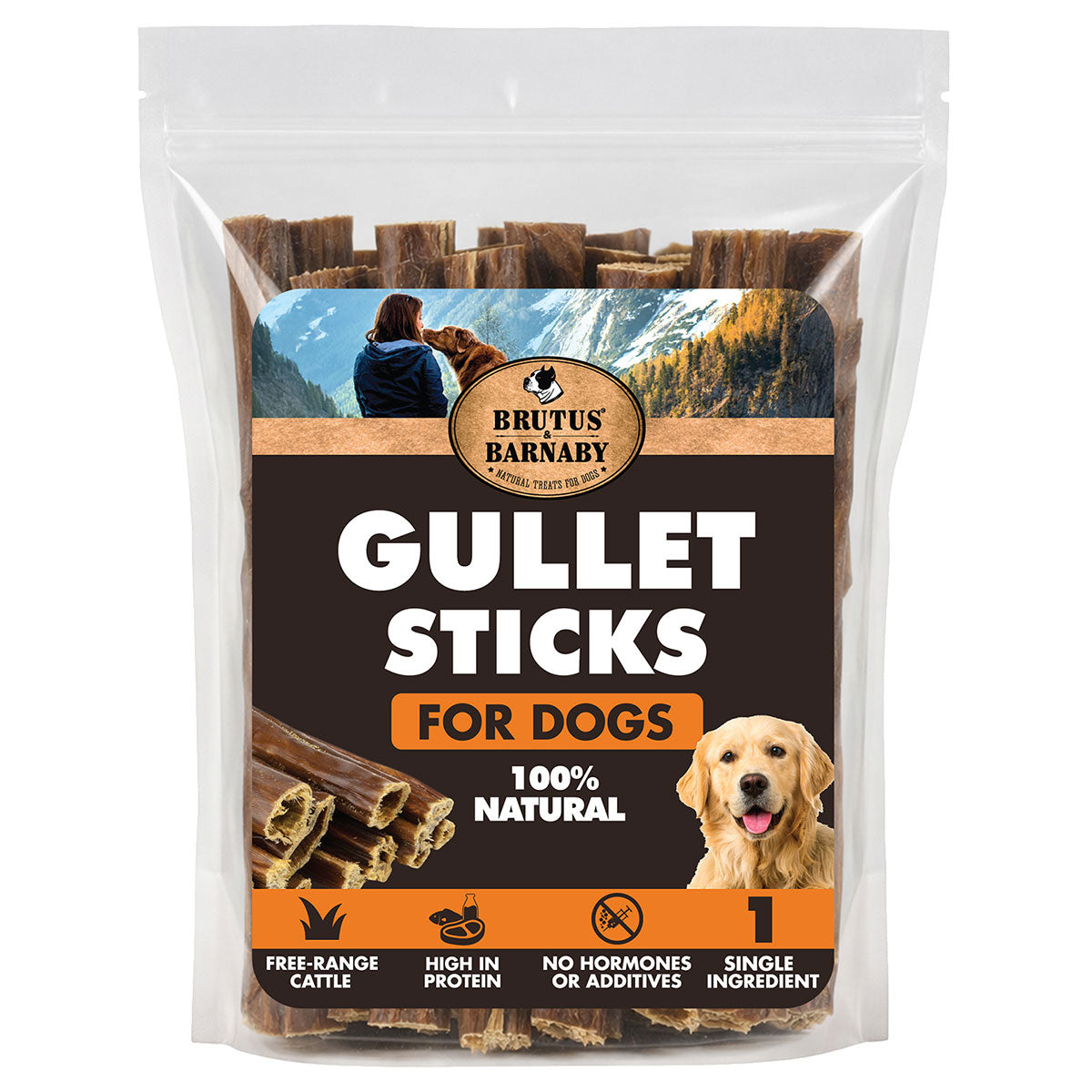
Beef Gullet Sticks for Dogs | 6 Inch Crunchy Dental Chews
View Beef Gullet SticksWhat If Your Puppy Swallows a Large Piece?
If a puppy swallows part of a chew, what happens next depends on the size of the puppy, the size and shape of the swallowed piece and how the puppy is acting. Do not assume that an edible ingredient means a large swallowed piece cannot create a problem.
Seek urgent veterinary help for breathing difficulty, persistent choking or gagging, collapse, severe distress or other emergency signs. Contact your veterinarian promptly if vomiting, repeated retching, abdominal pain, significant lethargy, appetite loss or abnormal stool develops after swallowing a chew.
After handling edible animal treats, follow sensible hygiene practices as well. The FDA recommends washing hands before and after handling pet food and treats and storing pet products appropriately.
Beef Gullet Sticks for Puppies
Can puppies eat beef gullet sticks?
Some puppies can. The puppy should be able to chew the stick calmly, the size should be appropriate for the mouth and the entire session should be supervised. Very young puppies and gulpers may need softer alternatives.
At what age can a puppy have a beef gullet stick?
There is no universal age that makes a gullet stick suitable for every puppy. Tooth development, size and chewing behavior are better indicators. Ask your veterinarian when you are uncertain about your individual puppy.
Are gullet sticks good for teething puppies?
They may suit an older or more experienced puppy that is ready for moderate chewing resistance, but a puppy with tender gums or loose baby teeth may be more comfortable with softer options.
Can beef gullet sticks cause diarrhea in puppies?
Any new treat or protein can be associated with digestive upset in an individual dog. Introduce new chews gradually and stop feeding them if diarrhea, vomiting or other concerning symptoms develop.
Should I give my puppy a whole gullet stick?
Do not decide solely by the word “whole.” The important question is whether the chew is large enough to prevent immediate gulping while still being manageable. Remove it once the remaining portion becomes small enough to swallow.
Can a puppy have a gullet stick every day?
Daily use is not automatically appropriate for every puppy. Consider total treat calories, the rest of the diet, digestive tolerance and how much of each chew is actually eaten. Your veterinarian can help if you need a specific daily feeding plan.
Choose Beef Gullet Sticks According to Your Puppy, Not Age Alone
Beef gullet sticks for puppies can fit a supervised treat routine when the puppy is ready for the texture, chews calmly and tolerates beef. Choose an appropriate size, introduce the chew gradually, remove small remaining pieces and keep nutritionally complete puppy food at the center of the diet. If your puppy gulps, has dental discomfort, develops digestive symptoms or follows a specialized diet, choose another option and ask your veterinarian for guidance.
Educational disclaimer: This article provides general educational information and is not veterinary, nutritional, diagnostic or emergency advice. Puppies differ in breed, size, growth rate, dental development, dietary needs and chewing behavior. Always supervise edible chews, provide fresh water and remove pieces that become small enough to swallow. Contact your veterinarian if your puppy develops persistent or severe vomiting, diarrhea, appetite loss, dental pain, abdominal discomfort, choking, breathing difficulty or other concerning symptoms. Product ingredients, nutrition information, packaging, feeding directions and availability can change, so review the current product page and package before feeding.