



Can Dogs Eat Beef Gullet Every Day? Frequency & Portion Guide
Daily gullet can fit some dogs better than others. The real question is not simply how many days per week your dog gets one — it is how much gullet they eat, what else they receive, and how their body handles the routine.
Your dog hears the gullet bag open and appears in the kitchen instantly. The first one went well. The second one disappeared just as happily. Now comes the obvious question: can this become an everyday thing?
Some dogs can have a managed amount of beef gullet regularly, including on consecutive days, when it fits their total calorie allowance, they tolerate beef well, and the treat does not replace a complete and balanced diet. But “every day” should never automatically mean one full stick for every dog. Natural pieces vary, dogs vary, and all treats given that day need to be counted together.
First: What Exactly Is Beef Gullet?
Beef gullet is made from beef esophagus. Once prepared as a dog treat, it creates a naturally ridged, crunchy chew that is generally less dense than heavy chews such as thick bully sticks or beef cheek rolls.
Brutus & Barnaby Beef Gullet Sticks are 6-inch chews made from 100% beef gullet. The live product page lists them for puppies, small and medium dogs, senior dogs, non-aggressive chewers, and dogs needing a gentler chew format.
A single-ingredient beef chew with no fillers or artificial extras listed.
A lighter chew format for dogs that do not need the heaviest chewing project.
Use the total amount fed rather than assuming every natural stick has identical calories.
For a deeper explanation of the format itself, read our guide to why gullet and trachea chews are valued for their texture.
Can a Dog Really Have Beef Gullet Every Day?
Potentially — but daily frequency only makes sense after three separate checks.
The key distinction: daily availability does not mean unlimited access. Frequency and portion are two separate decisions.
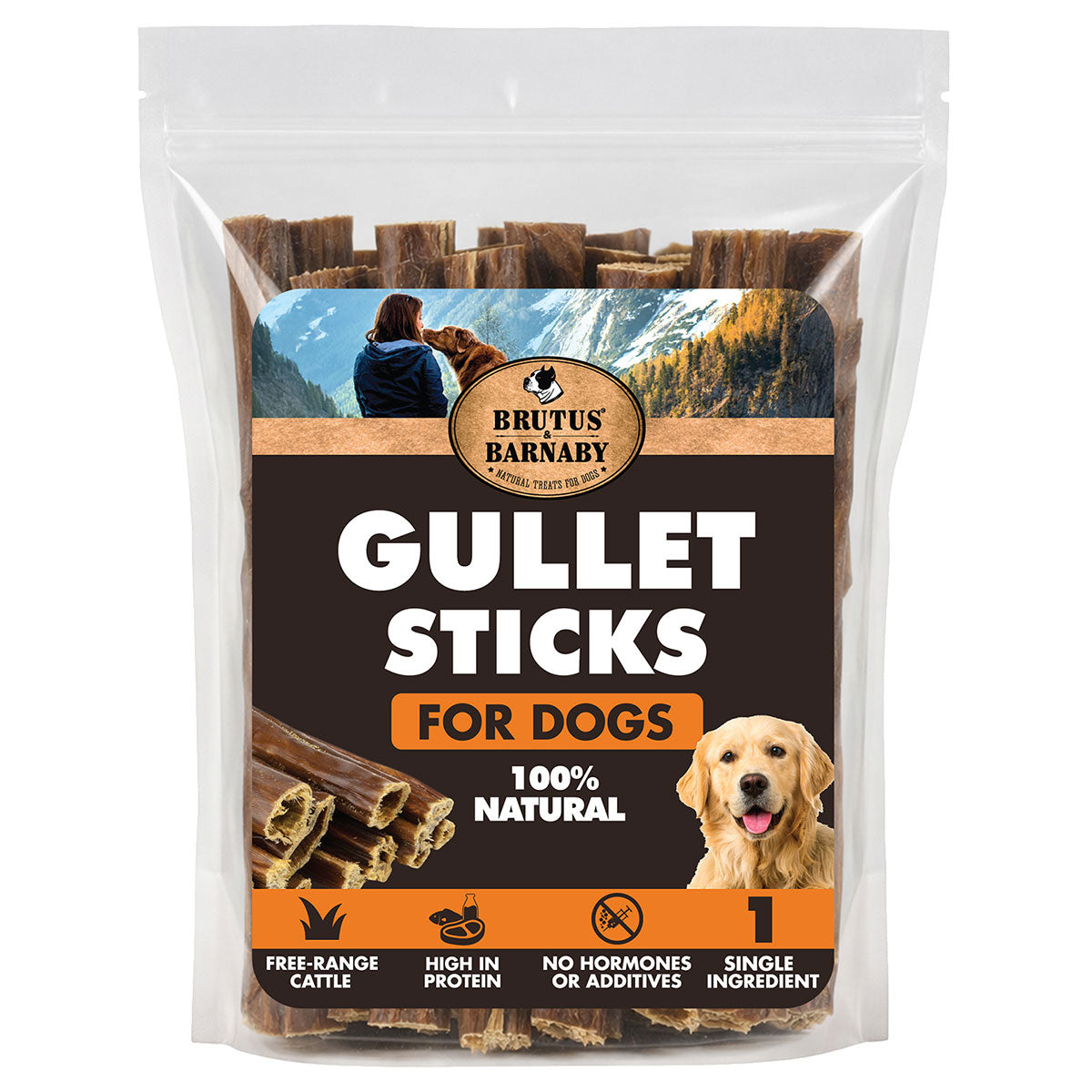
Beef Gullet Sticks for Dogs | 6 Inch Crunchy Dental Chews
Thin, crunchy 6-inch gullet chews for dogs that enjoy a lighter, gentler chewing format.
Do Not Use “One Stick a Day” as a Universal Rule
Natural chews vary. Dogs vary even more.
One full gullet stick could fit comfortably into one dog's routine while using too much of another dog's treat allowance. That is why the package's calorie information is more useful than assuming a fixed number of sticks works for every dog.
Use the 10% Treat Rule as Your Starting Guardrail
Cornell University's veterinary guidance suggests keeping treats to approximately 10% of a dog's daily calorie intake.
The important word is all. Beef gullet does not get its own separate allowance.
Everything outside the regular diet adds up together
Count gullet pieces, training rewards, chews, food used in puzzle toys, table scraps, treats from family members, and every other extra your dog receives.
Plan the amount before the day gets busy
Decide how much room the day's treat budget has before automatically adding a chew on top of training rewards and other snacks.
Counting every treat separately
“Only one gullet,” “only five training treats,” and “only one table scrap” can still become a large total by the end of the day.
For a broader way to think about treat frequency, use our weight-based guide to how often dogs should get treats.
When Regular Beef Gullet May Fit the Routine
A regular routine is easier to manage when the dog, the treat, and the rest of the diet are all working together.
When Should You Give Beef Gullet Less Often?
Reducing frequency does not mean the treat is bad. It may simply mean the current routine is not the right fit.
When the daily total is becoming too much
When your dog is not handling it well
Important: persistent or significant symptoms should not be managed by repeatedly testing the same treat. Stop the new treat and contact your veterinarian when your dog's reaction concerns you.
Daily, Several Times a Week, or Occasionally?
There is no evidence-based calendar that says every healthy dog must receive a gullet stick on a specific number of days per week. A better approach is to match frequency to the job.
A useful weekly routine can include different treat formats for different jobs. See our dog treat rotation guide for a broader framework.
A Training-Heavy Day May Not Need a Full Chew Too
This is where many treat routines quietly become excessive.
Your dog may receive repeated rewards during training, a snack from another family member, food inside an enrichment toy, and then a gullet chew at night. Each moment feels small when viewed separately.
Let the gullet do the main job
Keep other rewards lighter when the day's main treat event is a supervised chew session.
Use small repeatable rewards
When the day already includes many repetitions, smaller training rewards may be easier to manage than automatically adding another full treat event.
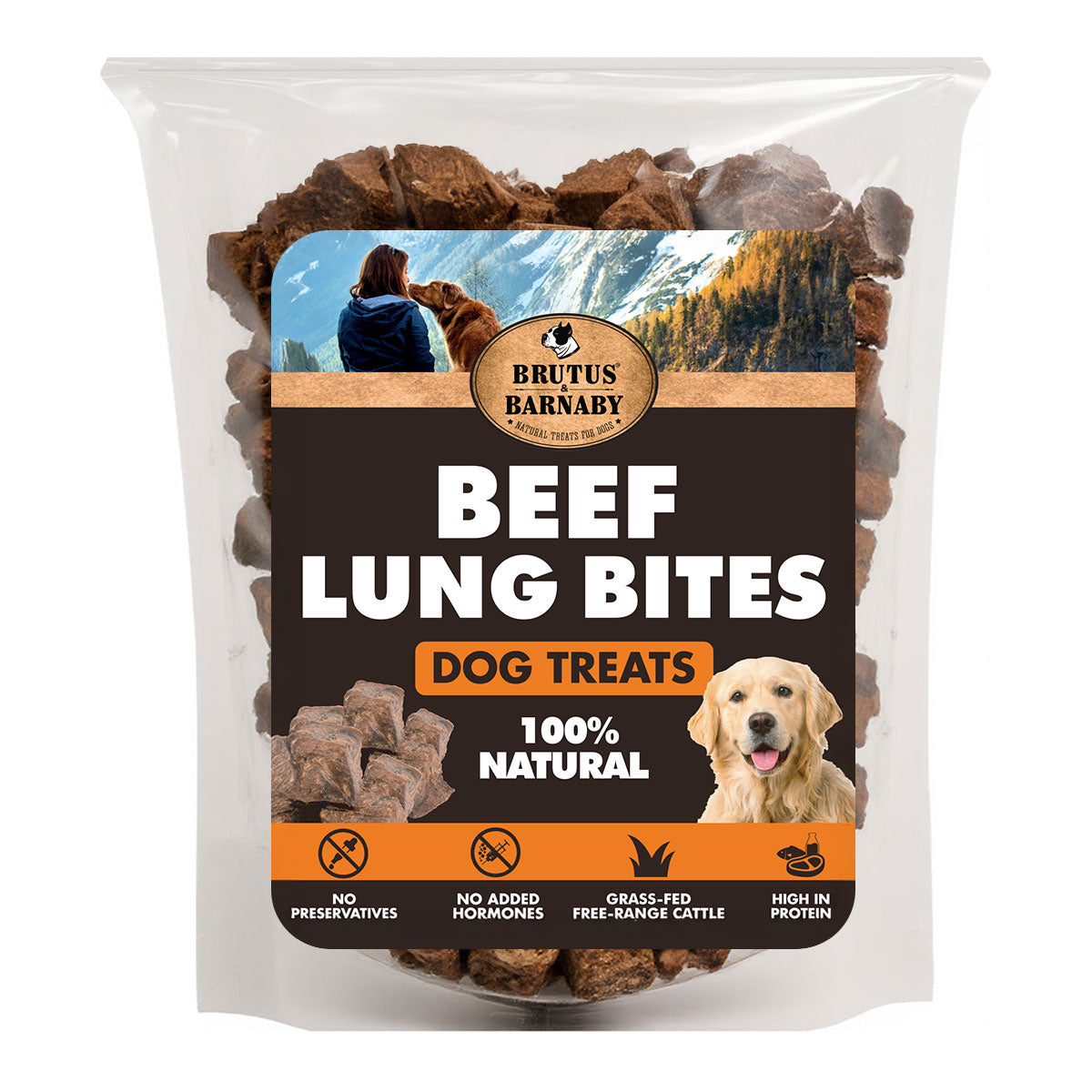
Beef Lung Bites for Dogs | High-Protein Crunchy Training Treats
Smaller crunchy rewards that make it easier to prepare controlled portions for training instead of using a chew-style treat for every reward moment.
How to Introduce Beef Gullet Before Making It a Routine
Do not decide whether a treat belongs in the daily routine based on the first five minutes. Give yourself time to see how your dog handles it.
Does Daily Gullet Work Differently for Small Dogs?
The basic rules are the same, but small dogs have less room for calorie mistakes.
A treat portion that barely changes a large dog's daily total may use a much bigger share of a small dog's allowance. That is why breaking a chew into a manageable portion can matter more than following a fixed “one per day” habit.
Small-dog rule: do not let the original size of the treat decide the portion. Use the amount that fits your individual dog's diet, size, and chewing behavior.
What About Puppies and Senior Dogs?
Age alone does not answer the frequency question. Puppies and seniors can have very different teeth, diets, calorie needs, and chewing habits.
Growth nutrition comes first
A puppy should already be comfortably eating solid puppy food and capable of managing the chew format. Treats should not crowd out the complete diet needed for growth.
Current chewing ability comes first
An older dog that still chews comfortably may handle a gentle gullet format differently from a senior with dental disease, missing teeth, or mouth pain.
When your dog's teeth, diet, or health status are uncertain, your veterinarian should help decide whether regular chew treats are appropriate.
Signs the Current Gullet Routine May Be Too Much
Do not judge the routine only by how excited your dog gets when the bag opens.
A Simple Way to Manage Daily Portions
You do not need a complicated spreadsheet to stop treats from quietly multiplying.
How to Store Gullet When You Buy It in Multipacks
Regular use makes storage habits more important, not less.
Better Storage Habits
Avoid
Read our full guide to storing dog treats and chews for a more complete routine.
Helpful External Resources
These veterinary and government resources provide useful guidance on treat calories, food safety, and secure storage.
Cornell University College of Veterinary Medicine — Obesity & Weight Loss in Dogs Veterinary guidance on keeping treats to approximately 10% of daily calorie intake. FDA — Tips for Safe Handling of Pet Food and Treats Practical guidance on clean handling, dry storage, packaging, and preventing pets from accessing the full supply. FDA — Proper Storage of Pet Food & Treats Why cool, dry storage and secure access matter when keeping treats at home.Daily Beef Gullet: Common Questions
Can dogs eat beef gullet every day?
Some dogs may be able to have a managed amount regularly when it fits the total calorie allowance, they tolerate beef well, and the treat does not replace a complete and balanced diet. Daily frequency should not automatically mean one full stick for every dog.
How often should dogs have beef gullet sticks?
There is no universal number of days per week for every dog. Frequency should be based on the portion, the dog's daily calorie needs, other treats given, ingredient tolerance, chewing behavior, and veterinary dietary restrictions.
How many beef gullet sticks can a dog have per day?
A fixed number is not appropriate for every dog because natural pieces and dog calorie needs vary. Brutus & Barnaby lists its Beef Gullet Sticks at 116.2 kcal per ounce, so manage the total amount fed and count it with every other treat given that day.
Do beef gullet sticks count toward the 10% treat rule?
Yes. Gullet chews are treats and should be counted together with training rewards, table scraps, chews, enrichment food, and other extras outside the regular complete diet.
Can small dogs have beef gullet every day?
Some small dogs may be able to have a managed amount regularly, but small dogs have less room for calorie mistakes. Break the treat into a portion that fits the individual dog's diet rather than assuming the original stick size is the correct daily serving.
What happens if a dog eats too much beef gullet?
Too much of any treat can disrupt the overall diet and may contribute to digestive upset or excess calorie intake. Contact your veterinarian when your dog develops persistent vomiting, diarrhea, unusual tiredness, appetite changes, or another concerning reaction.
Should I give gullet on days when my dog gets lots of training treats?
You can, but every reward uses the same overall treat budget. On training-heavy days, a smaller gullet portion or no chew may make more sense if repeated rewards have already used much of the day's allowance.
How do I know if my dog should get beef gullet less often?
Reconsider the routine when treats are crowding out meals, your dog is gaining unwanted weight, digestive problems repeatedly follow the treat, your dog tries to gulp large pieces, or your veterinarian has recommended dietary restrictions.
Daily Beef Gullet Is a Portion Decision Before It Is a Calendar Decision
The word “daily” does not tell you whether the routine is appropriate. The amount, the dog's total diet, the other treats given, and the dog's response matter more.
The smartest gullet routine is not the one with the most chew days — it is the one your dog can enjoy without the treat quietly taking over the diet.
Choose the Reward That Fits the Day
Pick 6-inch Beef Gullet Sticks for supervised crunchy chew time or keep Beef Lung Bites ready for smaller training rewards.
Disclaimer: This article is for general educational purposes only and does not replace veterinary or nutritional advice. Every dog is different. Treat suitability and frequency depend on age, size, weight, complete diet, health, ingredient tolerance, dental condition, eating behavior, and individual calorie needs. Treats should not replace a complete and balanced diet. Introduce new treats gradually, use manageable portions, provide fresh water, and supervise your dog while eating. Stop feeding a treat and contact your veterinarian if your dog develops persistent vomiting, diarrhea, appetite changes, unusual tiredness, a suspected food reaction, signs of choking, or any other concerning symptom. Product ingredients, nutrition information, packaging, sizes, and availability may change, so always review the current product page and packaging before feeding.